
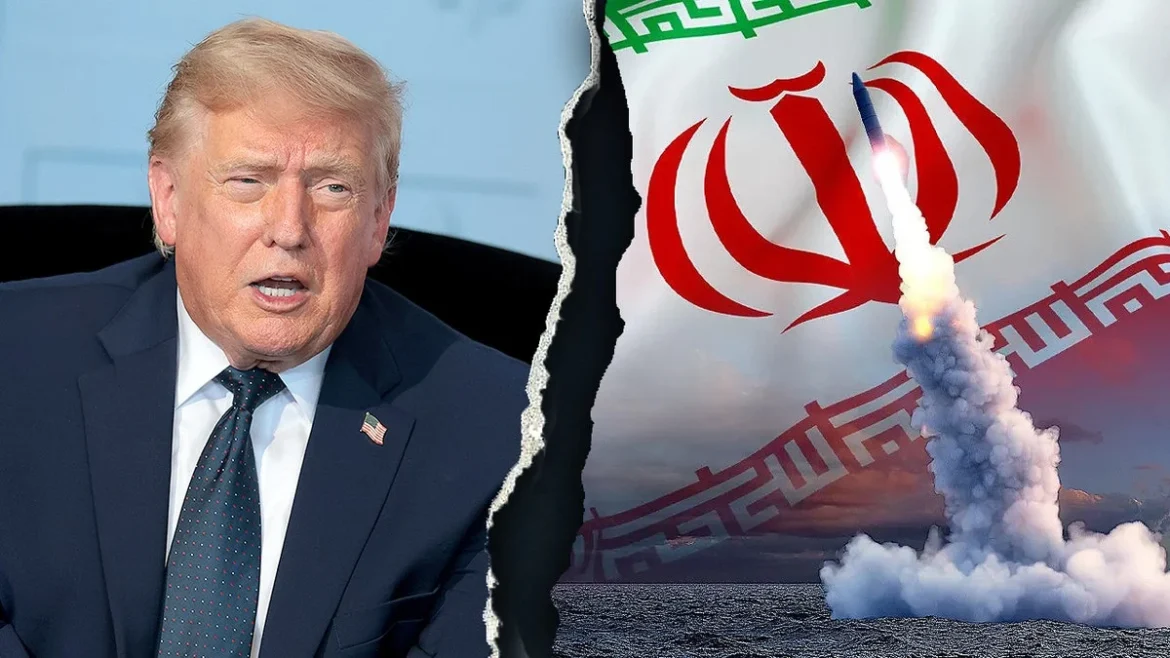
A recent Fox News survey conducted in July 2019 revealed a significant downturn in public approval for President Donald Trump’s handling of Iran, reaching a record high of disapproval. The poll indicated widespread voter opposition to U.S. military action against the Islamic Republic, with a substantial majority expecting any conflict to extend for at least a year. Concurrently, the Republican Party’s historical advantage on immigration issues appeared to be eroding, with voters now almost evenly split between the two major parties on which is better equipped to manage the complex challenges of border security and migration. These findings underscore a period of considerable public skepticism regarding key foreign policy decisions and domestic priorities, presenting potential challenges for the administration.
Deepening Public Skepticism on Iran Policy
The Fox News poll, conducted between July 17-20, 2019, found that a striking 66% of registered voters disapproved of President Trump’s approach to Iran, marking his lowest approval rating on the issue to date, with only 34% expressing approval. This record level of discontent reflected a broader public unease about the escalating tensions in the Persian Gulf and the administration’s "maximum pressure" campaign following the U.S. withdrawal from the Joint Comprehensive Plan of Action (JCPOA), commonly known as the Iran nuclear deal, in May 2018.
The decision to exit the JCPOA and re-impose stringent economic sanctions on Iran was a cornerstone of the Trump administration’s foreign policy, aimed at compelling Tehran to negotiate a new, more comprehensive agreement addressing its nuclear program, ballistic missile development, and regional proxy activities. However, the period leading up to the poll had been marked by a series of concerning incidents, including attacks on oil tankers in the Gulf of Oman, the downing of a U.S. surveillance drone by Iran, and retaliatory cyberattacks. These events brought the two nations to the brink of military confrontation, fueling public anxiety about the prospects of a wider conflict.
Voters’ aversion to military intervention was clear, with 56% opposing U.S. military action against Iran. A substantial 40% of respondents "strongly" opposed such action, highlighting a deep-seated reluctance among the electorate to engage in further foreign military entanglements. This sentiment was particularly pronounced along partisan lines, with 84% of Democrats opposing military action, in stark contrast to 76% of Republicans who expressed support. This partisan divide underscores the entrenched ideological differences shaping American foreign policy debates, where calls for restraint often clash with assertions of national security interests and geopolitical leverage.
Furthermore, there was a growing expectation among voters that any conflict with Iran would be protracted. A significant 64% believed that a war would last a year or more, an increase of 13 percentage points since a similar poll conducted just two months prior in May. This growing pessimism about the duration of a potential conflict reflects historical experiences with prolonged engagements in the Middle East, such as those in Iraq and Afghanistan, which have left a lasting imprint on the American public consciousness. Interestingly, this expectation varied sharply based on individual attitudes toward the potential conflict: among those who supported military action, 56% optimistically believed it would be over in weeks or months, while 80% of opponents foresaw a commitment lasting at least a year.
Skepticism also extended to the likelihood of a diplomatic resolution. Approximately half of all voters expressed doubt that the U.S. would reach a deal with Iran. Among the remaining half, opinions were split between expecting a "good deal" (27%) and a "bad deal" (25%). This division mirrored partisan lines, with Democrats being 20 points more likely to anticipate a negative outcome from any potential agreement, while Republicans were 27 points more inclined to expect a favorable one. This finding illustrates the profound distrust and political polarization that permeated public perceptions of the administration’s diplomatic capabilities and intentions regarding Iran.
Chronology of U.S.-Iran Tensions Leading to the Poll:
- May 8, 2018: President Trump announces the U.S. withdrawal from the JCPOA, calling it "a horrible, one-sided deal," and pledges to reimpose sanctions.
- August-November 2018: The U.S. reimposes first and second rounds of sanctions targeting Iran’s financial, automotive, shipping, and oil sectors, aiming for "maximum pressure."
- April 8, 2019: The U.S. designates Iran’s Islamic Revolutionary Guard Corps (IRGC) as a Foreign Terrorist Organization (FTO), marking the first time a component of another government has been so designated.
- May 5, 2019: U.S. sends an aircraft carrier strike group and bomber task force to the Middle East in response to alleged threats from Iran.
- May 12, 2019: Four oil tankers (two Saudi, one Emirati, one Norwegian) are targeted in alleged sabotage attacks off the coast of Fujairah in the UAE.
- June 13, 2019: Two more oil tankers, the Front Altair and Kokuka Courageous, are attacked in the Gulf of Oman; the U.S. blames Iran.
- June 20, 2019: Iran’s IRGC shoots down a U.S. RQ-4 Global Hawk surveillance drone over the Strait of Hormuz. President Trump approves and then calls off retaliatory strikes at the last minute.
- July 1, 2019: Iran announces it has surpassed the uranium enrichment limit set by the JCPOA.
- July 17-20, 2019: Fox News poll conducted, reflecting public opinion amidst these heightened tensions.
The implications of these findings for U.S. foreign policy were significant. The broad public opposition to military action limited the administration’s appetite for direct confrontation, despite the escalating rhetoric. Instead, it pushed the focus toward continued economic pressure and potentially, renewed diplomatic overtures, albeit from a position of deep mistrust on both sides.
Shifting Tides on Immigration: GOP’s Eroding Advantage
The poll also highlighted a crucial shift in public perception regarding immigration, an issue that had been central to President Trump’s political platform since his 2016 campaign. Historically, the Republican Party often held an advantage in voters’ minds when it came to handling border security and immigration enforcement. However, the July 2019 survey indicated that this advantage had evaporated. Voters were now nearly evenly divided, with 50% believing Democrats could better handle immigration, and 49% favoring Republicans. This represented a "meaningful shift" since April, when the GOP held an 8-point lead on the issue.
This erosion of Republican advantage could be attributed to several factors. The administration’s aggressive immigration policies, including the "zero tolerance" policy at the border (though largely rescinded by 2019, its impacts lingered in public memory), efforts to build a wall on the U.S.-Mexico border, and heightened enforcement actions by Immigration and Customs Enforcement (ICE), had generated considerable controversy. While these policies resonated strongly with a segment of the Republican base, they also alienated many independent voters and galvanized opposition among Democrats.
The demographic breakdown revealed distinct preferences: women and voters under the age of 45 predominantly favored Democrats on immigration, while men and those aged 45 and older leaned toward Republicans. This generational and gender divide underscores the varying priorities and concerns across different segments of the electorate regarding immigration policy, from humanitarian considerations to national security and economic impacts.
Despite the overall shift, immigration remained President Trump’s "best performing issue" in the survey, though his personal approval rating on it was still negative: 42% approved, while 57% disapproved. This indicated that while the issue was a rallying cry for his base, it did not garner overall public majority support for his specific handling.
Public perception of Immigration and Customs Enforcement (ICE) also reflected this complex and divided landscape. ICE approval stood at 41%, unchanged since earlier in the year but down from 49% in September of the previous year. The agency, which had been at the forefront of the administration’s enforcement efforts, faced stark partisan divisions in public opinion. A large majority of Democrats (90%) and independents (68%) disapproved of ICE, with 78% of Democrats and 50% of independents expressing "strong" disapproval. Conversely, most Republicans (79%) approved, with 53% "strongly" approving. This deep polarization over a key enforcement agency illustrated the chasm in American political discourse regarding the role and methods of immigration control.
Regarding specific policy preferences, the poll revealed nuanced views. Only a small minority of voters (7%) supported allowing all undocumented immigrants to remain in the U.S., including 11% of Democrats, 5% of independents, and 2% of Republicans. Instead, a significant majority (62%) favored a more conditional approach: deporting those charged with crimes while allowing others to stay and eventually qualify for citizenship. This position garnered majority support across most demographic groups, with the notable exceptions of Republicans (39%), conservatives (41%), and White evangelical Christians (48%), highlighting areas of ideological rigidity within certain segments of the population.
Conversely, 31% of voters favored deporting all undocumented immigrants, a stance that found its strongest support among "MAGA Republicans" at 68%. This policy preference speaks to the deep-seated desire for stricter enforcement and a belief in the necessity of comprehensive removal among a key segment of the Republican base.
When asked about their primary concerns regarding undocumented immigration, voters cited the strain on government services as the top worry (39%). Other concerns included crime (19%), job losses for U.S. citizens (14%), changes to the country’s culture (13%), and terrorism (10%). The concern about overburdened government programs resonated across various demographic groups, particularly among college graduates, those in high-income households, suburban voters, and independents. This indicates that the practical and economic impacts of immigration were salient to a broad cross-section of the electorate, beyond just the traditional "security" concerns.
A consistent divide within the Republican Party itself was also apparent on immigration issues. ICE approval was significantly higher among MAGA Republicans (91%) compared to other Republicans (59%), one of the widest gaps recorded in the survey. A similar split emerged in ratings of President Trump’s handling of immigration, with 91% of MAGA Republicans approving versus 63% of other Republicans. Furthermore, MAGA Republicans were nearly 30 points more likely to favor deporting all undocumented immigrants (68% vs. 41%). This internal division underscored the ideological fault lines within the GOP, with the most fervent supporters of the President holding distinct and often more extreme views on immigration policy than their less ideologically aligned counterparts.
President Trump’s Overall Standing and Future Implications
Beyond specific policy issues, the Fox News poll provided insights into President Trump’s overall job performance. His general approval rating remained steady but "underwater," with 39% approving and 61% disapproving. This 39% approval rating had been unchanged for the preceding three months, while the 61% disapproval tied a previous high, including 49% who "strongly" disapproved, also matching a record high.
For historical context, President Trump’s best approval rating during his presidency was 49% (with 49% disapproval) in April 2020, amidst the initial stages of the COVID-19 pandemic. His July 2019 rating of 39% was comparable to those of other presidents during the summer of a midterm election year, such as former President Joe Biden’s 40% in July 2022 and former President Barack Obama’s 42% in July 2014. These comparisons suggest a consistent pattern of presidential approval dipping during periods distant from general elections, yet for Trump, this particular level of disapproval was notable given the specific challenges of his presidency.
President Trump continued to draw his strongest support from his core base: 97% of MAGA Republicans approved of his job performance, as did 72% of conservatives. However, the poll also revealed concerning declines in support from other key demographics. Compared to the previous month (June), his approval had fallen to a near record low among rural voters (down 7 points to 44%) and an all-time low among White voters (down 3 points to 41%).
Perhaps the most significant shift was observed among non-MAGA Republicans, whose support had plummeted by 13 points since the previous month to 51% approval. This group had seen its approval rating for Trump as high as 70% at the beginning of what the poll’s original context described as "Trump’s second term" – a potentially confusing temporal reference given the 2019 poll date, but interpreted here as a hypothetical or aspirational peak of support. This substantial decline among a critical segment of his party suggested growing unease or disillusionment even within his broader political coalition, potentially driven by policy specifics or overall presidential conduct.
Furthermore, President Trump’s ratings were also "underwater" on critical economic issues. Only 33% approved of his handling of the economy, while 67% disapproved. His performance on inflation was even worse, with only 27% approval against 73% disapproval. These figures indicated that despite relatively strong economic indicators during this period, a significant portion of the public did not credit the administration for economic well-being or felt the benefits were not widely distributed.
Broader Impact and Implications
The findings of the July 2019 Fox News poll carried significant implications for the political landscape. For the Trump administration, the record disapproval on Iran policy highlighted the challenges of sustaining an aggressive foreign policy stance without broader public buy-in, particularly given the public’s clear aversion to military intervention and skepticism about diplomatic outcomes. This public sentiment could constrain future actions and force a re-evaluation of strategies to manage the complex relationship with Tehran.
On the domestic front, the erosion of the Republican Party’s advantage on immigration signaled a potential vulnerability heading into future elections. Immigration had been a powerful mobilizing issue for the GOP, but the poll suggested that the Democratic Party was gaining ground, possibly by framing the issue around humanitarian concerns and comprehensive reform rather than solely enforcement. The stark internal divisions within the Republican Party on immigration policy also presented a strategic dilemma, as appealing to the MAGA base with hardline stances risked alienating more moderate voters.
The declines in President Trump’s approval among rural, White, and especially non-MAGA Republican voters suggested that even segments of his core support were not entirely immune to dissatisfaction. This could complicate his political standing and necessitate efforts to shore up support among these groups. The consistently low approval ratings on the economy and inflation, despite a generally robust economic period, indicated that voters were not necessarily connecting economic performance directly to presidential actions or were more focused on specific personal financial concerns.
In conclusion, the Fox News poll from July 2019 painted a picture of a presidency facing significant headwinds on critical policy fronts. A public weary of foreign entanglements and deeply divided on immigration presented a challenging environment for the administration. The findings underscored the persistent political polarization in the United States, the evolving nature of public opinion on complex issues, and the internal dynamics within both major parties as they navigated a tumultuous political era. The data served as a critical barometer of public sentiment, offering insights into the complex interplay of foreign policy, domestic priorities, and presidential approval.
The survey was conducted from July 17–20, 2019, under the direction of Beacon Research (D) and Shaw & Company Research (R). It included interviews with a sample of 1,003 registered voters randomly selected from a national voter file. Respondents were contacted by live interviewers on landlines (70) and cellphones (681) or completed the survey online after receiving a text (252). Results based on the full sample have a margin of sampling error of ±3 percentage points. The survey included an oversample of 200 voters aged 18–29, bringing the sample size for that subgroup to 350 (±5). Sampling error for results among subgroups is higher. In addition to sampling errors, question wording and order can influence results. Weights were generally applied to age, race, education, and area variables to ensure the demographics were representative of the registered voter population. Sources for developing weight targets included the most recent American Community Survey, Fox News Voter Analysis, and voter file data.
