
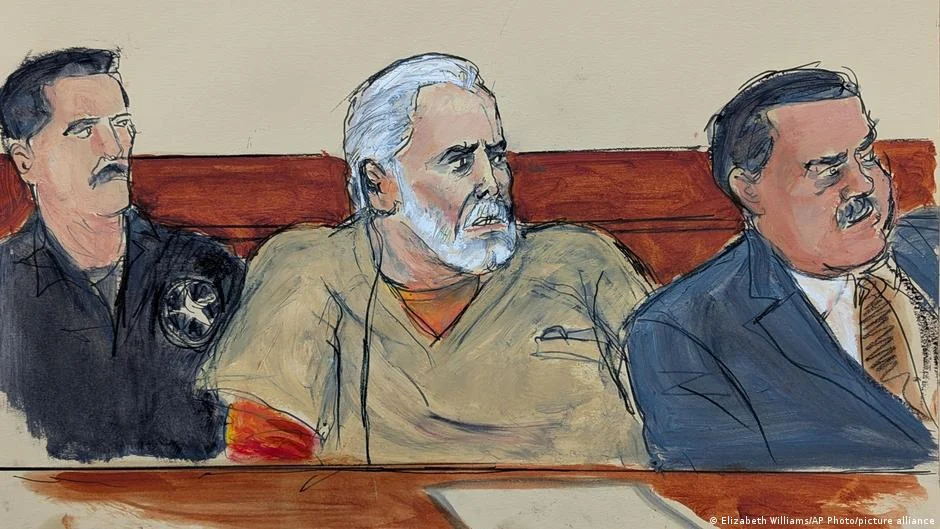
Mexican drug trafficker Ismael "El Mayo" Zambada, one of the most enduring and elusive figures in the annals of international organized crime, was sentenced to life in prison without the possibility of parole on Tuesday by a United States court. The ruling marks a monumental victory for U.S. law enforcement agencies, bringing an end to the decades-long reign of a man who co-founded and expertly led the notorious Sinaloa cartel, transforming it into one of the world’s most formidable criminal enterprises. This sentencing places Zambada in the same category as his former partner, Joaquin "El Chapo" Guzman, who received a similar fate in 2019, further solidifying the U.S. strategy of prosecuting high-profile foreign drug kingpins within its own judicial system.
The Verdict and Judge’s Condemnation
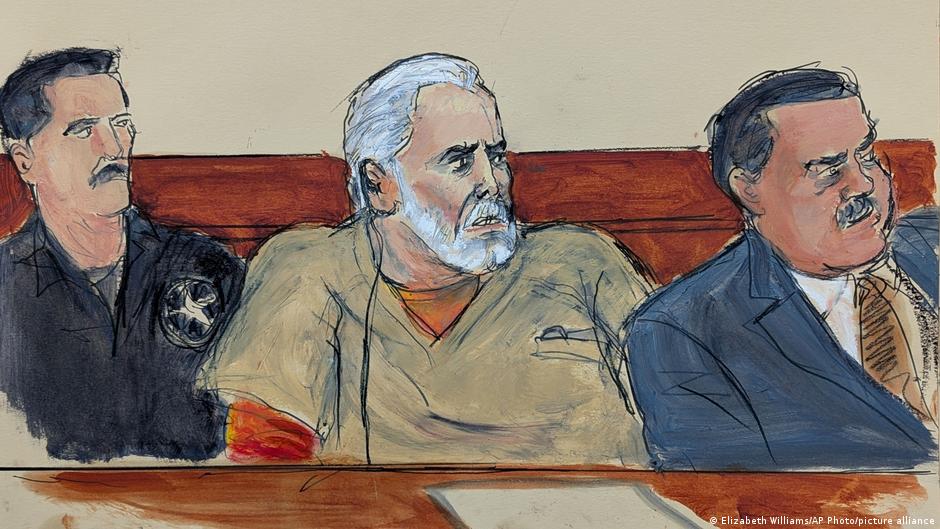
U.S. District Judge Brian Cogan, presiding over the case in Brooklyn, New York, delivered the severe sentence, underscoring the profound and far-reaching impact of Zambada’s criminal activities. "The almost unimaginable amount of drugs attributable to him and the number of murders that we can document is enough to justify Congress’s decision to make this a mandatory life sentence," Judge Cogan stated, emphasizing the sheer scale of human suffering and societal damage inflicted by the Sinaloa cartel under Zambada’s command. The 76-year-old Zambada, a figure whose legend was built on his uncanny ability to evade capture for decades, offered a rare public apology before his sentencing. He expressed remorse "for the harm I caused and for the example I set," appealing to future generations to "choose a different path." This statement, delivered with a measure of solemnity, stood in stark contrast to the ruthless empire he meticulously built and maintained.
A Kingpin’s Reign: The Rise of Ismael "El Mayo" Zambada
Ismael Zambada García’s journey to becoming one of the world’s most powerful drug lords began in the rural landscapes of Sinaloa, Mexico, a region long synonymous with drug trafficking. Born in 1948, Zambada rose through the ranks of various criminal organizations, distinguishing himself through a combination of strategic acumen, violent enforcement, and a talent for maintaining a low profile. Unlike many of his flashier counterparts, "El Mayo" was known for his discretion, avoiding the ostentatious displays of wealth often associated with narco culture, a trait that undoubtedly contributed to his prolonged freedom.
His criminal career spans over four decades, during which he witnessed the evolution of the drug trade from rudimentary smuggling operations to a sophisticated global network. In the late 1980s and early 1990s, Zambada emerged as a key figure within the Guadalajara Cartel, a precursor to many of Mexico’s modern drug syndicates. Following the fragmentation of the Guadalajara Cartel, Zambada, alongside Joaquin "El Chapo" Guzman and others, founded the Sinaloa Cartel in the late 1980s. This new entity quickly asserted its dominance, leveraging its strategic geographic location and a brutal efficiency to control lucrative smuggling routes into the United States.
Zambada’s leadership was characterized by a pragmatic approach to business and a willingness to adapt. He fostered alliances, eliminated rivals, and diversified the cartel’s portfolio beyond traditional cocaine and marijuana to include synthetic drugs like methamphetamine and, critically, fentanyl. His ability to navigate complex political landscapes and corrupt officials on both sides of the border was legendary, allowing the cartel to operate with relative impunity for extended periods. For decades, he remained on the U.S. government’s most wanted list, with a standing reward of up to $15 million for information leading to his capture, a testament to his elusive nature and the threat he posed.
The Sinaloa Cartel’s Empire: Scale and Impact
Under the joint leadership of Zambada and Guzman, the Sinaloa Cartel evolved into a global criminal enterprise with an estimated annual revenue in the billions of dollars. Prosecutors detailed how the cartel flooded the United States with staggering quantities of illicit substances, including tons of cocaine, methamphetamine, heroin, and increasingly, deadly fentanyl. The cartel’s reach extended beyond North America, with operations spanning Europe, Asia, and Australia, establishing complex supply chains for precursor chemicals and distribution networks for finished products.
The human cost of the cartel’s operations is immense. The influx of highly addictive drugs, particularly fentanyl, has fueled an opioid crisis in the United States that claims tens of thousands of lives annually. The violence associated with the cartel’s turf wars, enforcement actions, and internal purges has destabilized regions of Mexico, leading to widespread suffering, displacement, and a profound erosion of public trust in institutions. Prosecutors presented evidence that Zambada personally ordered torture and plotted numerous murders, including the chilling killing of his own nephew, illustrating the brutal nature of his command. U.S. Attorney Joseph Nocella Jr. for the Eastern District of New York, speaking after the sentencing, stated that Zambada had spent nearly four decades "poisoning American communities for profit and ordering the murders of anyone who stood in his way, and that all ended with his sentencing." This grim assessment underscores the vast human toll attributable to Zambada’s criminal enterprise.
The Pursuit and Capture: A Decades-Long Hunt Ends
For many years, Zambada was the last remaining "old guard" leader of the Sinaloa Cartel who had not been captured or killed. His legendary ability to evade authorities earned him nicknames like "The Last Godfather." His eventual arrest in July 2024, after he claimed he was kidnapped in Mexico and subsequently flown to Texas, was a dramatic turn of events that shocked the underworld and international law enforcement alike. While the specifics of his apprehension remain somewhat shrouded, it marked the culmination of decades of intense investigative work by agencies such as the U.S. Drug Enforcement Administration (DEA), the Federal Bureau of Investigation (FBI), and Mexican authorities.
Upon his arrival in the U.S., Zambada faced a litany of charges, including engaging in a continuing criminal enterprise, racketeering conspiracy, and numerous drug trafficking offenses. He ultimately pleaded guilty, acknowledging culpability for 85 underlying crimes. This plea deal, which saw prosecutors agree not to seek the death penalty, was a strategic move by both sides. For Zambada, it avoided the ultimate punishment and perhaps offered a slight measure of control over his final days. For the U.S. government, it secured a conviction against a historically elusive figure without the prolonged and resource-intensive trial that characterized "El Chapo" Guzman’s case.
In court, Zambada’s pre-sentencing remarks offered a glimpse into the mindset of a man who had lived his entire adult life within the brutal framework of organized crime. "I grew up in an environment where violence and crime seemed normal, but now I know that’s no excuse," he stated on Monday. "There comes a time when every person must take responsibility for their decisions. I didn’t, and many people paid the price." These words, while perhaps insufficient to atone for his crimes, represent a rare moment of introspection from a figure who, for so long, embodied unyielding power and ruthlessness.
Echoes of "El Chapo": A Shared Destiny
Zambada’s sentencing inevitably draws comparisons to that of his former partner, Joaquin "El Chapo" Guzman. Together, they built the Sinaloa Cartel into an unparalleled force, with "El Chapo" often seen as the more flamboyant and publicly recognized face, while "El Mayo" operated as the shrewd, calculating mastermind behind the scenes. Their partnership was foundational to the cartel’s success, combining Guzman’s audacious tactics and escape artistry with Zambada’s strategic genius and extensive network.
Guzman was convicted in 2019 on charges including drug trafficking, money laundering, and leading a continuing criminal enterprise. He is currently serving a life sentence at the federal Supermax prison in Florence, Colorado, often referred to as the "Alcatraz of the Rockies," an institution designed for the most dangerous and high-profile inmates. The parallel fates of these two kingpins underscore the U.S. government’s unwavering commitment to pursuing and prosecuting the leaders of foreign drug cartels, regardless of their perceived invincibility or the time it takes. Their respective convictions send a clear message that even the most powerful drug lords are not beyond the reach of international justice.

Official Responses and Broader Implications
The sentencing of Ismael Zambada has been met with significant acclaim from U.S. law enforcement officials. U.S. Attorney Joseph Nocella Jr. emphasized the symbolic importance of the verdict, stating that it "demonstrates the unwavering commitment of the United States to bring to justice those who seek to profit from the suffering of others, no matter how long it takes or how powerful they may seem." Officials from the DEA and FBI also hailed the outcome as a significant victory, acknowledging the decades of collaborative effort with Mexican counterparts that ultimately led to Zambada’s capture and conviction.
From a Mexican perspective, while no immediate official statements were released, the arrest and sentencing of such a high-profile figure are likely viewed with a mixture of relief and concern. Relief, because it removes a significant source of instability and violence from the country. Concern, because it highlights the ongoing challenges Mexico faces in combating deeply entrenched organized crime, often involving corruption within its own institutions. The cooperation between U.S. and Mexican authorities, despite periods of tension, remains a critical component in the fight against transnational criminal organizations.
The Cartel’s Future: Fragmentation and Power Struggles
Zambada’s capture and sentencing, following "El Chapo" Guzman’s incarceration, have profoundly impacted the Sinaloa Cartel’s internal dynamics. The original article notes that Zambada was arrested alongside Joaquin Guzman Lopez, one of "El Chapo’s" sons, who has also pleaded guilty to federal drug charges and awaits sentencing. This event, coupled with Zambada’s removal, has led to a significant splintering within the cartel, pitting Zambada’s loyalists against the faction led by Guzman’s sons, collectively known as "Los Chapitos" or "the little Chapos."
This internal conflict has ignited brutal power struggles for control of lucrative drug trafficking routes, illicit enterprises, and the cartel’s vast criminal infrastructure. The "Chapitos" — Ivan Archivaldo Guzman Salazar, Jesus Alfredo Guzman Salazar, Ovidio Guzman Lopez, and Joaquin Guzman Lopez — have increasingly asserted their authority, often through extreme violence, seeking to fill the void left by their father and now, Zambada. This fragmentation doesn’t necessarily weaken the cartel in the long term; it often leads to increased violence as factions fight for dominance, and new, more ruthless leaders emerge. The U.S. government, under President Donald Trump, designated the Sinaloa Cartel as one of six Mexican drug gangs classified as Foreign Terrorist Organizations, underscoring the severe threat they pose.
A Symbolic End, A Continuing Battle
Ismael "El Mayo" Zambada’s life sentence marks the definitive end of an era for one of the most powerful and enduring figures in the history of drug trafficking. His conviction represents a significant symbolic victory for the United States in its decades-long "War on Drugs" and a testament to the perseverance of international law enforcement. It reinforces the strategy of targeting cartel leadership, aiming to dismantle their hierarchical structures and disrupt their operations.
However, the reality of the drug trade is that it is a hydra-headed monster; cutting off one head often sees two more grow in its place. While Zambada’s removal is a major blow, the underlying conditions that fuel the drug trade—demand in consuming nations, poverty and corruption in producing regions—persist. The Sinaloa Cartel, though fractured, will likely continue to adapt, evolve, and operate under new leadership. The ongoing struggle against transnational organized crime remains a complex and multifaceted challenge, requiring sustained international cooperation, robust law enforcement efforts, and comprehensive strategies to address both the supply and demand sides of the illicit drug market. Zambada’s sentencing closes a chapter, but the larger narrative of the global drug war is far from over.
