
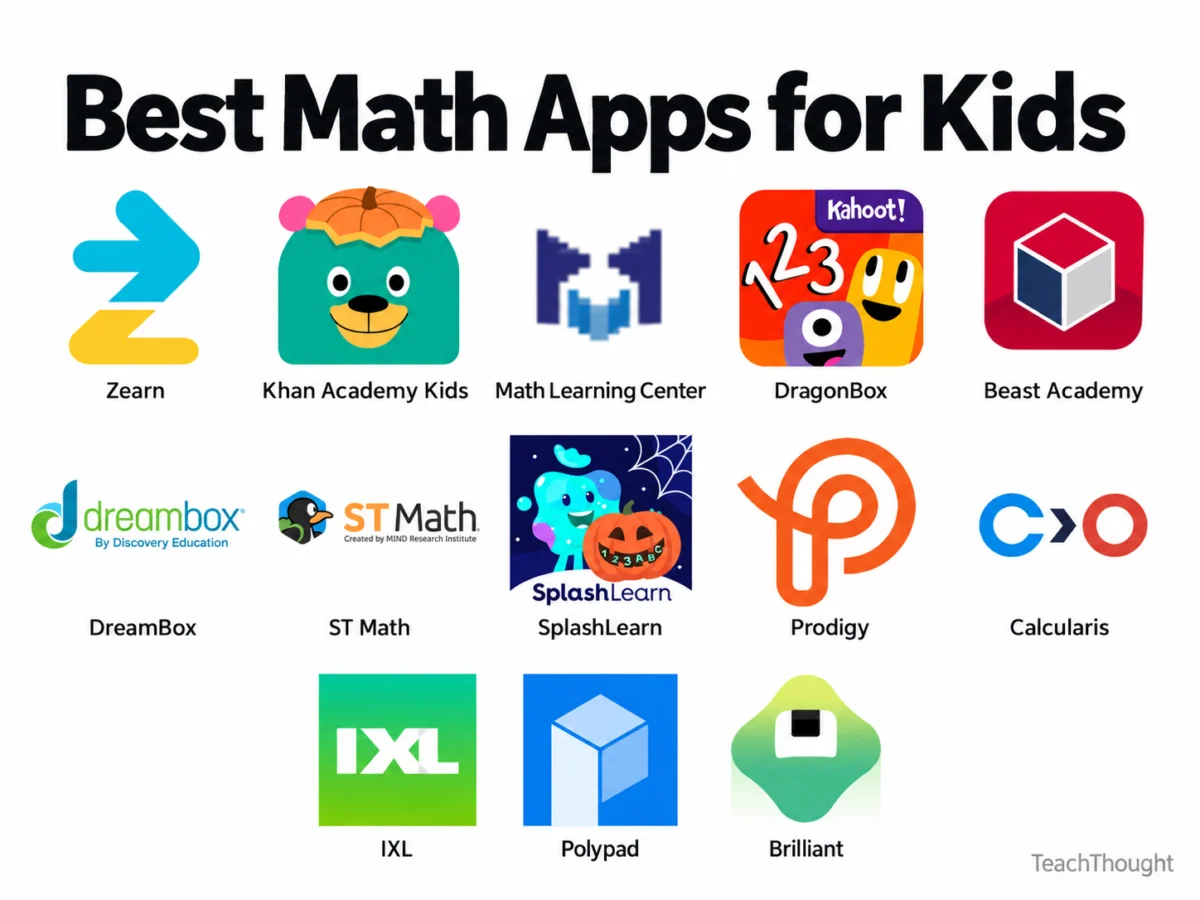
The integration of educational technology into elementary mathematics instruction represents a delicate balance between pedagogical strategy and digital interactivity. As educators and curriculum developers continuously seek methods to stimulate student curiosity and establish a functional need to know, the landscape of primary education has evolved to embrace digital platforms. Whether introducing abstract concepts like pi or foundational skills such as fraction division, contemporary educational philosophy increasingly favors experiential learning models. Proponents argue that allowing students to actively manipulate and play with mathematical concepts mirrors effective physical coaching—providing immediate, contextual feedback rather than passive observation.
Historical Evolution of EdTech and the Shift Toward Adaptive Learning
The trajectory of educational software has transformed dramatically over the past three decades. In the early days of personal computers in the 1990s, math software largely consisted of digital drill-and-practice flashcards, often referred to as "edutainment." These programs rewarded correct answers with simple animations but offered little insight into cognitive problem-solving processes.
By the late 2000s and early 2010s, the proliferation of tablets—specifically iPads, alongside Android and Windows devices—catalyzed a shift toward application-based ecosystems. This era introduced touch-driven virtual manipulatives and gamified learning platforms. Today, the industry has advanced into the era of adaptive learning algorithms. Modern platforms utilize artificial intelligence and complex decision trees to analyze error patterns in real time, shifting learning pathways dynamically to match an individual student’s developmental trajectory. This evolution has moved digital tools from peripheral novelties to central components of differentiated classroom instruction.
Current Landscape of Mathematics Proficiency and Academic Standards
This technological integration occurs against a backdrop of evolving national academic performance metrics. According to the 2024 National Assessment of Educational Progress (NAEP) results released by the U.S. Department of Education’s National Center for Education Statistics (NCES), exactly 40 percent of public-school fourth graders scored at or above the NAEP Proficient level in mathematics. Educational analysts emphasize that NAEP Proficient is a rigorous assessment standard denoting solid academic performance over challenging subject matter, rather than a mere synonym for baseline grade-level proficiency.
Against this data-driven reality, school districts face mounting pressure to bridge achievement gaps and support diverse learners, including multilingual students and those with specific learning differences such as dyscalculia. Consequently, educators are turning to evidence-based digital tools that offer diagnostic precision alongside engaging content.
Analytical Framework: Evaluating Instructional Value Over Popularity
When selecting digital math applications for elementary classrooms, educational researchers advise prioritizing instructional depth over sheer download popularity or superficial engagement metrics. A comprehensive evaluation framework typically examines five core pillars:
- Pedagogical Quality: Does the app foster conceptual understanding, or does it merely reward rote memorization?
- Empirical Evidence: Has the platform undergone independent, rigorous evaluation (such as Tier 1 ratings from Evidence for ESSA)?
- Accessibility and Inclusivity: Are the interfaces friendly to non-fluent readers, multilingual learners, and students with motor or visual challenges?
- Teacher Utility: Do dashboard analytics provide actionable formative assessment data to guide small-group instruction?
- Age Appropriateness: Is the game economy or visual design complementary to the mathematical objective rather than distracting from it?
Industry experts universally caution that no application should ever replace direct teacher-student dialogue, collaborative peer discussions, hands-on physical manipulatives, or structured opportunities for learners to explain their reasoning aloud.
Curated Profiles of Leading Elementary Mathematics Applications
To assist educators and families in navigating the crowded marketplace, instructional specialists have categorized the top mathematics platforms based on design philosophy, age range, accessibility, and optimal use cases.
1. Zearn Math
Zearn is a comprehensive nonprofit K–8 math program featuring over 1,000 adaptive digital lessons. Its architecture uniquely blends fluency practice, visual models, guided instruction, ongoing feedback, mastery checks, and explicit prompts for traditional paper-and-pencil problem solving.
- Ages/Grades: Kindergarten through grade 8
- Access Model: Free for individual teachers and classrooms; enterprise pricing applies for school and district-wide implementations.
- Optimal Use Case: Structured classroom instruction, targeted intervention, grade-level practice, and evidence-informed curriculum delivery. Zearn stands out for holding a robust research foundation, including a "Strong" Tier 1 rating from Evidence for ESSA based on an independent randomized control trial.
2. Khan Academy Kids
Designed for early childhood learners, this platform delivers playful math activities covering counting, number sense, basic geometry, arithmetic, and problem solving. Visual models, spoken audio directions, and immediate feedback remove reading barriers for pre-literate children.
- Ages/Grades: Ages 2–8 (primarily Pre-K through grade 2)
- Access Model: Genuinely free for families and individual educators, completely devoid of advertisements, subscriptions, or in-app purchasing prompts.
- Optimal Use Case: Foundational number sense, independent center rotations, and accessible early learning.
3. Math Learning Center Apps
Rather than presenting a linear game, this suite provides open-ended virtual manipulatives and mathematical workspaces—including Number Frames, Number Pieces, Number Racks, interactive fractions, geoboards, and digital pattern shapes.
- Ages/Grades: Elementary school focus with broad developmental applications.
- Access Model: Completely free web- and device-based applications.
- Optimal Use Case: Visual modeling, teacher-led demonstrations, small-group discourse, and open-ended student inquiry.
4. DragonBox
DragonBox utilizes game-based mechanics to teach number structures, operations, early algebra, and geometry. The platform is celebrated for allowing children to intuitively explore mathematical properties before encountering conventional formal notation.
- Ages/Grades: Approximately ages 4–14, varying by specific app title.
- Access Model: Individual paid applications or bundled access via applicable institutional plans.
- Optimal Use Case: Conceptual exploration, foundational algebra preparation, and high-engagement puzzle-solving.
5. Beast Academy
Developed by the Art of Problem Solving, Beast Academy targets mathematically ambitious students through illustrated comic-style guides, rigorous puzzles, and nonroutine challenges.
- Ages/Grades: Ages 6–13 (Curriculum levels 1 through 5)
- Access Model: Paid online subscription, print books, and optional live virtual classes.
- Optimal Use Case: Academic enrichment, advanced problem-solving, and intellectual stimulation for high-performing learners.
6. DreamBox Math
DreamBox is an adaptive K–8 environment that continuously adjusts its instructional pathway in response to student strategies and interaction patterns, providing continuous formative data to educators.
- Ages/Grades: Kindergarten through grade 8
- Access Model: Paid family subscriptions and school-level institutional licenses.
- Optimal Use Case: Differentiated practice, continuous remediation, and data-driven independent learning.
7. ST Math
Built around spatial-temporal puzzles, ST Math bypasses heavy textual instructions to teach mathematical concepts through direct visual manipulation, prediction, and immediate feedback loops.
- Ages/Grades: Pre-K through grade 8
- Access Model: Primarily distributed through school and district site licenses.
- Optimal Use Case: Spatial reasoning, support for English language learners, and school-wide intervention programs.
8. SplashLearn
SplashLearn combines curriculum-aligned mini-games, printable worksheets, and teacher reporting dashboards to support routine practice across early elementary grades.
- Ages/Grades: Preschool through grade 5
- Access Model: Free for classroom educators; subscription model for home use following a trial period.
- Optimal Use Case: Reinforcing basic computational fluency, homework assignments, and gamified review sessions.
9. Prodigy Math
Prodigy embeds standards-aligned math problem sets within a fantasy role-playing game environment, utilizing character progression mechanics to motivate reluctant learners.
- Ages/Grades: Grades 1 through 8
- Access Model: Core educational content and teacher assignment tools are free; optional aesthetic memberships are available for purchase.
- Optimal Use Case: Motivating disengaged students, supplementary practice, and targeted skill review.
10. Calcularis
Developed by Constructor Tech, Calcularis is designed specifically for early arithmetic development and includes specialized modules to support students with dyscalculia. Utilizing multi-sensory 3D environments, the software tracks individual error profiles to dynamically rewrite the learning path.
- Ages/Grades: Kindergarten through grade 4
- Access Model: Institutional and school-based licensing.
- Optimal Use Case: Early intervention, mixed-ability classrooms, and remediation for arithmetic learning difficulties.
11. IXL Math
IXL offers an expansive, highly structured repository of diagnostic assessments and skill-practice modules spanning the entire K–12 mathematics curriculum.
- Ages/Grades: Pre-K through grade 12
- Access Model: Limited free previews with full functionality locked behind paid family or institutional subscriptions.
- Optimal Use Case: Diagnostic testing, pinpointing individual learning gaps, and targeted drill practice.
12. Mathigon Polypad
Polypad serves as an advanced digital whiteboard featuring dynamic mathematical objects, algebra tiles, probability simulators, and geometric constructions.
- Ages/Grades: Elementary through secondary education
- Access Model: Free web-based access.
- Optimal Use Case: Mathematical modeling, interactive student presentations, and open mathematical investigations.
13. Brilliant
Bridging upper elementary education and advanced mathematics, Brilliant utilizes interactive visual lessons and an AI-powered tutor named Koji to guide students through complex problem-solving.
- Ages/Grades: Grade 5 through adult learning
- Access Model: Limited free tier with paid premium options; eligible K–12 educators and students may qualify for sponsored classroom access.
- Optimal Use Case: Enrichment, higher-level conceptual reasoning, and independent study for advanced upper-elementary students.
Strategic Implications and Classroom Implementation
The overarching objective of incorporating technology into mathematics instruction is not to maximize screen time, but rather to deepen cognitive comprehension. Educational researchers emphasize that the efficacy of any digital tool relies heavily on the quality of the pedagogical wrap-around activities designed by the teacher.
When evaluating student interactions with software, educators are encouraged to look beyond correct-or-incorrect binary metrics. Prompts such as asking a student to explain what a visual model helped them notice, compare an app’s algorithmic approach with a classroom strategy, or articulate where they encountered confusion transform passive digital consumption into active mathematical communication. Ultimately, the most valuable application is one that empowers a student to approach unfamiliar challenges with analytical confidence, conceptual clarity, and independent problem-solving capability.

