
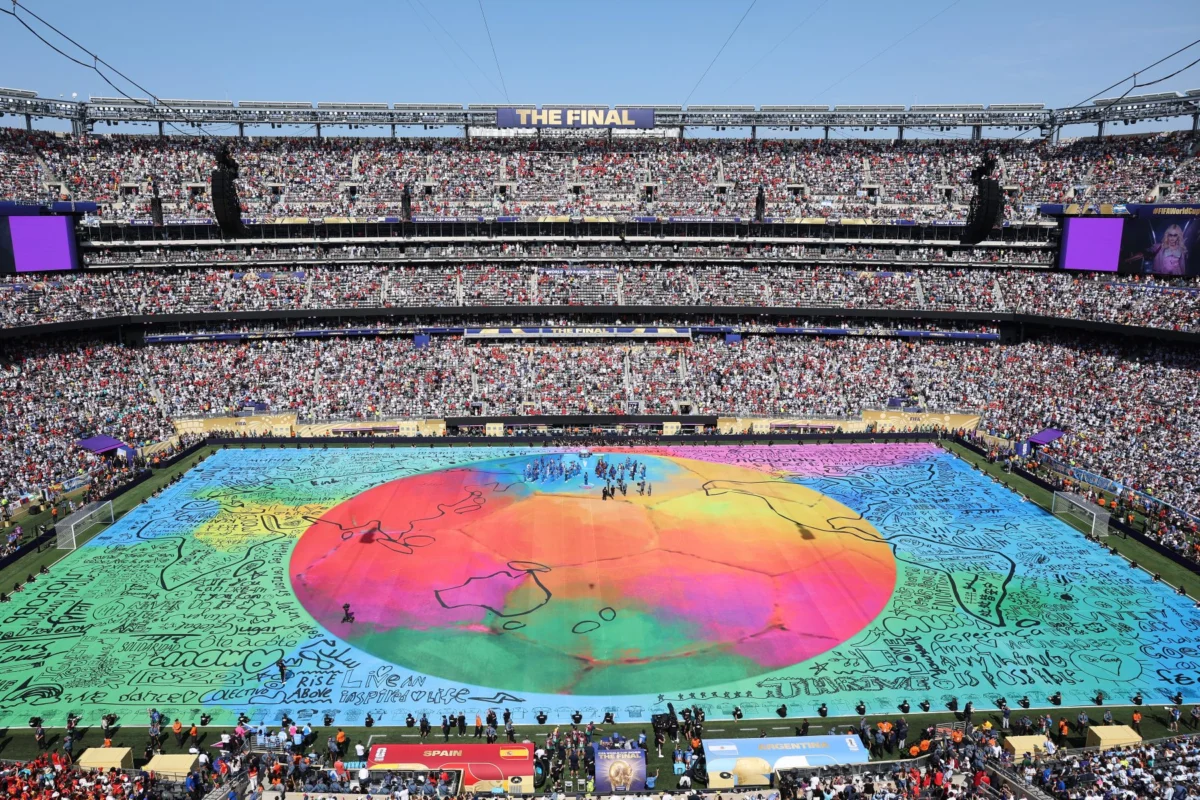
The landscape of major sporting event entertainment has witnessed a significant evolution with the introduction of a star-studded halftime show at the 2026 FIFA World Cup. For decades, the Super Bowl has set the benchmark for high-octane, celebrity-laden performances during its halftime interval. Now, the quadrennial global football spectacle, a tournament with a history stretching back to 1930, has embraced a similar tradition, marking a pivotal moment in its entertainment strategy. This shift, particularly as the 2026 tournament unfolds on American soil, with its culminating match slated for New Jersey’s MetLife Stadium, underscores a growing recognition of the immense viewership and cultural impact these musical interludes command. The Super Bowl Halftime Show has consistently been the most-watched single broadcast in the United States, often eclipsing other major broadcasts by millions, a testament to its power to draw and captivate audiences beyond the sport itself. The question now is whether the FIFA World Cup Halftime Show, particularly its recent iteration, managed to mirror the Super Bowl’s established formula or carve out its own distinct identity.
A Tale of Two Openings: National Reverence vs. Global Spectacle
The preamble to sporting events often sets a distinct tone, and the contrast between the Super Bowl and the World Cup is particularly striking. The Super Bowl, a deeply ingrained American institution, traditionally commences with a series of emotionally resonant and vocally demanding ballads. These include "The Star-Spangled Banner," a fixture since the Super Bowl’s inception, "America the Beautiful," a staple since 2009 (with a notable exception in 1977), and "Lift Every Voice and Sing," the Black National Anthem, which has been performed since 2021. These performances are characterized by solemnity and patriotic reverence, eliciting a profound sense of national pride, often marked by audiences placing hands over hearts rather than engaging in elaborate choreography.
In stark contrast, the 2026 FIFA World Cup’s opening ceremonies presented a spectacle of a different caliber. A vibrant, Busby Berkeley-inspired musical number titled "Champions," performed by streamer IShowSpeed, unfolded with dancers and musicians moving across an on-field depiction of the Empire State Building. Bird’s-eye views captured a soccer ball-shaped stage, creating a visually dynamic and energetic opening. The song itself, in a rather overt manner, repeatedly emphasized "this is the World Cup," ensuring no viewer could be left in doubt about the event’s identity. This approach immediately signaled a departure from the more reserved, nationalistic tone of the Super Bowl’s opening, leaning instead into global celebration and vibrant entertainment.
Post Malone and the International Vibe: Bridging Worlds
Following the initial spectacle, American artist Post Malone took to the stage, appearing in country-inspired attire but returning to his rap roots. He debuted a new track, "Chrome Heartbreaker," and was joined by Swae Lee for their Billboard Hot 100 chart-topping hit "Sunflower." This performance, described as a "closing ceremony" moment, occupied a unique space. It was less about the overt spectacle of a Super Bowl Halftime Show but offered more entertainment value than a typical pre-game Super Bowl performance. For American viewers potentially tuning into the World Cup for the first time, this performance served as an effective introduction to the event’s distinct global atmosphere and the diverse range of musical talent it would feature.
Further into the pre-match festivities, a powerful collaboration emerged as Robbie Williams, Nicole Scherzinger, and Laura Pausini united their voices for "Desire (Official FIFA Anthem)." The performance was enhanced by a sea of national flags waving around the artists, creating an emotionally charged atmosphere. While reminiscent of the fervor preceding an NFL kickoff, the overall feel was undeniably international, akin to the grand spectacles often witnessed during the Olympic Games. This international resonance was fitting, given the explicit and repeated reminders of the World Cup’s global nature, reinforcing the event’s identity beyond any single nation.
A Nod to Tradition and a Multilingual Welcome
The inclusion of Jennifer Hudson’s rendition of "The Star-Spangled Banner" served as a clear acknowledgment of American audiences and their familiarity with the anthem preceding major sporting events. This performance acted as an "olive branch," a gesture to bridge the gap for viewers accustomed to the Super Bowl’s patriotic rituals. However, the World Cup’s pre-match ceremonies didn’t stop at one national anthem. The performance of Spain’s "Marcha Real" by a brass band (notable for its lack of lyrics) and the singing of Argentina’s national anthem by Maria Becerra served as potent reminders that, despite being hosted in the United States, the tournament’s focus was firmly on the competing nations, Spain and Argentina, in this particular match. This multilingual and multinational approach further cemented the World Cup’s global character.
The Main Event: Madonna, BTS, Bieber, Shakira, and Burna Boy Under the World Cup Spotlight
The highly anticipated FIFA World Cup Halftime Show itself featured an extraordinary lineup: Madonna, BTS, Justin Bieber, Shakira, and Burna Boy, alongside the New York Philharmonic and the Simón Bolívar Symphony Orchestra, and even The Muppets’ Electric Mayhem. This assembly of global superstars and acclaimed ensembles presented a complex tapestry of musical influences. Notably, Madonna and Shakira had previously headlined the Super Bowl Halftime Show (Madonna in 2012, Shakira in 2020 with Jennifer Lopez), while Chris Martin, the curator of this World Cup halftime event, had led Coldplay in the 2016 Super Bowl halftime performance. After an hour of intense soccer action, the question arose: did this 11-minute performance offer a familiar taste of Super Bowl entertainment within a new context?
Analyzing the individual performances reveals moments that could have easily graced a Super Bowl stage. Madonna’s electrifying medley of "Music," "Disco Inferno," and "Danceteria," performed from a dune buggy, was pure spectacle. Shakira’s signature hip-swaying performance of "Dai Dai" with Burna Boy on the field, and BTS’s pyrotechnic-laden rendition of "Dynamite," all exuded the kind of high-energy entertainment that has become synonymous with Super Bowl halftime shows. These artists undeniably understood the assignment of delivering captivating performances, a key reason for the Super Bowl Halftime Show’s enduring popularity.
Unexpected Delights: Blending the Absurd and the Familiar
However, for every moment that echoed the Super Bowl’s established formula, there were instances that ventured into entirely new territory, distinguishing the World Cup halftime show from its NFL counterpart. The juxtaposition of classical music maestro Gustavo Dudamel, clad in a pinstriped suit emblazoned with his name and number, with the chaotic energy of The Muppets’ Electric Mayhem and the precision of the New York Philharmonic, was a masterstroke. Their rendition of The White Stripes’ "Seven Nation Army" was a standout. Witnessing Animal’s primal drumming prowess alongside professional violinists creating a powerful, unified sound was an unexpected delight, existing in that unique space between the brilliant and the hilariously absurd. This kind of audacious cross-pollination of genres and characters harked back to earlier eras of Super Bowl halftime shows, such as the 1972 pairing of Ella Fitzgerald and Carol Channing, or James Brown’s 1997 performance with The Blues Brothers, periods where experimentation and a touch of silliness were more readily embraced.
Similarly, the appearance of Jason Sudeikis and Brendan Hunt, reprising their roles as Ted Lasso and Coach Beard, to introduce Justin Bieber was a moment of genuine comedic relief. It’s difficult to envision a contemporary Super Bowl halftime show pausing for such a low-key, character-driven comedic interlude, especially one that succeeded precisely because it didn’t overreach. While Kendrick Lamar’s 2025 Super Bowl performance featured Samuel L. Jackson as Uncle Sam, the energy and intent of Sudeikis and Hunt’s appearance offered a distinct brand of gentle humor that felt unique to the World Cup’s programming.
Furthermore, Justin Bieber’s performance offered another distinctive element. For an artist of his global stature, a performance that included a somber acoustic rendition of "Everything Hallelujah" followed by a casual stroll around the field without delivering any of his chart-topping hits was a bold artistic choice. This quiet, introspective moment allowed the World Cup halftime show to cultivate its own unique flavor, diverging from the expected high-energy medley of hits that might characterize an NFL performance.
A Nostalgic Finale and a Refreshing Approach
The grand finale of the World Cup halftime show also evoked a sense of nostalgia, reminiscent of 20th-century Super Bowl productions rather than their 21st-century counterparts. The debut of a brand-new Coldplay song, "We Dance," co-written for the occasion and performed by Staten Island’s PS22 Chorus, Emmanuel Kelly, Coldplay, and The Muppets, celebrated themes of love, peace, and global unity. This heartwarming conclusion, featuring puppets and children delivering a message of togetherness, felt more aligned with the spirit of 1980s halftime shows than the slick, polished productions of today. This embrace of a more earnest and less overtly commercial finale was, in many ways, refreshing.
While the article acknowledges that a return to the "low-stakes, schlocky halftime shows of 50 years ago" might not be universally desired – with a nod to the fact that most viewers would prefer Bad Bunny over a magic-show Elvis impersonator from the 1989 Super Bowl – it highlights the appeal of unpredictability. The idea of a halftime show where the unexpected can truly happen, where Muppets and the New York Philharmonic can collaborate, offers an inviting spectacle that isn’t afraid to embrace a degree of silliness. This willingness to experiment and blend diverse elements is a departure from the increasingly standardized Super Bowl halftime formula.
The Verdict: A Hybrid Success
In conclusion, the 2026 FIFA World Cup Halftime Show presented a performance that felt markedly different from the modern Super Bowl Halftime Show, yet it also bore a strong resemblance to an amalgamation of Super Bowl performances across different decades. It successfully blended the high-impact entertainment expected from global superstars with unexpected artistic choices and nostalgic elements. The key takeaway for the NFL, and indeed for future major sporting events aiming to innovate their halftime entertainment, is the power of embracing a wider spectrum of creativity. If there’s one lesson to be learned from this World Cup spectacle, it’s the enduring appeal of surprise, diversity, and, perhaps, a touch more of the whimsical. The inclusion of beloved characters like The Muppets, combined with world-class musical talent and unexpected artistic juxtapositions, proved to be a winning formula, suggesting that the future of halftime entertainment lies not just in star power, but in inventive storytelling and a willingness to push creative boundaries.

