
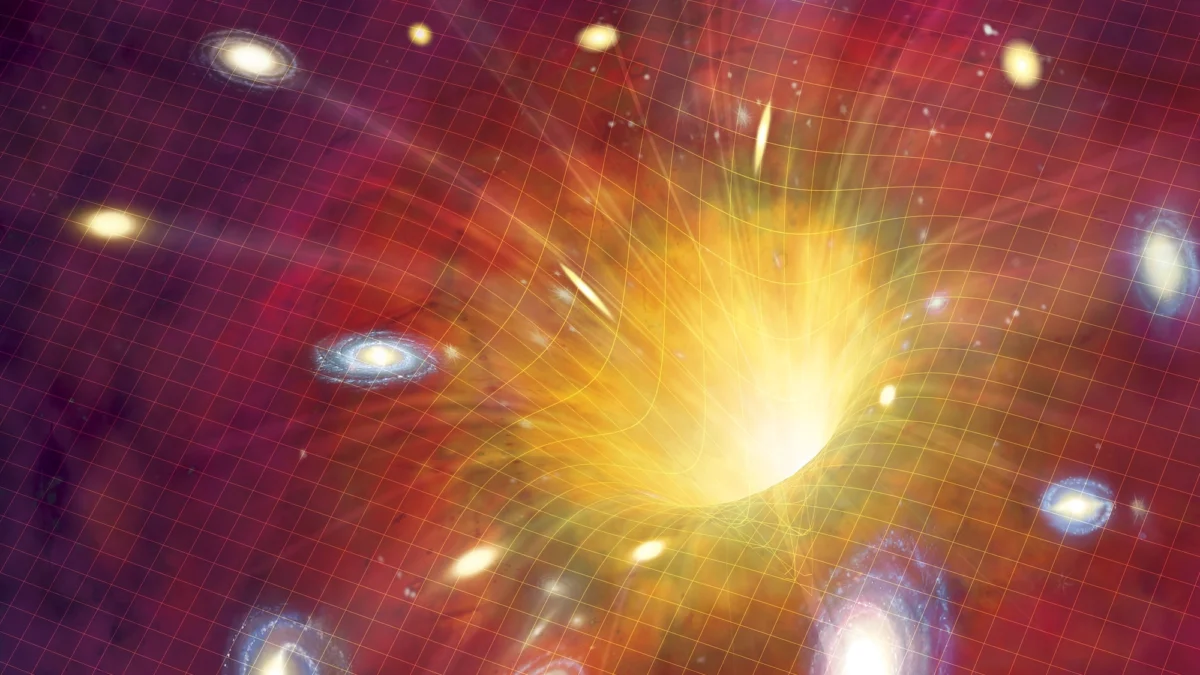
The scientific community, often perceived by the public as a monolithic body of consensus, is currently grappling with deep-seated disagreements regarding the fundamental architecture of reality. A comprehensive study involving over 1,600 physicists, conducted throughout 2025 and analyzed in 2026, has revealed that there is little agreement among experts on the most critical questions in cosmology. Published in Physics Magazine, these findings serve as a stark reminder that the frontier of modern physics remains a volatile, evolving landscape where established theories—including the standard model of the Big Bang—are subject to rigorous and ongoing scrutiny.
A Chronology of the Big Mysteries in Physics Survey
The impetus for this massive investigative undertaking began in early 2025, when a coalition of international researchers sought to quantify the state of modern scientific thought. The "Big Mysteries in Physics" project was designed as an open call for participants, targeting both professional physicists and those within the academic sphere to identify where the "known" ends and the "unknown" begins.
By the summer of 2025, the data collection phase had concluded, having gathered responses from 1,600 researchers. The subsequent year was dedicated to filtering these results to ensure that the analysis focused specifically on the perspectives of self-identifying physicists, rather than the broader public. In May 2026, the researchers officially released their findings via the arXiv preprint server, subsequently highlighting the core takeaways in Physics Magazine. This survey stands as the largest of its kind, offering an unprecedented snapshot of the intellectual diversity—and tension—currently defining the physics community.
Challenging the Popular Narrative of the Big Bang
Perhaps the most significant finding from the survey concerns the Big Bang, the cornerstone of modern cosmology. In popular culture, the Big Bang is frequently visualized as the "moment of creation"—a singular point in time when everything emerged from nothing. However, the survey reveals that 68 percent of physicists reject this simplistic interpretation.
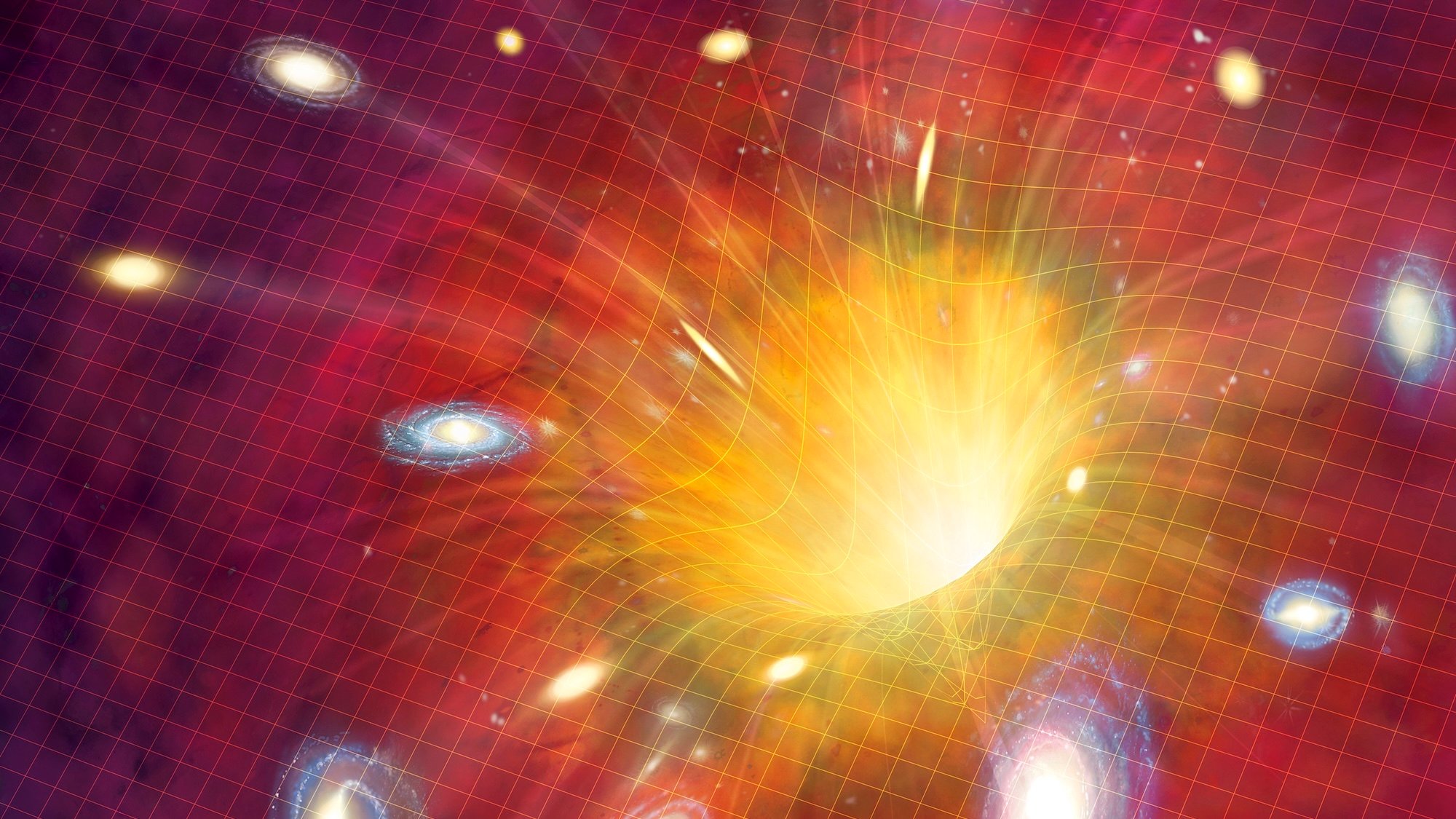
Technically known as the Lambda Cold Dark Matter (ΛCDM) theory, the scientific definition of the Big Bang describes the rapid expansion of the universe from a hot, dense, prior state of existence. It does not necessarily address what came "before" that state or if time existed in a different form. The survey results underscore a growing disconnect between public perception and professional scientific understanding. For many experts, the Big Bang is not an origin point for time itself, but rather a phase transition or a specific expansion event in an infinitely more complex, perhaps eternal, cycle of existence.
The Inflationary Debate and Early Universe Dynamics
The complexity of the early universe remains one of the most contentious topics in modern physics. Only 51 percent of survey respondents agreed with the theory of "inflation"—the hypothesis that the universe underwent an exponential, faster-than-light expansion in the fraction of a second immediately following the Big Bang.
The lack of a clear majority on this issue is particularly notable because inflation is widely used to solve several paradoxes in cosmology, such as the horizon problem and the flatness of the universe. The division suggests that while inflation provides a useful mathematical framework, many physicists are not yet convinced that it is the definitive physical reality. Alternative models, such as bouncing cosmologies or cyclic universes, continue to hold significant traction within the community, further illustrating that the first nanoseconds of our universe remain a profound mystery.
The Dark Matter and Quantum Gravity Conundrum
The study also shed light on the fragmentation of opinion regarding the "dark" components of our universe. With dark matter remaining one of the most elusive subjects in physics, the survey found that only 17 percent of respondents believe it is composed of a specific, undiscovered particle. Approximately 12 percent favor Modified Newtonian Dynamics (MOND) or other theories that suggest our understanding of gravity is fundamentally incomplete. A small cohort—roughly 21 percent—suggests that dark matter could be a combination of these theories or something entirely outside our current conceptual framework.
Quantum mechanics, the study of the very small, presents an even more fractured landscape. The search for a "Theory of Everything" that can unify gravity with quantum mechanics has led to a three-way split in professional opinion:

- String Theory: 19 percent of participants identify this as the most promising path toward quantum gravity.
- Loop Quantum Gravity: 12 percent believe that space-time is quantized and that this approach is the correct way to reconcile gravity with quantum principles.
- The "No-Go" Contingent: 18 percent lean toward the conclusion that gravity cannot be integrated with quantum mechanics at all, suggesting that these two pillars of physics may describe mutually exclusive domains of reality.
Expert Perspectives on Scientific Consensus
Dr. Niayesh Afshordi, a physicist at the University of Waterloo and a co-author of the survey, provided critical context regarding the interpretation of these results. "Consensus, or its absence, tells us where the evidence feels settled and where researchers still see room for radically different ideas," Afshordi noted. He emphasized that the objective of the study was not to declare a "winner" among competing theories, but to map the landscape of scientific thought.
Afshordi was quick to clarify that scientific progress is not a democracy. "The interesting point is not that physicists are confused. It is that the frontier is genuinely alive," he said. Unlike political polling, where a majority vote dictates policy, scientific reality is dictated by empirical evidence and reproducibility. The lack of consensus among 1,600 experts is not a sign of failure; rather, it is a marker of an active, healthy scientific field that has reached the limits of its current data and is hungry for new insights.
Broader Implications and Future Research
The implications of these findings are far-reaching. They suggest that the next major breakthrough in physics will not come from refining existing models, but from a radical shift in how we approach the most fundamental questions of nature. As data from next-generation observatories—such as the Vera C. Rubin Observatory and advanced space-based gravitational wave detectors—begins to flow in, the pressure to resolve these disagreements will only mount.
The "Big Mysteries in Physics" survey highlights that the current state of cosmology is characterized by "theory fatigue" in some areas and "theory proliferation" in others. When nearly 20 percent of physicists believe a foundational theory like string theory is the path forward, while an equal number believe it is impossible to unify the field, it indicates that we are approaching a "Kuhnian" paradigm shift. In his seminal work, The Structure of Scientific Revolutions, Thomas Kuhn argued that such periods of intense debate and fragmentation are the precursors to significant scientific revolutions.
Ultimately, the disagreement among the world’s leading minds provides a roadmap for future investment in science. It identifies where funding, technology, and intellectual effort must be directed to break the current deadlock. Whether the answer lies in a new particle, a modified theory of gravity, or a fundamental revision of how we perceive time and space, the survey confirms that the mystery of our universe is not only deep but also remarkably fertile for the next generation of discovery. As the community continues to analyze the data, the focus will likely shift from defending existing models to the development of the "sharper theory" that Afshordi and his colleagues advocate for—a framework that can finally bridge the chasm between the Big Bang and the quantum realm.

