
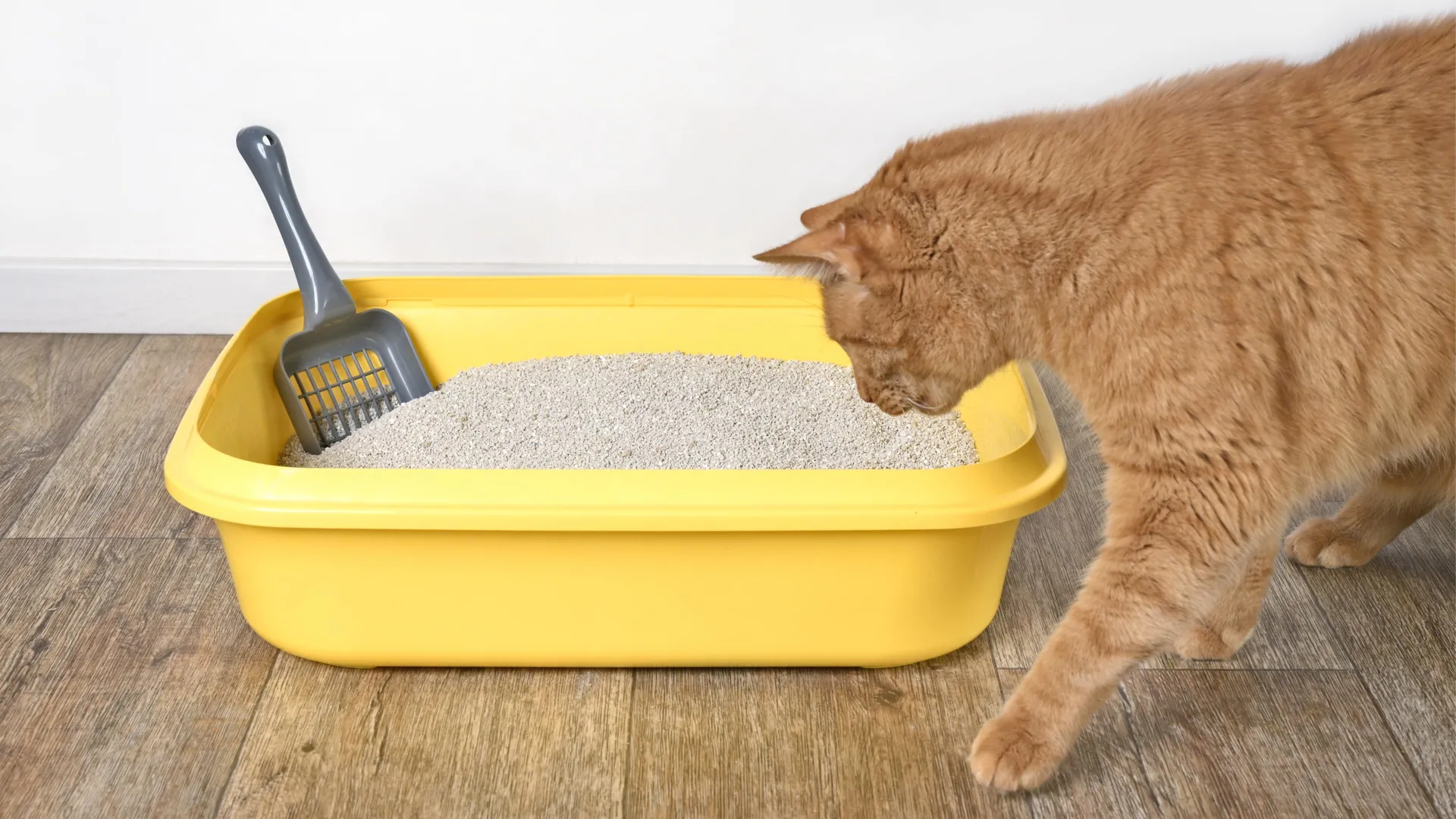
The domestic cat, a creature of mystery and subtle communication, relies heavily on the olfactory landscape to navigate its world. For decades, ethologists and biologists have observed cats gathering critical social intelligence from urine and other scent marks deposited throughout their territories. These chemical traces function as an asynchronous messaging system, allowing an animal to leave behind a data-rich signature that persists long after the original messenger has moved on. However, this phenomenon has long presented a profound scientific puzzle: if odor molecules are inherently volatile, prone to rapid evaporation, and susceptible to chemical degradation, how can a scent mark remain a reliable, durable indicator of individual identity?
New research led by Professor Masao Miyazaki at Iwate University, in collaboration with scientists from Germany and Spain, provides a compelling answer to this question. Their findings, published in the journal Current Biology, reveal that domestic cats possess a unique chemical mechanism involving a specific group of branched-chain fatty acids (BFAs). These compounds serve as a stable, persistent "calling card," offering a biological solution to the problem of decaying scent markers.
The Behavioral Foundation of the Study
The investigation began by establishing a behavioral baseline. Before identifying the specific molecules responsible for individual recognition, the researchers needed to confirm that cats could indeed distinguish between the urine of different individuals. In a controlled study, feline subjects were exposed to urine samples from other cats. Initially, the animals exhibited high levels of interest, characterized by prolonged sniffing. Over time, as the cats became accustomed to a specific sample, their interest waned—a phenomenon known as habituation.
Crucially, when the researchers introduced urine from a different donor, the cats’ interest surged immediately. This reaction was not merely a short-term response. The researchers observed that cats could retain these olfactory memories for months, suggesting that the feline brain is hardwired to categorize and remember individual scent profiles.
During these interactions, the scientists paid close attention to the "flehmen response"—the characteristic behavior where a cat curls its upper lip and keeps its mouth slightly open. This gesture facilitates the transfer of pheromones to the vomeronasal organ, a specialized sensory structure located in the roof of the mouth. The data showed that the frequency of the flehmen response decreased as a cat grew familiar with a scent but spiked significantly when presented with an unfamiliar individual’s urine. This provided the researchers with a reliable, quantitative metric to track how cats perceive and differentiate chemical signals.
The Discovery of the 13 Branched-Chain Fatty Acids
With behavioral evidence firmly established, the research team turned to the chemical composition of the urine. By analyzing the lipid fractions, they identified 13 previously unreported branched-chain fatty acids (BFAs). A thorough review of existing literature confirmed that these specific compounds had not been documented in the excretions or secretions of any other mammal, marking a significant discovery in comparative biochemistry.
The "signature" of each cat was not defined by a single molecule, but rather by the unique combination and relative abundance of these 13 BFAs. This profile remained remarkably consistent within an individual over time, even while displaying significant variation between different cats. Genetic testing suggested that while familial ties influence these patterns—with related cats showing greater similarity—each animal maintains a distinct, individual chemical profile.
The durability of these compounds is perhaps their most striking feature. Unlike the highly volatile molecules that typically signal a fresh scent, BFAs are semi-volatile. They evaporate at a significantly slower rate, allowing the signature to remain stable for at least 24 hours at room temperature. When the researchers isolated these BFAs and introduced them into urine samples, they observed that cats immediately reacted to the change, confirming that these specific molecules are the primary drivers of individual recognition.
Solving a Century-Old Kidney Mystery
One of the most unexpected outcomes of the study concerns the feline kidney. For over a century, biologists have been aware of the presence of abundant lipid droplets within the renal cortex of cats. Despite their prevalence, the biological function of these droplets had remained a complete mystery to the scientific community.
The team’s investigation revealed that these droplets contain the same BFAs identified in the urine. This discovery suggests that the renal cortex acts as a physiological storage reservoir. By sequestering these lipids, the cat’s body may be able to "buffer" its chemical output. This ensures that the individual’s scent profile remains stable, even if the animal’s diet, hydration, or general physiological state fluctuates. The kidney, therefore, does not just process waste; it acts as a regulatory organ for feline identity, ensuring that the chemical signals left in the environment are consistent and recognizable to peers.
Comparative Biology Across the Felidae Family
The researchers extended their inquiry to other members of the Felidae family to determine if this mechanism was unique to the domestic house cat. Their analysis confirmed the presence of BFA-related compounds in the urine and kidney tissue of lions, tigers, leopards, jaguars, lynxes, and the Iriomote cat.
However, this evolutionary conservation does not mean the system is identical across all species. The specific BFA profiles, as well as the distribution of lipid droplets in the kidneys, varied significantly between species. Even geographically isolated populations of the same species—such as the Iriomote cat and the Tsushima leopard cat—showed distinct variations. These findings suggest that while the "BFA-based communication system" is a widespread evolutionary trait in felids, it has diversified alongside the physical evolution of these species, likely adapting to the specific ecological and social needs of each cat’s environment.
Broader Implications and Future Research
The implications of this discovery reach far beyond the domestic living room. In the realm of wildlife conservation, this research provides a promising, non-invasive tool. If BFA profiles are as unique and stable as the study suggests, scientists may eventually be able to use environmental urine samples to monitor the populations of elusive, rare, or endangered wild felids. This could eliminate the need for stressful trapping or direct observation, providing a more ethical and efficient method for tracking individuals in the wild.
Furthermore, the discovery opens new avenues for medical research. Understanding why and how cats accumulate these specific lipids in their kidneys could provide insights into metabolic processes that, in other contexts, might be linked to disease. By framing the kidney’s lipid accumulation as a normal, functional process rather than a pathology, researchers may find new ways to approach renal health in both domestic and exotic species.
Finally, this study resolves a fundamental question in animal behavior: how can a species rely on scent to manage complex social hierarchies if that scent is constantly degrading? The feline model suggests a sophisticated, two-tiered system. While volatile, short-lived chemicals provide immediate information about a recent presence, the stable, semi-volatile BFA profiles provide a persistent identity that allows for long-term territorial management and social recognition.
As the scientific community continues to digest these findings, the work of Professor Miyazaki and his team highlights the intricate, often invisible, chemical networks that govern the lives of animals. What began as a question about why a cat sniffs a patch of grass has evolved into a comprehensive understanding of feline physiology, evolution, and social structure. Future studies will likely focus on the mechanisms of how these BFAs are released from the kidney and how the feline olfactory system translates these specific fatty acid ratios into a recognizable "name" for another individual. For now, the mystery of the cat’s chemical calling card has finally been decoded, revealing a level of biological precision that underscores the complexity of the animal kingdom.

