
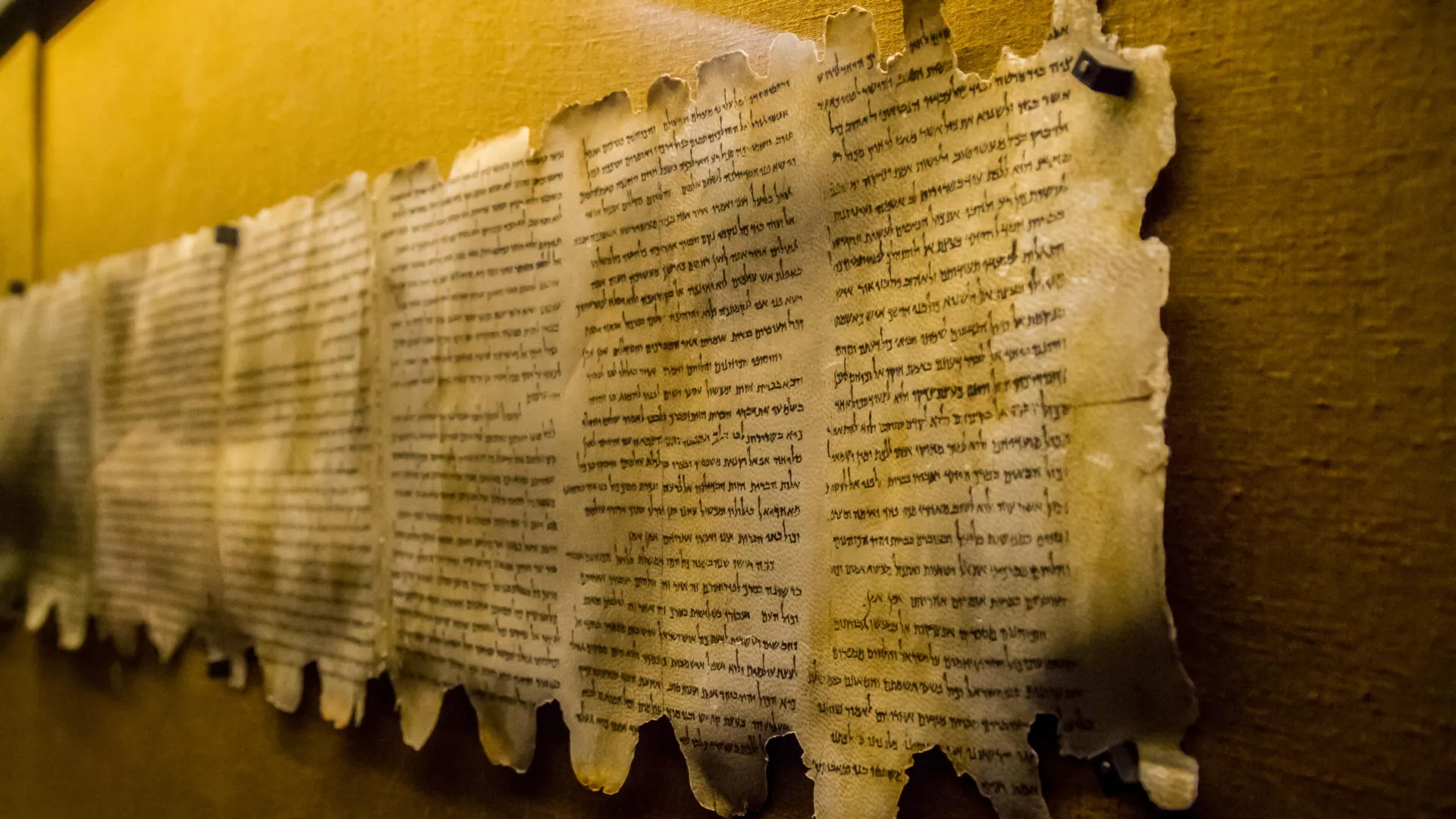
For decades, the Dead Sea Scrolls have served as the cornerstone of our understanding of Second Temple Judaism, yet one of their most persistent enigmas has been the sect’s rigid adherence to a 364-day calendar. While scholars have long debated whether this system was a functional mechanism for daily life or merely a theological abstraction, a new study from Tel Aviv University offers a compelling, nuanced reconciliation of these conflicting theories. By integrating astronomical, political, and historical analysis, researchers suggest that the Qumran community’s calendar was a dynamic instrument that evolved from a practical necessity into a powerful symbol of religious identity.
The research, conducted by Professor Eshbal Ratzon of the Department of Jewish Philosophy and the Cohn Institute for the History and Philosophy of Science and Ideas, was recently published in the Tarbiz Quarterly for Jewish Studies. It posits that the Qumran sect—a group widely believed to be the Essenes—employed this calendar during their formative years, only to abandon it as a functional tool when faced with the dual pressures of astronomical drift and shifting political alliances.
The Anatomy of a Perfect Year
To understand the friction caused by the Qumran calendar, one must first contrast it with the lunisolar system utilized by the Jerusalem Temple establishment during the Second Temple period. The standard Jewish calendar relied on the lunar cycle, requiring the occasional insertion of an extra month to synchronize with the solar year and the agricultural seasons.
In contrast, the Qumran calendar was a model of mathematical precision. It consisted of exactly 364 days, which is divisible by seven, resulting in precisely 52 weeks per year. Because of this structural elegance, any given festival would always fall on the same day of the week, year after year. For a community that viewed the universe as a manifestation of divine order, this calendar was more than a mere tool for timekeeping; it was a physical reflection of the perfection of Creation.
Members of the sect believed that this calendar had been revealed by God to Enoch and Noah and was later delivered to Moses on Mount Sinai. By rejecting the lunar-based system of the Jerusalem Temple, the Qumran community was making a bold theological statement: they refused to allow human authorities to dictate the timing of sacred festivals, arguing instead that these dates were immutable and divine.
The Mechanics of Astronomical Drift
While the 364-day calendar was mathematically beautiful, it suffered from a fundamental flaw: the astronomical solar year is approximately 365.24 days long. By utilizing a 364-day year, the Qumran calendar lost roughly 1.24 days annually. This discrepancy, while negligible over a single year, becomes catastrophic over decades.
After twenty years, the calendar would have drifted by nearly 25 days—roughly a full month. After four decades, the drift would exceed seven weeks. This meant that religious observances tied to the agricultural cycle, such as the festival of First Fruits (Shavuot), would eventually drift away from the harvest season entirely.
For an agrarian society, this was a functional impossibility. A clock that loses time eventually ceases to track reality. Professor Ratzon’s study suggests that the Qumran sect likely realized this drift. Unlike the Jerusalem authorities, who reconciled their calendar with the seasons through intercalation (the addition of extra days or months), the Qumran sect remained wedded to the rigid 364-day structure. This suggests that the calendar, while initially intended for practical use, eventually became a rigid religious ideal that ignored the physical reality of the solar cycle.
A Chronology of Conflict and Consolidation
The historical context of the Qumran community provides further insight into why this calendar was so central to their identity. The sect emerged in the second century BCE, a period of profound turbulence in Judea. The Maccabean revolt and the subsequent rise of the Hasmonean dynasty created deep fractures within Jewish society.
The Qumran community viewed the Jerusalem Temple as corrupted by Hasmonean political interference. By insisting on their own calendar, they were essentially declaring an alternative religious reality. Nearly twenty of the Dead Sea Scrolls are dedicated to calendars and astronomical observations, an extraordinary density of literature that underscores the topic’s centrality to their worldview. Works such as the Book of Jubilees serve as polemical documents, explicitly attacking the lunisolar calendar as a departure from the divine path.
The timeline of this conflict suggests that the calendar served as an "identity marker" during the sect’s early years of isolation. However, during the reign of Alexander Jannaeus (103–76 BCE), political dynamics shifted. Historical records indicate that Jannaeus, despite his complex relationship with various Jewish factions, shared some religious affinities with the Qumran sect’s approach to certain laws. It is during this period that the practical application of the 364-day calendar may have begun to wane, as the sect found it increasingly difficult to maintain a separate temporal existence while the seasons drifted further out of alignment with their festivals.
Implications of the Tel Aviv University Study
The findings presented by Professor Ratzon bridge a long-standing gap in scholarly literature. Previously, academics were divided into two camps: those who argued that the calendar was a functional, albeit failed, system, and those who maintained that it was purely a theoretical or "utopian" framework.
The new research suggests that both sides are partially correct. The calendar was a functional tool that served as a catalyst for the sect’s initial separation from the Temple establishment. As the astronomical error compounded, the system evolved into an idealized religious construct. It became a symbol of the "true" order of the world—a system that may have been believed to have existed at the time of Creation and one that was expected to be restored during the "End of Days."
This dual nature explains why the scrolls place such intense emphasis on the 364-day year. The documents were not merely technical manuals; they were manifestos of a community that felt they were living in a state of suspended harmony, waiting for a divine intervention that would realign their perfect calendar with the physical world.
Broader Historical Context
The implications of this study extend beyond the Qumran community itself. It highlights the role of timekeeping as a form of political and religious power. In the ancient world, control over the calendar was control over the rhythm of life—when to work, when to feast, and when to commemorate the sacred.
By rejecting the Jerusalem calendar, the Qumran sect was not merely arguing about dates; they were asserting the authority of their own community to interpret divine revelation. The transition of the 364-day calendar from a daily practice to an ideological symbol reflects the broader trajectory of the sect, which moved from active engagement with the religious politics of the Hasmonean era to a more secluded, eschatological focus as their political hopes dwindled.
Final Scholarly Assessment
Professor Ratzon’s analysis provides a robust framework for understanding the internal logic of the Dead Sea Scrolls. By acknowledging the practical limitations of the 364-day year while simultaneously honoring its deep theological significance, the study offers a more holistic view of the Qumran sect’s intellectual history.
The mystery of the "missing" calendar is likely not a mystery of scientific incompetence, but rather one of ideological persistence. The Qumran community did not abandon their calendar because they failed to notice the seasons were changing; they maintained the calendar because the perfection of the 364-day system was more important to them than the pragmatic need to track the agricultural year. It was a choice between temporal accuracy and theological purity, and for the residents of Qumran, the latter was a price they were willing to pay.
As further scrolls are analyzed and digital technologies allow for better reconstruction of fragmentary texts, this study will likely serve as a foundational piece of evidence for how sectarian groups navigate the tension between their idealized beliefs and the practical realities of a changing world. The 364-day calendar remains one of the most intriguing legacies of the Dead Sea Scrolls, representing a profound human attempt to impose order on the cosmos through the power of faith and mathematics.

