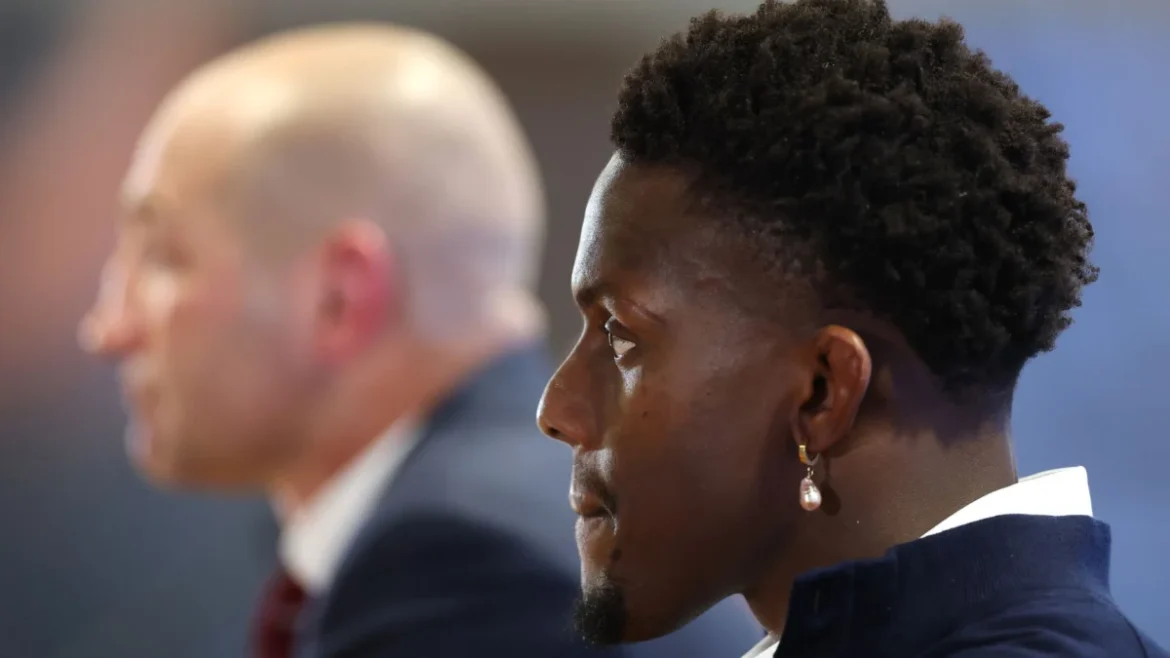
England captain Maro Itoje has issued a definitive vote of confidence in head coach Steve Borthwick, asserting that the national side remains capable of achieving "special things" despite a disappointing Six Nations campaign that saw the team plummet to a fifth-place finish. Speaking at the Football Black List event, Itoje addressed the growing scrutiny surrounding the coaching staff and the squad’s performance, emphasizing a collective belief within the camp that the current leadership is the right fit to navigate England through a period of significant transition.
The 2026 Six Nations tournament represented a stark departure from the momentum England had built over the previous year. Having entered the competition on the back of an impressive 11-Test winning streak, expectations were high for a title challenge. Instead, the campaign unravelled in a series of narrow defeats and tactical inconsistencies, culminating in four successive losses. Most notably, England suffered a historic first-ever international defeat to Italy, a result that sent shockwaves through the rugby world and prompted questions regarding the speed of the team’s development under Borthwick’s tutelage.
A Campaign of Contrasts: Analyzing the Six Nations Decline
The statistical reality of England’s Six Nations performance paints a picture of a team that struggled to convert possession and territorial dominance into points. Finishing fifth in the standings, England managed only a single victory throughout the five-round tournament. While their points difference remained marginally positive (+2), largely due to a high-scoring opening victory and narrow margins in subsequent losses, the inability to close out games became a recurring theme.
The final standings saw France reclaim the championship with 20 points, followed closely by Ireland (19) and Scotland (16). Italy’s resurgence was the story of the tournament, as they secured two wins and a draw to finish fourth with 9 points, just one point ahead of England’s 8. Wales occupied the bottom of the table with 6 points. For England, the drop from title contenders to the lower echelon of the table was both swift and humbling.
Itoje, who has been a cornerstone of the England pack for nearly a decade, acknowledged that the results fell far below the standards expected of the Red Rose. However, he remained steadfast in his appraisal of the coaching group. "We believe in what we’re doing," Itoje told Sky Sports. "Steve is a great coach—Wiggy [Richard Wigglesworth], Kev [Kevin Sinfield], Joe [Joe Shaw], Lee [Lee Blackett]—all great coaches. We just need to get together as a team, learn the lessons, and move positively forward."
The RFU’s Stance and the Path to 2027
Despite the public outcry following the loss to Italy and the fifth-place finish, the Rugby Football Union (RFU) has opted for stability over upheaval. Bill Sweeney, the Chief Executive of the RFU, has indicated that Steve Borthwick retains the full support of the board. The governing body appears committed to a long-term vision that views the recent Six Nations as a painful but necessary learning curve in the build-up to the 2027 Rugby World Cup in Australia.
Sweeney has signaled that Borthwick will lead the team into this summer’s tour fixtures, which will form part of the inaugural Nations Championship. This new global competition is designed to provide more meaningful Test windows and high-stakes matches between the Northern and Southern Hemisphere giants. For Borthwick, the summer tour represents a critical juncture. It is understood that a "satisfactory return" against world-class opposition—specifically South Africa, Fiji, and Argentina—will solidify his position, allowing him to see out his contract through to the end of the 2027 World Cup cycle.
The decision to stick with Borthwick is rooted in the belief that the foundations laid during the 11-Test winning run are still intact. The coaching staff, which includes former Leicester Tigers head coach Richard Wigglesworth and rugby league legend Kevin Sinfield, is highly regarded for its technical expertise and work ethic. The challenge now lies in translating that expertise into a cohesive game plan that can withstand the pressure of elite international rugby.
Chronology of the 2026 Six Nations Slump
The decline of England’s form during the tournament was unexpected given their prior consistency. To understand the current climate, it is essential to look at the timeline of the campaign:
- The Opening Round: England began the tournament with a hard-fought victory, maintaining the momentum of their previous winning streak. At this stage, the narrative was one of quiet confidence.
- The Mid-Tournament Slide: Successive losses to Scotland and Ireland exposed defensive vulnerabilities and a lack of creativity in the midfield. Despite competitive performances, England failed to secure the "bonus points" that often decide the mid-table standings.
- The Historic Defeat: The penultimate round saw England face Italy. In a match characterized by English errors and Italian clinical execution, Italy secured their first-ever win over the Red Rose. This result fundamentally shifted the discourse from "tactical refinement" to "crisis management."
- The Final Whistle: A final-round loss confirmed England’s fifth-place finish, their lowest ranking in several years, sparking an immediate internal review by the RFU.
Tactical Analysis: What Went Wrong?
Rugby analysts have pointed to several factors that contributed to England’s sudden loss of form. Under Borthwick, England has transitioned toward a more data-driven, territory-based kicking game. While this was effective during their 11-match winning streak, Six Nations opponents appeared to have "solved" the system, utilizing effective backfield coverage and counter-attacking prowess to negate England’s tactical kicking.
Furthermore, the integration of new personnel in key positions—specifically at fly-half and in the back row—led to a lack of cohesion during high-pressure moments. Maro Itoje’s role as captain has also been under the microscope. While his individual performances remain elite, the challenge of galvanizing a squad during a losing streak is a test of leadership that few players face.
Itoje’s comments at the Football Black List event suggest that the players are taking ownership of these failures. "We weren’t as successful as we wanted to be, but how I felt at the beginning of the tournament doesn’t change now," Itoje remarked. "I have a lot of faith, a lot of belief in this England team, and I think this England team is going to go on to do special things."
The Nations Championship: A High-Stakes Summer
The upcoming summer schedule offers no respite for Borthwick’s men. The inaugural Nations Championship will see England travel to face the reigning World Champions, South Africa, followed by fixtures against a dangerous Fiji side and a revitalized Argentina.
- South Africa: Facing the Springboks in their own backyard is widely considered the toughest test in world rugby. For England, it will be a trial by fire for their set-piece and defensive resolve.
- Fiji: Having lost to Fiji at Twickenham in the recent past, England cannot afford to underestimate the Pacific Islanders’ physicality and offloading game.
- Argentina: The Pumas have consistently proven they can beat any Tier 1 nation on their day. This fixture will likely determine the overall success of the tour.
If England can secure at least two wins from these three matches, the pressure on Borthwick will likely subside, providing him the "clean air" needed to prepare for the 2026 Autumn Internationals. However, another string of defeats would make his position increasingly tenuous, regardless of the RFU’s current public stance.
Broader Implications for the Sport
The struggle of the English national team has wider implications for the Premiership and the grassroots game in England. A successful national side drives commercial interest, ticket sales, and participation rates. The RFU’s financial model is heavily dependent on the success of the senior men’s team at Twickenham.
Moreover, the rise of Italy and the continued dominance of France and Ireland suggest a shifting power dynamic in European rugby. England, once the undisputed financial and competitive powerhouse of the Six Nations, now finds itself in a battle to reclaim its status as a top-four global power.
As the squad prepares for the summer, the focus remains on "learning the lessons," as Itoje stated. The transition from the Eddie Jones era to the Steve Borthwick era was always expected to have growing pains, but the depth of the Six Nations slump has accelerated the need for results. For Maro Itoje and his teammates, the belief remains unshaken, but the rugby-public’s patience will require victories in the Southern Hemisphere to be fully restored.
The road to the 2027 World Cup is long, and while the 2026 Six Nations will be remembered as a low point, the England camp is adamant that it will serve as the catalyst for a future resurgence. Whether Borthwick can orchestrate that revival remains the definitive question of the current international cycle.