
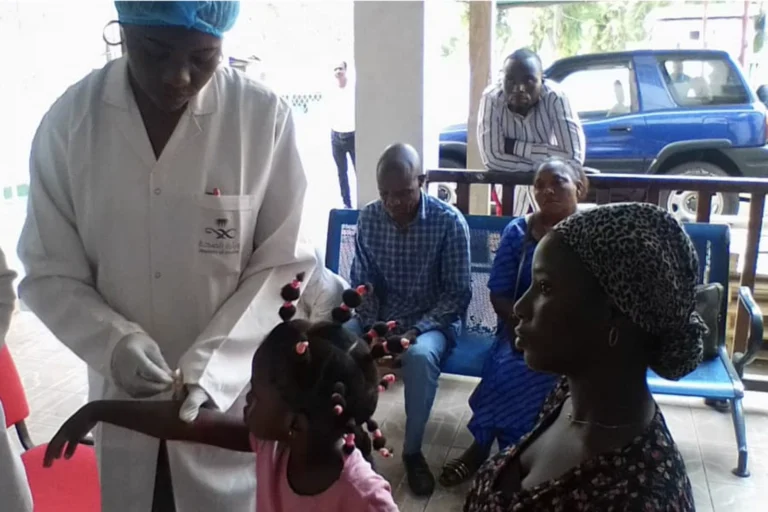
The residents of Vindoulou, a working-class neighborhood in the coastal city of Pointe-Noire, Republic of Congo, have escalated their long-standing struggle against industrial environmental degradation. Nearly 120 citizens have officially filed a civil claim before the city’s High Court, seeking accountability for severe lead poisoning they attribute to the operations of a local battery recycling foundry, Metssa Congo. This legal maneuver marks a critical juncture in a years-long battle that has transitioned from local grievances to a scientifically documented public health crisis, exposing the fragility of environmental regulation in a nation dominated by extractive industries.
The facility in question, operated by the Metssa Group—a firm with headquarters in the United Arab Emirates—commenced operations in 2013. Its primary function was the recycling of used car batteries, a process that involves dismantling units to extract lead for the production of ingots intended for export. While industrial metal recycling is a vital component of the global circular economy, the process is notoriously hazardous when conducted without stringent safety protocols. According to World Health Organization (WHO) guidelines, the smelting and refining of lead are high-risk activities that release toxic fumes, dust, and fine particles into the atmosphere, which can permeate the soil and contaminate the lungs and bloodstreams of nearby populations.
A Chronology of Neglect and Resistance
The conflict in Vindoulou did not emerge overnight; it is the culmination of a decade of industrial activity and systematic institutional silence.

- 2013: Metssa Congo begins operations in the Vindoulou neighborhood of Pointe-Noire.
- 2019: Residents, having endured years of what they described as toxic, acrid fumes, officially register their discontent with local environmental and health authorities.
- Post-2019: Initial inquiries by local officials conclude that no pollution is occurring. Medical examinations, described by residents as superficial, are used to deny claims of illness.
- 2023: Supported by Amnesty International, the community organizes independent blood lead testing. The results reveal levels far exceeding the 5 micrograms per deciliter (µg/dL) threshold recommended by the WHO, with some children showing levels ten times higher than the safety limit.
- 2024: Following the publication of these findings, the Pointe-Noire administrative court orders the suspension of the plant’s operations.
- 2026: A new round of soil testing, conducted by the community in collaboration with Columbia University researcher Alexander Van Geen, provides definitive proof of massive, localized heavy metal contamination.
The residents’ decision to take legal action in October 2026 was prompted by the total lack of follow-up after the plant’s closure. While the facility’s machines have stopped, the toxic legacy remains in the soil, continuing to pose a latent threat to the health of the community.
The Scientific Evidence of Contamination
The recent soil analysis serves as a cornerstone for the plaintiffs’ current legal strategy. After the initial blood tests sparked international concern, Alexander Van Geen, a research professor at Columbia University’s Earth Institute, sought to identify the environmental source of the lead. Using a low-cost, innovative method, Van Geen provided residents with sampling kits and remote training to map the lead concentrations in the upper layers of the soil where children play.
The resulting data, analyzed via X-ray fluorescence at Columbia University, painted a stark picture. Of the 49 samples collected within a 300-meter radius of the plant, nearly half exceeded the U.S. Environmental Protection Agency (EPA) safety threshold of 200 mg/kg for residential soil. In some instances, concentrations reached 10,000 mg/kg. The mapping provided a spatial confirmation of what residents had long claimed: the area surrounding the foundry is a toxic hotspot.
Crucially, the report produced by Van Geen suggests that the crisis is remediable. Because the contamination is concentrated within a 25,000-square-meter area, a targeted cleanup operation—removing the top 10 centimeters of topsoil—could effectively neutralize the immediate risk. This finding contradicts the common industrial argument that such pollution is too widespread or expensive to clean up, placing the burden of responsibility back on the company and the state.

Official Responses and Institutional Impunity
Despite the mounting scientific evidence, the path to justice remains obstructed. The Congolese government, which has been under the leadership of President Denis Sassou Nguesso for the majority of the time since 1979, has historically maintained a complex relationship with foreign industrial operators. Critics argue that the state’s inaction reflects a broader pattern of prioritizing foreign investment over the health and safety of its citizens.
Both the Congolese Ministry of the Environment and the management of Metssa Congo have remained silent regarding the findings of the soil tests. The lack of an official response has led to a deep-seated distrust among the residents of Vindoulou. Cyrille Traoré Ndembi, president of the Vindoulou Residents’ Collective, notes that the silence is not merely a bureaucratic oversight but a deliberate strategy. "The authorities are deliberately allowing the situation to deteriorate," Ndembi stated. "The case has simply been shelved."
The absence of government intervention is particularly jarring given the clear health risks. Jacques Gardon, a research director at the French National Research Institute for Sustainable Development (IRD) and an expert in industrial pollution, has reviewed the findings and characterized them as an irrefutable diagnosis of danger. "We have a clear diagnosis of environmental pollution," Gardon noted. "Now we need blood lead tests to determine the extent of the contamination among the population, but that requires financial resources the victims do not have."
Broader Implications for Industrial Accountability
The Vindoulou case highlights a pervasive issue in global environmental justice: the "pollution haven" effect. In many developing nations, the lack of rigorous enforcement of environmental standards allows foreign companies to bypass the safety costs that would be mandatory in their home markets. The case also underscores the critical importance of citizen-science initiatives. By training residents to collect their own samples and utilize mobile data collection apps like SurveyCTO, the Vindoulou collective has created a form of evidence that is difficult for authorities to dismiss as biased or amateur.

The implications extend beyond this specific case. As the global demand for lead—driven by the automotive and energy storage industries—continues to grow, the risks associated with recycling facilities will persist. The model pioneered by Van Geen and the Vindoulou collective, which leverages low-cost, accurate testing and community-led data collection, offers a blueprint for other communities globally facing similar industrial threats.
For the residents of Vindoulou, the primary goal remains simple yet urgent: they want a comprehensive decontamination of their neighborhood, access to medical care for those suffering from lead poisoning, and formal recognition of the harm caused. As Ndembi pointed out, the fight is not just about the past; it is about the future of their children. "I don’t feel at ease when my children play outside, but I can’t keep them locked indoors forever," he said.
The upcoming legal proceedings in the Pointe-Noire High Court are expected to test the independence of the judiciary and the political will of the state. If the court rules in favor of the residents, it could set a powerful precedent for corporate accountability in the Republic of Congo. If it fails to act, however, it may solidify the perception that for the most vulnerable, environmental safety is a luxury that remains out of reach. For now, the people of Vindoulou remain in a state of suspended anxiety, waiting for a resolution that acknowledges the scientific reality of the toxic ground they walk upon.

