
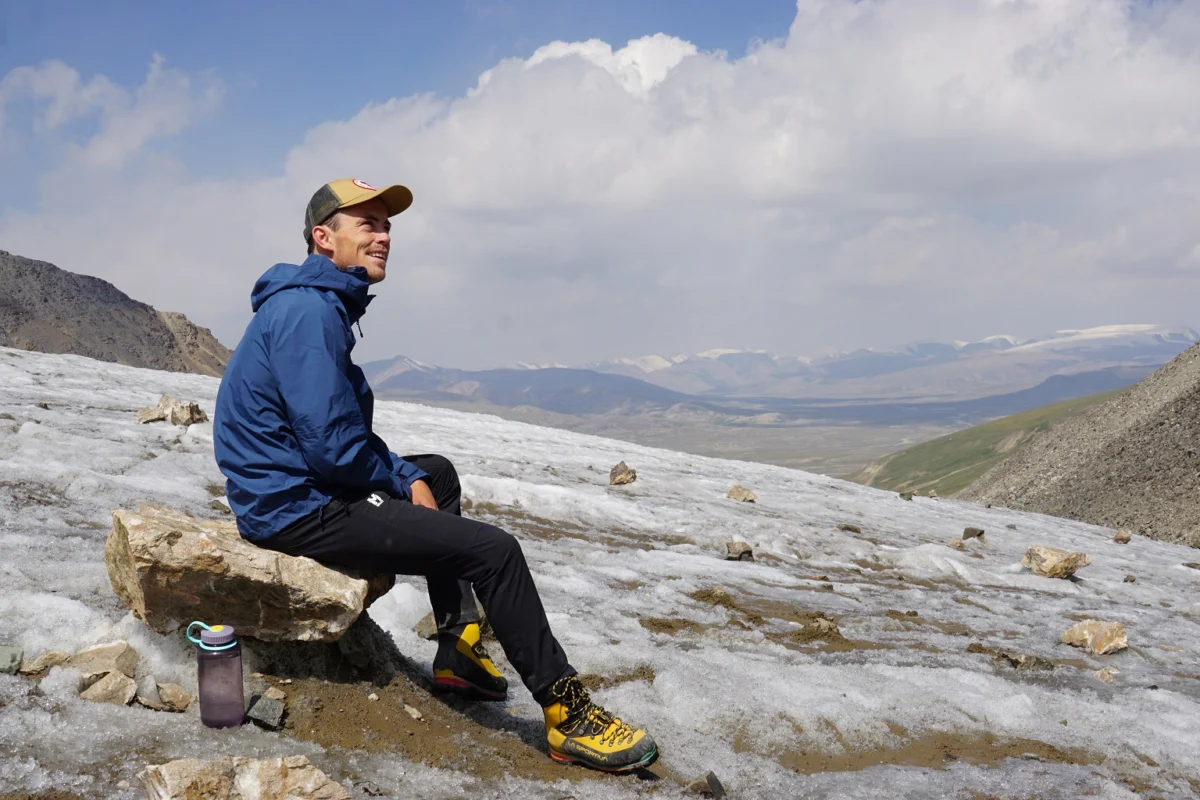
In mid-October, a woman reached out to glaciologist Lander Van Tricht with a poignant realization: a glacier she had visited as a child was now projected to go extinct within four decades. This interaction, facilitated by the Global Glacier Extinction Explorer, encapsulates the primary mission of the digital tool: to bridge the gap between complex climate modeling and the lived experience of the general public. Developed by Van Tricht, a postdoctoral researcher at ETH Zürich and Vrije Universiteit Brussels, the platform allows users to interact with granular, site-specific data regarding the future of individual glaciers worldwide. By visualizing the terminal trajectory of these ice masses, the tool provides a stark, empirical look at the accelerating impact of anthropogenic global warming on the world’s cryosphere.
The Scientific Foundation of the Extinction Explorer
The Global Glacier Extinction Explorer is not merely a digital visualization project; it is a manifestation of the findings published in a landmark 2026 study in the journal Nature. Led by Van Tricht, the research provided a comprehensive analysis of the decline of individual glaciers, moving beyond the traditional focus on aggregate sea-level rise or total mass loss to look at the specific, localized extinction timelines of glaciers globally.
The data fueling the platform is categorized by four distinct warming scenarios, mirroring those used by the Intergovernmental Panel on Climate Change (IPCC): 1.5°C, 2°C, 2.7°C, and 4°C above pre-industrial levels. Each scenario provides a different window into the potential future of mountain ranges, from the high-altitude peaks of the Alps to the peripheral ice caps of the Russian Arctic and Greenland. The findings are sobering: even under the most optimistic scenario of 1.5°C warming—the target set by the Paris Agreement—approximately half of Earth’s glaciers are already destined to vanish.
Chronology of a Crisis
The decline of glaciers is not a future projection; it is a documented, ongoing process. The timeline of this extinction is highly sensitive to the rate of global temperature rise. Historically, glaciers served as reliable water towers for mountain communities, regulating flow through seasons and providing a consistent supply of meltwater. However, the current rate of retreat has shifted from a gradual seasonal change to an accelerated loss of structural integrity.

In the Alps and the Caucasus, the "de-glacierization" process is already well underway. According to the data, many smaller glaciers in these regions are projected to disappear entirely within the next 10 to 15 years, regardless of immediate mitigation efforts. For these regions, the decision is essentially made, as the existing warming has already locked in the eventual loss of these ice masses.
As we move into the latter half of the 21st century, even the currently "healthy" glaciers in high-latitude regions, such as Svalbard and the Russian Arctic, will begin to see a rise in the number of individual extinctions. The Aletsch Glacier, the largest in the Alps and long considered a resilient titan of European ice, stands as a critical case study. Under a 4°C warming scenario, this massive body of ice, currently containing roughly 15 cubic kilometers of volume, is projected to disappear before the end of the century.
Economic and Social Implications for Mountain Communities
The implications of this loss extend far beyond aesthetics or environmental science. For thousands of communities, glaciers are the foundation of local economies and resource management. The Global Glacier Extinction Explorer was designed specifically to help stakeholders assess these risks.
The economic impact on the tourism industry is perhaps the most immediate. Many municipalities in the Alps and the Andes rely on glaciers to draw visitors for hiking, ice-climbing, and skiing. For these towns, the tool provides a necessary, albeit painful, data point for infrastructure investment. A village planning a 30-year expansion for a ski resort must now weigh the reality that the glacier serving as the primary attraction may be gone in five to ten years.
Beyond tourism, the hydrological impact is a matter of long-term sustainability. Millions of people rely on glacier runoff for agriculture, hydroelectric power, and municipal water supplies. As glaciers shrink, the "peak water" period—the time when the maximum amount of meltwater is released—passes. Once a glacier crosses this threshold, the flow of water becomes increasingly seasonal and, eventually, ephemeral. Understanding when a specific glacier will cease to act as a perennial water source is crucial for urban planners, farmers, and government agencies tasked with water security.

Data-Driven Public Engagement
Van Tricht’s decision to move his research from the pages of academic journals to an interactive web platform reflects a growing trend in "open science." By making the data accessible, he aims to circumvent the barriers that often keep critical climate information sequestered in high-level policy discussions.
"What I really hoped was that scientific results are shared beyond the academic world," Van Tricht stated in an interview. The user experience is designed to be intuitive: a global map allows for zooming into any location, with color-coding indicating the projected timeline of extinction. Red and orange hues represent imminent loss, while blue indicates longer-term persistence. By providing the public with the ability to see the specific extinction year for a glacier in their local valley, the abstract concept of "1.5 degrees of warming" is transformed into a tangible, relatable reality.
Scientific Consensus and Future Mitigation
The scientific consensus remains clear: the primary driver of glacier loss is the accumulation of greenhouse gases in the atmosphere. While local, high-cost interventions—such as the use of geotextiles to shade glaciers in ski resorts—exist, they are largely localized, energy-intensive, and sometimes environmentally detrimental. They do not represent a systemic solution to the global retreat.
The trajectory for the world’s glaciers is heavily dependent on the global response to emission targets. In a 1.5°C scenario, roughly 400 glaciers might persist in the Alps. Under a 4°C scenario, that number drops to approximately 20. The gap between these figures represents the difference between a managed transition and a catastrophic loss of mountain ecosystems.
Analysis of the Current Landscape
The "de-glacierization" of the world’s mountain ranges marks a fundamental shift in the global landscape. While glaciers have expanded and contracted throughout geological time, the current rate of retreat is unprecedented in the context of human civilization. The research suggests that we have entered an era where the loss of these ice masses is a defining feature of the Anthropocene.

The utility of the Global Glacier Extinction Explorer lies in its ability to force a confrontation with this reality. It provides a platform for both individual reflection and institutional planning. As the world navigates the mid-21st century, the ability to predict the disappearance of these vital water sources will be a core component of adaptation strategies.
However, the tool also serves as a final, urgent warning. The data clearly shows that for many regions, the tipping point has already been passed. The focus for these areas must shift toward building resilience in the face of a future without glacial water and ice. For others, particularly in high-latitude regions, the data provides a narrow window of opportunity to influence the outcome through aggressive climate policy.
Conclusion: A Tool for the Future
The story of the woman who discovered the fate of her childhood glacier is a microcosm of the larger goal of the project. By making the invisible process of glacial melt visible, the tool fosters a deeper understanding of the urgency of the climate crisis. As glaciers continue to vanish, the Explorer will serve as an evolving record of the planet’s changing face.
For policy makers, local governments, and the general public, the data is no longer a matter of future prediction but a baseline for current action. The research and the platform created by Van Tricht and his colleagues underscore a simple but profound truth: the decisions made today regarding global carbon emissions will dictate the physical landscape of the planet for centuries to come. Whether the remaining half of the world’s glaciers are preserved or lost is a choice that remains, at least in part, in the hands of global society. The Global Glacier Extinction Explorer ensures that this choice is made with the full visibility of the consequences.

