
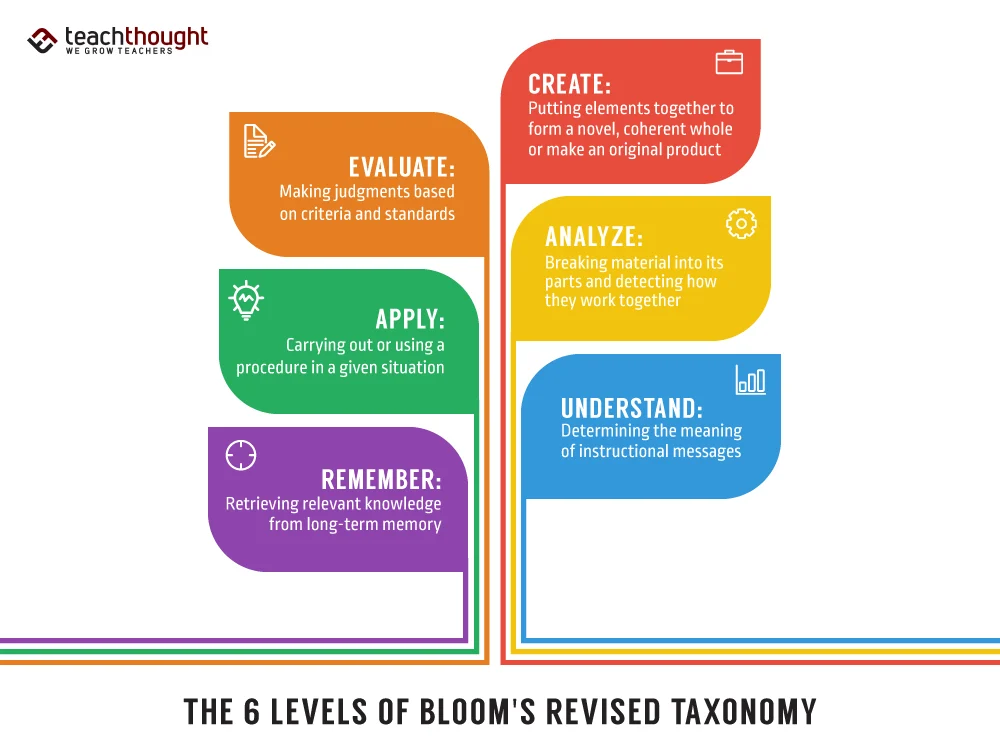
The 2001 publication of "A Taxonomy for Learning, Teaching, and Assessing" marked a pivotal shift in the landscape of educational psychology, effectively modernizing a framework that had served as the gold standard for pedagogical design since the mid-20th century. Led by Lorin Anderson, a former student of Benjamin Bloom, and David Krathwohl, a co-author of the original 1956 framework, the revision was not merely a linguistic update but a structural overhaul designed to align educational objectives with contemporary cognitive science. By transitioning from static nouns to active verbs and introducing a two-dimensional matrix for knowledge classification, the revised taxonomy provided educators with a more precise instrument for curriculum development, instructional delivery, and assessment.
Historical Context and the Need for Revision
The original taxonomy, formally titled "Taxonomy of Educational Objectives: The Classification of Educational Goals. Handbook I: Cognitive Domain," emerged from a series of informal conferences held by the American Psychological Association (APA) between 1948 and 1953. Benjamin Bloom, then an Associate Director of the Board of Examinations at the University of Chicago, sought to create a common language for examiners to share test items and ideas. When the handbook was finally published in 1956, it introduced a cumulative hierarchy of six levels: Knowledge, Comprehension, Application, Analysis, Synthesis, and Evaluation.
For nearly four decades, this original framework dominated educational planning. However, by the 1990s, the field of cognitive psychology had evolved significantly. The original model was increasingly viewed as too rigid and one-dimensional. Critics argued that "Knowledge" was a category of content rather than a cognitive process, and that the hierarchy did not accurately reflect how the human brain integrates information. In 1995, Anderson and Krathwohl assembled a team of experts—including cognitive psychologists, curriculum theorists, and instructional researchers—to undertake a six-year revision process aimed at making the taxonomy more actionable for 21st-century classrooms.
Structural Evolution: From Nouns to Verbs
The most immediate change in the 2001 revision was the shift in terminology. The authors argued that because thinking is an active process, the categories should be represented by verbs rather than nouns. This change emphasizes the cognitive actions students perform when engaging with material.
- Remember (formerly Knowledge): This level involves retrieving relevant knowledge from long-term memory. It encompasses recognizing (identifying) and recalling (retrieving).
- Understand (formerly Comprehension): This is defined as determining the meaning of instructional messages, including oral, written, and graphic communication. Sub-processes include interpreting, exemplifying, classifying, summarizing, inferring, comparing, and explaining.
- Apply (formerly Application): This level refers to carrying out or using a procedure in a given situation. It involves executing (performing a task) and implementing (applying a process to an unfamiliar task).
- Analyze (formerly Analysis): This involves breaking material into its constituent parts and detecting how the parts relate to one another and to an overall structure or purpose. It includes differentiating, organizing, and attributing.
- Evaluate (formerly Evaluation): This involves making judgments based on criteria and standards. It includes checking (testing for internal consistency) and critiquing (judging based on external criteria).
- Create (formerly Synthesis): This involves putting elements together to form a novel, coherent whole or an original product. It includes generating (hypothesizing), planning (designing), and producing (constructing).
A significant structural change was the reordering of the top two levels. In the 1956 version, "Evaluation" was considered the highest level of cognitive complexity. The 2001 revision placed "Create" at the apex, arguing that while evaluation requires critical thinking, the act of synthesizing disparate elements into a new, original structure represents a more complex and demanding cognitive feat.
The Introduction of the Knowledge Dimension
Beyond the shift in cognitive levels, the most profound contribution of the revised taxonomy was the introduction of a second dimension: The Knowledge Dimension. The original 1956 taxonomy was essentially a one-dimensional scale. The revision recognized that cognitive processes (what we do) must act upon some form of knowledge (what we know).
The Knowledge Dimension is categorized into four distinct types:
- Factual Knowledge: The basic elements students must know to be acquainted with a discipline or solve problems within it. This includes knowledge of terminology and specific details.
- Conceptual Knowledge: The interrelationships among the basic elements within a larger structure that enable them to function together. This includes knowledge of classifications, categories, principles, generalizations, theories, models, and structures.
- Procedural Knowledge: Knowledge of how to do something, including methods of inquiry, and criteria for using skills, algorithms, techniques, and methods. This includes subject-specific skills and knowledge of when to apply certain procedures.
- Metacognitive Knowledge: Knowledge of cognition in general as well as awareness and knowledge of one’s own cognition. This includes strategic knowledge, knowledge about cognitive tasks, and self-knowledge.
By crossing these four types of knowledge with the six cognitive processes, the authors created the "Taxonomy Table." This 24-cell grid allows educators to map out learning objectives with unprecedented clarity. For example, a teacher might design a lesson where the objective is for students to "Analyze (Cognitive Process) the structural components of a cell (Conceptual Knowledge)."
Chronology of Development and Adoption
The timeline of the taxonomy’s evolution reflects the broader shifts in educational theory over the last 70 years:
- 1948: Initial discussions begin at the APA Convention in Boston to standardize educational objectives.
- 1956: Publication of the original Bloom’s Taxonomy.
- 1964: Publication of the Affective Domain taxonomy (led by Krathwohl, Bloom, and Masia), focusing on attitudes and emotions.
- 1970s: Various researchers, including Harrow and Simpson, propose versions of a Psychomotor Domain (physical skills).
- 1995: Anderson and Krathwohl begin the formal revision of the Cognitive Domain.
- 2001: "A Taxonomy for Learning, Teaching, and Assessing" is published.
- 2008–Present: The taxonomy is further adapted for the digital age (Bloom’s Digital Taxonomy), incorporating verbs like "coding," "blogging," and "curating."
Supporting Data and Educational Impact
The impact of the revised taxonomy on global education systems is measurable. According to Google Scholar data, Krathwohl’s 2002 overview of the revision, "A Revision of Bloom’s Taxonomy: An Overview," has been cited by over 20,000 academic papers, illustrating its foundational role in modern research.
In the United States, the Common Core State Standards and various state-level frameworks heavily utilize the verbiage of the revised taxonomy to define "college and career readiness." Internationally, the Programme for International Student Assessment (PISA), conducted by the OECD, uses a framework for assessing mathematical, scientific, and reading literacy that mirrors the hierarchical complexity found in Bloom’s levels, particularly emphasizing the "Analyze" and "Evaluate" stages.
Data from teacher training programs suggests that the revised taxonomy improves "instructional alignment." A study of curriculum design indicates that when teachers use the Taxonomy Table, the alignment between learning objectives, classroom activities, and final assessments increases by over 40%, reducing the "disconnect" where students are taught at a low level (Remember/Understand) but tested at a high level (Analyze/Evaluate).
Professional Perspectives and Scholarly Reactions
The educational community generally received the 2001 revision with acclaim, though it was not without scholarly debate. David Krathwohl noted in 2002 that the revision was necessary because the original was being used in ways Bloom never intended—as a rigid, "step-by-step" ladder rather than a flexible framework.
"The original taxonomy was a product of its time, rooted in the behaviorist traditions of the 1950s," stated one contemporary curriculum theorist. "The revision by Anderson and Krathwohl successfully integrated the constructivist and cognitive revolutions, acknowledging that the learner is an active participant in building knowledge, not a passive vessel for facts."
However, some critics argue that the hierarchy remains problematic. Some cognitive scientists suggest that "higher-order" thinking (like Analyzing or Evaluating) cannot occur without a massive foundation of "lower-order" knowledge (Remembering), and that the pyramid structure might inadvertently lead educators to devalue the importance of factual recall. Others have pointed out that in many creative fields, "Creating" and "Evaluating" happen simultaneously, challenging the linear nature of the model.
Broader Implications and Future Outlook
The broader implications of Bloom’s Revised Taxonomy extend into the realms of professional development, corporate training, and artificial intelligence. In the corporate sector, instructional designers use the framework to ensure that employee training goes beyond simple compliance (Remembering) to problem-solving and innovation (Applying/Creating).
In the age of Artificial Intelligence, the taxonomy takes on new relevance. As AI tools become proficient at the "Remember" and "Understand" levels—and increasingly the "Apply" and "Analyze" levels—human education is shifting its focus toward the "Evaluate" and "Create" tiers. The "Metacognitive Knowledge" dimension added in 2001 is now seen as the most critical skill for the future, as it involves understanding how one thinks and learns in collaboration with technology.
As education continues to evolve toward personalized and competency-based models, Bloom’s Revised Taxonomy remains a vital touchstone. It provides a robust, scientifically grounded language for describing the journey from the acquisition of basic facts to the mastery of complex, original thought. While the tools of the classroom may change, the fundamental cognitive processes identified by Anderson, Krathwohl, and the original Bloom team continue to define the essence of human intellectual achievement.

