
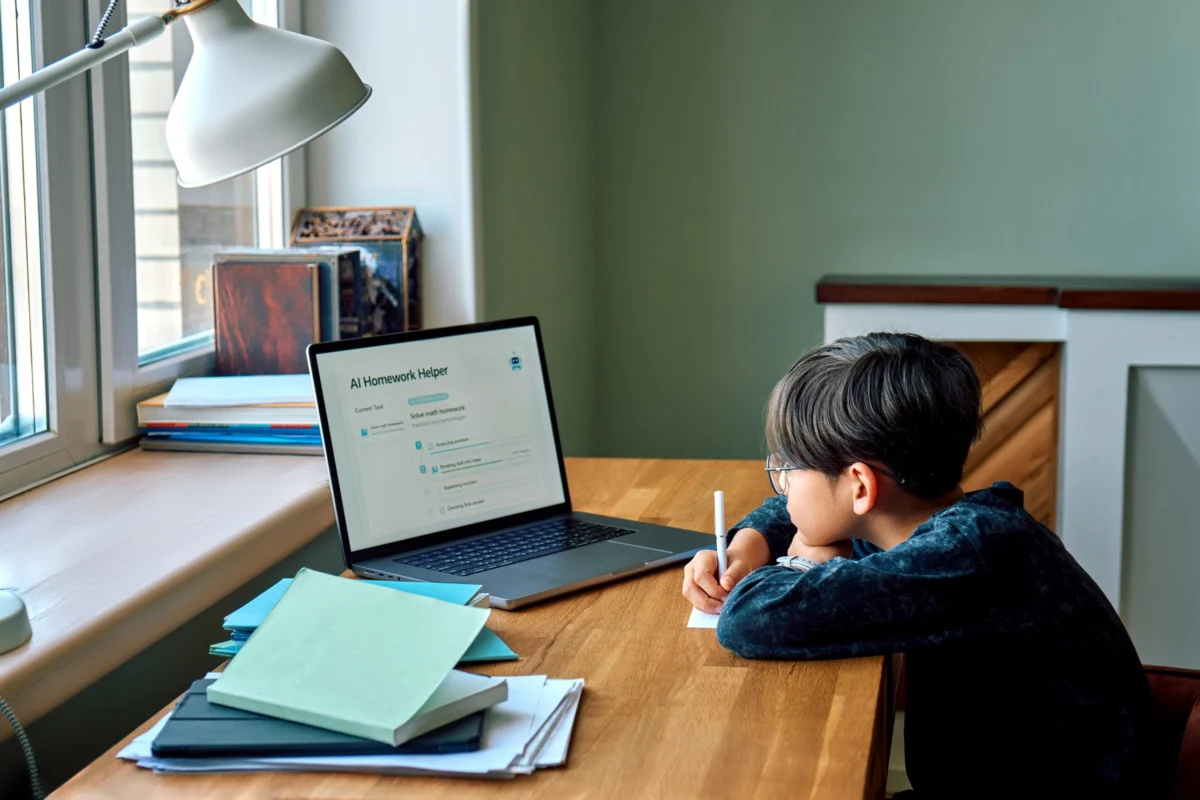
The rapid integration of generative artificial intelligence into the classroom has sparked a global debate regarding the efficacy of digital instruction versus traditional human-led pedagogy. While early adopters praised the potential for "a tutor for every student," initial empirical evidence suggested that many AI-driven tools were failing to deliver substantive learning gains. However, a landmark study from the University of Pennsylvania, released in early 2026, suggests that the secret to successful AI tutoring lies not in how the machine explains a concept, but in how it sequences the challenges presented to the learner. By shifting the focus from conversational fluency to the strategic calibration of difficulty, researchers have identified a pathway that could potentially double the rate of learning for certain subjects, particularly in technical fields like computer science.
Main Facts of the Personalized AI Tutoring Study
The core of this breakthrough stems from a controlled experiment involving approximately 800 high school students in Taiwan. The participants were enrolled in an after-school course designed to teach Python, a foundational programming language. The study was led by Angel Chung, a doctoral student at the Wharton School, and included a team of researchers who had previously expressed skepticism regarding the unbridled use of Large Language Models (LLMs) in education.
The experiment divided the students into two distinct groups. Both groups utilized the same underlying AI tutor, which was programmed with strict pedagogical guardrails to prevent it from simply "spoon-feeding" answers to students—a common pitfall that has plagued earlier chatbot implementations. The critical variable was the sequence of the practice problems. The control group followed a fixed, linear progression of problems that moved from "easy" to "hard" in a standardized fashion. In contrast, the treatment group experienced a personalized sequence. For these students, the AI continuously analyzed their performance in real-time, adjusting the difficulty of subsequent problems based on their accuracy, the number of times they edited their code, and the depth of their interaction with the chatbot.

The results were statistically significant. Students in the personalized group outperformed their peers on the final examination. According to the research team, the performance gap was equivalent to roughly six to nine months of additional traditional schooling, despite the course only lasting five months. While the researchers noted that the conversion of statistical gains into "months of schooling" is an estimate rather than a fixed metric, the data clearly indicated that personalization in problem-sequencing provided a superior learning trajectory compared to a one-size-fits-all curriculum.
A Chronology of Automated Instruction: From ITS to LLMs
To understand the significance of the UPenn study, one must look at the historical timeline of automated education, which has sought to solve "Bloom’s 2-Sigma Problem"—the 1984 finding by educational psychologist Benjamin Bloom that students tutored one-on-one perform two standard deviations better than those in a traditional classroom.
- 1970s–1990s: The Era of Intelligent Tutoring Systems (ITS). Early researchers developed rule-based systems designed to model student knowledge. These systems were effective at providing hints and immediate feedback but lacked the ability to engage in natural language. While they improved learning outcomes, they suffered from low engagement; students often found them repetitive and mechanical.
- 2000s–2010s: Adaptive Learning Platforms. Companies began integrating machine learning to create "adaptive" pathways. These platforms could skip sections a student already knew, but they remained largely locked into pre-scripted content and could not assist with the nuanced "why" behind a student’s mistake.
- 2022–2024: The Generative AI Explosion. The release of ChatGPT and subsequent LLMs introduced the "conversational tutor." These tools were highly engaging and could explain complex topics in various styles. However, studies in 2024 and 2025 (including a notable report in PNAS) found that students often used these tools as a crutch, asking for answers rather than learning the logic, which led to a "backfire" effect where test scores actually dropped.
- 2025–2026: The Hybrid Algorithmic Approach. The current era, exemplified by the UPenn study, involves "fusing" the conversational power of LLMs with separate machine-learning algorithms (often based on reinforcement learning) that act as a pedagogical "brain," deciding the most effective path forward for the student.
Supporting Data: Engagement and Demographics
The success of the personalized AI tutor in the Taiwan study was driven largely by increased student engagement. The data showed that students in the personalized group spent significantly more time on task. On average, these students spent three additional minutes per problem compared to the control group. Over the course of a single module, this added up to an extra hour of focused practice.
The researchers believe this is a direct result of the "Zone of Proximal Development" (ZPD), a concept pioneered by psychologist Lev Vygotsky. The ZPD represents the "sweet spot" of learning—tasks that are too difficult for a student to do alone but possible with the right amount of guidance. When the AI tutor correctly identified a student’s ZPD, it kept them in a state of "flow." Problems that were too easy led to boredom and disengagement in the control group, while problems that were too hard led to frustration and abandonment.

Furthermore, the data revealed an interesting demographic trend regarding who benefits most from AI tutors:
- Novices vs. Experts: Students who were brand new to Python programming saw the most dramatic gains from personalized sequencing. Students who already had prior coding experience performed similarly regardless of whether the sequence was fixed or personalized, suggesting that experts have better internal "self-regulation" and can navigate a rigid curriculum more effectively.
- Institutional Equity: Students from "less elite" high schools appeared to benefit more from the personalized AI than those from prestigious institutions. This suggests that AI tutors could serve as a powerful tool for closing achievement gaps in districts where students may have less access to private human tutoring or advanced elective courses.
Official Responses and Expert Perspectives
The findings have garnered reactions from both the developers of the technology and long-time critics of AI in education. Angel Chung, the Wharton doctoral student who invented the tutor’s sequencing logic, emphasized that the goal was to address the "meta-cognitive" deficit in students. "Students usually don’t know what they don’t know," Chung stated. "The student doesn’t have the ability to ask the right questions to get the best tutoring. The system has to be proactive in guiding them."
Ken Koedinger, a professor at Carnegie Mellon University and a legendary figure in the development of Intelligent Tutoring Systems, offered a cautious but optimistic take. Koedinger, who was not involved in the UPenn study but has conducted similar research, noted that while the AI’s ability to sequence problems is a major step forward, the human element remains vital. Koedinger is currently experimenting with "human-in-the-loop" systems where AI models alert remote human tutors when a student is showing signs of emotional frustration or "drifting off."
"We are having more success by using AI to tell humans when to step in," Koedinger remarked, suggesting that the future of education is not a choice between AI and humans, but a sophisticated integration of both.

Broader Impact and Policy Implications
The implications of the UPenn study extend far beyond a single Python course in Taiwan. As school districts worldwide grapple with teacher shortages and "learning loss" following the COVID-19 pandemic, the prospect of an effective, scalable AI tutor is highly attractive. However, several hurdles remain before these systems can be deployed at scale.
First, there is the issue of "algorithmic transparency." The machine-learning models that decide which problem a student sees next are often "black boxes." Educators and parents may be hesitant to cede control of the curriculum to an algorithm that cannot explain its reasoning. There are also concerns about data privacy, as these systems require deep tracking of student interactions—keystrokes, chat logs, and time-on-task—to function effectively.
Second, the "motivation gap" remains a significant barrier. The Taiwanese students in the study were volunteers who were highly motivated to bolster their college applications. Whether an AI tutor can maintain the engagement of a disengaged or struggling student in a compulsory classroom setting remains to be seen.
Finally, the study underscores a shift in the AI industry. The focus is moving away from making chatbots "smarter" or more "human-like" in their speech, and toward making them better "pedagogues." This involves a return to educational psychology and the rigorous testing of how humans actually process information. As AI tutors become more adept at identifying a student’s unique "sweet spot" for learning, the role of the teacher may shift from a deliverer of content to a facilitator of these high-tech tools, focusing on the social and emotional support that no algorithm has yet been able to replicate.

