
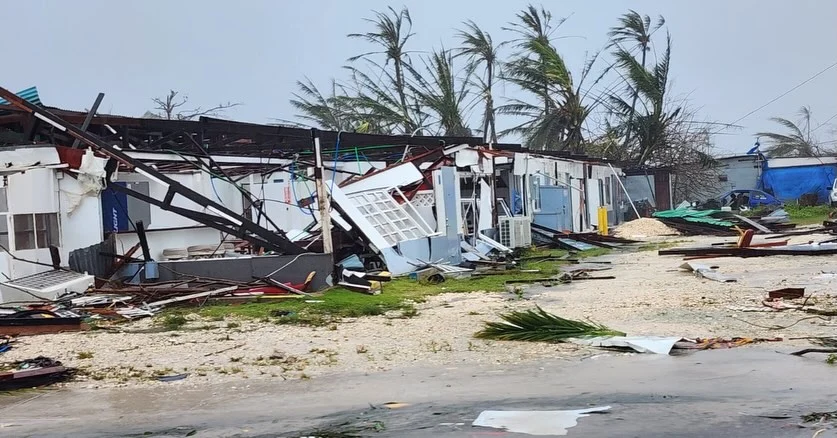
The Commonwealth of the Northern Mariana Islands (CNMI) is grappling with the aftermath of the most powerful storm of 2026, as Super Typhoon Sinlaku tore through the archipelago this week, leaving a trail of destruction that has paralyzed the U.S. territory. The Category 5 storm, packing sustained winds of 185 mph, lingered over the islands of Saipan and Tinian for more than 48 hours, trapping residents in flooded homes and severing critical infrastructure, including electricity, cellular communication, and running water.
The arrival of Sinlaku in mid-April has stunned meteorologists and residents alike, as it precedes the traditional start of the Pacific typhoon season by nearly two months. For a region still scarred by the memory of Super Typhoon Yutu in 2018, the current disaster represents a compounding crisis that intersects with a stalled federal budget, a struggling local economy, and the accelerating impacts of global climate change.
A Path of Destruction Across the Western Pacific
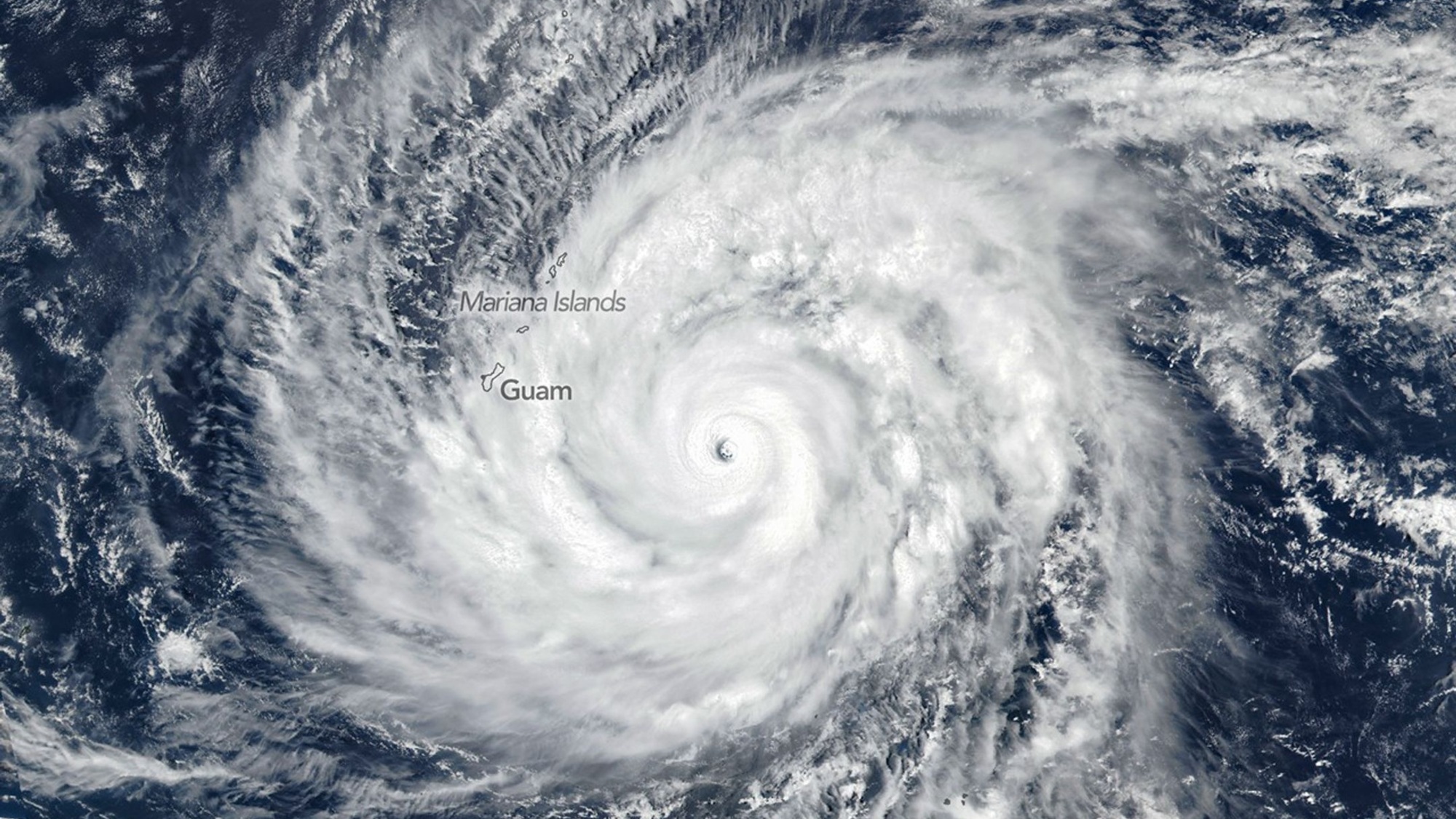
Super Typhoon Sinlaku’s journey toward the Mariana Islands began southeast of the archipelago, where it underwent a period of rapid intensification rarely seen so early in the calendar year. Before making its presence felt in the CNMI, the storm first struck Chuuk in the Federated States of Micronesia. Local authorities there reported at least one fatality and one fisherman missing at sea after the storm’s outer bands lashed the island state.
As the system tracked northwest, it passed just north of Guam. While the center of the storm missed a direct hit on the southernmost island of the Marianas, Guam nonetheless experienced tropical storm-force winds and significant flooding that toppled trees and knocked out power to several villages. However, the brunt of the typhoon’s fury was reserved for the CNMI.
In Saipan and Tinian, the storm followed a trajectory hauntingly similar to that of Super Typhoon Yutu eight years ago. Yutu, which also reached Category 5 status, destroyed thousands of homes and caused such extensive damage to the education system that some children were still attending classes in temporary tents as recently as last year. Sinlaku’s slow-moving nature meant that the destructive winds and torrential rains persisted far longer than typical systems, exacerbating the structural damage across the islands.
Unprecedented Timing and Meteorological Anomalies
The sheer intensity of Sinlaku has raised urgent questions regarding the shifting patterns of tropical cyclones in the Pacific. Ed Propst, a Chamorro resident and former commonwealth legislator, described the experience as uniquely harrowing. "It’s still whistling and you can still hear it going on and things are banging outside," Propst said from his home in Saipan on Thursday morning. "I’ve never seen anything like this, where a typhoon just doesn’t seem to leave. When was the last time we had a super typhoon hitting us this early in the year? This is the first that I can recall."
Climate scientists point to record-breaking ocean temperatures as the primary catalyst for the storm’s early arrival and rapid growth. Daniel Swain, a climate scientist at the California Institute for Water Resources, noted that ocean surface temperatures in the region were between 3 and 5 degrees Fahrenheit above the recent average in the days leading up to Sinlaku’s formation.
"Because warm tropical oceans are ‘hurricane fuel,’ the current supertyphoon has rapidly intensified in a favorable environment that is at least partly linked to climate change via warming oceans," Swain explained. While individual storms are difficult to attribute solely to climate change, the increased frequency of "rapid intensification" events—where a storm’s wind speeds increase by 35 mph or more within 24 hours—aligns with global warming projections.
A Territory in Economic and Political Peril
The timing of the disaster could not be worse for the CNMI. The territory has been mired in a years-long economic downturn, largely driven by a collapse in the tourism industry following the COVID-19 pandemic. Arrivals remain at less than 50% of 2019 levels, leading to widespread business closures and a significant "brain drain" as residents migrate to the continental United States for work.
In recent months, CNMI leaders, including the territory’s sole representative in Congress, Kimberlyn King-Hinds, have petitioned the Trump administration for economic relief. Requests have included a federal bailout and policy adjustments to ease visa restrictions for tourists from the Philippines and flight restrictions from China. To date, the federal response to these economic pleas has been noncommittal.
The typhoon now compounds these existing priorities. Sheila Babauta, a Chamorro climate justice advocate and fellow with the nonprofit Right to Democracy, highlighted the exhaustion of the local population. "We are taking a devastating hit, compounding the urgent local priorities we already face, from coastal erosion to an economic crisis," Babauta said while sheltering with her two-month-old child. "Our community is strong, but even warriors need rest."
Federal Funding Stalemate and Disaster Response
As the CNMI begins the arduous process of damage assessment, the federal government’s ability to provide long-term recovery aid remains in question. The Department of Homeland Security (DHS), which oversees the Federal Emergency Management Agency (FEMA), is currently undergoing a partial shutdown. This is the result of a protracted stalemate in Congress, where Democrats have resisted funding measures linked to the Trump administration’s aggressive immigration policies.
FEMA has maintained that its immediate response capabilities remain intact despite the political gridlock. A spokesperson for the agency confirmed that an emergency declaration was approved by President Trump ahead of the storm’s landfall. Currently, 90 FEMA personnel are stationed across Guam and the CNMI.
According to FEMA, their distribution center in Guam is stocked with:
- 1.1 million liters of water
- 723,000 meals
- 5,300 cots and 3,600 blankets
- 4,400 tarps
- 78 generators (42 of which are already en route to Saipan)
However, the agency has warned that the lack of a permanent funding solution for DHS could jeopardize the availability of the Disaster Relief Fund for long-term reconstruction. "We urge Democrats in Congress to stop playing games and restore DHS’s funding before American communities suffer the next disaster alone," a FEMA spokesperson stated, reflecting the partisan tensions surrounding the relief efforts.
Concerns Over Long-Term Recovery and Policy Shifts
Advocacy groups are expressing deeper concerns about the Trump administration’s broader approach to disaster management. For over a year, the administration has moved to reduce FEMA’s permanent staff, cut hazard mitigation grants, and systematically remove references to climate change from federal agency websites and planning documents.
Adi Martínez Román, co-director of Right to Democracy, noted that while the initial emergency aid is vital, the "very big question" is what resources will remain for the years of rebuilding that follow a Category 5 strike. She argued that the political status of U.S. territories—effectively modern-day colonies—leaves them uniquely vulnerable during federal budget disputes.
"It is so difficult for us to have agency in federal policies," Román said. "Programs are built responding to constituencies, and we are not considered a constituency." Because residents of the CNMI cannot vote for the president and their congressional delegates lack voting power on the House floor, their needs are often sidelined in favor of domestic political posturing in Washington, D.C.
The Human Toll and the Road Ahead
On the ground in Saipan, the focus remains on immediate survival and mutual aid. Ed Propst has spent the hours following the storm’s peak fielding messages from former constituents in desperate need. He cited reports of a mother trapped in a flooded home requiring baby formula and residents who have lost their entire means of off-grid power as solar panels were ripped from roofs.
Congresswoman Kimberlyn King-Hinds’ office has maintained a positive public outlook, stating that FEMA has not yet raised funding issues in direct communications. However, her spokesperson, Chris Conception, acknowledged the precarious nature of the situation. "The CNMI relies heavily on timely federal support following major disasters, and any constraints on resources could affect the speed and scope of recovery, particularly in remote and infrastructure-constrained communities like ours."
As the winds finally begin to subside, the scale of the damage is becoming clearer. Entire neighborhoods have been stripped of their roofs, and the agricultural sector, vital for local food security, has been decimated. The recovery from Super Typhoon Sinlaku will likely take years, testing the resilience of a population that is increasingly finding itself on the front lines of both climate change and American political volatility.
For many in the CNMI, the storm is a reminder of their isolation from the seat of power in Washington, yet their reliance on its decisions. As Propst noted, while the federal funding debate rages thousands of miles away, the people of the Marianas will do what they have always done: lean on each other. "We’ve been through this before," he said, "and we know what it takes to get through it again."

