
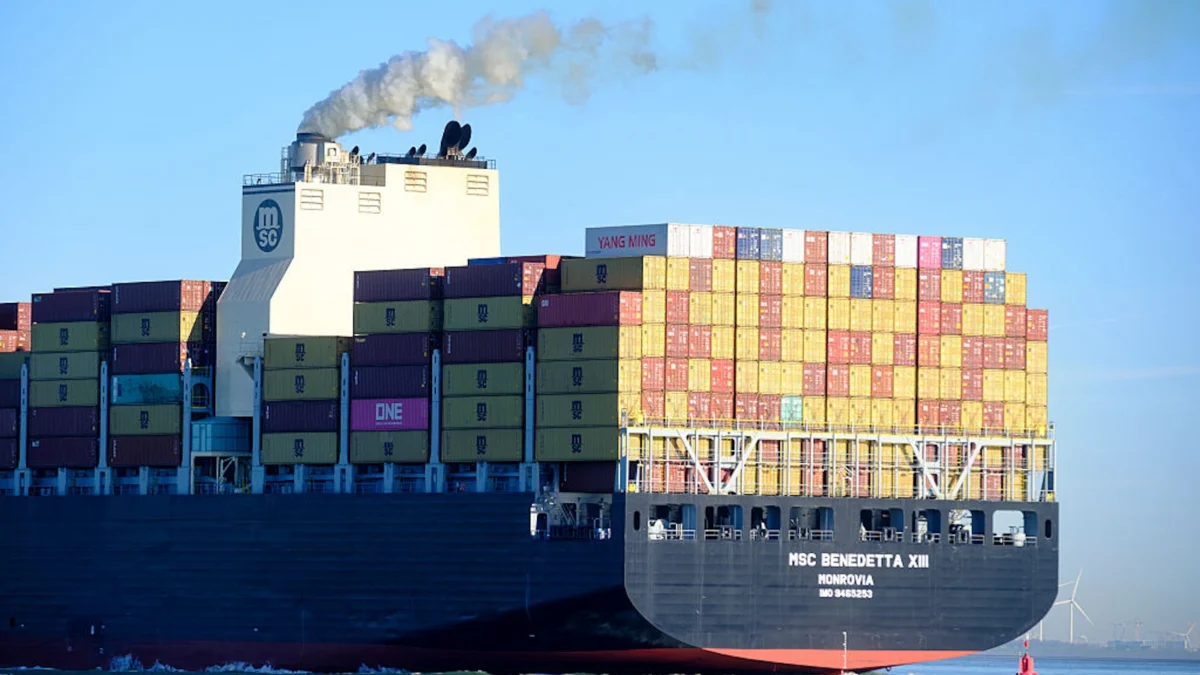
The global maritime industry, responsible for transporting approximately 90 percent of the world’s trade, currently stands at a critical crossroads as international negotiators struggle to finalize a historic decarbonization plan. At a recent summit held by the International Maritime Organization (IMO) in London, a fragile but vocal majority of member states signaled their continued support for the Net-Zero Framework (NZF), an ambitious plan designed to eliminate carbon emissions from the shipping sector by 2050. This development comes despite an aggressive campaign by the Trump administration to derail the proposal, citing concerns over economic costs and national sovereignty. The resilience of the NZF during the most recent round of talks suggests that while the path to a green shipping future remains fraught with geopolitical tension, the momentum for a unified global carbon levy may be stronger than previously estimated.
The shipping industry has long been one of the most difficult sectors of the global economy to decarbonize. For decades, the massive vessels that carry everything from crude oil and liquefied natural gas to consumer electronics and fast fashion have relied on heavy fuel oil (HFO). Often described as the "sludge" left over from the petroleum refining process, HFO is incredibly carbon-intensive and sulfur-rich. As a result, the maritime sector currently contributes roughly 3 percent of total global greenhouse gas emissions—a figure that experts warn could rise significantly as other sectors decarbonize if shipping remains on its current trajectory.
The Mechanics of the Net-Zero Framework
At the heart of the debate is the Net-Zero Framework’s "economic element": a proposed per-ton fee on greenhouse gas emissions. This levy is intended to serve two primary purposes. First, it would bridge the price gap between traditional, dirty fossil fuels and more expensive, cleaner alternatives such as green ammonia, methanol, or hydrogen. By making carbon-intensive fuels more expensive, the framework aims to incentivize shipowners to invest in new propulsion technologies. Second, the revenue generated from the levy—potentially billions of dollars annually—would be redirected to support climate transitions in developing nations and to fund research and development for zero-emission maritime infrastructure.
The original NZF proposal was poised for adoption last year, but the process was interrupted by a significant shift in U.S. foreign and environmental policy. The Trump administration has taken a hardline stance against the framework, arguing that a global carbon tax would inevitably lead to higher prices for American consumers and place an undue burden on domestic businesses. In documents submitted to the IMO, U.S. officials stated that "the most appropriate path forward is to end consideration of the IMO Net-Zero Framework entirely." To reinforce this position, the administration has reportedly leveraged diplomatic pressure, including threats of visa restrictions, increased tariffs, and heightened port fees for nations that align with the NZF.
A Chronology of Maritime Climate Negotiations
The journey toward a decarbonized shipping sector has been a decade-long endeavor, marked by incremental progress and sudden setbacks. In 2018, the IMO reached its first initial strategy, aiming to reduce total annual GHG emissions by at least 50 percent by 2050 compared to 2008 levels. However, as climate science evolved and the urgency of the Paris Agreement became more pronounced, many member states and environmental groups pushed for more aggressive targets.
In July 2023, the IMO updated its strategy, setting a target to reach net-zero GHG emissions by or around 2050. This landmark agreement included "indicative checkpoints" for 2030 and 2040. The NZF was conceived as the primary mechanism to achieve these goals. However, the subsequent year saw the emergence of deep divisions. By early 2024, the United States, joined by a handful of other nations including Japan, Liberia, and Panama, began proposing alternative "watered-down" versions of the plan. These alternatives focused on technical efficiency standards rather than a mandatory economic levy.
The most recent meeting in London was expected to be a showdown between these competing visions. While opponents of the levy hoped to see the NZF abandoned in favor of these alternatives, the opposite occurred. A slim majority of the IMO’s 176 member states reaffirmed their commitment to the original framework. Em Fenton, a senior director at the climate group Opportunity Green, noted that a "spirit of collaboration and optimism" pervaded the room, suggesting that many delegates remain committed to a meaningful global solution despite the pressure from Washington.
The Arithmetic of Flag States and Blocking Power
Despite the majority support for the NZF, the unique structure of the IMO makes the path to adoption technically difficult. Unlike many U.N. agencies, the IMO’s voting power is heavily influenced by "tonnage"—the total volume of shipping registered under a country’s flag. Under IMO rules, a proposal can be blocked if one-third of the member countries oppose it, or if a smaller group of countries representing 50 percent of the world’s shipping tonnage stands in opposition.
This gives an outsized amount of leverage to so-called "flag of convenience" states. Four countries—Liberia, Panama, the Bahamas, and the Marshall Islands—account for nearly half of the world’s registered shipping fleet. Because shipping companies often register their vessels in these nations to take advantage of lower taxes and less stringent labor regulations, these small countries hold the keys to global environmental policy.
Evelyne Williams, a research associate at Columbia University’s Center on Global Energy Policy, points out that the "blocking arithmetic" is currently in favor of the opponents. Since Liberia and Panama have expressed skepticism or outright opposition to the NZF, the threshold for a veto is nearly met. This reality has forced NZF proponents to engage in intense bilateral negotiations to sway these pivotal maritime nations.
Industry Support for a Level Playing Field
In a surprising twist, much of the shipping industry itself is siding with the environmental advocates rather than the U.S. government. Major shipping companies and trade organizations, such as BIMCO and the World Shipping Council, have expressed a preference for a single, uniform global tax over a fragmented system of regional regulations.
Currently, shippers are already grappling with the European Union’s Emissions Trading System (EU ETS), which began including maritime transport in 2024. Without a global IMO standard, shipping companies fear they will face a "patchwork" of conflicting rules in different jurisdictions—such as different carbon prices in China, the U.S., and Europe—which would complicate logistics and distort competition.
David Loosley, CEO of BIMCO, emphasized the need for the IMO to act as a global regulator to ensure a "level playing field." For the industry, a predictable global levy is preferable to the uncertainty of varying national policies. This corporate backing provides a significant counterweight to the political opposition led by the United States.
Misinformation and Economic Modeling
A point of significant contention during the recent London meeting was the distribution of leaflets by U.S. delegates. These documents contained economic projections suggesting that the NZF would have devastating financial impacts on developing nations. One specific handout focused on Peru, claiming the country would face nearly $800 million in compliance costs.
However, these figures have been sharply criticized by independent analysts and environmental groups. Critics argue that the U.S. models utilized outdated assumptions and failed to account for the revenue-sharing mechanisms built into the NZF, which are designed to offset costs for developing economies. Em Fenton characterized the data as a "clear effort" by a country acting in self-interest to use "misinformation and exaggeration" to influence the negotiations.
The U.S. State Department has not officially responded to these specific criticisms, but the incident has highlighted the high stakes of the "information war" surrounding the maritime transition. Proponents of the NZF argue that the cost of inaction—including the long-term economic damage of climate-induced trade disruptions—far outweighs the short-term costs of a carbon levy.
Implications and the Road to November
The failure or success of the NZF will have profound implications for the global economy. If the framework is adopted in November, it will mark the first time a global industry has agreed to a self-imposed carbon tax. This could serve as a blueprint for other hard-to-abate sectors, such as aviation.
If the talks collapse, the likely outcome is a surge in regional regulations. The European Union has already indicated that it will expand its maritime carbon rules if the IMO fails to act. Other regions, including parts of East Asia, are considering similar measures. For global trade, this would mean increased complexity, higher administrative costs, and potentially slower transit times as ships navigate different regulatory zones.
Furthermore, the transition to green fuels requires massive infrastructure investment in ports worldwide. A global levy would provide the necessary capital to build green hydrogen hubs and ammonia bunkering stations, particularly in the Global South, where much of the world’s future renewable energy will be produced. Without the NZF, the "green corridor" initiatives currently being developed between major ports may remain isolated experiments rather than becoming the global standard.
The next few months will be defined by intense technical discussions and diplomatic maneuvering. Several key details remain unresolved, most notably the exact dollar amount of the per-ton fee and the precise formula for redistributing the collected funds. Developing nations are insisting that a significant portion of the revenue be used to modernize their ports and protect their coastal communities from rising sea levels.
As the maritime world looks toward the decisive November vote, the tension between national economic interests and global environmental necessity has never been higher. The slim majority at the IMO has kept the hope of a net-zero future alive, but the "blocking arithmetic" of the flag states and the looming shadow of U.S. opposition ensure that the final stretch of these negotiations will be the most challenging yet. The outcome will determine whether the "sludge-powered" engines of global trade can finally be replaced by a cleaner, more sustainable system, or if the shipping industry will remain a significant contributor to the world’s carbon footprint for decades to come.

