
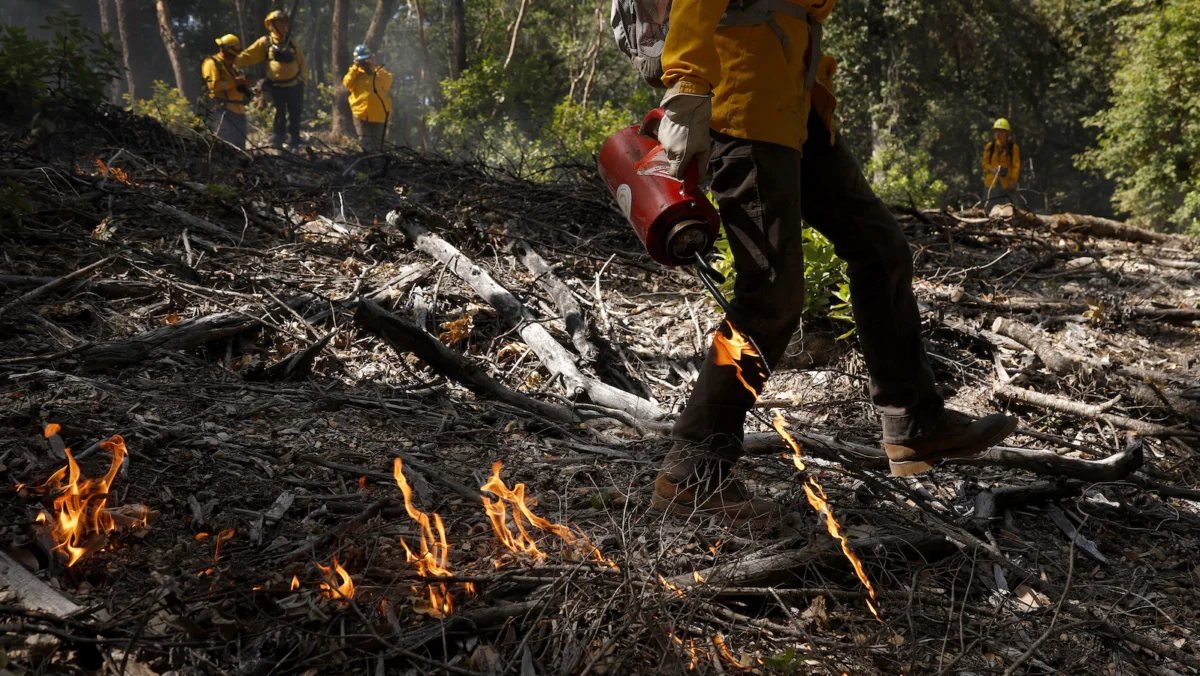
For nearly a century, the United States has grappled with the increasingly volatile nature of wildfires across the Western landscape. While the U.S. Forest Service has long employed active management strategies—such as clearing underbrush, thinning dense stands of trees, and conducting prescribed burns—the primary justification for these actions has traditionally been ecological health and public safety. However, a landmark study published in the journal Science has now provided a compelling financial argument for these interventions, revealing that proactive forest management is not merely an environmental necessity but a highly cost-effective economic strategy.
The research, led by Frederik Strabo, an economist at the University of California, Davis, indicates that for every dollar the federal government invests in fuel treatments, it avoids approximately $3.73 in damages related to public health, property destruction, and carbon emissions. This finding comes at a critical juncture as the nation faces a shifting political landscape regarding land management and an escalating climate crisis that has made "mega-fires" a recurring seasonal reality.
The Economic Calculus of Prevention
The study represents one of the most comprehensive attempts to date to quantify the "non-market" and indirect benefits of fuel treatments. By analyzing high-resolution data from 285 wildfires across 11 Western states between 2017 and 2023, the researchers were able to observe how fires behaved when they encountered areas that had undergone fuel reduction.
The results were stark: on average, fuel treatments reduced the total area burned by 36 percent. More importantly, they cut the amount of land burned at moderate to high severity by 26 percent. High-severity fires are particularly damaging because they often kill mature trees, sterilize soil, and are significantly harder for fire crews to contain.
When translated into monetary terms, the researchers estimated that these treatments prevented:
- $1.39 billion in health-related costs and workforce productivity losses caused by wildfire smoke.
- $895 million in structural damage to homes and infrastructure.
- $503 million in damages associated with carbon dioxide emissions.
"A lot of people have suggested that there could be potential economic benefits," Strabo noted. "But it’s been a pretty understudied area." He emphasized that the $3.73 return on investment is likely a conservative estimate, as the study did not factor in the protection of the multi-billion-dollar outdoor recreation industry, the preservation of biodiversity, or the safeguarding of critical water sheds.
A History of Fire Management: From Indigenous Practice to Suppression
To understand the significance of this study, it is necessary to look at the evolution of fire management in North America. For centuries, Indigenous nations practiced cultural burning—a form of prescribed fire used to manage ecosystems, promote the growth of specific plants, and reduce the risk of catastrophic blazes. These practices were largely suppressed following European colonization and the subsequent establishment of federal land management agencies.
In the early 20th century, following the "Big Burn" of 1910, the U.S. Forest Service adopted a policy of total fire suppression, often referred to as the "10 a.m. Policy," which aimed to extinguish every fire by 10 a.m. the morning after it was reported. While well-intentioned, this policy led to an unnatural accumulation of "fuel"—dead wood, thick underbrush, and overcrowded small trees—across millions of acres.
By the late 20th century, scientists realized that by removing fire from the landscape, the government had inadvertently created a "tinderbox" effect. When fires did start, they were far more intense than historical norms. The transition back toward active management—using mechanical thinning and prescribed burns to mimic natural fire cycles—began in earnest in the late 1990s, but funding and public support have often lagged behind the scale of the problem.
Skepticism and the Difficulty of Monetization
Despite the positive findings of the Science study, the approach of assigning a dollar value to forest management is not without its critics. David Calkin, a former Forest Service research scientist, expressed reservations about the methodology, though he lauded the novelty of the analysis.
Calkin argues that many of the values provided by healthy forests are "non-market" and inherently difficult to quantify. "I worry about trying to monetize the value of treatments on public lands," he stated, noting that the benefits to ecosystem services and public recreation are often intangible.
Furthermore, Calkin pointed out a logistical reality: the most expensive fires often ignite in the Wildland-Urban Interface (WUI), where homes are built directly adjacent to flammable vegetation. He suggests that the most effective way to protect a structure is "at the structure itself," through home hardening and creating defensible space, rather than through large-scale forest thinning miles away.
In response, Strabo pointed to the 2021 Caldor Fire, which threatened the community of South Lake Tahoe. While the fire still caused significant damage, previous fuel treatments around the basin were credited with slowing the fire’s advance and allowing firefighters to steer the flames away from the city center. Strabo’s analysis suggests that fires interacting with fuel treatments often account for a disproportionately large share of potential losses, making their mitigation even more economically significant.
The Hidden Costs of Treatment: Smoke and Emissions
Another layer of complexity involves the environmental impact of the treatments themselves. Mark Kreider, a Forest Service researcher, noted that the study did not account for the smoke and carbon dioxide produced during intentional prescribed burns.
"We’re finding that’s not a non-trivial amount," Kreider said. Because wildfire is inherently unpredictable, land managers must treat many more acres than will actually encounter a wildfire in any given year. If the emissions from those thousands of acres of prescribed burns are not factored in, the "net" carbon benefit of the treatment might be lower than suggested.
However, fire scientists generally agree that the smoke from a prescribed burn is far less toxic and less concentrated than the smoke from a high-severity wildfire. Prescribed fires are conducted under specific weather conditions to maximize smoke lofting and minimize impacts on populated areas, whereas wildfires often occur during heatwaves and inversions that trap dangerous particulate matter (PM2.5) at ground level.
Shifting Political Priorities and the 2025 Decline
The publication of this study arrives as the federal government’s approach to wildfire undergoes a significant shift. In 2022, the Forest Service launched a "10-year Wildfire Crisis Strategy," which aimed to treat an additional 20 million acres of National Forest System lands. This plan was supported by historic funding from the Bipartisan Infrastructure Law and the Inflation Reduction Act.
However, the political climate has changed. The current administration has signaled a pivot back toward full fire suppression and an increased emphasis on logging. In 2025, the Forest Service reported reducing vegetation on approximately 1 million fewer acres than in 2024. While a spokesperson for the agency attributed this decline to high wildfire activity in the Southeast diverting resources, critics worry it represents a fundamental retreat from proactive management.
Heather Stricker, a climate and lands analyst with the Sierra Club, argued that the administration’s focus on full suppression is "misguided." She noted that while suppression sounds protective, it often perpetuates the cycle of fuel accumulation, leading to even more catastrophic fires in the future. "This paper reiterated a lot of previous research, but then took it a step further to quantify the cost savings," Stricker said.
The administration’s proposal to increase logging on federal lands has also sparked concern among environmental groups. While "thinning" involves removing small-diameter trees and brush, "logging" often targets larger, more fire-resistant trees that are vital for forest health. Opponents fear that the economic pressure to produce timber could lead to clear-cutting under the guise of fire prevention, which can actually increase fire risk by opening the forest canopy and allowing the ground to dry out.
Implications for Future Policy
The findings of the Science study provide a new framework for policymakers who are often forced to make difficult decisions regarding budget allocations. If fuel treatment can be framed as a "public good" with a nearly 4-to-1 return on investment, it may become easier to secure long-term, stable funding for programs that are often the first to be cut during budget negotiations.
The research also highlighted that larger treatments—those covering more than 2,400 acres—were the most cost-effective. This suggests that a landscape-scale approach, rather than small, fragmented projects, is necessary to achieve significant economic and ecological results.
As wildfires continue to grow in size and frequency, the debate over how to manage America’s forests will only intensify. The study by Strabo and his colleagues offers a clear data point: the cost of inaction is far higher than the cost of prevention. By investing in the health of the forest today, the government can save billions of dollars in healthcare costs, property losses, and climate damages tomorrow.
"We could have these economic and ecological benefits if we scaled it up," Strabo concluded. "It’s a critically underfunded public good." Whether the current administration and future Congresses will heed this economic warning remains to be seen, but the data now suggests that the smartest way to fight fire is to manage the forest long before the first spark is struck.

