
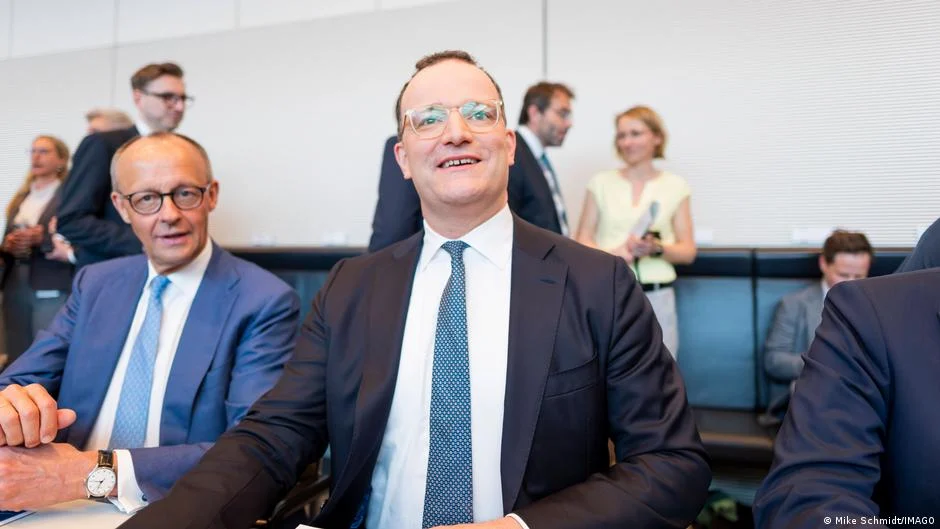
The heart of the controversy lies in the stark conflict between Spahn’s personal choice and the official stance of his party and German law. Surrogacy is strictly prohibited in Germany, and the CDU has consistently opposed its legalization, citing ethical and moral concerns. Spahn, along with his husband, circumvented this domestic ban by having their child through a surrogate mother in the United States, where commercial surrogacy is legal in several states. This act, while not illegal under German law for parents raising a child born abroad via surrogacy, ignited a firestorm of criticism, particularly regarding the perceived double standards of a senior politician upholding a law he personally sidestepped.
The Unfolding Controversy: A Detailed Chronology
The events leading to Spahn’s resignation unfolded rapidly, capturing national attention and exposing fissures within the conservative movement. The controversy began earlier in the week when Jens Spahn, 45, and his husband, Daniel Funke, publicly announced their new parenthood, sharing a photograph on social media depicting them with a stroller. The announcement, intended as a joyous personal milestone, instead triggered an immediate and intense backlash from across the German political spectrum.
Critics were swift to accuse Spahn of hypocrisy, pointing out his senior position within a party vehemently opposed to surrogacy within Germany’s borders. Compounding the issue were Spahn’s own past statements; he had previously expressed personal reservations about the concept of "rented wombs," stating his difficulty in reconciling it with his Christian beliefs and his identity as a gay man. Furthermore, he had consistently voted along party lines in favor of maintaining the domestic ban on surrogacy.
As public pressure mounted, Spahn attempted to address the criticism in a podcast interview with Germany’s Bild newspaper on Friday. He acknowledged the internal struggle, stating, "I have wrestled with myself for a long time, including on the issue of surrogacy." This defense, however, did little to quell the brewing storm, as the perceived inconsistency between his public political stance and private actions remained a central point of contention.
The situation escalated to a point where Chancellor Friedrich Merz deemed it untenable. Merz, known for his commitment to traditional conservative values and strengthening party discipline, intervened directly, requesting Spahn’s resignation from the parliamentary leadership. Following this intervention, Spahn issued a statement seen by news agencies, explaining his decision: "In recent days, I have come to realize that my personal happiness in starting a family with my husband and becoming a father is incompatible with my political office." This statement marked the official end of his tenure as parliamentary leader, a role he had been re-elected to with a substantial 85% of the vote just months prior in May, underscoring his previous standing as a powerful figure within the CDU/CSU bloc.
Jens Spahn’s Political Trajectory and the CDU’s Stance
Jens Spahn’s career had been characterized by a rapid ascent within the Christian Democratic Union. A trained banker, he entered the Bundestag in 2002 and quickly established himself as a prominent voice, often seen as representing a more modern, yet still conservative, wing of the party. His appointment as Health Minister in 2018 under Chancellor Angela Merkel solidified his status as a key player. During his time in this role, particularly throughout the COVID-19 pandemic, he gained significant public exposure, albeit often accompanied by controversy.
His leadership of the parliamentary group, a crucial position that involves coordinating legislative strategy and maintaining party unity in the Bundestag, cemented his influence. Spahn was widely regarded as having leadership ambitions, with many speculating he could one day contend for the party chairmanship or even the chancellorship. His re-election to the parliamentary leadership with overwhelming support earlier in the year was a testament to his perceived strength and influence within the bloc.
The Christian Democratic Union (CDU), together with its Bavarian sister party, the Christian Social Union (CSU), forms Germany’s main conservative political force. At the core of their ideology are principles rooted in Christian ethics, which traditionally inform their stance on family, life, and bioethics. The parties’ official position on surrogacy reflects this, opposing its legalization primarily due to concerns about the commodification of women’s bodies, the potential for exploitation, and the ethical implications surrounding the creation and upbringing of children. This conservative stance aligns with a broader societal debate in Germany that views surrogacy with considerable skepticism, often emphasizing the protection of human dignity and the welfare of the surrogate mother. For a high-ranking member like Spahn to openly defy this deeply held party line, even if legally permissible in his personal capacity, presented a profound challenge to the party’s credibility and internal coherence.
The Legal Landscape of Surrogacy in Germany and Beyond
Surrogacy in Germany is explicitly prohibited under the Embryo Protection Act (Embryonenschutzgesetz) of 1990, which primarily aims to prevent the misuse of reproductive technologies. The act criminalizes the brokering of surrogacy arrangements and the performance of medical procedures related to surrogacy. While the act focuses on preventing surrogacy within Germany, it does not criminalize German citizens who seek surrogacy services abroad, nor does it make it illegal to raise a child born through surrogacy in another country. This legal nuance is what allowed Spahn and his husband to pursue surrogacy in the United States without facing direct legal prosecution in Germany.
The ethical debate surrounding surrogacy in Germany is complex and multifaceted. Opponents, including the CDU, often argue that surrogacy exploits economically vulnerable women, turning a deeply personal act into a commercial transaction. Concerns are also raised about the potential psychological impact on the surrogate mother and the child, as well as the fundamental question of whether a child can be "commissioned." Proponents, on the other hand, argue for reproductive freedom, the right to form a family, and the potential for altruistic surrogacy models that prioritize the well-being of all parties involved. They often point to countries like the United States, Canada, and parts of Australia, where regulated surrogacy is permitted, sometimes even commercially.
The United States, where Spahn and Funke pursued their surrogacy, has a patchwork of state laws regarding surrogacy, with some states, like California, being particularly surrogacy-friendly and offering robust legal frameworks for intended parents and surrogates. This has made the U.S. a popular destination for "surrogacy tourism" for individuals and couples from countries with restrictive laws. The significant cost associated with international surrogacy in such countries often adds another layer to the ethical debate, highlighting socio-economic disparities and access.
Chancellor Merz’s Intervention and the Party’s Credibility
Chancellor Friedrich Merz’s decision to request Spahn’s resignation underscores his leadership style and his determination to uphold party principles. Merz, who took over the CDU leadership in early 2022, has been working to re-establish the party’s conservative profile and strengthen its internal discipline after the Merkel era. His statement following Spahn’s resignation was unequivocal: he called the decision both "correct" and "unavoidable," emphasizing that "credibility is the most valuable asset in politics." This statement was a clear message, not only to Spahn but to the entire party, that adherence to core values and principles is paramount, especially for those in leadership positions.
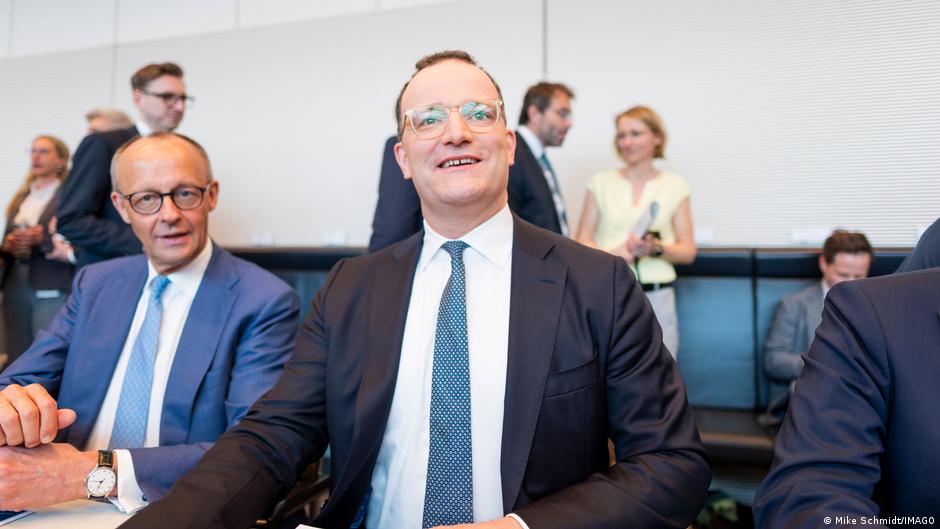
Merz’s swift action demonstrates his resolve to prevent internal dissent or perceived hypocrisy from undermining the party’s image, particularly as the CDU/CSU bloc positions itself as a strong opposition force against the current "traffic light" coalition government. The surrogacy controversy presented a direct challenge to the CDU’s traditional family policy and bioethical stance. Allowing Spahn to remain in a high-profile leadership role while openly pursuing a practice the party opposes would have significantly weakened the CDU’s moral authority and provided ammunition to political rivals. Merz’s move was a strategic assertion of authority, designed to project an image of a principled and united party under his leadership. He subsequently announced that he would coordinate with Markus Söder, the leader of the CSU, to propose a new parliamentary group chair, signaling a deliberate and measured approach to filling the vacancy.
Wider Political Reactions: A Spectrum of Views
The political responses to Spahn’s resignation were diverse, reflecting the various ideological positions on surrogacy and political accountability in Germany.
From within the current ruling coalition, Mattias Miersch, Spahn’s counterpart in the center-left Social Democrats (SPD) and a partner in the CDU/CSU’s historical "grand coalition" in the past, offered a more empathetic tone. Miersch stated, "As a person I can imagine how the last few hours must have been for Jens Spahn and his family. I wish Jens Spahn and his family all the best and much strength for the time after office." This response from the SPD, known for its more progressive social policies, subtly highlighted the personal dilemma while avoiding direct criticism, perhaps recognizing the sensitivity of family matters.
Opposition parties, however, were less reserved. Alice Weidel, co-leader of the far-right Alternative for Germany (AfD), described Spahn’s resignation as "overdue." Weidel, whose party often capitalizes on perceived failures of the establishment, went further, stating that Spahn’s past "COVID-era misadventures alone made him untenable," and that his undermining of a law he himself voted for had "definitively destroyed his credibility." This reaction leveraged both the surrogacy controversy and Spahn’s previous public scrutiny to reinforce the AfD’s narrative of political corruption and hypocrisy.
The Greens’ co-chairs, Britta Hasselmann and Katharina Dröge, issued a joint statement that expanded the critique beyond just the surrogacy issue. They asserted that the resignation was not "only about personal decisions that stood in defiance of a party position," but that Spahn’s "scandals, mistakes and leadership weaknesses ultimately led to this point." This indicated a broader dissatisfaction with Spahn’s political conduct and leadership style, echoing criticisms that had accumulated over his career.
Sören Pellmann of the socialist Left Party (Die Linke) articulated a principle of political ethics, stating that anyone "who bears political responsibility must be measured by the yardsticks that they set for other people." This statement underscored the expectation that public figures adhere to the standards they impose on society, a direct jab at Spahn’s perceived double standard.
Wolfgang Kubicki, leader of the liberal Free Democrats (FDP) and a successor to Germany’s first senior openly gay party leader, expressed a note of regret. He found it a "pity" that Spahn had not clarified sooner "that he had changed his opinion on surrogate mothers on the basis of his own personal experiences." Kubicki’s comment suggested that Spahn’s transparency regarding his evolving views could have potentially mitigated some of the backlash, highlighting a liberal emphasis on personal conviction and open discourse.
Previous Scandals and a "Rising Star’s" Fall
This surrogacy controversy is not the first time Jens Spahn has found himself embroiled in public scrutiny. During his tenure as Germany’s Health Minister, particularly at the height of the COVID-19 pandemic, he faced intense criticism and even investigations related to alleged misuse of public money. These allegations centered around procurement deals for masks and other medical supplies, as well as the rapid expansion of testing facilities. While state prosecutors ultimately dropped their investigation into his COVID-era dealings in March, citing insufficient evidence of criminal conduct, the accusations had already cast a shadow over his reputation and leadership capabilities.
These past controversies, combined with the current surrogacy debate, painted a picture of a politician frequently battling ethical questions. For a "rising star" like Spahn, who had consistently polled well and garnered significant support within his party, the accumulation of such incidents ultimately proved too much for his continued leadership in a party that values traditional probity. His fall from the parliamentary leadership marks a significant setback for his career, effectively derailing any immediate aspirations for higher office.
Implications for German Politics and the Surrogacy Debate
Jens Spahn’s resignation carries several significant implications for German politics and the ongoing societal debate surrounding surrogacy. For the CDU, it represents both a challenge and an opportunity. While it highlights potential internal divisions between modernizing impulses and traditional conservative values, Merz’s firm response could be seen as an assertion of strong leadership and a commitment to core party principles. It may help consolidate his authority and reinforce the CDU’s stance on family policy, potentially appealing to its traditional voter base. However, it also underscores the difficulties conservative parties face in navigating evolving social norms, particularly concerning LGBTQ+ rights and family structures.
For Spahn personally, this is a major political setback. While he retains his Bundestag seat, his removal from the parliamentary leadership likely diminishes his influence and puts a halt to his leadership ambitions for the foreseeable future. He will now have to rebuild his political capital from a less prominent position, potentially focusing on specific policy areas or parliamentary work away from the intense glare of party leadership.
The controversy will undoubtedly reignite the public and political debate on surrogacy in Germany. While the legal status of surrogacy within Germany is unlikely to change immediately, the high-profile nature of Spahn’s case brings the issue of "surrogacy tourism" and the ethical implications of using international services back into focus. It may prompt renewed calls for a re-evaluation of the existing laws, either to explore regulated forms of altruistic surrogacy or to reinforce existing prohibitions and their enforcement, although the latter seems less likely given the current government’s composition.
Ultimately, Spahn’s resignation serves as a stark reminder of the unique pressures faced by politicians in a modern democratic society, where personal choices can intersect powerfully with public office, party ideology, and societal expectations. It underscores that for high-ranking officials, particularly within parties with strong ethical stances, the perception of credibility and consistency is paramount, and any deviation, however personal, can carry significant political consequences.

