
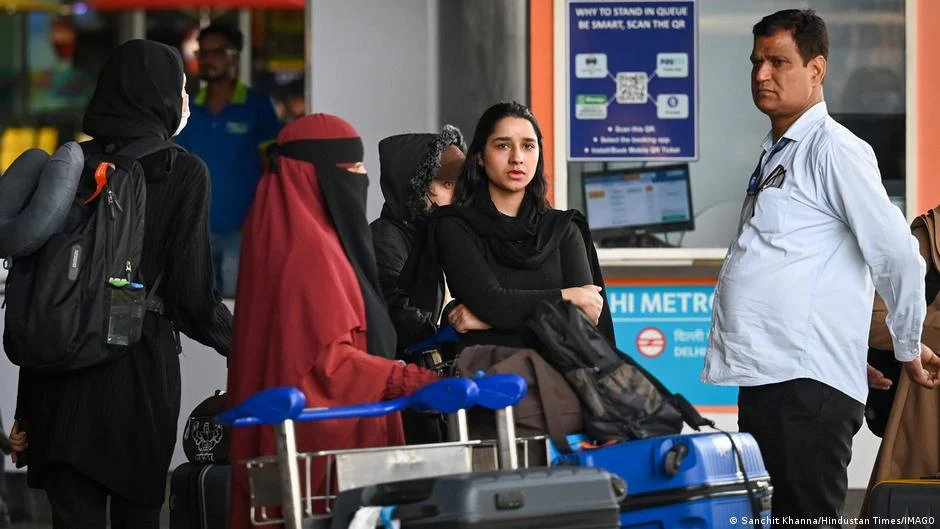
Sandip Sikdar was meant to fly from India’s capital, New Delhi, to Munich in Germany, with a layover in Sharjah. He had meticulously planned his European holiday months in advance, envisioning a smooth, cost-effective journey. But then, just days before his scheduled departure in early March 2026, the US-Israeli war with Iran erupted, unleashing a cascade of disruptions that upended not only his personal plans but also the trajectory of one of the world’s fastest-growing aviation markets. Sikdar found himself having to rebook both legs of his journey, a process compounded by the fact that prices for one segment had soared almost fivefold. "It has been quite an ordeal," he recounted, a sentiment echoed by millions of passengers across India whose travel aspirations have been derailed by skyrocketing fares or abrupt cancellations, all due to airspace closures amid the escalating conflict.
India’s aviation sector, a beacon of rapid expansion and robust growth in the global landscape prior to the recent geopolitical upheaval, now finds itself at a critical juncture. The ongoing crisis in the Middle East is fundamentally reshaping established flight paths and the economic calculus of air travel for Indian carriers, threatening to stall a boom that was once considered unstoppable.
The Unfolding Crisis: A Chronology of Disruption
The current turmoil for India’s aviation sector is a confluence of two major geopolitical events:
- April 2025: Following heightened hostilities stemming from the Pahalgam terrorist attack, Pakistan closed its airspace to Indian carriers. This was not an unprecedented move, as similar closures occurred in 2019, but its duration and timing proved particularly challenging. This pre-existing constraint forced Indian airlines to already adopt longer, less efficient routes for westbound travel, primarily to Europe and North America.
- Early March 2026: The outbreak of the US-Israeli war with Iran dramatically escalated the situation. This conflict led to extensive restrictions and closures within Middle Eastern airspace, a vital and historically efficient corridor for international flights connecting India with the Western world.
These two events, occurring within a year of each other, have created an unprecedented dual challenge for Indian aviation, forcing a radical recalibration of operational strategies and financial models.
Airspace Gridlock: Forcing Costly Detours
At the very heart of the crisis lies the restricted airspace across the Middle East due to the Iran war. This region serves as a crucial artery for air traffic, particularly for flights originating from or destined for India, connecting it with major hubs in Europe and North America. Airlines that once relied on these direct, fuel-efficient routes are now compelled to undertake significant detours, circumnavigating the conflict zones.
The challenge is further exacerbated for Indian carriers by the persistent closure of Pakistani airspace. While foreign airlines can typically adjust their routes to bypass the Middle Eastern conflict zones, they are not similarly constrained by the India-Pakistan border. This allows international competitors to maintain relatively shorter routes and more stable schedules, placing Indian carriers at a distinct competitive disadvantage.

The impact on flight durations has been immediate and substantial. Experts indicate that journey times on some key routes have surged by 15-40%. In more extreme cases, shorter regional sectors have witnessed their travel times more than doubling. A stark example is the New Delhi-Tashkent route, which previously took just over two hours, now stretches to more than five and a half hours, according to data from the FlightRadar24 tracking service.
Nitin Sarin, a prominent aviation lawyer, articulated the severity of these constraints for Indian airlines in an interview with DW. "Because they [Pakistan] are very strategically geographically positioned, if we can’t fly through them, we have to burn a lot of extra fuel and waste a lot of extra time getting from here to Europe or North America," he explained. This geographical chokehold, combined with the new restrictions over Iran, creates a labyrinthine routing challenge that significantly inflates operational costs and extends travel times, making Indian carriers less competitive against their international counterparts who enjoy more direct access to global air corridors.
The Economic Strain: Soaring Fuel Prices and Thin Margins
The forced rerouting comes at a particularly inauspicious time, as the Iran war has severely disrupted global energy supplies, sending crude oil prices soaring worldwide. This surge directly translates to dramatically increased costs for aviation turbine fuel (ATF), which represents the single largest operational expense for most airlines. Typically, fuel accounts for 30-40% of an airline’s operating expenses. However, in India, due to historically high domestic taxes on jet fuel, this proportion can climb to nearly 45%, making Indian carriers exceptionally vulnerable to global price fluctuations.
Earlier this month, jet fuel prices in India reached record highs, with international flight rates more than doubling in a short span. While the Indian government has taken steps to mitigate the impact on domestic operations by limiting price increases, airlines operating international routes remain under intense and sustained cost pressure.
For an industry notorious for its razor-thin profit margins, the combined effect of longer flight paths and drastically higher fuel prices is nothing short of catastrophic. Sarin reiterated this point, stating, "Global oil prices are rising, and because India is a high-tax jurisdiction, the cost for the airlines is tremendous." This double-whammy significantly erodes profitability and places immense strain on airline balance sheets.
In an effort to offset these spiraling costs, carriers have inevitably begun passing some of the burden onto passengers. This manifests in the form of fuel surcharges and elevated ticket prices, particularly noticeable on long-haul international routes. However, there are inherent limits to how much of these increased costs can be transferred before it impacts passenger demand. Sarin cautioned that "it will be quite a large part of leisure travel and non-work travel, which will get affected." This implies a potential cooling of India’s aviation boom, especially among budget-conscious travelers who have been a significant driver of growth.
Operational Ripple Effects: Beyond Fuel and Fares
The disruptions extend far beyond merely increased fuel consumption and higher ticket prices. They are creating significant operational strains that ripple throughout airline networks and infrastructure.

An anonymous pilot for one of India’s leading airlines highlighted the multifaceted impact: "Longer routes increase costs across the board, from higher fuel burn and aircraft maintenance to additional crew requirements and longer layovers needed to meet duty time regulations." These extended flight times directly translate into longer crew duty hours, necessitating more complex scheduling to ensure compliance with strict flight duty time limitations (FDTL) set by regulatory bodies like India’s Directorate General of Civil Aviation (DGCA) and international standards. This often means more pilots and cabin crew are required for fewer flights, or longer rest periods between rotations, increasing personnel costs and complexity.
Aircraft utilization, a critical metric for airline profitability, is also taking a substantial hit. Planes, which are immensely expensive assets, are spending more time in the air to complete fewer journeys. For instance, an aircraft that might typically complete two rotations per day on a standard route can now only manage one and a half on some of the newly extended paths. This directly impacts airline revenues because the same capital asset is operating less efficiently, generating less income for its operational duration.
These operational shifts create a domino effect across an airline’s entire network. They demand adjustments to fleet deployment, maintenance schedules, ground handling services, and even passenger connection times, leading to potential delays and further inconveniences for travelers. The intricate logistics of managing an airline operation are being stretched to their limits, challenging the resilience and adaptability of even the most robust carriers.
A Shifting Competitive Landscape and Strategic Rethinking
The current geopolitical climate has undeniably created a structural disadvantage for Indian carriers compared to their global peers. Foreign airlines, unburdened by the restriction of Pakistani airspace, can often offer more direct routes, shorter travel times, and consequently, more stable and competitive pricing for international travel originating from or destined for India. This disparity could potentially lead to a diversion of traffic towards non-Indian carriers, impacting market share and revenue streams.
Moreover, the disruption in the Gulf region specifically threatens a historically lucrative revenue stream: traffic between India and the Middle East. This corridor has long been a "cash cow" for many airlines, facilitating the movement of millions of Indian expatriate workers, business travelers, and tourists between the two regions. Any significant curtailment or increased cost in this segment will have a disproportionate impact on airline profitability.
In light of these challenges, strategic alternatives are being explored. Aviation lawyer Nitin Sarin suggested a bold geopolitical maneuver: India could actively lobby China to open new air routes over the Tibetan region. Such a development could offer "much shorter routing, especially from India to North America by completely bypassing Pakistan," he posited. While such a proposal involves complex diplomatic negotiations, it highlights the desperate need for Indian aviation to find alternative, more efficient air corridors to sustain its long-term international ambitions. This strategic shift underscores how deeply geopolitical realities are now intertwined with the economics of commercial aviation.
Passengers Bear the Brunt: A Looming Impact on Demand
For everyday travelers like Sandip Sikdar, the immediate consequences are stark and clear: longer journeys, significantly higher fares, and an increased sense of uncertainty. The sudden eruption of conflict and the subsequent airspace closures have introduced an unpredictable element into travel planning, making last-minute bookings risky and pre-planned trips vulnerable to disruption.

As flight costs continue to escalate, airlines must brace for a potential decline in demand, particularly from the budget-conscious passengers who have been instrumental in fueling India’s aviation boom over the past decade. The affordability factor, a key driver of increased air travel penetration in India, is now under severe threat. Leisure travel and non-essential business trips are likely to be the first to be curtailed, potentially dampening the robust growth trajectory that characterized the sector.
There are already nascent signs of stress within the industry. The Economic Times newspaper recently reported that budget airline SpiceJet, a significant player in India’s low-cost segment, is reportedly considering layoffs amidst reduced operational capacity. This development serves as a stark reminder of the immediate financial pressures facing carriers, especially those with tighter margins and less operational flexibility, underscoring how swiftly external shocks can translate into tangible economic hardship for airlines and their employees. Low-cost carriers like IndiGo, despite its strong financial position, are also likely feeling the pinch of increased operational costs, even if their market dominance provides a buffer.
An Industry at a Crossroads: Resilience Amidst Volatility
Prior to the outbreak of the US-Israeli war with Iran and the preceding airspace issues, India’s aviation sector was on an aggressive expansion path. Driven by a burgeoning middle class, increasing disposable incomes, and improving connectivity, demand for air travel was projected to continue its rapid ascent. However, the current crisis starkly underscores how profoundly vulnerable this growth remains to external shocks, particularly those emanating from volatile geopolitical landscapes.
Despite the immediate headwinds, experts maintain that the fundamental drivers of India’s aviation growth remain firmly in place. Jagriti Chandra, an aviation journalist with over a decade of experience covering the industry, offers a reassuring perspective. "India’s aviation sector is firmly on a growth trajectory, with a vast, underpenetrated market still to be tapped – only about 2-3% of the population currently travels by air," she observed. "That leaves enormous headroom for expansion as incomes rise and connectivity improves."
Chandra believes that while external shocks like the conflict in the Gulf might disrupt travel in the short term, they are unlikely to fundamentally alter the long-term demand curve, which typically demonstrates remarkable resilience and rebounds swiftly once normalcy is restored. She pointed to the strategic advantages held by some of India’s major players. Air India, now backed by the formidable Tata Group, possesses the financial muscle and strategic vision to sustain its expansion plans despite the current volatility. Similarly, IndiGo Airlines’ robust liquidity, boasting approximately ₹36.945 crore ($3.9 billion or €3.39 billion) in cash reserves, provides a strong foundation for continued growth and market dominance, allowing it to weather the storm more effectively than smaller, less capitalized competitors.
"In short," Chandra concluded, "the sector’s underlying momentum remains intact – low penetration, strong balance sheets, and structural demand will keep India’s aviation story on course." While the immediate future presents undeniable challenges in terms of operational costs, pricing, and passenger convenience, the long-term outlook for Indian aviation, buoyed by its vast domestic market potential and the strategic strength of its leading carriers, appears poised for eventual recovery and continued growth, albeit on a potentially re-routed and more costly trajectory. The current crisis serves as a harsh lesson in geopolitical risk management, prompting a re-evaluation of strategies to ensure the resilience of a sector critical to India’s economic ambitions.

