
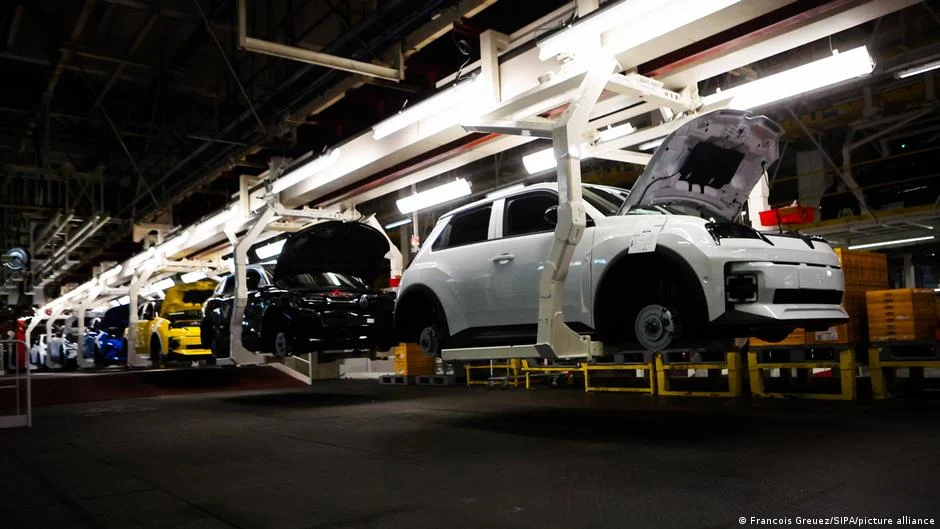
French automotive giant Renault has announced a strategic initiative to reduce its global engineering workforce by 15 to 20 percent over the next two years. This translates to a potential reduction of up to 2,400 positions from its current global engineering team, which ranges between 11,000 and 12,000 professionals. The company has assured that these significant cuts will be implemented through voluntary measures, specifically avoiding forced layoffs. This restructuring aims to streamline operations and enhance efficiency as Renault navigates an increasingly competitive global automotive landscape, particularly in the burgeoning electric vehicle (EV) sector. The move underscores the profound pressures faced by legacy European automakers in adapting to rapid technological shifts and intense competition from agile, cost-effective rivals, primarily from China.
Elaboration on Job Cuts and Geographic Impact
The planned reduction targets a substantial portion of Renault’s highly skilled engineering personnel across its worldwide operations. A spokesperson for the carmaker confirmed that the core functions of developing new technologies and fundamental design work would remain firmly anchored in France, reinforcing the nation’s role as the company’s primary innovation hub. This strategic decision highlights a commitment to retaining critical intellectual property and high-value research and development within its home country, potentially safeguarding national expertise and high-skill employment in advanced automotive fields.
However, engineering centers situated in various other countries are slated to experience reductions in their staffing levels. These include key facilities in Brazil, India, Morocco, Romania, South Korea, Spain, and Turkey. The geographical distribution of these cuts suggests a global optimization strategy, where certain engineering tasks might be centralized or re-evaluated for efficiency. For instance, while fundamental design and cutting-edge research might be consolidated in France, localized engineering for specific market adaptations, component testing, or more routine development tasks could see reductions elsewhere. This reflects a trend among multinational corporations to consolidate specialized functions to achieve economies of scale and foster closer collaboration on key projects.
The emphasis on "without forced layoffs" is a crucial aspect of Renault’s communication strategy, aimed at mitigating potential industrial relations disputes and maintaining employee morale. This approach typically involves a reliance on natural attrition, voluntary severance packages, early retirement incentives, and internal redeployments. Voluntary departure schemes often include attractive financial incentives and support for career transitions, designed to encourage employees to leave willingly. This method seeks to manage the transition smoothly, minimizing the social impact while still achieving the desired workforce reduction goals. However, even voluntary schemes can lead to a loss of institutional knowledge and place increased pressure on remaining staff.
Background Context: The Automotive Industry’s Shifting Landscape
The automotive industry is undergoing its most profound transformation in a century, driven by a confluence of factors: electrification, digitalization, and increasing software content. European automakers, including Renault, find themselves in a challenging crucible, grappling with intense competition that has reshaped market dynamics. A primary driver of this pressure emanates from Chinese brands, which have rapidly ascended to prominence, particularly in the electric vehicle segment.
These Chinese manufacturers are renowned for their distinct advantages: significantly lower production costs, remarkably shorter development cycles, and an aggressive innovation pace, especially concerning battery technology and smart vehicle features. Companies like BYD, Nio, and XPeng have demonstrated an ability to bring new EV models to market at speeds previously unheard of in the Western automotive industry, often integrating cutting-edge digital cockpits and advanced driver-assistance systems as standard. This paradigm shift means that traditional strengths of European marques – such as powertrain refinement, brand heritage, and extensive dealer networks – are being challenged by new metrics of success: software integration, battery range, charging speed, and affordability.
The global push towards electric mobility has exacerbated these competitive pressures. While European governments and consumers increasingly embrace EVs, the supply chain and manufacturing ecosystems for these vehicles are heavily concentrated in Asia, particularly China. Chinese companies benefit from robust domestic supply chains for critical components like batteries, electric motors, and power electronics. They also often operate with lower labor costs and receive significant government support through subsidies and strategic industrial policies, allowing them to bring competitively priced EVs to market with unprecedented speed. Legacy European automakers, by contrast, often carry the burden of extensive internal combustion engine (ICE) infrastructure, higher labor costs, and complex, often fragmented supply chains. The massive capital investment required to transition to an all-electric future, coupled with the need to retool factories and retrain workforces, makes this transition both costly and operationally complex. Renault’s decision to streamline its engineering department is thus not an isolated event but a symptomatic response to these macro-economic and industrial forces, aimed at re-aligning its cost structure and operational agility with the demands of the new automotive era.
Chronology of Renault’s Strategic Response
Renault’s current restructuring is part of a broader, multi-year strategic overhaul initiated by CEO Luca de Meo and his leadership team, known as the "Renaulution" plan. Launched in 2020, Renaulution was designed to shift the company’s focus from volume to value, reduce fixed costs, enhance profitability, and embrace the future of mobility.
A key milestone in this strategy was the public articulation in March by François Provost, a key executive at Renault, of the company’s urgent need to "compete with Chinese vehicle manufacturers in terms of innovation, cost and speed." This statement underscored a profound recognition of the competitive threat and an immediate call to action for the entire organization.
A cornerstone of the Renaulution plan was the creation of dedicated business units, notably Ampere, which was spun off in late 2023 as a standalone entity focused entirely on electric vehicles and software development. Ampere, headquartered in France, is envisioned as a more agile, tech-focused company capable of rapid innovation cycles, free from the legacy constraints of the broader Renault Group. The engineering cuts announced now are likely a direct consequence of this strategic bifurcation, allowing Ampere to build a highly specialized, efficient engineering team with a focus on cutting-edge EV and software technologies, while the legacy Renault brand optimizes its remaining resources for profitability and efficiency in its traditional segments.
Furthermore, Renault has set ambitious product development targets to regain market traction. The company plans to launch 36 new models within the next five years, a testament to its commitment to refresh its product portfolio rapidly and frequently. Crucially, it aims to drastically cut the development time for these new vehicles to just 24 months, a significant departure from the much longer timelines traditionally associated with European car manufacturers, which often spanned 48 to 60 months or even more for complex new platforms. This acceleration in development cycles is critical for responding to fast-evolving consumer preferences and technological advancements, directly mirroring the agility of its Asian rivals.
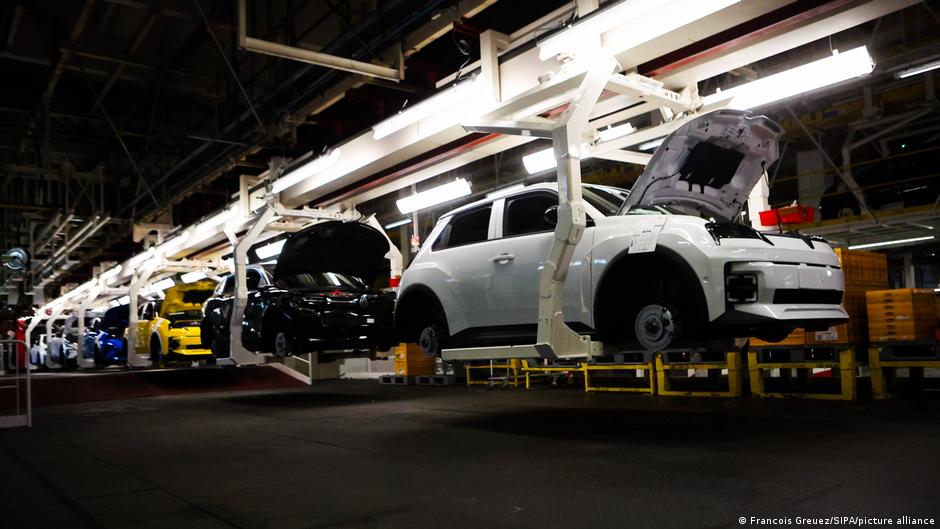
A notable example of this accelerated development strategy is the new Twingo E-Tech electric car. Through close collaboration with Chinese engineers at its research and development center in China, Renault was able to reduce the development time for this compact EV to an impressive 21 months. This success story not only demonstrates the feasibility of shorter development cycles but also highlights Renault’s pragmatic approach to leveraging global expertise and efficiency, even from its competitors’ home turf, to achieve its strategic objectives. This collaboration signals a willingness to adopt new methodologies and partnerships to remain competitive and learn from the fastest innovators in the industry. The Twingo E-Tech, unveiled as a low-price electric vehicle, embodies Renault’s strategy to combine affordability with rapid innovation.
Supporting Data and Market Analysis
The competitive landscape for European automakers has become increasingly challenging, as evidenced by various market data points. According to reports from organizations like JATO Dynamics and S&P Global Mobility, Chinese EV brands have been steadily increasing their market share in Europe, driven by aggressive pricing, rapid product launches, and strong technological offerings in areas like battery range and infotainment. In 2023, Chinese-made cars, including those from Western brands produced in China, accounted for a significant percentage of EV sales in Europe, with projections indicating further growth. This influx is putting immense pressure on the profitability and market positioning of established European players, forcing them to re-evaluate their cost structures and development processes.
Cost structures are a crucial differentiating factor. Chinese manufacturers benefit from vertically integrated supply chains, particularly for battery production, where China holds a dominant global position. This integration allows them to control costs more effectively than many European counterparts who often rely on external suppliers, sometimes from China itself. Furthermore, lower labor costs in China contribute to a more competitive overall manufacturing expense. An analysis by KPMG noted that the average development cost per vehicle for Chinese OEMs could be significantly lower than for their European counterparts, partly due to less complex regulatory environments in their home market and a ‘software-first’ approach that often streamlines hardware development and reduces prototyping costs.
Development cycles illustrate this disparity starkly. While traditional European carmakers historically took 4-5 years to bring a new model from concept to market, Chinese OEMs frequently achieve this in 2-3 years, and sometimes even less for derivative models or significant mid-cycle refreshes. This speed allows them to quickly adapt to market trends, iterate on designs, and introduce new technologies faster, effectively shortening product lifecycles and maintaining a fresh product pipeline. For Renault to target 24-month development cycles is a direct attempt to bridge this gap and regain parity in terms of market responsiveness, which is essential for capturing rapidly evolving consumer demand in the EV space.
The broader shift towards electric vehicles also demands different types of R&D investment. While legacy R&D focused heavily on internal combustion engine optimization, chassis dynamics, and traditional materials science, the EV era prioritizes battery chemistry, electric powertrains, power electronics, and, crucially, software development, artificial intelligence, and connectivity features. This requires a significant reallocation of R&D budgets and a profound transformation of the engineering skill set, often necessitating a reduction in certain legacy engineering roles while simultaneously recruiting for new, specialized expertise in areas like AI algorithms, cybersecurity, cloud computing, and advanced battery management systems. This dual movement—downsizing in traditional areas and upskilling/recruiting in new ones—contributes to the overall restructuring of engineering departments across the industry.
Official Responses and Stakeholder Reactions
Renault’s management has consistently framed these engineering workforce reductions as a necessary and proactive step to ensure the company’s long-term viability and competitiveness. The official stance emphasizes efficiency, agility, and future-proofing the organization against evolving market demands. By explicitly stating that the cuts will be made "without forced layoffs," Renault aims to convey a commitment to responsible corporate conduct, mitigating potential negative impacts on its workforce and public perception. This approach suggests a preference for voluntary departure schemes, which typically involve attractive severance packages, early retirement incentives, and support for career transitions, aiming to manage the process amicably and minimize disruption. The company’s communication emphasizes that these measures are strategic, not a sign of financial distress, but rather a necessary adaptation to a rapidly changing industrial landscape.
While no direct statements from employee representatives or unions were provided in the initial report, it is a logical inference that such significant workforce changes would involve extensive consultations with labor organizations in countries where Renault operates. Unions typically prioritize job security, fair treatment, and the protection of workers’ rights. Their likely reaction would be to scrutinize the terms of any voluntary departure programs, ensure transparency in the process, and advocate for retraining opportunities and robust support services for affected employees. Given the company’s pledge against forced layoffs, union leaders might view this as a more palatable approach to restructuring compared to compulsory redundancies, provided the voluntary terms are generous and support services are comprehensive. However, concerns about the overall impact on remaining engineers, potential workload increases, and the vital importance of retaining critical technical expertise and institutional knowledge would almost certainly be raised during negotiations.
Industry analysts, observing the broader automotive landscape, largely view such restructuring efforts as an inevitable, albeit challenging, part of the transition for legacy automakers. They acknowledge that streamlining operations, optimizing R&D spending, and accelerating product development cycles are critical for survival in the face of disruptive competition. Analysts might commend Renault for taking decisive action, particularly its focus on leveraging collaboration (e.g., with Chinese partners) and establishing agile units like Ampere to drive innovation. However, they would also highlight the execution risk associated with such large-scale changes, particularly the challenge of retaining critical talent and skills during a period of significant downsizing, and ensuring that the pursuit of cost-efficiency does not compromise the quality, safety, or innovation potential of future products. The delicate balance between aggressive cost reduction and maintaining a competitive edge in R&D is a constant focus for industry watchers, who will closely monitor Renault’s ability to achieve its strategic objectives without sacrificing its engineering prowess.
Broader Impact and Implications
The implications of Renault’s engineering workforce reduction extend far beyond the immediate confines of the company, reflecting broader trends shaping the global automotive industry and industrial policy. This move serves as a bellwether for the profound transformations occurring across the entire sector.
Firstly, it underscores a fundamental transformation of automotive R&D. The industry is rapidly shifting from a hardware-centric model, historically dominated by mechanical, chemical, and materials engineering, to a software-defined vehicle paradigm, where expertise in artificial intelligence, data science, cybersecurity, cloud computing, and advanced electronics is paramount. This necessitates a profound reskilling and upskilling of the existing workforce and a complete re-evaluation of the types of engineers required. Legacy engineering roles related to internal combustion engines or traditional mechanical systems may become redundant, while demand for new digital competencies soars. This structural shift is likely to be a continuous process across all major automakers, requiring substantial investment in training and talent acquisition.
Secondly, the intense competitive pressure from Chinese manufacturers has significant geopolitical implications. European policymakers are increasingly concerned about the influx of low-cost Chinese EVs, which poses a direct threat to domestic auto production, jobs, and the industrial base of the continent. While some advocate for protectionist measures, such as tariffs, others, like Renault, are seeking more nuanced ways to learn from and compete directly with Chinese efficiency and speed. This dynamic highlights a tension between open market principles and the desire to protect strategic national industries, potentially leading to trade disputes or new industrial policies aimed at bolstering European competitiveness in key EV technologies and supply chains. The long-term industrial strategy of Europe will be heavily influenced by how its automotive giants respond to this challenge.
Thirdly, the restructuring affects the overall competitiveness of the European automotive industry as a whole. Renault’s move is not unique; other European carmakers, including Volkswagen, Stellantis, and Mercedes-Benz, are also undertaking similar efficiency drives and strategic reorganizations. The collective ability of these companies to adapt rapidly, cut costs without sacrificing innovation, and integrate new technologies will determine Europe’s future standing in the global automotive hierarchy. Failure to do so could lead to a significant decline in market share, widespread job losses, and a weakening of a historically vital economic sector that underpins millions of jobs and significant GDP contributions across the continent.
Finally, there are localized impacts on innovation hubs in the countries where engineering posts are being reduced. While France retains core R&D, scaling back engineering teams in countries like Spain, Romania, or India could affect local talent pools, university partnerships, and the overall development of automotive engineering expertise in those regions. These centers often play crucial roles in localized product development, testing, and adapting global platforms for specific market needs. The challenge for Renault will be to maintain sufficient localized engineering capacity and market understanding to serve diverse global markets effectively, even with a leaner global footprint. The long-term success of this strategy hinges on its ability to foster a more focused, agile, and technologically advanced engineering organization that can innovate at the pace of its fastest rivals, while successfully managing the human and operational aspects of such a significant transition.
Conclusion
Renault’s decision to significantly reduce its global engineering workforce is a stark manifestation of the profound and rapid changes sweeping through the automotive industry. It represents a strategic imperative to become more agile, cost-efficient, and competitive in a market increasingly dominated by electric vehicles and characterized by intense pressure from fast-moving Chinese rivals. By prioritizing core R&D in France, leveraging international collaboration, and aiming for drastically shorter development cycles, Renault is attempting to re-engineer its very approach to innovation and product delivery. This bold move, while undoubtedly challenging for the individuals and teams affected, underscores a broader industry trend where traditional models are being dismantled in favor of leaner, more technology-driven structures. The success of Renault’s "Renaulution" strategy and its ability to navigate this challenging transition will serve as a crucial test case for how legacy European automakers can adapt and thrive in the electric, software-defined future of mobility. The coming years will reveal whether these strategic cuts pave the way for a more robust and innovative Renault, capable of competing effectively on the global stage.

