
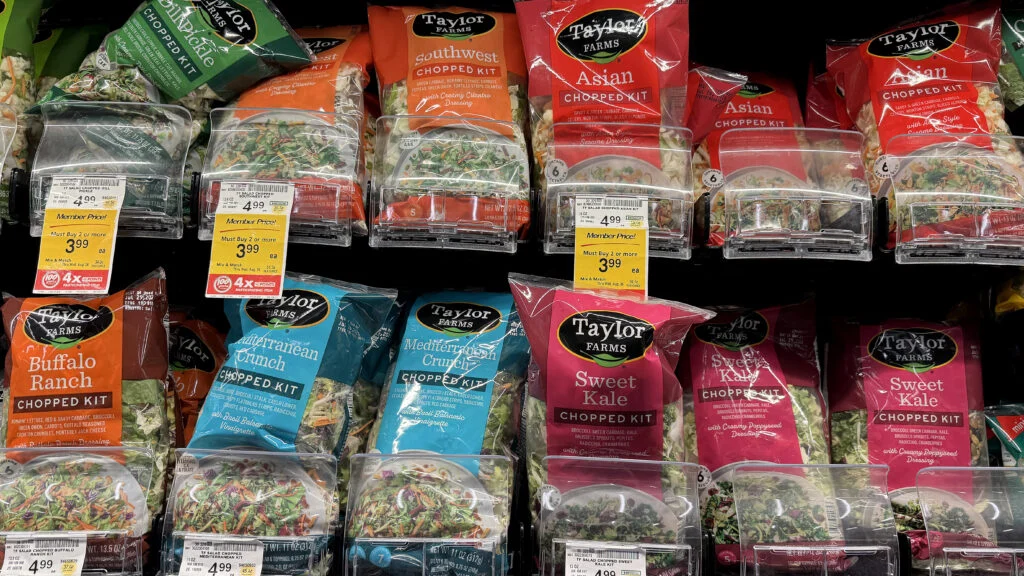
Federal health officials are steadfastly maintaining their focus on lettuce originating from Taylor Farms as the probable source of a multi-state outbreak of Cyclospora, a debilitating parasitic infection, despite a temporary setback involving inaccurate laboratory test results. The U.S. Food and Drug Administration (FDA) confirmed on Monday that a laboratory test, initially reported as positive for Cyclospora on a sample of Taylor Farms lettuce, was subsequently identified as a false positive. This development, briefly publicized over the weekend, has not deterred investigators from their primary lead.
Investigation Deepens into Cyclospora Contamination
The ongoing investigation into a surge of Cyclospora cases across five states has been a top priority for federal and state authorities. The outbreak was initially linked to lettuce served at various Taco Bell locations, prompting swift action from both public health agencies and the food industry. On Saturday, Taylor Farms, a significant supplier of produce to numerous food chains and distributors, proactively announced a recall of 25 shredded lettuce and salad mix products. These products, identified by eight different brand codes, were distributed widely across the United States, underscoring the potential reach of the contamination.
Donald Prater, the FDA’s acting deputy commissioner for food policy and response, articulated the agency’s continued conviction in a press briefing on Monday. "The FDA’s traceback investigation and the outbreak data continue to converge on shredded iceberg lettuce from Taylor Farms’ locations in central Mexico," Prater stated, emphasizing that the evidence consistently points towards this specific product and origin. In parallel with tracing the supply chain of the implicated lettuce, FDA personnel have initiated testing of produce entering the U.S. across its borders, a measure designed to cast a wider net and identify any potential vulnerabilities in the food import system.
A False Positive and the Scrutiny of Rapid Testing
The erroneous test result that briefly cast a shadow over the investigation stemmed from a rapid screening test used by the FDA to detect traces of Cyclospora. The sample in question, which originated from Taylor Farms, was not part of the company’s voluntarily recalled product line. Nevertheless, FDA officials felt a responsibility to inform the public of the initial positive finding, prioritizing transparency and immediate public health awareness. However, a subsequent and rigorous quality control check revealed that the positive result was indeed an error, a correction that was communicated to Taylor Farms on Sunday.
This sequence of events led to a public statement from Taylor Farms on social media, which highlighted the updated test results and stated, "FDA apologized to us." In response, agency officials clarified that no formal apology was issued, emphasizing their commitment to accurate and verifiable reporting. The incident underscores the critical importance of robust quality control protocols in laboratory testing, particularly when dealing with foodborne illness investigations that have significant public health and economic ramifications.
Understanding Cyclospora: A Microscopic Threat
Cyclospora cayetanensis is a microscopic protozoan parasite that causes cyclosporiasis, an intestinal infection in humans. The parasite is typically transmitted through contaminated food or water. Produce becomes contaminated when it comes into contact with human feces, often through the irrigation or washing of crops with contaminated water. The symptoms of cyclosporiasis are characterized by gastrointestinal distress, including frequent, watery, and sometimes explosive bowel movements, abdominal cramping, bloating, and nausea. Fatigue, loss of appetite, and low-grade fever can also occur. The illness can be particularly severe for individuals with weakened immune systems.
The Centers for Disease Control and Prevention (CDC) has provided critical insights into the symptoms and transmission of Cyclospora, aiding both public understanding and medical diagnosis. The parasite’s life cycle requires a period of maturation outside the human body before it becomes infectious, meaning that the contaminated produce itself is the vehicle of transmission.
A Pattern of Outbreaks and Public Health Response
The current outbreak is not an isolated incident. According to data from the FDA and CDC, Cyclospora has caused significant illness in the United States in previous years. In 2026, for instance, the parasite sickened at least 1,645 people and led to 141 hospitalizations. Public health agencies investigate multiple distinct clusters of Cyclospora illnesses annually, with the current investigation involving five separate clusters.
Kyle Diamantas, the FDA’s acting commissioner, highlighted the persistent nature of the current outbreak during the Monday press briefing. "Health officials have continued to see new cases associated with the latest outbreak, including some as recent as last week," Diamantas reported. This ongoing influx of cases underscores the urgency of the situation. "Which means it’s imperative for us to take action to ensure that contaminated product is not making its way to the market," he added, emphasizing the critical role of continued vigilance and intervention.
Economic Repercussions and Consumer Confidence
The impact of foodborne illness outbreaks extends beyond public health, significantly affecting the food service industry. Data compiled by Placer.ai, a firm that tracks foot traffic using cellphone usage patterns, revealed a noticeable decline in customer visits to several dining chains in the week leading up to Friday. This drop coincided with federal health officials publicly linking the outbreak to specific establishments.
Taco Bell experienced the most significant decline, with an 18.9% decrease in foot traffic compared to the average for the same day of the week between January 1 and July 6. Other fast-casual restaurants also saw notable dips: Chopt reported a 14.3% fall in traffic, while Chipotle and Panera Bread each experienced close to a 7% reduction. Cava saw a smaller, though still significant, decrease of 4.2%. These figures illustrate the sensitive nature of consumer confidence in the face of food safety concerns and the immediate economic consequences that can follow public health warnings.
The Challenges of Tracing and Proving Causation
Investigating foodborne illness outbreaks, particularly those involving parasites like Cyclospora, presents unique scientific and logistical challenges. Food safety investigators often struggle to establish a direct biological link between a recalled product and specific instances of illness. Standard laboratory tests designed to detect common foodborne pathogens may not be sufficiently sensitive or specific for identifying Cyclospora.
Furthermore, the Cyclospora parasite cannot be easily cultured in a laboratory setting, making it difficult to obtain definitive evidence directly from contaminated produce samples. Consequently, investigators often rely on a combination of epidemiological data, including detailed interviews with affected individuals about their dietary histories, the geographical and temporal proximity of reported cases, and the identification of common consumption patterns. This reliance on indirect evidence highlights the intricate and often complex nature of foodborne illness investigations.
Moving Forward: Vigilance and Collaboration
The FDA and its state and federal partners remain committed to thoroughly investigating the Cyclospora outbreak, identifying its root cause, and preventing further illnesses. The focus on Taylor Farms lettuce, despite the temporary confusion caused by the false positive test result, is a testament to the ongoing evidence-gathering process. The agency’s proactive testing of imported produce signifies a broader commitment to bolstering food safety measures across the entire supply chain.
The incident also serves as a reminder of the ongoing need for advanced diagnostic tools and robust investigative methodologies in the realm of food safety. As new cases continue to emerge, the collaborative efforts of public health agencies, the food industry, and researchers will be crucial in safeguarding the nation’s food supply and protecting public health from the persistent threat of foodborne pathogens. The FDA’s dedication to transparency, even in the face of procedural hiccups, is vital for maintaining public trust and ensuring effective public health interventions.
Matthew Perrone and Anne D’Innocenzio of the Associated Press contributed to this report.

