
A profound political and cultural shift is quietly unfolding across the vast expanses of rural America, defined by an intriguing paradox. According to a comprehensive new national poll conducted by The Associated Press in partnership with KFF, roughly half of all rural voters identify with the "Make America Healthy Again" (MAHA) movement, a sprawling public health and political crusade championed by the Trump administration and spearheaded by Health and Human Services Secretary Robert F. Kennedy Jr. Yet, despite this overwhelming cultural buy-in, the same survey reveals a striking disconnect: approximately 8 out of 10 rural voters—a foundational voting bloc for Donald Trump and the Republican Party—believe the administration’s specific healthcare policies have yielded either a negative effect or zero tangible impact on the health and well-being of their local communities.
Even among dedicated MAHA adherents, 68% share this sense of localized stagnation. This complex sentiment underscores a growing tension between populist health rhetoric emanating from Washington, D.C., and the daily realities experienced by millions of Americans living outside major metropolitan centers. As midterm elections approach, this divergence highlights how deep-seated anxieties over chronic illness, systemic healthcare shortages, and soaring household expenses are shaping voter behavior in ways that defy simple partisan categorization.
The Genesis and Evolution of the MAHA Movement
The roots of the Make America Healthy Again movement stretch back years, drawing energy from a growing frustration with institutional public health failures, the epidemic of chronic disease, and the pervasive influence of corporate agriculture and pharmaceutical giants. When Donald Trump returned to the White House for a second term, he and his allies sought to institutionalize these grievances by elevating Robert F. Kennedy Jr. to head the Department of Health and Human Services.
Under Kennedy’s guidance, the MAHA banner has been deployed to champion a diverse, often controversial portfolio of policy initiatives. These include challenging long-standing federal vaccine guidance, launching aggressive inquiries into ultraprocessed foods, reshaping federal dietary guidelines, and expanding investments in regenerative agriculture. For many rural residents who watch family members and neighbors grapple with high rates of cancer, diabetes, and autoimmune disorders, these populist talking points strike a deeply personal chord.
However, political analysts note that the operational reality of governing has introduced a confusing policy mix. David Peterson, a political science professor at Iowa State University, points to a visible split in perception between Kennedy’s aggressive public messaging and the broader legislative and executive actions taken by the Trump administration as a whole.
"It’s this mix of things coming out of D.C., out of different pieces of the administration, that’s confusing people," Peterson observed. While voters applaud the rhetoric aimed at taking on corporate agriculture and cleaning up the American food supply, they are simultaneously struggling to feel the direct benefits of these federal pivots on the ground.
Personal Stories from the Heartland: Perspectives from Iowa and Beyond
To understand the grassroots appeal of MAHA alongside the prevailing skepticism of federal healthcare outcomes, one must look to the heart of the American agricultural belt.
In Sumner, Iowa, 58-year-old registered Republican and local pastor Mike Jager sits squarely at the intersection of these competing dynamics. Living just a short distance from sprawling cornfields, Jager has watched friends and family members contract serious illnesses that he believes are linked, at least in part, to long-term exposure to agricultural chemicals and a diet heavily reliant on processed foods.
Jager identifies strongly with the MAHA movement and believes that Secretary Kennedy is pushing public policy "in the right direction." However, he concedes that the actual impact of the Trump administration’s health policies on his local community thus far has been "minimal."

"It’s a beginning," Jager said, offering a patient defense of the administration. "It’s a big ship to try and turn around and course-correct." Jager’s enthusiasm for the movement has translated into active local engagement; during the June Republican primary for governor, he cast his ballot for Zach Lahn—a businessman and farmer who ran on an explicit MAHA platform—helping him defeat Trump-backed U.S. Rep. Randy Feenstra.
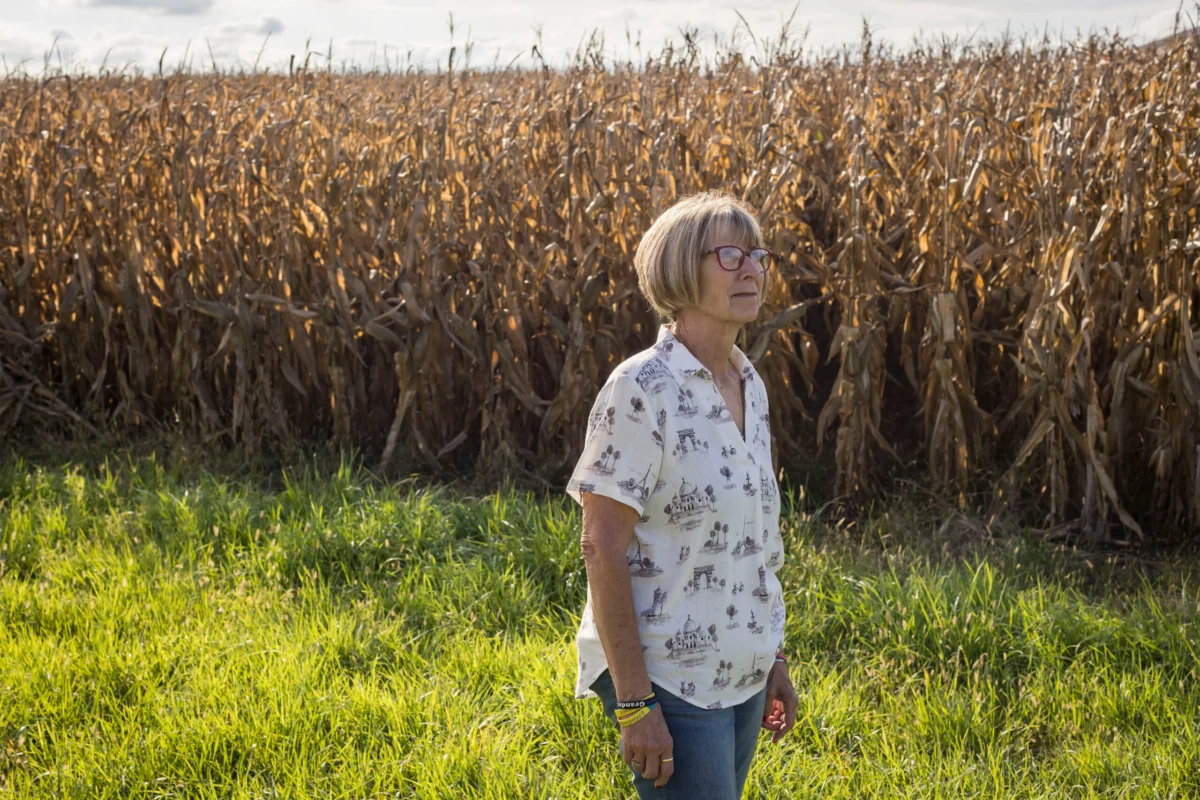
Conversely, not all rural residents view the movement with optimism. Donna Klocke, a 71-year-old Democrat living on a 200-acre farm in Carroll County, Iowa, understands the health anxieties plaguing rural communities all too well. Her husband passed away from cancer following a lifetime of farming, and she notes that cancer diagnoses remain distressingly common among her neighbors.
While Klocke agrees with the basic premise that Americans need to eat healthier and pay attention to environmental toxins, she stops short of supporting the MAHA movement. Furthermore, she harbors deep apprehensions about Robert F. Kennedy Jr.’s historical and ongoing skepticism regarding established vaccines.
"Measles are coming back and polio," Klocke remarked, expressing frustration over declining immunization rates and mixed public messaging. "It’s the measles that really gets me. It’s like, do you not understand how dangerous it is?"
Mounting Pressures: Healthcare Access, Costs, and Provider Shortages
Beyond the ideological debates surrounding food and vaccines, the KFF-AP survey lays bare a worsening crisis of healthcare access and affordability across rural America.
Approximately half of all rural survey respondents stated that their communities suffer from a severe shortage of doctors and primary care providers. The deficit is viewed as even more acute when it comes to mental health professionals. Compounding these workforce shortages is the vanishing infrastructure of rural care: the proportion of rural voters reporting that their community lacks an adequate number of hospitals has climbed to 35%, a significant leap from the 21% who reported the same sentiment in a parallel 2017 survey conducted by KFF and The Washington Post.
Simultaneously, everyday financial pressures are weighing heavily on rural families. More than 60% of rural voters expressed significant anxiety over the escalating costs of healthcare, prescription drugs, and basic necessities like gas and groceries.
This financial anxiety is sharply stratified by insurance coverage type. While rural residents covered by traditional employer-sponsored plans or Medicare report lower levels of distress, working-age adults reliant on Medicaid face immense vulnerability. The survey revealed that 80% of rural working-age Medicaid recipients are very or somewhat worried about healthcare costs. This widespread unease follows the passage of a major tax and spending bill by congressional Republicans last year, which slashed projected federal Medicaid spending by more than $900 billion over a decade while instituting stricter eligibility guidelines.
For those purchasing individual coverage through Affordable Care Act (ACA) marketplaces, the financial strain is similarly acute. Kim Solis, a 62-year-old resident of Lipan, Texas—a small community west of Dallas—operates a handyman and home-remodeling business with her husband and relies on marketplace insurance. According to Solis, their monthly premium jumped from zero to $166 following Trump’s return to office, accompanied by higher copays and a $2,000 increase in individual deductibles.
"Certainly, we’d be in a world of hurt trying to take money out of savings or getting it out of our 401(k) just to be able to do something about it," Solis said, capturing the precarious financial tightrope walked by many self-employed rural workers.
Trust Deficits and Partisan Dives on Health Information

When it comes to sourcing reliable health guidance, rural voters exhibit a clear and consistent skepticism toward government institutions, mirroring trends observed in the broader American populace. Instead of relying on federal agencies, politicians, or public health bureaucrats, rural residents overwhelmingly place their trust in their personal physicians and local healthcare providers.
Trust in specific political figures heading the national health apparatus remains sharply divided along party lines. The survey found that roughly 74% of rural Republican voters harbor a "great deal" or "fair amount" of trust in Robert F. Kennedy Jr. for reliable health information, compared to just 10% of rural Democrats. Similarly, President Trump commands the trust of 69% of rural Republicans on health matters, while only 5% of rural Democrats share that confidence.
This deep partisan divide complicates the political fallout for local candidates running under the MAHA banner. While Make America Great Again (MAGA) and Make America Healthy Again identities are frequently intertwined in the public consciousness, economic realities threaten to fracture that coalition.
Professor Peterson notes that when inflation drives up the cost of groceries, the noble goal of purchasing wholesome, organic food can quickly morph into a point of political frustration. Families trying to adhere to MAHA dietary principles may find themselves thinking, "I can’t afford to do that because of broader economic policies."
An Incremental Culture Shift
Despite these economic hurdles, many rural supporters believe that the cultural transformation championed by the MAHA movement is a long-term project requiring patience.
Alma Johnson, a 65-year-old night security worker at a horse farm in Stamping Ground, Kentucky, has voted for Donald Trump in 2016, 2020, and 2024. While she enjoys the overall direction of the country under Trump’s leadership, she describes herself as an independent thinker rather than a blind partisan.
Johnson is an enthusiastic supporter of MAHA principles, particularly favoring proposals to restrict the purchase of junk food using benefits from the Supplemental Nutrition Assistance Program (SNAP). Yet, much like her peers in Iowa and Texas, she acknowledges that she has not yet witnessed any dramatic shifts resulting from administration policies like the newly proposed federal food pyramid.
"It takes a long time to change people, their habits, their thoughts, or the things they do," Johnson reflected.
Methodology of the KFF-AP Rural Voters Survey
The insights informing this analysis are derived from the KFF-AP Rural Voters Survey, which was administered online and via telephone between August 12 and August 24, 2026. The research captured responses from 2,241 registered voters residing in designated rural areas, defined according to the U.S. Department of Agriculture’s 2020 Rural-Urban Commuting Area (RUCA) codes 5 through 10.
The survey sample was constructed using a dual-method approach, combining the probability-based SSRS Opinion Panel with a comprehensive registration-based sample sourced from the L2 voter file. Researchers from KFF, in close collaboration with The Associated Press, designed the survey instrument, formulated the questionnaire, and conducted the subsequent data analysis. The overall findings carry a margin of sampling error of plus or minus 3 percentage points, accounting for standard design effects and weighting procedures, with wider margins applicable to specific demographic subgroups.

