
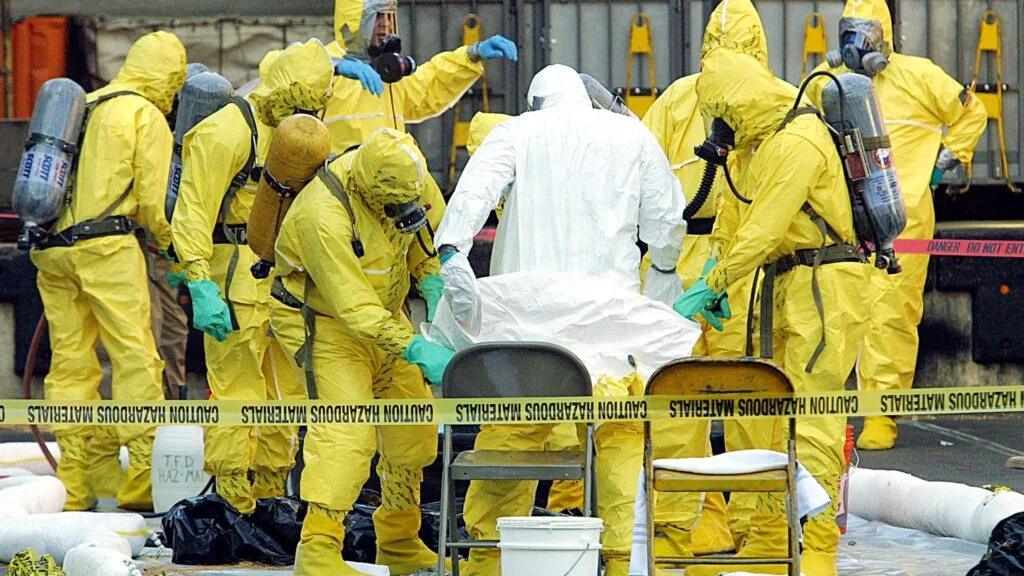
Twenty-five years after the United States was struck by the 2001 anthrax attacks, the nation finds itself reflecting on a defining moment in public health and national security. Occurring in the immediate, volatile aftermath of the September 11 terrorist attacks, the dissemination of Bacillus anthracis through the U.S. postal system transformed the American perception of domestic vulnerability. What began as a localized medical mystery in Florida rapidly escalated into a national crisis, ultimately resulting in 22 confirmed cases of anthrax, five deaths, and a profound shift in how the federal government approaches the intersection of epidemiology and counterterrorism.
A Chronology of the 2001 Crisis
The timeline of the attacks reveals the rapid pace at which public health officials were forced to adapt to an unprecedented threat. The first identified case occurred in early October 2001, when a photo editor at American Media Incorporated (AMI) in Boca Raton, Florida, presented with symptoms of inhalational anthrax. Initially, clinicians and public health experts viewed the case as a potential anomaly or a rare natural occurrence. However, as the investigation progressed, the discovery of a second case at the same facility signaled a deliberate, coordinated effort.
The dissemination occurred in two primary waves. The first, mailed on September 18, 2001, contained a "crunchy," clumped formulation of the pathogen, which primarily caused cutaneous (skin) infections. The second wave, mailed on October 9, contained a significantly more dangerous, "fine" powder formulation designed for easy aerosolization. This second mailing targeted media offices and high-profile congressional targets, including the offices of then-Senate Majority Leader Tom Daschle and Senator Patrick Leahy. The shift from cutaneous to inhalational cases among postal workers—many of whom were not the intended recipients of the letters—exposed a critical gap in the understanding of how biological agents move through industrial mail-processing infrastructure.
The Epidemiological Investigation
The response was coordinated by the Centers for Disease Control and Prevention (CDC), which activated its Emergency Operations Center (EOC) for the first time in an auditorium setting to manage the deluge of data and field reports. Epidemiologists engaged in what is described as "shoe-leather" fieldwork, tracing the path of the letters across the Northeast.
Molecular testing, a technology still in its relative infancy in 2001, proved to be the linchpin of the investigation. By comparing the genetic isolates recovered from the patients, the contaminated envelopes, and various environmental samples, investigators were able to confirm that the spores were indistinguishable. This confirmed a single, common source for the attacks. Despite these technical successes, the investigation faced massive challenges. At the time, existing scientific literature suggested that the risk of resuspension of spores from mail was negligible. This assumption led to initial protocols that focused narrowly on those who opened the envelopes, leaving postal workers and those in mail-processing facilities at significant, unrecognized risk.
Supporting Data and Public Health Impact
The scale of the response required an unprecedented mobilization of resources. To mitigate the risk of infection among those potentially exposed, approximately 32,000 individuals were placed on antimicrobial prophylaxis. The economic impact was equally staggering, with response and recovery efforts totaling billions of dollars. This included the large-scale decontamination of government facilities, most notably the Hart Senate Office Building and various postal distribution centers, some of which remained shuttered for months.
The investigation provided a sobering realization: in a deliberate biological event, initial cases are often misleading. The geographic spread of the spores meant that the impact of the attack rippled far beyond the intended targets. The lesson for the public health community was clear—investigators must look beyond the primary victims and analyze the entire path of dissemination, as biological agents do not respect the boundaries of an intended recipient list.
Official Responses and Institutional Reform
In the wake of the 2001 crisis, the U.S. government implemented significant reforms. The establishment of the Laboratory Response Network (LRN) allowed for more rapid identification of high-consequence pathogens. Furthermore, the federal government enacted strict "select-agent" regulations, designed to tighten oversight of laboratories and researchers working with dangerous biological materials. The United States Postal Service (USPS) also underwent a technological overhaul, implementing new mail-screening procedures and engineering changes to sorting machines to detect and contain potential contaminants.
However, many experts now argue that these gains are being eroded. The current landscape of biodefense is characterized by a paradox: while our diagnostic technologies are more sophisticated than ever, our institutional infrastructure—the "muscle memory" of the response—is weakening.
The Modern Biothreat Landscape
The Center for Strategic and International Studies (CSIS) has recently warned that Americans face greater risks from biological threats today than at any point in the 21st century. This heightened risk is driven by several converging factors. First, the rapid advancement of artificial intelligence (AI) has lowered the barrier to entry for the development of synthetic pathogens. AI tools can now assist in the design of biological sequences, potentially allowing bad actors to bypass traditional acquisition hurdles.
Second, the institutional capacity of public health agencies is under strain. The Bipartisan Commission on Biodefense has noted that AI fundamentally transforms the threat landscape, yet the bureaucratic response to these new threats has been sluggish. The CDC, in particular, has faced significant challenges in maintaining its workforce. With a reduction in scientific staff and the departure of seasoned subject matter experts, the nation’s ability to respond to a large-scale, deliberate biological event is compromised.
Lessons for the Future
As we look back at the 25th anniversary of the anthrax attacks, three primary lessons remain pertinent:
- Detection vs. Interpretation: Rapid detection is useless without the capability for immediate, evidence-based interpretation. There is a growing concern that political interference in scientific institutions may delay the decision-making processes necessary during a crisis. Coordination between federal agencies and state/local partners is the backbone of any effective response, and any breakdown in these relationships could prove fatal.
- Managing Uncertainty: The 2001 investigation succeeded because leadership remained open to shifting paradigms—specifically, acknowledging that the initial assessment of the risk to postal workers was wrong and adjusting accordingly. A culture that penalizes dissenting dialogue or suppresses scientific evaluation is fundamentally ill-equipped to handle the uncertainty inherent in a biological attack.
- Preparedness as a Capability: Preparedness is not a static state but a dynamic capability that requires continuous investment. Sophisticated software and high-tech equipment cannot replace the need for experienced, trained personnel and established, tested networks. When institutions lose the expertise required to navigate high-consequence events, they become vulnerable.
Conclusion
The specter of an intentional biological threat, whether human-generated or facilitated by emerging technologies, continues to loom over global security. Recent outbreaks of pathogens like Ebola, hantavirus, and measles serve as reminders that the infrastructure for responding to infectious disease is under constant pressure. To honor the legacy of those who responded to the 2001 anthrax attacks, the United States must renew its focus on biothreat preparedness. This requires not only funding for technology but a renewed commitment to institutional independence, cross-sector coordination, and a scientific culture that prioritizes the objective assessment of risk. The strength of the nation’s future response will depend not merely on its ability to detect a threat, but on its capacity to understand it, adapt to it, and act with speed and precision.

