
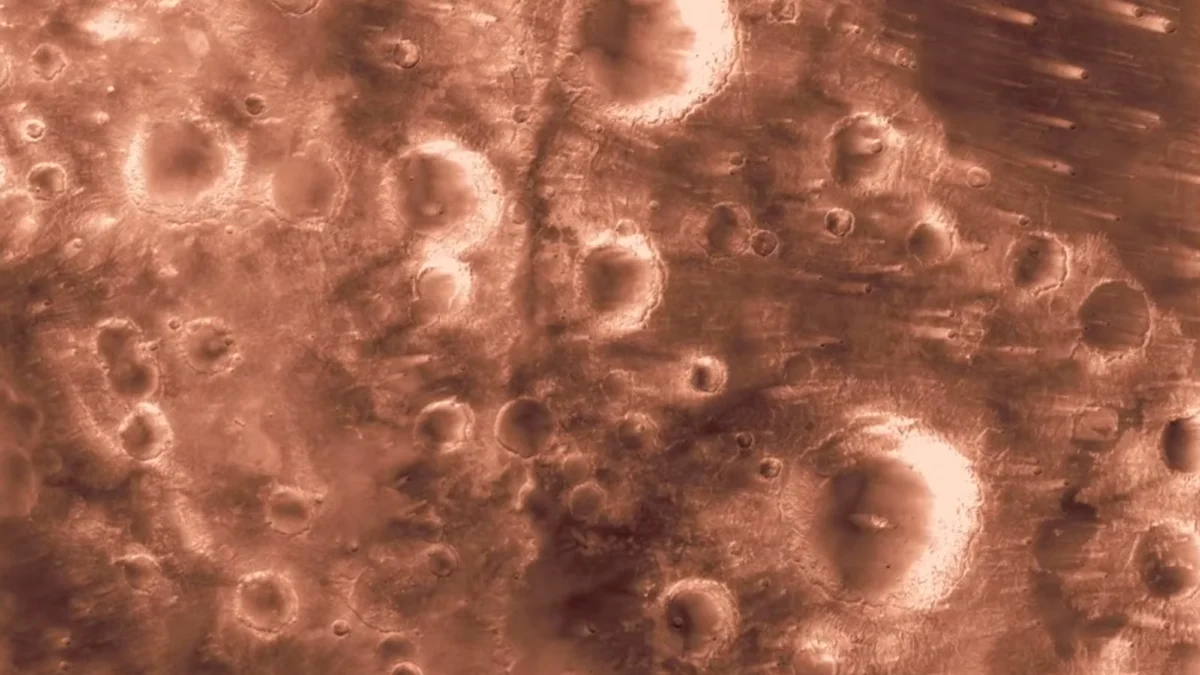
NASA’s Psyche spacecraft, on its ambitious journey to explore a unique metal-rich asteroid, has successfully utilized Mars for a critical gravitational assist, capturing a wealth of scientific data and stunning imagery of the Red Planet during its encounter. This maneuver, executed in May, not only propelled Psyche further along its trajectory toward asteroid 16 Psyche but also served as a vital testing ground for the spacecraft’s sophisticated scientific instruments. The mission team has now released a compilation of images and data, offering a rare glimpse of Mars from a dynamic, fleeting perspective and validating the readiness of Psyche’s scientific payload for its primary objective.
A Cosmic Ballet: Psyche’s Martian Sojourn
The Psyche spacecraft embarked on its multi-billion-mile voyage from Earth in October 2023. Its destination, asteroid 16 Psyche, located in the main asteroid belt between Mars and Jupiter, is an object of immense scientific interest. Unlike most asteroids, which are primarily rocky or icy, 16 Psyche is believed to be composed largely of iron and nickel, potentially representing the exposed core of an early planetesimal. Understanding its composition could unlock crucial insights into planetary formation and the differentiation processes that shaped our solar system.
To reach its distant target, Psyche requires significant velocity. While its advanced solar-electric propulsion system provides sustained thrust, strategic gravitational assists from planets along its path are essential for optimizing its journey and minimizing fuel consumption. Mars, being the fourth planet from the Sun and a relatively frequent stopover for interplanetary missions, presented an ideal opportunity for such a maneuver.
The flyby, which occurred over a month-long period in May, involved Psyche approaching Mars and using the planet’s immense gravitational pull to alter its speed and trajectory. This "slingshot" effect is a well-established technique in space exploration, allowing spacecraft to gain momentum without expending precious propellant. During this close encounter, Psyche maintained a distance of approximately 2,864 miles (4,600 kilometers) from Mars at its closest approach.
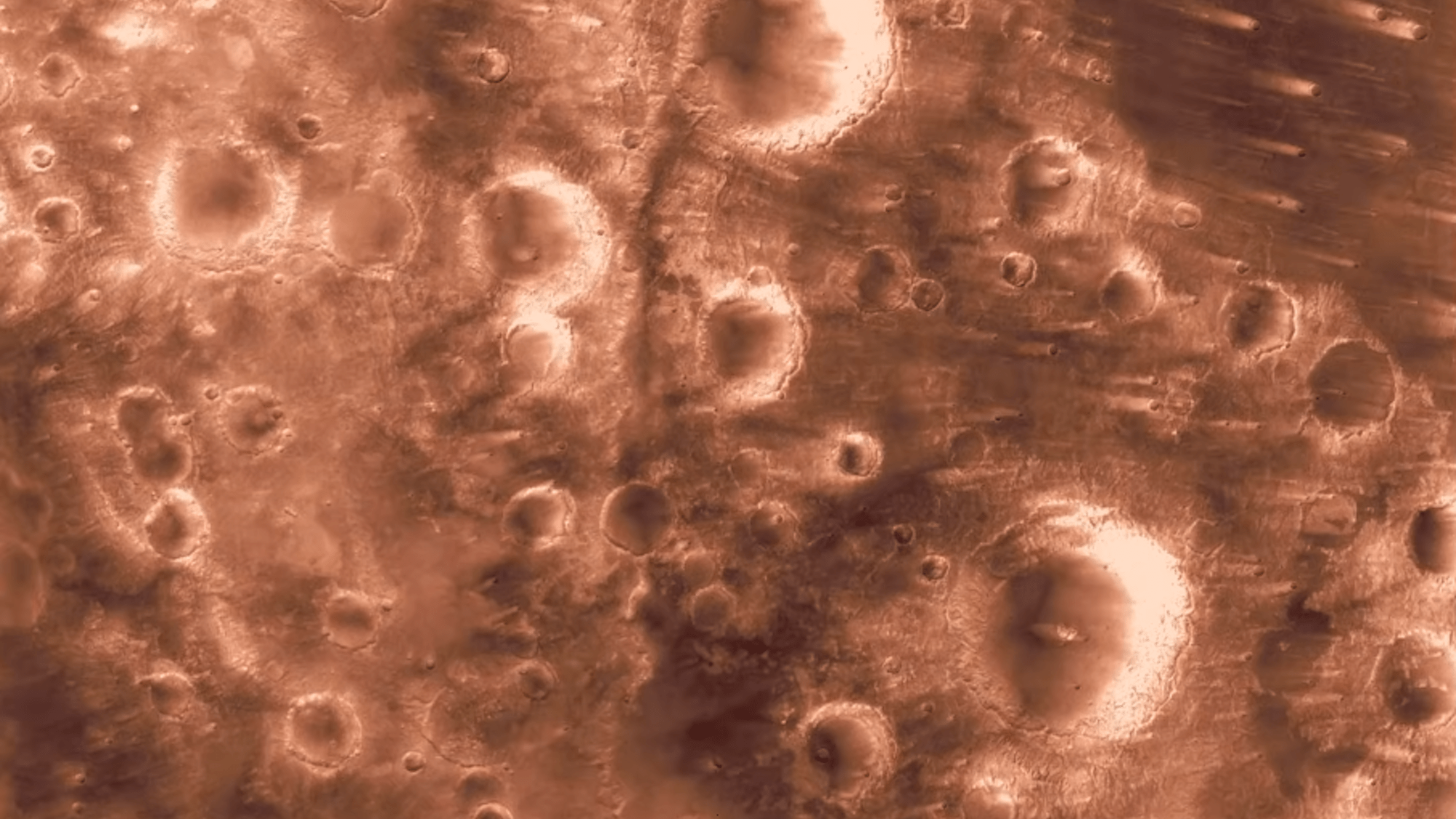
A Visual Feast: Capturing the Red Planet’s Majesty
While the primary goal of the flyby was navigational, the Psyche mission team leveraged the opportunity to capture a remarkable series of images of Mars. Equipped with a pair of identical high-resolution cameras, the spacecraft’s imager instrument, led by Jim Bell at Arizona State University, documented the Martian landscape in unprecedented detail. These images showcase the planet’s diverse topography, including vast, wind-sculpted plains, colossal impact craters, and the striking polar ice caps.
"The imager performed brilliantly, delivering some rarely seen views of the Red Planet," stated Jim Bell in a NASA press release. These visuals not only serve as a testament to the imager’s capabilities but also provide valuable data for Martian scientists, complementing existing orbital and surface observations. The time-lapse video released by NASA, compiled from these flyby photos, vividly illustrates Psyche’s approach, close passage, and departure from Mars, offering a dynamic perspective of this cosmic rendezvous.
Instrument Calibration: A Crucial Pre-Mission Test
Beyond its photographic prowess, the Mars flyby was a critical phase for testing and calibrating Psyche’s suite of scientific instruments. These instruments are designed to analyze the composition and characteristics of asteroid 16 Psyche, and their successful operation during the Mars encounter significantly bolsters confidence in their readiness for the primary mission.
Imager Instrument Testing: The cameras underwent rigorous testing, including calibration of their settings and assessment of their sensitivity to scattered light. This process is crucial for ensuring accurate scientific measurements. Furthermore, the imager was tasked with observing Mars’ two small moons, Phobos and Deimos. The techniques used to highlight these moons will be replicated at asteroid 16 Psyche, with the hope of detecting any potential smaller moons or moonlets orbiting the asteroid. This ability to detect small celestial bodies is vital for understanding the dynamics and formation history of asteroid systems.
Neutron and Gamma-Ray Spectrometer Trials: Psyche is equipped with a neutron and gamma-ray spectrometer, designed to determine the elemental composition of celestial bodies. These instruments work by detecting the high-energy cosmic rays that planetary bodies and asteroids absorb, causing them to emit neutrons and gamma rays. By analyzing the energy and patterns of these emissions, scientists can identify specific elements.

During the Mars flyby, the spectrometer was operational. While Psyche’s closest approach altitude was too high to detect the faint gamma ray emissions from Mars itself, the team aimed to identify any neutron signatures emanating from the planet. Spectrometer science lead David Lawrence reported, "Around the time of Mars’ closest approach, the neutron spectrometer detected a count-rate enhancement close to what we anticipated. It was very gratifying to see." This detection, even if subtle, validates the instrument’s ability to pick up such signals and suggests it will be capable of analyzing the elemental makeup of asteroid 16 Psyche.
Magnetometer Data Acquisition: The spacecraft’s magnetometer is a key instrument for studying the magnetic field of asteroid 16 Psyche, which is expected to provide insights into whether the asteroid is indeed the exposed core of a protoplanet. However, the magnetometer has been actively collecting data since Psyche’s launch in 2023, primarily to measure solar winds.
As Psyche approached Mars, the magnetometer registered a significant increase in its magnetic field readings. This enhancement correlated with an area of Mars known as the bow shock region, where the planet’s magnetic field interacts most intensely with the solar wind. This observation not only demonstrates the magnetometer’s sensitivity to planetary magnetic phenomena but also contributes valuable data to the ongoing study of Mars’ magnetosphere and its interaction with the solar environment.
Official Reactions and Scientific Significance
The successful Mars flyby and instrument validation have been met with enthusiasm from the Psyche mission leadership. Lindy Elkins-Tanton, the principal investigator for the Psyche mission at the University of California, Berkeley, expressed optimism about the mission’s progress. "We didn’t anticipate big discoveries, given how extensively the planet has been studied, but we did complement Mars science with the data we collected through Psyche’s unique perspective," she stated. This sentiment highlights the dual benefit of such flybys: advancing the primary mission’s goals while also contributing to our broader understanding of planetary science.
The data gathered during the Mars encounter serves multiple purposes. For the Psyche mission itself, it provides crucial validation of the spacecraft’s systems and instruments, reducing risks for the remainder of the journey and for the eventual scientific investigation of asteroid 16 Psyche. For Mars science, the unique vantage point and the instruments’ specific sensitivities may offer new perspectives on Martian atmospheric and magnetic interactions.

The Road Ahead: Continuing the Journey to 16 Psyche
With the Mars flyby successfully concluded, the Psyche spacecraft is now continuing its 2.2-billion-mile (3.5-billion-kilometer) odyssey toward asteroid 16 Psyche. The next major milestone for the mission will be the reactivation of its solar-electric propulsion system. This system, which utilizes solar panels to generate electricity that then ionizes and accelerates xenon propellant, provides a continuous, gentle thrust. Specialists anticipate restarting this system later in the year to maintain sustained acceleration towards its destination.
The journey to asteroid 16 Psyche is expected to take several more years, with arrival anticipated in 2029. Upon reaching its target, Psyche will orbit the asteroid for approximately 26 months, employing its full suite of instruments to conduct a detailed investigation. The data collected will be instrumental in understanding the formation of terrestrial planets, the processes that lead to the differentiation of planetary cores, and the potential for asteroids like 16 Psyche to serve as sources of valuable resources.
The successful Mars flyby represents a significant step forward for NASA’s Psyche mission. It underscores the ingenuity of interplanetary mission design, the dedication of the scientific teams, and the continued pursuit of knowledge about our solar system’s origins and evolution. The stunning images of Mars and the validated performance of its scientific instruments pave the way for what promises to be a groundbreaking exploration of a truly unique celestial body.

