
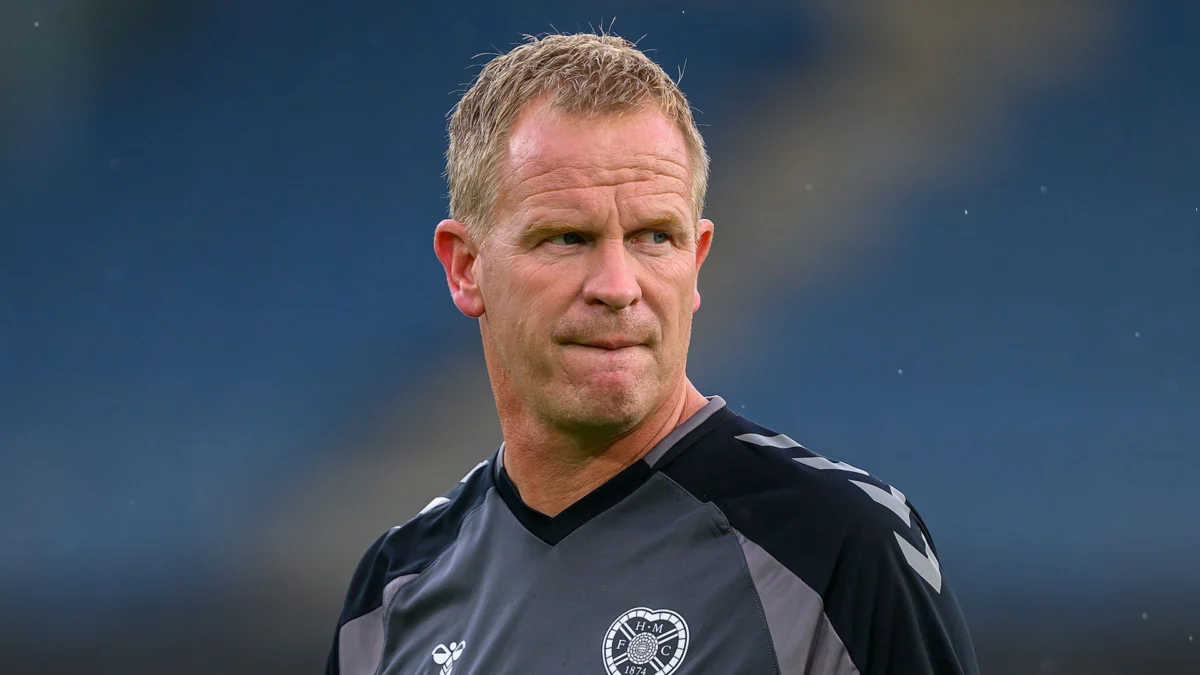
The dawn of the Wouter Vrancken era at Heart of Midlothian began in catastrophic fashion as the Edinburgh side saw their Champions League aspirations effectively extinguished following a bruising 4-0 defeat at the hands of Sturm Graz. In what was billed as a pivotal night for the club’s European ambitions, the Scottish Premiership side was undone by a combination of set-piece vulnerabilities, defensive lapses, and a clinical ruthlessness from their Austrian hosts. The result leaves Hearts facing an almost impossible task in the return leg at Tynecastle next Tuesday, with the club now bracing for a likely transition into the Europa League qualifying rounds.
Vrancken, who arrived in the Scottish capital with a reputation for tactical fluidity and high-pressing football, endured a baptism of fire in his first competitive match in charge. Having opted to leave Sint-Truiden—where Europa League football was already a guarantee—to succeed Derek McInnes, the Belgian tactician found himself immediately under the microscope. His task was made significantly harder following the high-profile departures of talismanic striker Lawrence Shankland and midfield enforcer Cammy Devlin to Rangers, leaving a void in leadership and goal-scoring threat that was painfully evident throughout the ninety minutes in Graz.
Tactical Selection and Pre-Match Context
The starting eleven named by Vrancken signaled a clear intent to move the club in a new direction, though it was not without its risks. The Belgian handed debuts to wide player Calvin Miller and young center-back Malachi Fagan-Walcott, signaling a youthful shift in the squad’s profile. Perhaps the most scrutinized decision was the inclusion of Jamie McCart in the heart of the defense, preferred over Stuart Findlay, who had been a mainstay and a standout performer for the Jambos during the previous campaign.
Furthermore, the match served as the first competitive test for the club’s new set-piece department. Following the departure of Ross Grant to Celtic, Hearts appointed Liam Ross to oversee dead-ball situations. Given that set-pieces were a cornerstone of Hearts’ success under the previous regime, the subsequent defensive collapse in this area was particularly alarming for the traveling support.
The backdrop of the match was also clouded by the situation involving goalkeeper Alexander Schwolow. Despite a move to Bundesliga side Mainz being virtually finalized, the veteran keeper was handed the starting spot. It was a selection that would later come under heavy scrutiny as the German appeared distracted during key moments of the match.
First Half: A Story of Fragility and Missed Chances
The match began with a deceptive sense of optimism for the visitors. Hearts looked bright in the opening exchanges, with Harry Milne forcing an early save that suggested the Scottish side could compete with the Austrian runners-up. However, the optimism was short-lived. In the fourth minute, a routine long throw-in caught the Hearts defense stationary. Jon Gorenc Stankovic capitalized on the lack of communication, drifting away from his marker and outjumping Jamie McCart to power a header past Schwolow.
The early goal emboldened Sturm Graz, who began to exploit the spaces behind Hearts’ adventurous full-backs. Seedy Jatta came inches from doubling the lead when his header from a corner rattled the post, while Schwolow was forced into a desperate save with his feet to deny a second.
Despite the pressure, Hearts managed to find a foothold in the game midway through the first half. Claudio Braga was the architect of much of their best work, forcing a smart save from the Graz goalkeeper. Minutes later, Landry Kabore found himself with a golden opportunity after a surging run from Oisin McEntee, but his shot from ten yards lacked the power and placement to beat the keeper. The profligacy continued when Alexandros Kyziridis, arriving at the back post after more good work from Braga, somehow flicked the ball wide with the goal at his mercy.
The half was not without controversy. The referee initially awarded a penalty to Sturm Graz for a handball against Milne, a decision that appeared incredibly harsh given the proximity of the defender to the ball. However, after a lengthy VAR intervention and a trip to the pitchside monitor, the official reversed his decision, providing Hearts with a temporary reprieve heading into the interval.
Second Half: The Ten-Minute Collapse
If the first half was a competitive affair, the second period was a defensive nightmare for Vrancken’s men. Sturm Graz emerged from the tunnel with renewed intensity, and within five minutes of the restart, they had doubled their advantage. Jeyland Mitchell was the beneficiary of more static defending, nodding home from close range following a corner. The goal was particularly galling for the Hearts coaching staff; Schwolow appeared more preoccupied with an opposing attacker than the flight of the ball, while Kabore misjudged the inswinger entirely.
The floodgates opened three minutes later. In the 53rd minute, Luca Weinhandl found space in the box and fired a shot that deflected off the unfortunate Milne and into the net. The goal was a direct result of the Hearts defense failing to make a decisive challenge despite having three separate opportunities to clear the danger.
The humiliation was compounded in the 59th minute. Emran Soglo was allowed time on the edge of the area to curl a magnificent effort off the inside of the far post. While the strike was high in quality, the ease with which Graz progressed through the midfield was a cause for concern. Moments later, Jurgen Heil made it 4-0, firing through Schwolow at the near post. The goalkeeper’s positioning was again questionable, but the blame was shared with a defense that stood motionless as Heil exchanged passes with ease in the final third.
Statistical Analysis and Performance Metrics
The data from the match paints a sobering picture for the Edinburgh club. While Hearts enjoyed 48% of the possession, their efficiency in both boxes was markedly inferior to their opponents.
| Metric | Sturm Graz | Heart of Midlothian |
|---|---|---|
| Goals | 4 | 0 |
| Total Shots | 16 | 9 |
| Shots on Target | 8 | 3 |
| Corners | 7 | 4 |
| Big Chances Created | 5 | 2 |
| Set-Piece Goals Conceded | 2 | 0 |
The most damning statistic remains the defensive record on set-pieces. After conceding only a handful of goals from corners in the entirety of the previous season, Hearts allowed two in a single hour of European football. The lack of aerial dominance from Fagan-Walcott and McCart was exploited by a physical Sturm Graz side that won 62% of the aerial duels in the Hearts penalty area.
Post-Match Reactions and Managerial Pressure
In the post-match press conference, a visibly frustrated Wouter Vrancken did not mince his words regarding his team’s defensive display.
"To concede in the fourth minute from a long throw is unacceptable at this level," Vrancken stated. "We spoke about the importance of concentration on set-pieces, especially with the changes we have made in the coaching staff, but we were found wanting. We had a period in the first half where we played some excellent football and created chances that must be taken in the Champions League. When you don’t take those chances and then defend like we did in that ten-minute spell in the second half, you get punished."
When asked about the performance of Alexander Schwolow amidst his impending move to Germany, Vrancken defended his selection but admitted the player’s performance was below par. "Alexander is a professional, but today was difficult for him and the entire backline. We will analyze the goals, but it is clear we lacked the necessary aggression in our own box."
Supporters’ groups have already begun to voice concerns over the squad’s depth following the sale of Shankland. Without their captain’s clinical edge, the misses by Kabore and Kyziridis felt all the more significant.
Broader Impact and the Road Ahead
The 4-0 deficit means Hearts are now almost certain to drop into the Europa League play-off round. According to the tournament bracket, they will likely face either Portuguese giants Benfica or Swiss side St Gallen. While the Europa League offers a prestigious alternative, the financial windfall associated with the Champions League group stages—estimated to be worth upwards of £15 million—is now seemingly out of reach.
The winners of the tie between Sturm Graz and Hearts are scheduled to face either Fenerbahce or Gornik Zabrze in the final qualifying round. For Graz, that prospect looks like a reality, while for Hearts, the focus must shift to damage limitation and rebuilding confidence.
The implications for Vrancken are immediate. Having abandoned a stable situation at Sint-Truiden, he now faces the daunting task of integrating several new signings while managing the expectations of a fan base that grew accustomed to the pragmatism and defensive solidity of the McInnes era. The transition to a more expansive style of play has, in its first outing, left the team’s "soft underbelly" exposed.
As the team prepares for the return leg at Tynecastle, the tactical priority will undoubtedly be shore up the defense. The potential return of Stuart Findlay to the starting lineup and a possible debut for further summer signings may be the only way to restore a sense of order. However, with a four-goal margin to overturn against a side as disciplined as Sturm Graz, the night in Austria may well be remembered as the moment the Champions League dream turned into a recurring nightmare.

