
The landscape of home mixology has undergone a significant transformation over the last decade, transitioning from basic utility to a sophisticated pursuit of professional-grade quality, with a specific focus now falling on the foundational element of the cocktail: the ice. Recent market shifts have seen high-end appliances, such as the Electactic Whiskey Ice Cube Maker, become increasingly accessible to the general consumer, evidenced by a recent price reduction of approximately $55 for the unit. This shift marks a broader trend in the appliance industry where specialized ice production, once the exclusive domain of high-end cocktail bars, is being integrated into the modern domestic kitchen. The Electactic model, known for producing 1.6-inch square cubes, addresses a specific demand for slow-melting ice that preserves the integrity of premium spirits like whiskey and bourbon without the rapid dilution caused by standard refrigerator ice.
The Thermodynamics of the Home Bar: Surface Area and Dilution
To understand the surge in popularity for specialized ice makers, one must examine the physics of spirit cooling. The fundamental challenge of serving a drink "on the rocks" lies in the balance between temperature reduction and dilution. Standard ice cubes produced by traditional plastic trays or automated refrigerator dispensers typically feature a high surface-area-to-volume ratio. This physical property ensures that the ice melts rapidly, releasing water into the spirit at a rate that often outpaces the drinker’s ability to enjoy the beverage.
Professional mixologists have long advocated for the use of large-format ice. A 1.6-inch square cube, such as those produced by the Electactic Whiskey Ice Cube Maker, possesses significantly less surface area relative to its mass compared to an equivalent weight of crushed or small-cube ice. Consequently, the large cube absorbs heat from the liquid more slowly, maintaining a chilled temperature for a longer duration while minimizing the introduction of water. This is particularly crucial for "golden nectars"—aged spirits where the complex flavor profiles of oak, vanilla, and peat are easily masked by excessive dilution.
Technical Specifications and the Evolution of Countertop Appliances
The Electactic Whiskey Ice Cube Maker represents a shift toward specialized kitchen technology that prioritizes both form and function. The unit is designed to produce 1.6-inch square cubes, a dimension that has been identified as a "sweet spot" for standard rocks glasses. While 2-inch cubes are common in professional environments, they often prove too large for standard domestic glassware, leading to "overhang" or difficulty in pouring. The 1.6-inch specification ensures compatibility with a wider range of home barware while still providing the thermal mass necessary for a slow melt.
Beyond the dimensions of the ice, the appliance incorporates several features intended to bridge the gap between industrial performance and home convenience. One notable advancement is the inclusion of a self-cleaning cycle. Maintaining hygiene in ice production is a frequent concern for consumers, as stagnant water or mineral buildup can affect the flavor of the ice. The automated cleaning function reduces the maintenance burden on the user. Furthermore, the unit operates at approximately 43 decibels. In the context of home appliances, this level of noise is comparable to a quiet refrigerator or a library environment, ensuring that the machine can operate in open-plan living spaces without causing significant acoustic disruption.
Chronology of the Premium Ice Movement
The trajectory of the "premium ice" movement can be traced back to the early 2000s, coinciding with the global resurgence of classic cocktail culture.
- 2005–2010: High-end "speakeasy" bars in metropolitan centers like New York and London began reviving the use of hand-carved ice from large blocks. This period established the aesthetic and functional standards for modern "rocks" service.
- 2011–2015: Silicon molds for large spheres and squares entered the mass market. While affordable, these tools were often cumbersome, requiring manual filling and significant freezer space, and they frequently produced "cloudy" ice due to trapped air and impurities.
- 2016–2020: The rise of countertop nugget ice makers, popularized by the "Sonic ice" phenomenon, began to normalize the idea of a dedicated appliance for ice production.
- 2021–Present: The market has bifurcated into two distinct segments: nugget ice for soft drinks and large-format "clear" or specialty ice for spirits. The current price drop for units like the Electactic signifies the maturation of this market, as manufacturing efficiencies allow for professional-grade specifications at consumer-friendly price points.
Comparative Market Analysis: Spheres, Nuggets, and Squares
The Electactic Whiskey Ice Cube Maker exists within a competitive ecosystem of specialized ice machines, each catering to different consumer demographics. Understanding the distinctions between these types of ice is essential for consumers looking to optimize their home bar experience.
The Silonn Sphere Ice Maker
While square cubes are the standard for many, the Silonn Sphere Ice Maker produces 2.4-inch ice balls. Spherical ice represents the pinnacle of thermal efficiency; a sphere has the least surface area of any geometric shape for a given volume. This results in the slowest possible melt rate. However, the 2.4-inch diameter requires specific "double old fashioned" or oversized glassware, making it a more niche choice compared to the 1.6-inch square cube.
The Nugget Ice Segment: Euhomy and Silonn
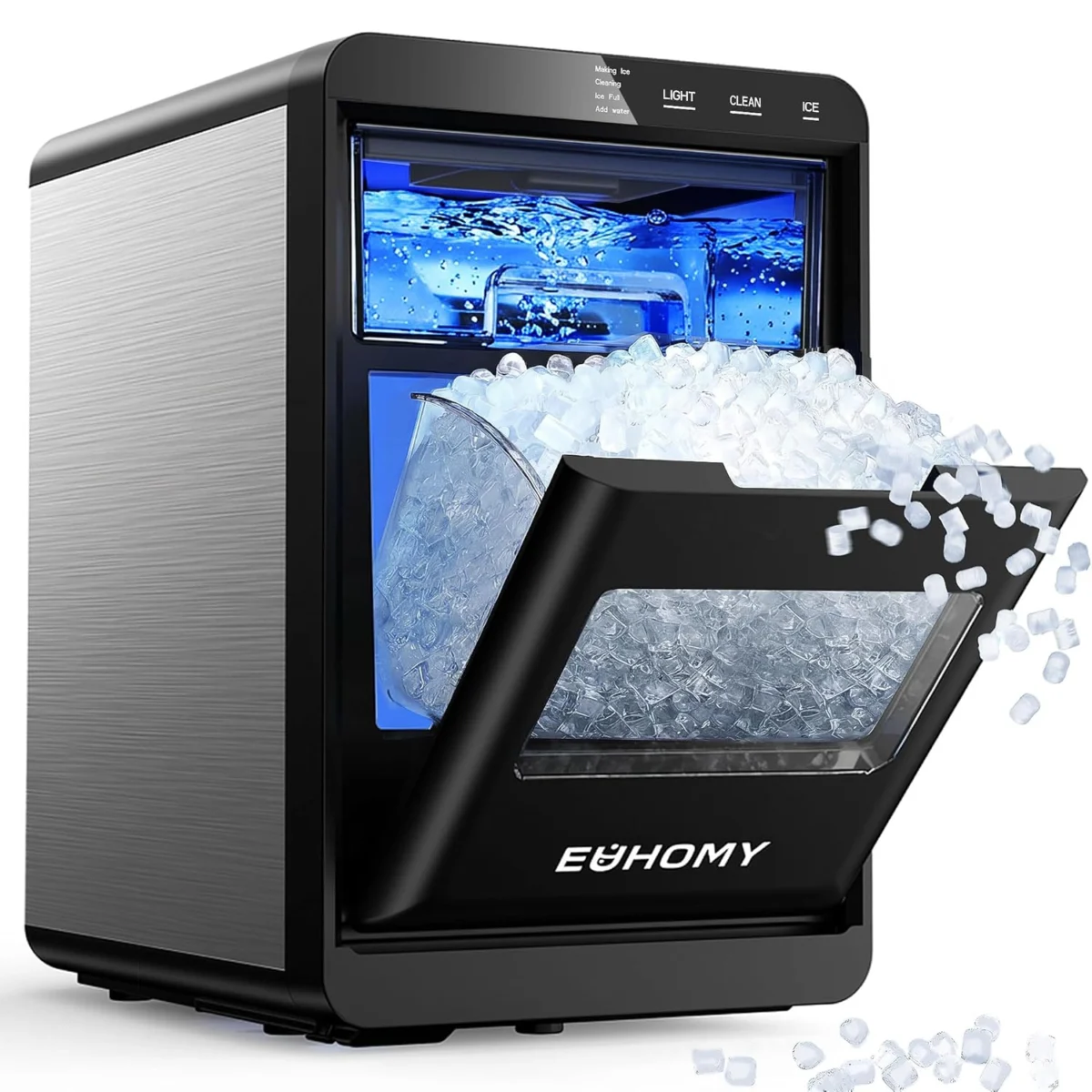
Contrastingly, the "nugget" or "pebble" ice market focuses on texture and chewability rather than slow melting. Machines such as the Euhomy Nugget Ice Maker, which can produce up to 40 pounds of ice in a 24-hour period, are designed for high-volume consumption. This type of ice is porous and absorbs the flavor of the beverage, making it ideal for sodas, juleps, and tiki-style cocktails. The Silonn Nugget Ice Maker offers a more compact footprint, producing 33 pounds per day, catering to urban dwellers with limited counter space. These machines serve a "normie" or general-purpose market, whereas the Electactic is a precision tool for the spirits enthusiast.
Data-Driven Insights into Consumer Behavior
Market research indicates that the "home bar" segment has seen a compound annual growth rate (CAGR) of over 6% since 2020. Several factors contribute to this expansion:
- Premiumization: Consumers are spending more per bottle on spirits and are consequently more willing to invest in accessories that protect that investment.
- Aesthetic Influence: The rise of social media platforms like Instagram and TikTok has made the visual presentation of cocktails a priority for home hosts. A clear, large-format ice cube is a hallmark of "luxury" content.
- Technological Accessibility: As evidenced by the $55 price reduction on the Electactic unit, the cost of entry for specialized appliances is falling, moving these items from "luxury gifts" to "household staples" for a certain demographic.
Professional Perspectives and Industry Implications
Industry experts and professional bartenders have noted that the democratization of ice technology is changing consumer expectations. When consumers can produce high-quality ice at home, they become more discerning when frequenting commercial establishments.
"Ice is the only ingredient that goes into almost every drink we make," says an industry consultant based in New York. "For a long time, the home consumer was stuck with cloudy, fast-melting ‘crescent’ ice from their fridge. Now that they can produce 1.6-inch squares or 2.4-inch spheres at the touch of a button, the bar for what constitutes a ‘premium’ experience has been raised across the board."
Furthermore, the shift toward dedicated ice makers has implications for energy efficiency and water conservation. Modern countertop units are increasingly designed to recycle meltwater, pulling it back into the reservoir to be frozen again, which is more efficient than the "constant-run" systems found in older industrial machines.
Broader Impact: The Future of the Domestic Kitchen
The integration of specialized ice makers like the Electactic into the home environment suggests a broader shift in kitchen design. We are seeing a move away from "all-in-one" appliances toward a modular approach, where consumers supplement their main refrigerator with dedicated tools for coffee, wine, and ice.
The recent price volatility and subsequent discounts in this sector may also point to a highly competitive holiday season. As manufacturers vie for dominance in the "luxury kitchen gadget" category, consumers are the primary beneficiaries of the downward pressure on pricing. The Electactic’s $55 discount is not merely a random sale but a tactical move to capture market share in an increasingly crowded field of home mixology enthusiasts.
In conclusion, the Electactic Whiskey Ice Cube Maker and its contemporaries are more than just novelties; they are the result of a convergence between thermodynamic science, consumer trends toward premiumization, and advancements in manufacturing. For the whiskey drinker who prefers their spirit "on the rocks," the move toward 1.6-inch square cubes represents a significant upgrade in the sensory experience, ensuring that the last sip of a drink is as potent and flavorful as the first. As these technologies continue to evolve and become more affordable, the "golden nectar" of the home bar will remain perfectly chilled and properly balanced.

