
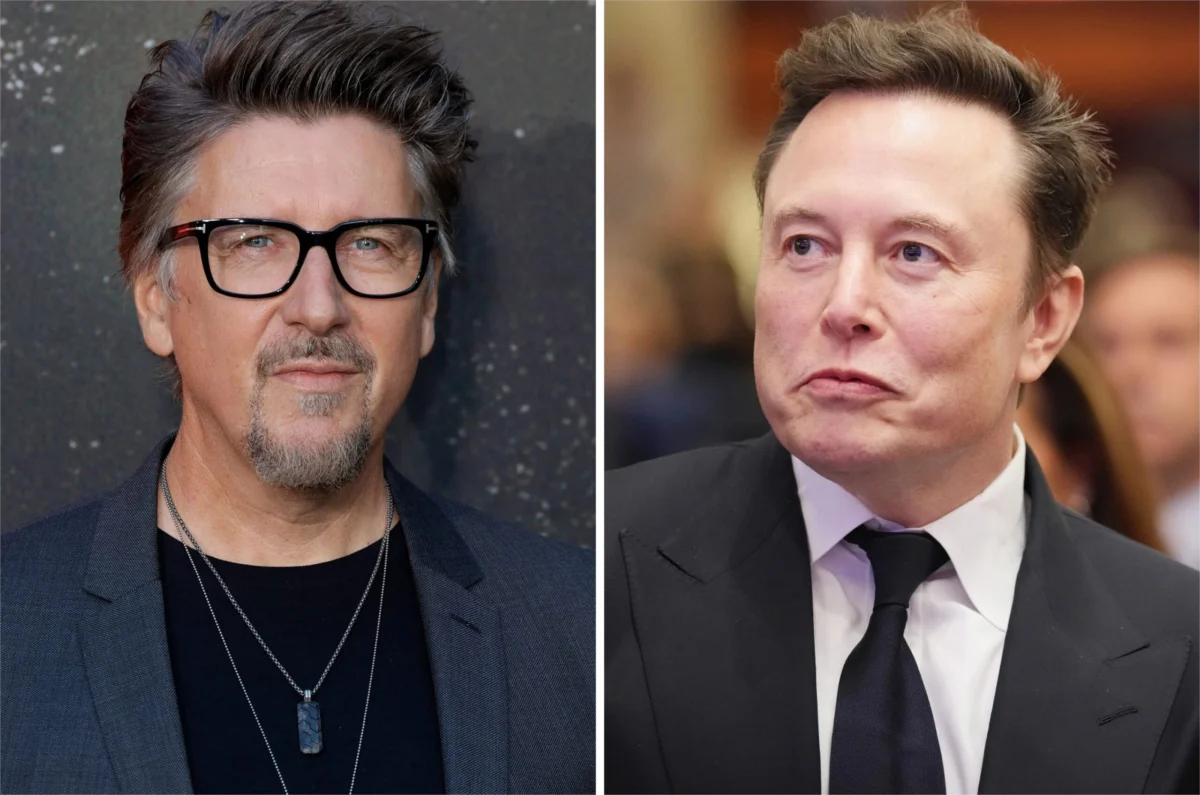
The burgeoning capabilities of artificial intelligence in content creation have taken a dramatic and controversial turn, with tech mogul Elon Musk announcing that his AI tool, Grok, will produce a full-length film adaptation of Homer’s epic poem, "The Odyssey." Musk, who has been a vocal critic of recent Hollywood productions he deems "woke," declared that Grok’s rendition will be "historically accurate and true to the art of Homer." This bold assertion, accompanied by the release of a three-minute AI-generated scene from the poem, has ignited a firestorm of debate within the film community, drawing sharp rebukes from established directors and raising profound questions about the future of filmmaking and artistic integrity.
Musk’s AI-Driven "Odyssey": A Challenge to Traditional Cinema
Elon Musk’s ambitious project centers on his AI chatbot, Grok, which he claims possesses the capacity to synthesize vast amounts of historical data and literary analysis to create a cinematic masterpiece. The announcement, made via his social media platform X, outlined a stark contrast to contemporary Hollywood’s approach, which Musk has repeatedly criticized for what he perceives as a prioritization of social agendas over artistic merit.

"Before the end of the year, our AI tool Grok will make a full-length movie of The Odyssey that is historically accurate and true to the art of Homer," Musk stated, signaling a direct challenge to traditional filmmaking processes and the creative decisions made by human directors and screenwriters. To underscore his point, Musk shared a short, AI-generated clip that purports to be an adaptation of a scene from "The Odyssey." This visual demonstration, produced by a user leveraging Grok, offered a glimpse into the potential output of such AI-driven storytelling, sparking both fascination and apprehension.
Hollywood’s Scathing Response: "Worthless Opinions on Art"
The film industry has not been slow to react to Musk’s pronouncements. Prominent directors, deeply invested in the craft of filmmaking, have voiced strong opposition to Musk’s claims and his apparent dismissal of established cinematic practices. Among the most vocal critics is Scott Derrickson, the acclaimed director behind "Doctor Strange" and "The Black Phone."
Derrickson directly addressed Musk on X, stating, "Clearly @elonmusk doesn’t know shit about cinema & he stopped reading in his 20s. His opinions on art are worthless." This blunt assessment reflects a sentiment shared by many in Hollywood who view filmmaking as a complex art form requiring nuanced human interpretation, cultural understanding, and subjective creative choices that AI, in its current form, may struggle to replicate authentically. The director’s statement highlights a fundamental disagreement: Musk’s focus on factual accuracy and historical fidelity versus Derrickson’s emphasis on the intangible elements of cinematic artistry.

A History of Anti-"Woke" Critiques
Musk’s current focus on "The Odyssey" is not an isolated incident but rather a continuation of a pattern of criticism he has leveled against films he believes are driven by what he terms "woke" ideology. His objections to Christopher Nolan’s "The Odyssey" predate its release and have centered on casting decisions he views as politically motivated rather than artistically sound.
In March, Musk publicly denounced director Christopher Nolan, calling him an "anti-White racist" for casting Lupita Nyong’o as Helen of Troy. Musk posited that Nolan’s decision was driven by a desire for awards recognition, asserting that the director had "lost his integrity" and that the casting was an "insult" to Homer. Furthermore, Musk targeted Elliott Page, who portrays Sinon in Nolan’s film, by reposting comments that mocked the transgender actor’s appearance.
This pattern of commentary extends beyond "The Odyssey." Musk previously derided Greta Gerwig’s "Barbie" for its feminist themes and expressed disapproval of Disney’s "Snow White" reboot, particularly its casting of Rachel Zegler. These critiques suggest a broader ideological stance from Musk, framing his engagement with popular culture through a lens of perceived cultural and political agendas.

Despite the vocal backlash and "anti-woke" sentiment surrounding Nolan’s "The Odyssey," the film has achieved considerable commercial success. Starring Matt Damon, the epic opened to a global box office of $264 million and has continued to draw audiences, selling out screenings months after its premiere. This commercial triumph complicates Musk’s narrative, suggesting that audience reception does not always align with his ideological critiques.
The Chronology of AI in Filmmaking: From Experiments to Grand Ambitions
The concept of AI generating creative content is not entirely new, but Musk’s declaration marks a significant escalation in ambition.
- Early AI Art and Text Generation: In the preceding years, AI models like DALL-E and GPT-3 demonstrated remarkable capabilities in generating images and text based on prompts. These tools were largely seen as experimental or assistive, aiding human creators rather than replacing them entirely.
- AI-Generated Shorts and Music: Various independent projects emerged showcasing AI’s ability to create short films, animated sequences, and musical compositions. These were often lauded for their novelty but lacked the narrative depth and emotional resonance of human-created works.
- Musk’s Grok Announcement (July 2026): Elon Musk’s announcement in July 2026 represents a pivotal moment, moving beyond experimental shorts to the production of a full-length feature film, with specific claims of historical accuracy and artistic fidelity.
- Pre-Release Criticisms of "The Odyssey" (March 2026 onwards): Musk’s vocal opposition to Nolan’s "The Odyssey" and its casting choices predated his AI film announcement, setting the stage for his subsequent technological intervention.
- AI-Generated Clip Release (July 2026): The release of a three-minute AI-generated scene from "The Odyssey" serves as a tangible, albeit brief, demonstration of Grok’s capabilities in this domain.
Supporting Data: The Evolving Landscape of AI and Content Creation
The development of AI tools capable of generating complex narratives and visual media is accelerating. Large language models (LLMs) like Grok are trained on massive datasets, enabling them to understand and generate human-like text, code, and increasingly, to inform visual content creation pipelines.

- Data Volume for LLMs: Modern LLMs are trained on trillions of words, encompassing vast libraries of literature, historical texts, and scientific papers. This extensive training allows them to identify patterns, styles, and factual information.
- Computational Power: The creation of AI-generated films requires immense computational resources, including advanced graphics processing units (GPUs) and sophisticated algorithms for rendering and animation.
- Market Growth in AI: The global AI market is projected to grow exponentially in the coming years. While specific figures for AI in film production are still emerging, the broader AI industry is expected to reach trillions of dollars in value by the end of the decade, indicating significant investment and technological advancement.
Analysis: Implications for the Future of Filmmaking and Artistic Expression
Elon Musk’s venture into AI-generated filmmaking raises several critical implications for the industry and for the very definition of art:
- Democratization or Devaluation of Art? On one hand, AI could democratize content creation, enabling individuals and smaller entities to produce films without the extensive resources typically required. On the other hand, it could devalue the work of human artists, writers, and filmmakers, leading to job displacement and a homogenization of creative output.
- The Nature of "Accuracy" and "Artistry": Musk’s emphasis on "historical accuracy" and "true to the art of Homer" highlights a tension between objective data and subjective interpretation. While AI can process historical facts, capturing the emotional depth, thematic complexity, and cultural nuances inherent in a work like "The Odyssey" requires a level of human empathy and understanding that AI may not possess. The concept of "art" itself is being challenged, prompting a debate about whether creative output generated by algorithms can be considered true art.
- Intellectual Property and Copyright: The legal and ethical implications of AI-generated content are significant. Questions surrounding ownership, copyright, and the originality of AI creations are likely to become more prominent as these technologies advance.
- Audience Perception and Acceptance: Ultimately, the success of Musk’s AI-generated "Odyssey" will depend on audience reception. Will viewers embrace a film created by an algorithm, or will they continue to seek the human touch and emotional connection that has defined cinema for over a century? The commercial success of Nolan’s film, despite Musk’s criticisms, suggests a continued appetite for human-led creative endeavors.
Broader Impact: A New Frontier in Content Creation
Musk’s announcement is more than just a commentary on filmmaking; it represents a potential paradigm shift in content creation. If successful, Grok’s "Odyssey" could pave the way for AI-generated narratives across various media, from novels and music to video games and virtual reality experiences.
The debate ignited by Musk’s project underscores a crucial juncture where technological advancement intersects with deeply ingrained cultural values surrounding art and human creativity. As AI capabilities expand, the dialogue concerning its role in shaping our cultural landscape will undoubtedly intensify, forcing a re-evaluation of what it means to create, to consume, and to appreciate art in the 21st century. The coming months will reveal whether Musk’s AI can truly capture the spirit of Homer’s epic or if it will remain a technological marvel that falls short of genuine artistic achievement.

