
Financial literacy has emerged as a cornerstone of modern elementary education, serving as a vital precursor to long-term economic stability and responsible citizenship. As global economic landscapes become increasingly complex, educators are seeking innovative ways to teach young learners how to navigate the nuances of monetary management. The Spend, Save, Decide! program, an interactive pedagogical tool, represents a significant shift in how schools address the foundational concepts of wants versus needs, moving beyond rote memorization to foster critical thinking in changing economic environments.
The Evolution of Financial Literacy in K-5 Education
Historically, financial education for primary school students was limited to rudimentary arithmetic or basic lessons on identifying currency. However, data from organizations such as the Council for Economic Education suggests that early intervention in financial habits significantly impacts long-term behavioral outcomes. According to their 2022 Survey of the States, while a growing number of states now mandate financial education, there remains a critical gap in resources that teach students how to adapt to shifting priorities—a skill now addressed by the Spend, Save, Decide! framework.
The program was developed to meet the requirements of modern curricula, which emphasize "soft skills" such as collaboration and situational analysis alongside traditional math. By utilizing Google Slides as a primary interface, the program aligns with the widespread digitization of classrooms, allowing for real-time engagement that static textbooks often fail to provide.
Program Components and Structural Framework
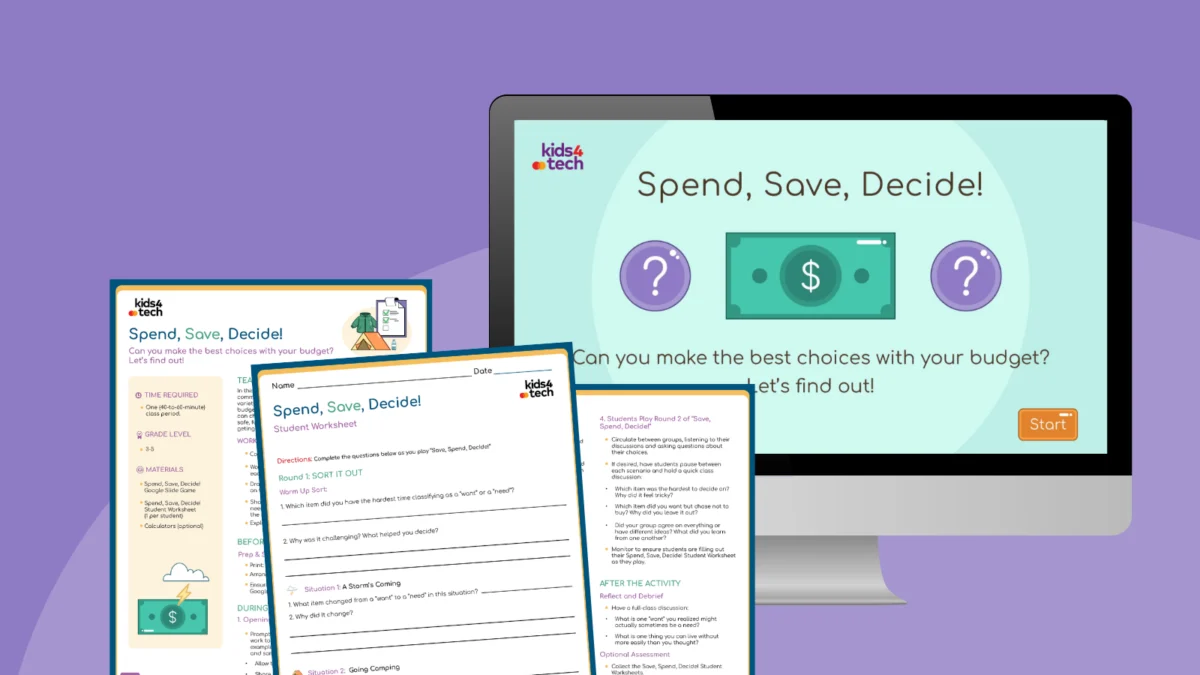
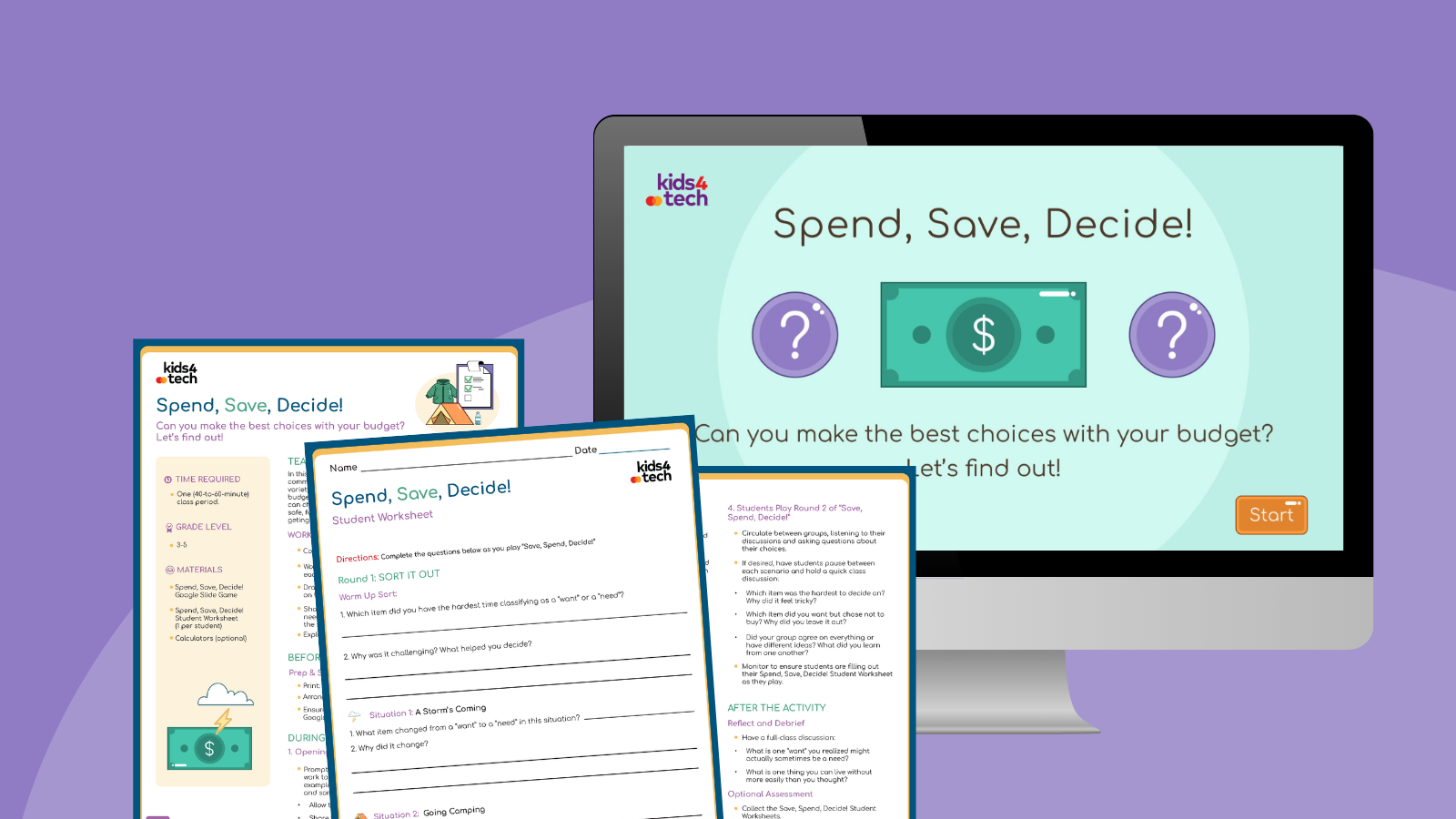
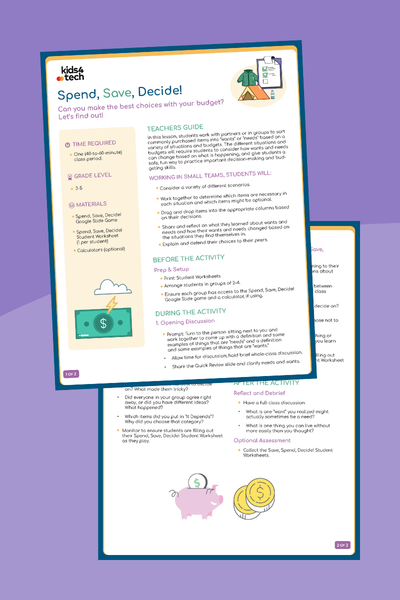
The resource is divided into three primary modules designed to facilitate a comprehensive understanding of fiscal responsibility: the Teacher’s Guide, the Student Worksheet, and the interactive Google Slides game.
The Teacher’s Guide serves as the foundational document, offering educators structured lesson plans that emphasize inquiry-based learning. Rather than providing definitive answers, the guide encourages teachers to present scenarios where the definition of a "need" fluctuates. For example, in a survival scenario, a flashlight is an essential requirement; in a different context, such as a well-lit living room during the day, it might be categorized as a non-essential item. This nuance is crucial, as it prepares students for the reality of "opportunity cost"—the loss of potential gain from other alternatives when one alternative is chosen.
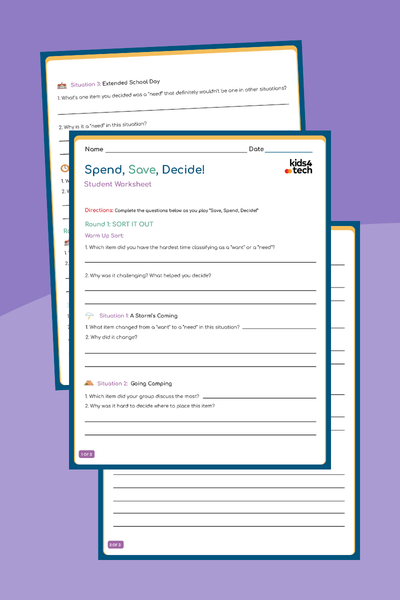
The Student Worksheet acts as a diagnostic tool, capturing the cognitive process of the child as they navigate the scenarios. By requiring written explanations, the curriculum forces students to articulate their reasoning, which pedagogical experts argue is essential for internalizing complex concepts. Finally, the interactive Google Slides game introduces the concept of a "token budget." This simulation requires students to manage finite resources, forcing them to rank their priorities and engage in trade-offs—a practical application of scarcity, which is the fundamental problem of economics.
The Role of Context in Economic Decision-Making
A central challenge in teaching financial literacy to children is the tendency to view economic decisions as binary—either "good" or "bad." Spend, Save, Decide! intentionally subverts this by introducing changing variables. In the first phase of the game, students sort common household items. In the second phase, they are presented with a restricted budget.

This structure mimics real-world economic conditions. When students are forced to choose between competing "needs," they learn that financial literacy is not merely about having money, but about the allocation of resources. This methodology is supported by behavioral economics, which posits that children are more likely to retain financial habits when they are taught to weigh the "why" behind a purchase rather than simply practicing the "how" of saving.
Implications for Future Economic Stability
The broader implications of such programs are significant. According to the Financial Industry Regulatory Authority (FINRA), adults who report receiving financial education in school are more likely to demonstrate better financial behaviors, including higher savings rates and lower reliance on high-interest credit. By introducing these concepts at the elementary level, the Spend, Save, Decide! program aims to build a foundation of "financial resilience."
Furthermore, as the digital economy continues to expand, the ability to discern between wants and needs is increasingly challenged by online marketing and instant-purchase culture. By grounding students in the logic of budgeting early on, the program seeks to provide a buffer against impulsive consumerism.
Expert Perspectives and Educational Integration
Educational specialists have noted that the integration of collaborative elements into this program is its greatest strength. By requiring students to defend their choices to teammates, the curriculum encourages peer-to-peer learning. Educators who have piloted this initiative report that the most productive moments often occur during the "debate" phase of the activity, where students realize that their peers may have different priorities based on their own lived experiences and household values.
From a policy perspective, the move toward integrating financial literacy with digital literacy—as seen in the alignment with the Kids4Tech initiatives—reflects a growing consensus that these skills cannot be taught in isolation. The ability to manage money is now inextricably linked to the ability to manage digital safety and identify fraudulent or manipulative content, creating a holistic approach to student preparedness.
A Chronology of Implementation
The development of this resource follows a distinct trend in educational technology:
- Phase 1 (Preparation): Introduction of basic needs/wants terminology through teacher-led discussion.
- Phase 2 (Gamification): Transition to the interactive slides where students engage with the "token budget" simulation.
- Phase 3 (Reflection): Post-activity analysis using the student worksheets to identify how individual choices evolved during the simulation.
- Phase 4 (Application): Extension activities that apply these concepts to real-world scenarios, often involving home-school connections where students discuss budgets with their families.
Assessing Impact and Efficacy
While quantitative data on this specific program is still being compiled through classroom pilot studies, the qualitative feedback from educators indicates a marked improvement in students’ ability to identify trade-offs. The shift from a "what should I buy" mindset to a "what do I need right now" mindset is the primary metric for success.
Furthermore, the program addresses the "equity gap" in financial education. By providing standardized, high-quality digital resources, it allows teachers in underfunded districts to offer the same level of financial literacy instruction as those in well-resourced areas. This democratization of information is essential for ensuring that financial literacy does not become a luxury skill.
Future Directions for Financial Literacy Curricula
As the global economy faces ongoing volatility, the importance of teaching adaptability cannot be overstated. Spend, Save, Decide! provides a template for future developers: keep the technology simple, keep the scenarios realistic, and keep the focus on the decision-making process rather than the final transaction.
Looking ahead, the integration of artificial intelligence and more complex simulations may further enhance these lessons. However, the core of the program—the human interaction, the discussion, and the critical analysis of priorities—remains the most effective method for instilling financial maturity. As schools continue to prepare students for a future that is increasingly defined by rapid change and technological advancement, the ability to make smart, informed decisions will remain the most valuable asset any student can possess.
In conclusion, the Spend, Save, Decide! initiative represents a sophisticated approach to a foundational problem. By equipping students with the tools to navigate scarcity, value, and priority, educators are doing more than just teaching arithmetic; they are preparing a generation to manage their lives with prudence, foresight, and economic confidence.

