

The recent identification of Wyoteuthis linsterorum, a robust new species of belemnite dating back 160 million years, has fundamentally altered paleontological understanding of Jurassic marine ecosystems. Unearthed in the fossil-rich strata of Wyoming’s Sundance Formation, the species is distinguished by its remarkably wide, bullet-shaped internal shell, or rostrum—a feature researchers have colloquially described as having the "chunkiest" proportions ever documented within this ancient lineage. This discovery, detailed in the journal Papers in Palaeontology, bridges a significant gap in the evolutionary timeline of cephalopods, revealing that certain lineages of these squid-like creatures persisted far longer than previously theorized.
A Three-Decade Journey from Storage to Discovery
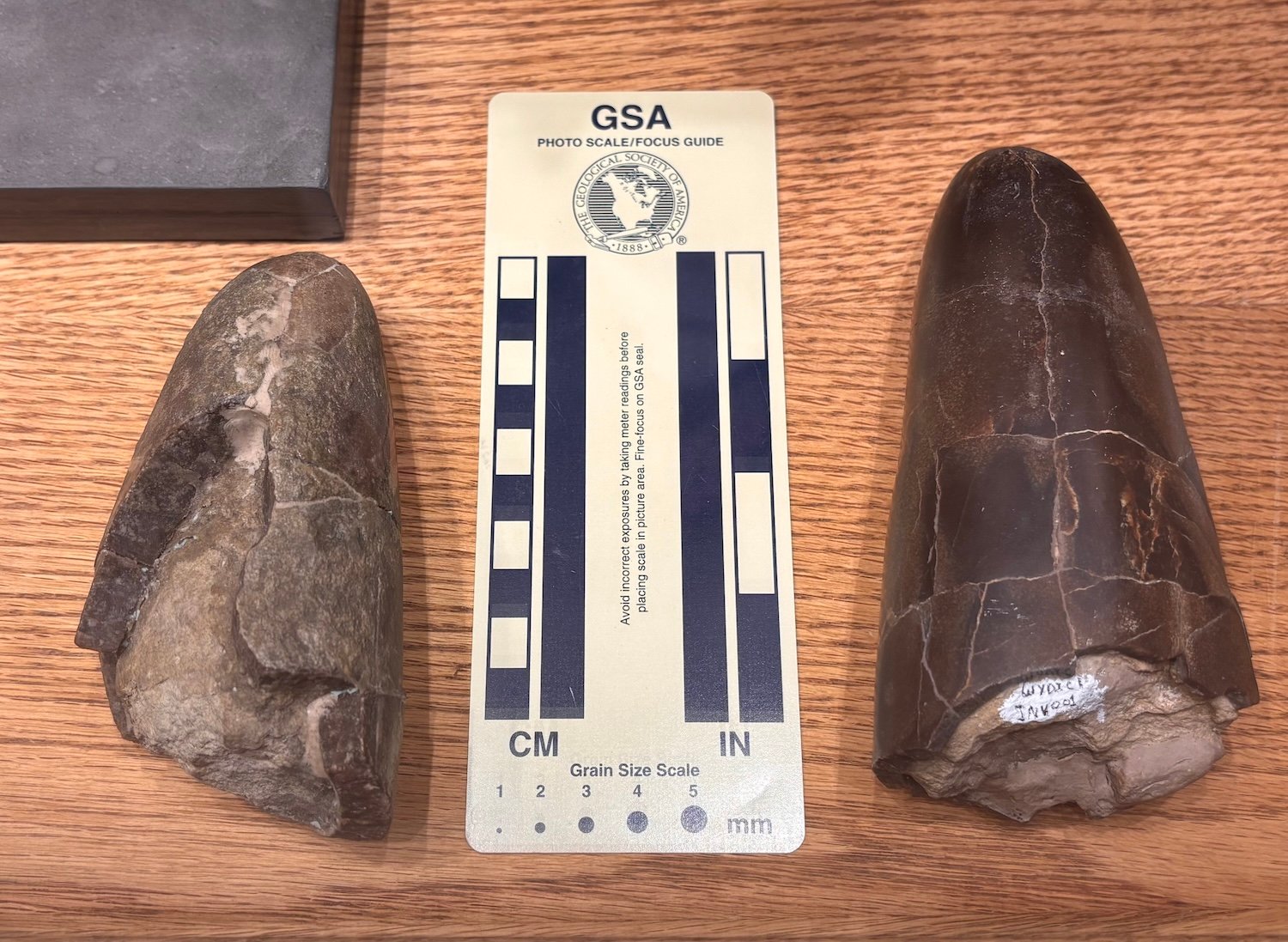
The path to identifying W. linsterorum was characterized by a prolonged period of scientific mystery. The initial specimen was retrieved from the Sundance Formation over 30 years ago by Burkhard Pohl, founder of the Wyoming Dinosaur Center. Upon its excavation, the fossil presented a significant anomaly; while its length was consistent with standard belemnite fossils found in the region, its width—measuring 2.4 inches—was disproportionately large compared to the typical specimens, which usually spanned only one inch in diameter.
For nearly three decades, this specimen remained in storage, lacking a taxonomic classification due to the absence of comparable fossils. It was not until 2019 that a second, remarkably similar specimen was discovered by fossil collector Cliff Linster near the town of Ten Sleep, Wyoming. The discovery of a second individual confirmed that the morphological characteristics were not a singular mutation but rather representative of a distinct, previously unknown species. The subsequent donation of the specimen to the Wyoming Dinosaur Center enabled an international team of researchers to conduct a comparative analysis, ultimately leading to the classification of W. linsterorum.
Technological Advancements in Paleontological Analysis
The research team employed high-resolution computed tomography (CT) scanning to analyze the two specimens. This non-invasive imaging technique was critical, as it allowed for the internal examination of the rostra without compromising the physical integrity of the fossils. The data gathered from these scans revealed complex internal structures that were instrumental in placing the species within the broader evolutionary framework of the belemnites.
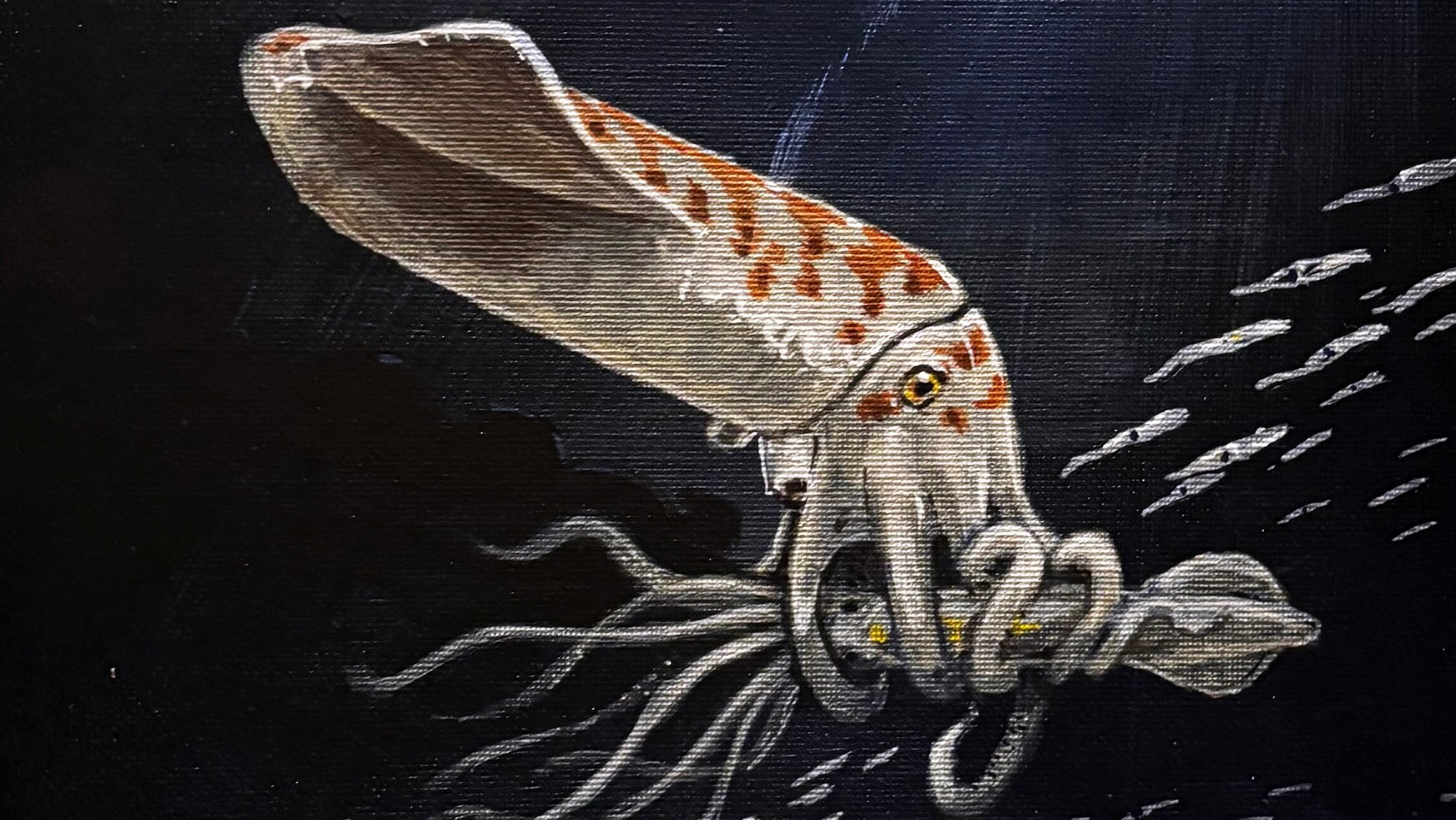
The findings were surprising to the scientific community. Morphological analysis indicated that W. linsterorum belonged to a taxonomic family that researchers had long presumed went extinct millions of years before the Jurassic period. This discovery serves as a prime example of the "Lazarus taxon" phenomenon, where a group of organisms appears to vanish from the fossil record, only to reappear much later. The re-emergence of this specific lineage suggests that the marine biodiversity of the Jurassic era was significantly more complex and resilient than once understood, necessitating a recalibration of existing evolutionary models for prehistoric cephalopods.
Evolutionary Pressures and Predatory Behavior
The physical bulk of W. linsterorum has prompted extensive inquiry into its biological and ecological purpose. Paleontologists theorize that the creature’s enlarged rostrum provided a significant competitive advantage in the inland seas of the Mesozoic era. By cross-referencing the anatomy of W. linsterorum with modern cephalopods, researchers have developed a hypothesis rooted in predatory strategy.
Contemporary squids and octopuses are known for their aggressive, opportunistic hunting behaviors. Many modern species exhibit little hesitation when preying upon other cephalopods, including members of their own species. The research team, including co-author Alexey Ippolitov of Victoria University, posits that the massive size of W. linsterorum likely allowed it to dominate its environment by preying upon the smaller, more common belemnites of the genus Pachyteuthis. This size-based predatory hierarchy would have been an effective survival strategy in a highly competitive marine environment where food resources were abundant but contested.
The Role of Citizen Science in Modern Research
The identification of W. linsterorum underscores the invaluable contributions of amateur paleontologists and fossil collectors to formal scientific research. The late Cliff Linster, for whom the species is named, exemplified this dynamic. Although Linster passed away in June 2026, his commitment to documentation and his subsequent donation to the Wyoming Dinosaur Center were pivotal in the research team’s ability to conduct a comprehensive study.
Jessica Lippincott, a paleontologist at the Wyoming Dinosaur Center and co-author of the study, emphasized that this discovery highlights the ongoing necessity of collaboration between professional researchers and the public. As she noted in a public statement, many species remain hidden in plain sight, waiting for the dedicated eye of a collector or hobbyist to bring them to the attention of the scientific community. The case of W. linsterorum serves as a reminder that the fossil record is far from fully explored, and that individual discoveries can radically shift the paradigm of historical biology.
Broader Implications for Mesozoic Studies
The discovery of W. linsterorum has implications that extend beyond the classification of a single species. It provides a unique window into the paleoecology of the Western Interior Seaway during the Jurassic. By establishing that this specific lineage of belemnites survived into a later geological period, researchers can now re-examine other fossils previously dismissed as outliers or misidentified fragments.
Furthermore, the study highlights the importance of re-evaluating specimens stored in museum archives. As technology such as CT scanning and isotopic analysis continues to evolve, museum collections—often containing items collected decades ago—are increasingly becoming goldmines for new discoveries. The "chunky" rostrum of W. linsterorum acts as a case study for the value of long-term preservation and the constant advancement of analytical tools.
A Future-Focused Perspective
While W. linsterorum offers insights into the distant past, it also aligns with the contemporary push for more rigorous, data-driven paleontology. The team’s research has laid the groundwork for future investigations into the growth rates, migration patterns, and dietary habits of Jurassic belemnites. By synthesizing the morphological data from these specimens with climate models of the Jurassic, scientists hope to build a more granular picture of how these creatures adapted to fluctuating sea levels and temperatures.
The legacy of this discovery will likely influence how future researchers approach the study of invertebrate fossils. As the scientific community continues to piece together the history of life on Earth, W. linsterorum stands as a testament to the fact that even the most well-studied strata—such as the Sundance Formation—can still yield transformative surprises. For now, the "chunkiest squid" of the Jurassic has earned its place in the annals of history, proving that in the ocean of time, even the most overlooked specimens can eventually take center stage in our understanding of evolutionary success.

