
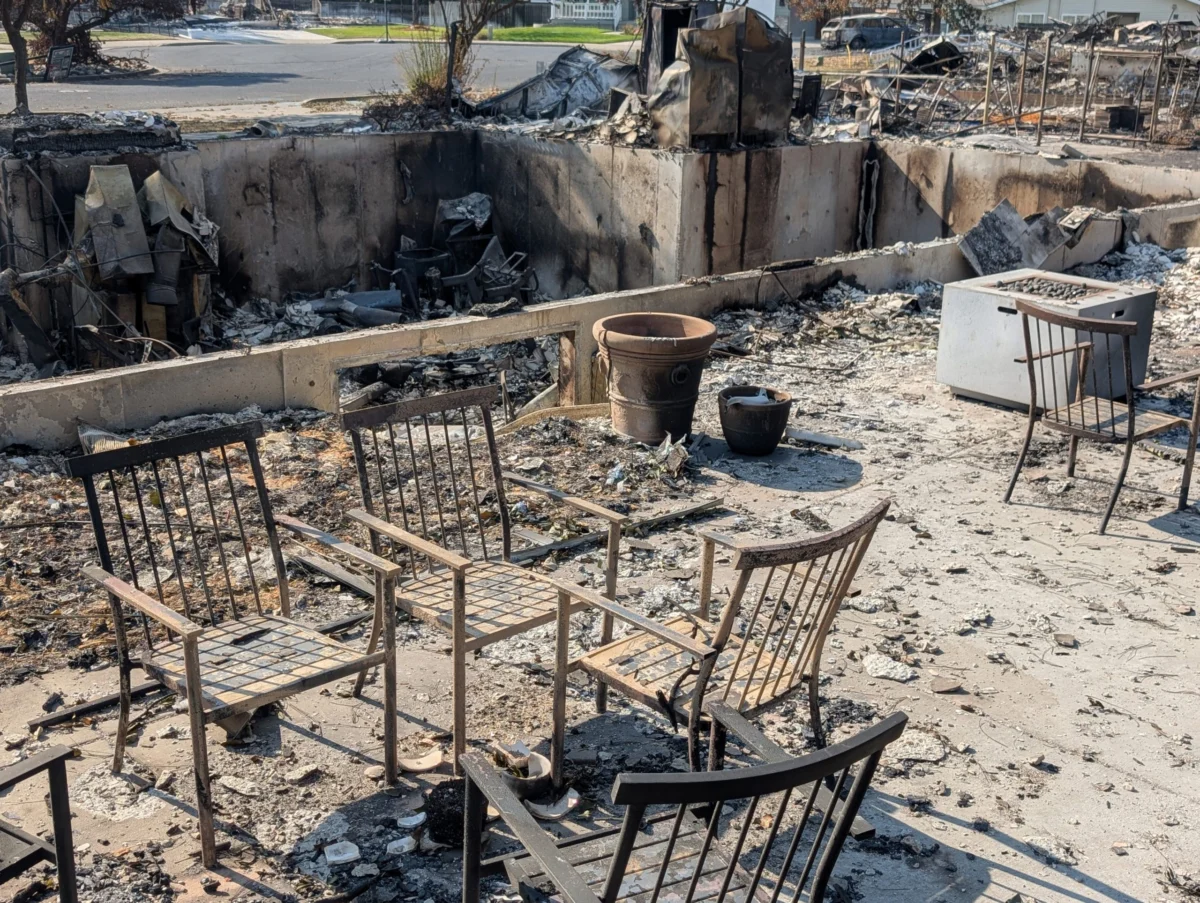
One week after the devastating wildfires tore through the eastern Washington landscape, forcing her family to flee as flames encroached from three directions, Mareesha Backman found herself at a crossroads of exhaustion and relief. Standing in a Spokane school building, she made the difficult decision to entrust her youngest son to the care of strangers. It was a leap of faith facilitated by Spokane Public Schools, which had transformed its facilities into a sanctuary for the children of survivors. For Backman, who had spent the previous week living in a cramped travel trailer on an Idaho Christmas tree farm without running water or electricity, the simple act of leaving her children in a safe, air-conditioned environment allowed her to finally exhale.

The Spokane wildfires, which scorched over 10,000 acres and destroyed an estimated 920 structures, serve as a harrowing reminder of the intensifying reality of extreme weather. For families like the Backmans, the disaster was not merely a loss of property; it was a profound rupture in the fabric of their daily lives. Across the region, 169 students and 38 staff members from the Spokane Public Schools system lost their homes, while another 20 students in the nearby Nine Mile Falls School District faced similar displacement.
A Rapid Response to Crisis
The response from the school district was swift and decisive. Recognizing that the physical safety of children is only one component of disaster recovery, district officials pivoted from their standard summer operations to provide emergency care within 48 hours of the initial evacuation orders. By that Monday morning, a local high school had been converted into a resource hub, offering food, toiletries, and insurance claim assistance, while the auditorium and gymnasium were repurposed to provide supervised care for children.

The demand for these services far exceeded initial projections. While the district prepared for a modest turnout, more than 120 children arrived on the first day, with that number swelling to 300 by midweek. Laurie Morrison, the district’s chief academic officer, characterized the effort as a moral imperative. When a community faces such immense devastation, the school system acts as a vital bridge, providing stability when parents are forced to navigate the logistical nightmares of displacement.
The Role of Specialized Emergency Education
As climate-related disasters become more frequent, the concept of "education in emergencies"—a framework traditionally utilized in international humanitarian aid—is increasingly being adopted by American school districts. Sarah Dryden-Peterson, a researcher at the Harvard Graduate School of Education, notes that the efficacy of these programs lies not just in child care, but in the creation of predictable routines. These structures help children process the chaotic nature of disasters, allowing them to focus on the future rather than the immediate trauma of the event.

To enhance its capabilities, Spokane Public Schools partnered with Project:Camp, a nonprofit organization dedicated to establishing free day camps in disaster-stricken areas. Since its inception in 2021, Project:Camp has deployed to 33 locations across 10 states, ranging from the hurricane-battered coast of Florida to the wildfire-scarred landscapes of Maui and Los Angeles. By utilizing a "rapid response" model, the group can deploy experienced directors and structured curricula to any disaster site, often operating with minimal supplies and relying on local community partnerships.
The Science of Resilience and Recovery
The integration of trauma-informed practices is central to the success of these camps. Project:Camp operates on the understanding that returning children to a sense of normalcy is essential to mitigating the long-term effects of Adverse Childhood Experiences (ACEs). The camp’s daily routine includes simple, grounding activities: “ME checks,” where children rate their emotional state on a scale of one to 10; structured play; and the “gratitude circle,” a ritual that encourages children to vocalize their experiences and appreciation for their surroundings.

The impact of this approach is significant. During one session, children expressed gratitude for everything from surviving the fires to the firefighters who defended their homes. These moments of collective processing are vital. As Jeff Baerwald, superintendent of the Nine Mile Falls School District, observed, the community’s response—supported by local churches and regional volunteers—highlighted the resilience of rural areas when they are given the right resources.
The Long-Term Impact of Climate-Driven Displacement
The necessity for these programs is underscored by grim data regarding the frequency of extreme weather events. The RAPID Survey Project, based at the Stanford Center on Early Childhood, indicates that approximately two out of three parents have experienced an extreme weather event in the last two years that resulted in increased anxiety for their children and disrupted educational routines.

Furthermore, research from Brown University’s SustainableED center suggests that during the 2024-25 school year alone, at least 9 million students—one in five public school children—had their education interrupted by natural disasters. This, researchers warn, is likely an underestimate. The long-term consequences are well-documented: a 2024 study of 38,000 teenagers found that those residing in areas with federal disaster declarations exhibited a 20 percent higher likelihood of experiencing mental distress up to five years after the event.
Moving Toward Systemic Preparedness
The experience of the Backman family illustrates the lingering psychological toll of these events. For their seven-year-old son, Bennett, who is medically fragile, the displacement was particularly traumatic, leading to regressions and night terrors. Backman’s realization that her children were struggling only came through the conversations initiated by the camp’s trauma-informed staff. This realization emphasizes that recovery is not merely about physical reconstruction; it is about the long-term mental health support required by the youngest members of the community.

Looking ahead, the goal for organizations like Project:Camp and district leaders is to institutionalize these responses. Mikey Latner, the cofounder of Project:Camp, has been advocating for a shift in emergency management, pointing out that local government operations are often hindered when staff cannot deploy to emergency centers due to a lack of child care. By integrating child care into the standard emergency response, municipalities can ensure that essential personnel are free to manage the crisis while the most vulnerable are supported.
In Spokane, the focus has now shifted to long-term recovery. District leaders are working with colleagues from other regions, such as those affected by the 2025 Palisades fires in California, to plan for the academic future of displaced students. With enrollment fluctuations expected at the most affected schools, the focus is on maintaining viability for remaining families while preparing to welcome new ones.

As the physical environment begins the slow process of regeneration, the community recognizes that the recovery of its children is a parallel, if not more complex, journey. For Superintendent Baerwald, watching the burn scars on the landscape serves as a daily reminder of the challenges ahead. Just as the forest will eventually see new growth, the community is committed to fostering a new sense of stability for its children, ensuring that they are not defined by the disaster, but by the support and care they received in its wake. The path to normalcy is long, but through collaborative, trauma-informed, and community-centric interventions, the foundation for that future is being laid today.

