
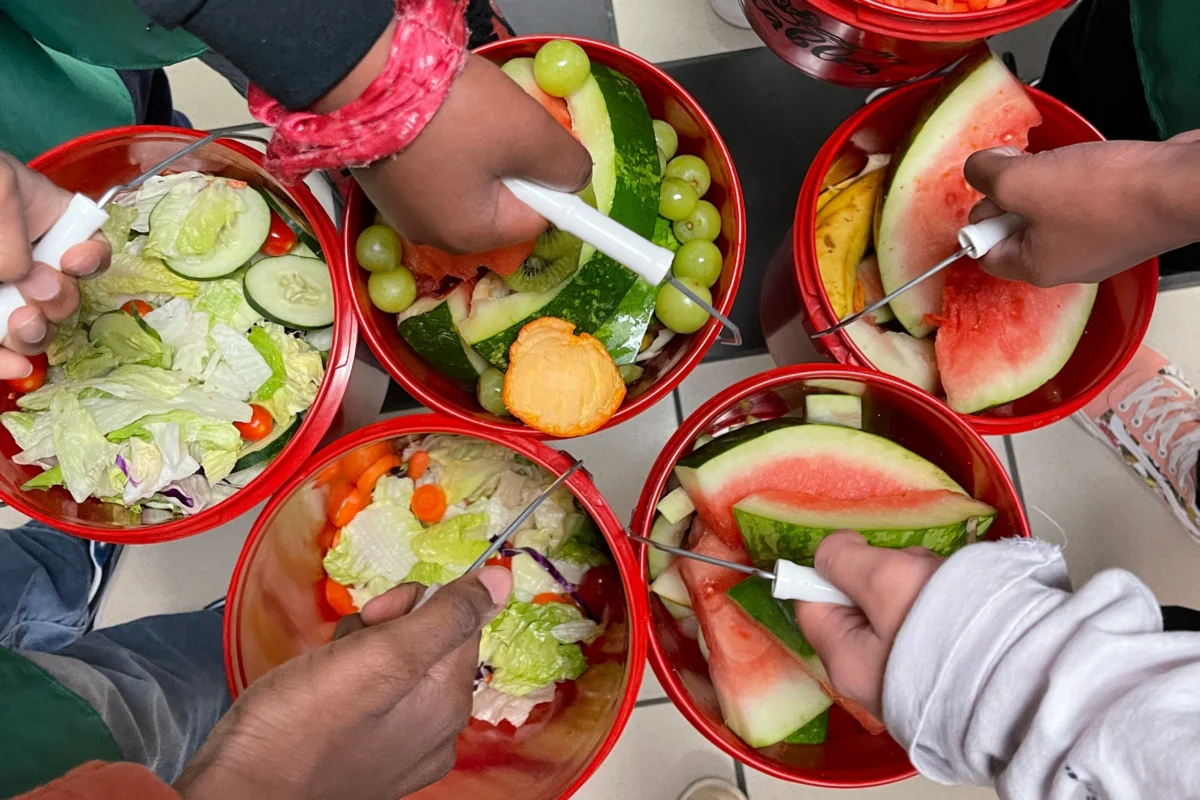
Up to 40 percent of food served in K-12 schools across the United States ends up in the trash, representing a staggering 530,000 tons of waste annually. This inefficiency is not merely a budgetary or logistical concern; it carries significant environmental weight, contributing to an estimated 1.9 million metric tons of greenhouse gas emissions each year. As schools grapple with tight budgets and the pressures of daily operations, a burgeoning movement led by institutions like Lovin Elementary in Gwinnett County, Georgia, is demonstrating that systemic change is possible through data-driven initiatives, student-led education, and cross-departmental collaboration.
The environmental cost of school food waste is particularly acute when considering the entire lifecycle of a meal. From the energy required for agricultural production and transportation to the methane emissions generated when organic matter decomposes in landfills, the impact of school lunches is far-reaching. According to the World Wildlife Fund (WWF), which has been spearheading the Food Waste Warriors program since 2018, the scale of this problem requires a departure from traditional waste management and a move toward holistic, school-wide cultural shifts.
A Chronology of Change at Lovin Elementary
The transformation at Lovin Elementary serves as a national case study for how schools can mitigate waste. The initiative began in late 2018, sparked by a realization that the volume of discarded food—including unopened milk cartons, fresh fruit, and packaged produce—was unsustainable.
The first step in the school’s journey was the implementation of a food audit. In partnership with Gwinnett Clean & Beautiful and their "Green & Healthy Schools" initiative, students and staff conducted a baseline study. By weighing every scrap of discarded food from a single day, the school identified that they were producing 589 pounds of waste in a single lunch period. Crucially, 120 pounds of that waste consisted of "recoverable" items—unopened, nutritious food that was perfectly safe for consumption.
Following this data collection, the school initiated a phased implementation strategy:
- 2019: The introduction of "share tables" and the integration of food waste education into the curriculum. By March 2019, a follow-up audit revealed a significant reduction in waste, with the share table diverting over 100 pounds of food from the landfill in a single day.
- 2021-2022: The school secured a grant from the Food Well Alliance to build a dedicated composting system. Educators began integrating composting into the fifth-grade curriculum, treating the cafeteria as a living laboratory.
- 2022-2024: The program expanded to include nearly all grade levels. By the 2023-2024 academic year, the school successfully diverted 5,489 pounds of fruit and vegetable waste, eventually outgrowing their on-site capacity and forming a partnership with a local church to manage the excess volume.
Data-Driven Pedagogy and the "Cafeteria as Classroom" Model
The success of the Lovin Elementary model relies heavily on the "cafeteria as classroom" philosophy. Instead of treating waste management as a custodial task, the school has embedded it into core subjects like mathematics, environmental science, and communication.
For example, fourth-grade students are tasked with the practical application of their math standards by weighing and documenting waste totals. This involves calculating figures with decimals and tracking longitudinal data, turning a routine lunch period into an exercise in data literacy. Meanwhile, the school’s "Eco Heroes" club and other student-led groups facilitate the composting process, monitor the thermal output of the compost piles, and conduct peer-to-peer education sessions. By allowing third-graders to instruct kindergarteners on sustainability, the school has created a self-sustaining cycle of institutional knowledge.
This educational integration is not purely academic; it addresses the psychological aspect of consumption. By showing students the direct impact of their choices—such as the difference in waste when a specific side dish is served—the school empowers them to become active participants in solving the waste crisis rather than passive observers.
Technological Integration and Future Hurdles
Innovation at Lovin Elementary recently reached a new frontier with the introduction of "Raccoon Eyes AI," a pilot program utilizing computer vision to track food waste. By scanning trays, the system provided granular data on what students were eating and what they were discarding. This level of precision allowed for menu adjustments, such as modifying seasoning to increase the palatability of certain items, thereby reducing unnecessary waste.
However, the path to expansion remains fraught with systemic barriers. The primary obstacle, according to STEM content specialist Gerin Hennebaul, is the need for dedicated human resources. At Lovin, the presence of a "fully released" teacher—one without classroom responsibilities—allows for the consistent oversight required to maintain composting bins and facilitate share tables. Many schools lack this luxury, forcing staff to balance waste management with their primary pedagogical duties.
Furthermore, the scale of food service in public school districts often limits local autonomy. While a school might identify that students prefer a specific sauce or preparation method, district-wide contracts with food vendors can make it difficult to adjust procurement strategies based on student feedback.
Broader Implications for the Education Sector
The implications of the Lovin Elementary model extend far beyond Georgia. As climate change becomes a central theme in global policy, the ability of schools to demonstrate sustainable practices offers a tangible lesson in civic responsibility.
The WWF report on K-12 food waste emphasizes that schools are unique environments where behavioral habits are formed. By normalizing composting and waste reduction, schools are not only lowering their carbon footprint today but are also preparing a generation of citizens who view sustainability as a standard operating procedure rather than an optional endeavor.
Experts suggest that the success of such programs depends on a "top-down and bottom-up" approach. For schools to successfully adopt these measures, they require:
- Administrative Buy-in: Support from principals and district leaders to ensure that cafeteria staff and custodians are aligned with sustainability goals.
- Infrastructure Support: Access to grants or partnerships (such as the Food Well Alliance or local garden clubs) to fund initial composting equipment and logistics.
- Community Partnerships: Leveraging local resources, such as churches or community gardens, to manage waste outputs that exceed the capacity of school grounds.
Analysis of Current Trends
The transition toward waste-conscious schools is gaining momentum, yet it remains fragmented. The shift from "trash" to "resource" requires a fundamental change in how school districts define the cost of a meal. If a district calculates the cost of food waste solely by the price of the ingredients thrown away, the return on investment for a composting program may seem low. However, when the cost of landfill fees, the educational value of the curriculum, and the reduction in greenhouse gas emissions are factored in, the financial and social benefits become clear.
As more schools pilot these programs, the data suggests a recurring theme: the biggest barrier to change is often the assumption that the current level of waste is inevitable. The work at Lovin Elementary proves that when students are treated as stakeholders in the process—given the tools to collect data, the freedom to brainstorm solutions, and the responsibility to teach their peers—the results are not just incremental, but transformative.
Ultimately, the fight against food waste in K-12 education is a test of institutional agility. While the logistical hurdles of weather, staffing, and district-level bureaucracy are significant, the evidence from the Food Waste Warriors program suggests that the most effective solutions are those that integrate seamlessly into the school day. By turning the cafeteria into a site of inquiry and responsibility, educators can effectively tackle one of the most overlooked aspects of the climate crisis while simultaneously enriching the academic experience of their students.

