
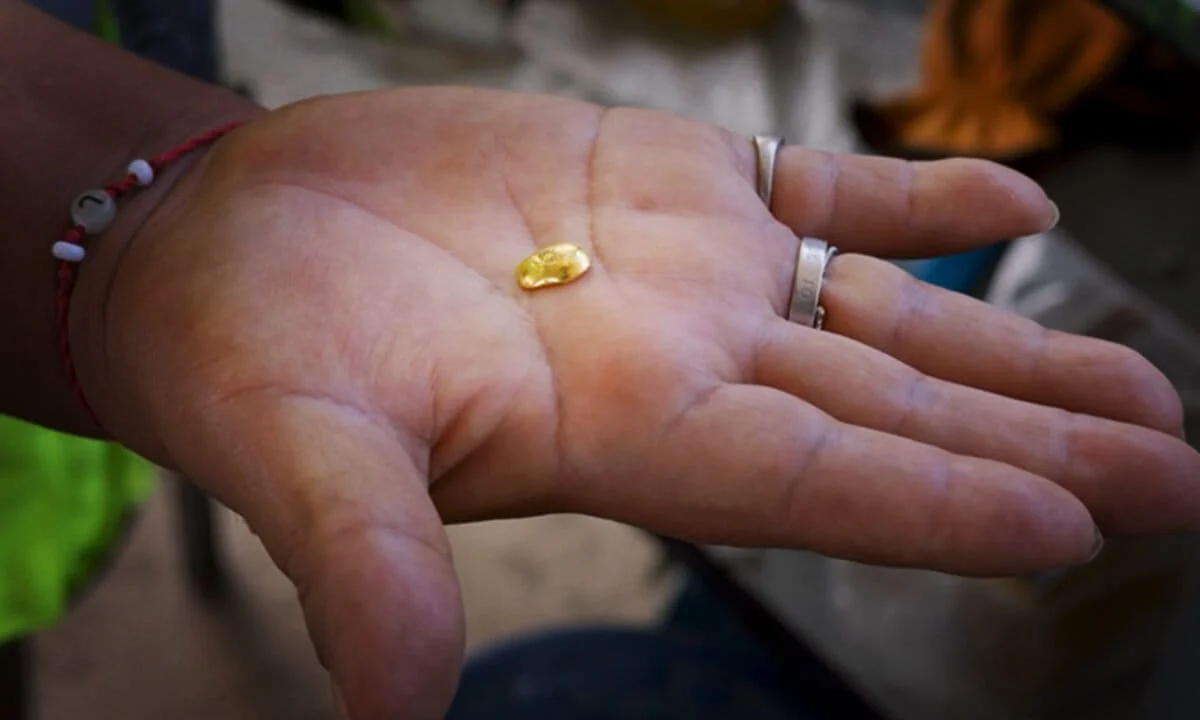
Deep within the Madre de Dios region of the Peruvian Amazon, the conflict between economic survival and environmental preservation has reached a critical juncture. The area, renowned for harboring some of the world’s most significant terrestrial biodiversity, is currently the epicenter of a desperate struggle between traditional artisanal gold mining, illegal exploitation, and a burgeoning movement toward "clean" extraction methods. As the region grapples with the dual crises of mercury contamination and systemic deforestation, a segment of the local population is attempting to rewrite the narrative of extractive industry in the Amazon.
The Geography of Extraction and Conflict
Madre de Dios is a landscape defined by the Interoceanic Highway, a critical infrastructure artery that has inadvertently facilitated the rapid expansion of mining camps. In the La Pampa sector, the landscape is scarred by moon-like craters, stagnant pools of toxic water, and vast swaths of denuded forest. For thousands of families, mining is not merely an industry but a generational legacy, an inherited trade that serves as the only viable path to economic stability in a region where state presence is often defined more by police confrontations than by public services.
The reality on the ground is volatile. Recent incidents, including the burning of police vehicles and violent clashes between law enforcement and miners, underscore the breakdown of social order. These confrontations are the culmination of years of state neglect, where miners—often operating in the shadow of the law—view the state as an antagonist rather than a regulator. The informal sector, which dominates the region, relies heavily on mercury to isolate gold, a process that releases heavy metals into the soil and river systems, causing irreversible damage to the Amazonian food chain and the health of indigenous communities.
A Chronology of the Crisis
The escalation of tension in Madre de Dios did not occur in a vacuum. The following timeline highlights the progression of the mining crisis:
- Early 2000s: The completion of the Interoceanic Highway triggers an unprecedented migration of workers to the Amazon, leading to an unregulated boom in artisanal and small-scale gold mining (ASGM).
- 2012–2014: The Peruvian government initiates aggressive "formalization" campaigns, requiring miners to meet strict environmental and legal standards. Many miners, unable to navigate the complex bureaucracy or afford the costs of compliance, remain in the shadows.
- 2019: Operation "Mercury" is launched by the Peruvian government, a massive military and police intervention aimed at purging illegal mining from the La Pampa buffer zone.
- 2021–2023: Despite government efforts, illegal mining persists, shifting deeper into protected areas and indigenous territories. Simultaneously, a small group of miners begins experimenting with gravimetric tables and solar-powered technology to bypass mercury use.
- 2024: Tensions peak as state enforcement operations face violent resistance, highlighting the failure of the current "command and control" approach to resolve the underlying socioeconomic drivers of mining.
The Technology of Transformation
Amidst the chaos of illegal extraction, a quiet technological revolution is taking root. A small cohort of miners is pivoting toward mercury-free extraction. The process, which utilizes a gravimetric table, replaces the chemical-intensive traditional method with physical separation. By using water and controlled agitation, miners can isolate gold particles from sediment without the need for toxic quicksilver.
The shift, however, is not merely technical; it is structural. These miners are seeking to formalize their operations, a process that requires obtaining legal concessions, filing environmental impact assessments, and participating in the formal tax system. Yet, the cost of entry is prohibitively high. Spare parts for modern machinery, when purchased through legal, invoiced channels, come at a premium compared to the unregulated, black-market alternatives. Without government subsidies or low-interest credit, the transition to "ecological gold" remains a precarious experiment for those involved.
Economic and Environmental Implications
The environmental toll of traditional mining in Madre de Dios is staggering. According to recent data from the Monitoring of the Andean Amazon Project (MAAP), deforestation related to gold mining has claimed hundreds of thousands of hectares of primary forest. Mercury, a potent neurotoxin, does not degrade; it bioaccumulates in fish populations, which form the dietary staple for local indigenous groups. Research from various environmental organizations has consistently found mercury levels in the blood of local residents—including children—that far exceed the safety guidelines set by the World Health Organization.

The economic implications are equally complex. The gold mining sector in Peru represents a significant portion of the national GDP, yet the informal sector operates entirely outside the tax base. By ignoring the potential for sustainable small-scale mining, the state loses out on billions of dollars in potential revenue and, more importantly, loses the opportunity to integrate these workers into a regulated, safer, and more productive economic model.
Perspectives on Formalization
The frustration voiced by those currently attempting to work within the law is palpable. Many miners argue that the media and the state paint all extraction with the same brush, labeling them as "scum" or criminals. They contend that by failing to differentiate between illegal, environmentally destructive operations and those attempting to modernize, the government is effectively disincentivizing formalization.
"We ask for documentation, but many people don’t have it," one local miner noted. "The technology exists, but we need support to implement it and make it economically sustainable in the long term."
This sentiment is echoed by development experts who suggest that formalization must be a carrot-and-stick approach. The "stick" of enforcement is necessary to curb illegal activity, but without the "carrot" of technical assistance, access to fair markets, and streamlined permitting, the informal economy will continue to thrive as a matter of survival.
The Path Forward: Can "Clean Gold" Be Scaled?
The concept of "ecological gold" presents a potential roadmap for the future, but it faces significant headwinds. First, there is the challenge of supply chain integrity. For consumers in global markets, tracing gold back to an ethical source in the Amazon is difficult. Without a robust certification scheme, the "clean" gold produced by formalized miners is often indistinguishable from gold produced by environmental degradation.
Second, the state’s role is currently limited to enforcement. There is a lack of institutional support for the transition to greener technologies. If the Peruvian government is to succeed in protecting the Amazon, it must move beyond police interventions and toward a framework that includes:
- Direct Subsidies: Financial support for small-scale miners to transition from mercury-based processing to gravimetric or centrifuge technologies.
- Simplified Bureaucracy: Reducing the complexity of the formalization process to ensure that small-scale miners can actually afford to comply with environmental regulations.
- Community Partnerships: Engaging indigenous communities and local cooperatives in the management of concessions to ensure that mining does not infringe upon protected ancestral lands.
The story of the miners in La Pampa is a microcosm of a larger global challenge: how to reconcile the need for economic development with the preservation of critical ecosystems. As long as the state treats mining solely as a criminal issue rather than a structural economic one, the cycle of violence, deforestation, and contamination is likely to continue.
The miners who are currently using gravimetric tables and solar panels are not just extracting metal; they are betting that the Peruvian state will eventually recognize their existence and facilitate a shift toward a more sustainable future. Until that happens, they continue to work in the shadows, waiting for the day when their, and the Amazon’s, survival is no longer an act of defiance, but a standard practice.

