
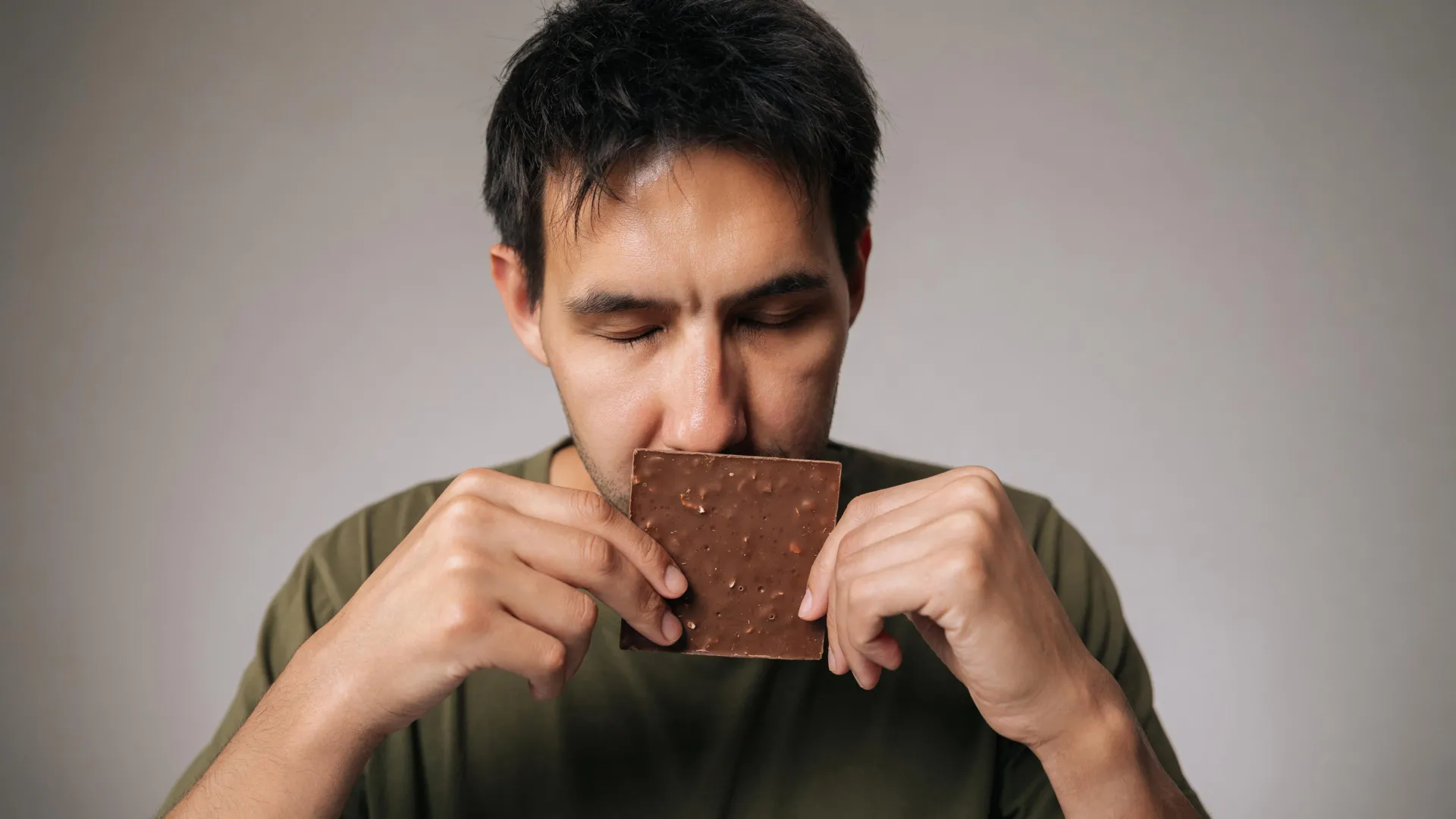
The pursuit of peak athletic performance often leads fitness enthusiasts to explore various ergogenic aids, ranging from high-stimulant pre-workout powders and caffeine capsules to specialized amino acid drinks and complex nutritional timing strategies. However, recent scientific inquiry suggests that a surprisingly simple, sensory-driven intervention might be hiding right under our noses: the scent of chocolate. A novel study published in the peer-reviewed journal Frontiers in Physiology has demonstrated that exposing individuals to specific chocolate aromas before and during resistance exercise can substantially increase training volume—measured by total completed repetitions—without escalating the subjective feeling of workout difficulty.
This fascinating intersection of olfactory science, psychobiology, and exercise physiology opens up new pathways for optimizing athletic output through environmental sensory manipulation. Conducted by a team of researchers at the Faculty of Sports and Exercise Science at the University of Malaya, the study bridges the gap between sensory perception, appetite regulation, and muscular endurance. As sports scientists continually search for legal, non-invasive methods to enhance training capacity, olfactory stimulation is emerging as an innovative frontier in physical conditioning.
Main Facts and the Core Experiment
At the center of this investigation is a controlled trial designed to evaluate how different types of chocolate aromas influence both appetite and physical performance during lower-body resistance training. The study evaluated 23 healthy, moderately trained men in their early to mid-twenties. These participants were subjected to controlled olfactory exposures while performing leg extensions—a classic open-chain resistance exercise targeting the quadriceps muscle group, where the user sits upright and straightens the lower legs against mechanical resistance to lift a designated weight.
To isolate the variables, the researchers divided the cohort into three distinct experimental groups. Each group was exposed to one of three specific scent conditions: a liquified dark chocolate sample containing a high concentration of 90% cocoa, a liquified milk chocolate sample containing 60% cocoa, or an odorless water sample that served as the methodological control.
The findings revealed a remarkable divergence in physical output based on the scent administered. Participants who sniffed the 90% dark chocolate aroma achieved an average increase of approximately 18 additional repetitions during their leg extension sets compared to the control group. Meanwhile, those exposed to the 60% milk chocolate aroma completed roughly nine additional repetitions compared to the water control. Crucially, these performance gains were achieved without a corresponding increase in the participants’ Rating of Perceived Exertion (RPE). This means that the athletes were able to perform significantly more work without feeling as though the workout required greater physical or mental strain.
Chronology and Methodological Design
Understanding the methodical framework of the trial provides critical context for these results. The experimental timeline was meticulously structured to monitor physiological and psychological shifts from a baseline fasting state through active exertion.
Prior to stepping into the testing environment, all participants underwent a mandatory fasting period of at least 10 hours. This step was crucial for standardizing baseline metabolic states and controlling for variable hunger levels that might otherwise skew appetite reporting. Upon arrival, researchers established baseline psychological metrics by asking participants to rate their subjective hunger, fullness, desire to eat, and immediate intention to consume food.
Following this initial data collection, the participants engaged in the resistance exercise protocol. The olfactory intervention was administered systematically: participants were exposed to their assigned scent sample—dark chocolate, milk chocolate, or the water control—immediately before beginning the exercise sets and continuously during the rest intervals between sets. Each scent exposure lasted for a standardized duration of 30 seconds.
Throughout the training session, researchers dynamically tracked both performance metrics and psychological feedback. Immediately following each 30-second scent exposure interval, participants were once again prompted to report their current levels of hunger and desire to eat. This rigorous chronological tracking allowed the research team to map out how continuous olfactory cues altered subjective appetite states in real-time while the body was undergoing physical stress.
Appetite Regulation and Sensory Differences
One of the most intriguing secondary findings of the study was the distinct manner in which dark chocolate and milk chocolate aromas impacted appetite and satiety. While both scents enhanced physical endurance to varying degrees, their psychological and physiological signatures on appetite were fundamentally different.
The 90% dark chocolate aroma exerted a profound suppressive effect on subjective hunger. Across the board, participants exposed to the dark chocolate scent reported lower hunger levels, diminished desire and intention to eat, and heightened feelings of fullness even before the exercise regimen began. The researchers noted that the dark chocolate aroma effectively tricked the metabolic and psychological systems into an anticipatory state of satiety. Because dark chocolate is universally recognized as a rich, intensely bitter, and deeply satisfying food source, its scent serves as a powerful learned cue that signals the impending consumption of dense caloric energy.
Milk chocolate presented a contrasting psychological profile. Participants consistently rated the aroma of the 60% milk chocolate as more pleasant, sweet, and hedonic than either the dark chocolate or the control sample. However, unlike the dark chocolate, the milk chocolate aroma did not significantly alter baseline hunger levels or subjective markers of appetite.
This divergence led the research team to hypothesize that the two aromas operate through entirely different psychobiological mechanisms. The sweet, hedonic profile of milk chocolate primarily functions as a reward cue, generating a positive, highly pleasurable sensory environment that elevates mood and motivation, thereby driving higher training volume without altering baseline metabolic hunger signals. In contrast, the bitter, complex profile of high-cocoa dark chocolate acts as a satiating cue, shifting the brain toward an anticipatory state of fullness.
Underlying Mechanisms: How Olfaction Interacts with the Brain
To comprehend why a mere scent can prompt such profound changes in muscular endurance and appetite, one must examine the intricate wiring of the human olfactory system. Olfaction—the sense of smell—is uniquely positioned within human neuroanatomy. Unlike other sensory inputs that must be processed through relay stations before reaching higher cortical centers, olfactory nerve projections bypass early thalamic filtering and connect directly to the limbic system. This includes the amygdala, which governs emotional processing, and the hippocampus, which manages memory consolidation and reward circuitry.
Dr. Mohamed Nashrudin bin Naharudin, an assistant professor at the Faculty of Sports and Exercise Science at the University of Malaya and the senior author of the study, emphasized the profound nature of this neural wiring. "We know olfaction is powerfully wired into the brain’s appetite and emotion networks, but surprisingly, no study has systematically looked at the three-way interaction between smell, appetite, and actual resistance exercise capacity," he noted.
From an evolutionary and developmental perspective, human beings are conditioned from early childhood to associate specific food aromas with subsequent physiological events. Repeatedly experiencing a particular scent in conjunction with eating creates robust, enduring neural pathways. Over time, these aromas transform into powerful predictive signals that prompt the brain and peripheral nervous systems to prepare for food ingestion.
When an individual is exposed to these familiar food cues during physical exertion—especially in a fasted state—the brain anticipates the arrival of nutrients. This anticipatory response can trigger physiological and psychological changes that mimic aspects of post-consumption recovery, potentially stabilizing energy perception, reducing the psychological burden of fatigue, and optimizing neural drive to the skeletal muscles. Consequently, the athlete can push through physiological barriers that would normally signal the cessation of a set, allowing for additional repetitions without a concurrent spike in perceived exertion.
Broader Implications for Sports Science and Fitness
The publication of these findings introduces compelling possibilities for the broader fields of athletic training, sports nutrition, and physical rehabilitation. While conventional ergogenic aids often rely on metabolic stimulants, central nervous system energizers, or caloric supplementation, olfactory interventions offer a completely non-pharmacological, non-metabolic alternative.
In high-intensity resistance training, muscular failure is frequently dictated as much by central nervous system fatigue and psychological perception of effort as it is by absolute muscular depletion. If targeted sensory stimuli can successfully decouple the objective workload from the subjective experience of fatigue, athletes might utilize pleasant or functional aromas to extend training volume safely. This could be particularly advantageous during periods of caloric restriction, such as pre-competition cutting phases for bodybuilders or weight-class athletes, where maintaining training intensity while managing hunger is a constant challenge.
Furthermore, the concept opens up avenues for commercial product innovation. The development of specialized, performance-enhancing pre-workout inhalers, scented training gear, or gym environments infused with targeted aromatic compounds could soon become a fixture of modern fitness culture. Fitness enthusiasts who struggle with low energy or mental fatigue during grueling leg days or high-volume hypertrophy routines may find a practical tool in simple scent therapy.
Addressing Study Limitations and Future Research Directions
Despite the promising nature of the findings, the research team is careful to emphasize several important limitations that must be addressed before these results can be broadly generalized across the wider athletic population.
First and foremost, the biological mechanisms proposed by the researchers remain largely speculative. Because the study did not measure circulating blood hormones—such as ghrelin, leptin, or cortisol—nor did it record real-time neural activity via electroencephalography (EEG) or functional neuroimaging, the precise physiological pathways responsible for the observed appetite suppression and performance enhancement cannot be definitively confirmed.
Additionally, methodological constraints regarding the sensory stimuli must be acknowledged. The physical intensity and chemical concentration of the dark and milk chocolate aromas were not mathematically identical, meaning variations in scent potency could have marginally influenced participant responses. Furthermore, because the control sample consisted of odorless water, participants were fully aware of when they were in the control condition, introducing the potential for psychological bias or placebo effects.
The demographic scope of the study was also intentionally narrow. By restricting the participant pool to 23 healthy, moderately trained young men in their early to mid-twenties, the researchers ensured a controlled baseline, but left open questions regarding external validity. Future research will need to investigate whether these same olfactory responses occur in female athletes, untrained individuals, elite powerlifters, or older adults.
Finally, a compelling question remains: Is chocolate uniquely suited for this phenomenon, or can other familiar, highly appealing food aromas replicate these performance-enhancing effects? Dr. Naharudin and his colleagues suspect that chocolate is not entirely singular in its capabilities, though it possesses uniquely strong, universally recognized reward and satiety associations due to its widespread cultural consumption.
"We don’t think chocolate is entirely unique, though it is a food cue with incredibly strong, universally recognized reward associations," Dr. Naharudin concluded. He noted that other foods strongly associated with post-eating satisfaction could potentially yield comparable psychobiological responses, provided the individual finds the specific odor familiar, appealing, and free of aversion.
As sports scientists continue to decode the complex relationship between the human senses and physical output, the humble chocolate aroma stands as a reminder that the pathways to enhanced athletic performance are as diverse as the human mind itself. Whether future gym-goers will routinely pack a dark chocolate scent stick alongside their lifting belts and shaker bottles remains to be seen, but the science strongly suggests that taking time to stop and smell the chocolate might just get you through your next grueling leg day.

