
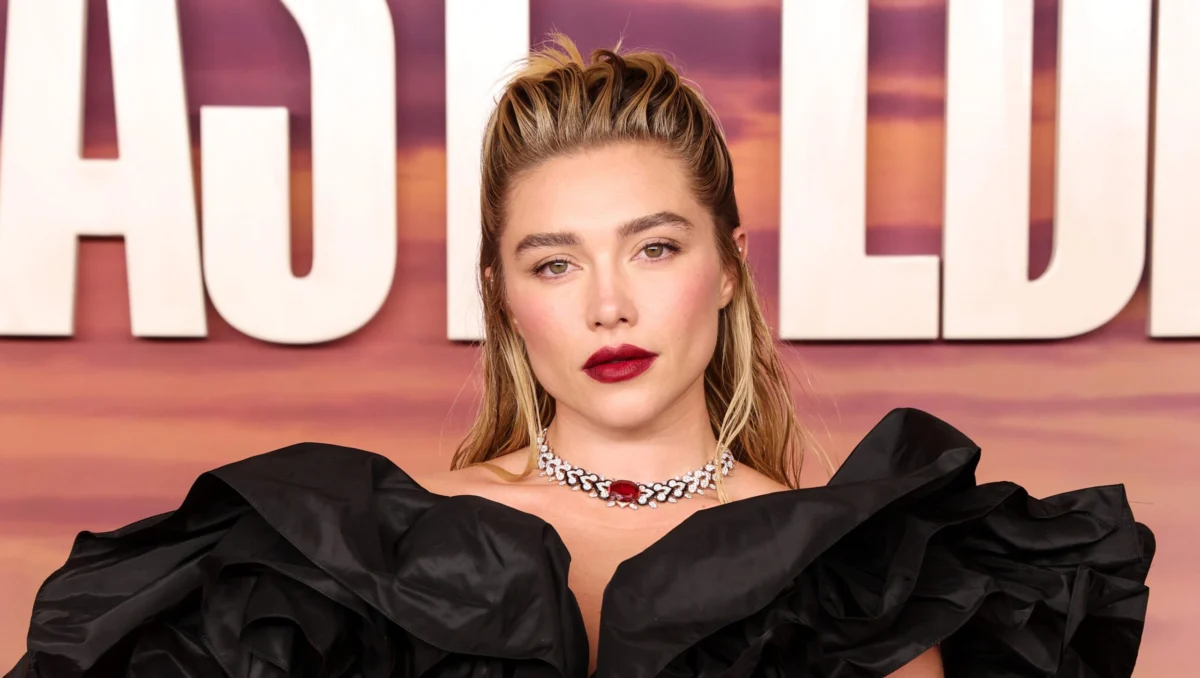
Oscar-nominated actress Florence Pugh has addressed the significant professional and digital repercussions she faced after publicly voicing her support for Palestine, revealing that the backlash cost her hundreds of thousands of social media followers. In a comprehensive cover story for Vanity Fair, the British star opened up about her decision to use her platform for advocacy, emphasizing that her conscience outweighed any fear of industry or public retaliation.
The controversy surrounding Pugh’s activism traces back to September, when she made a surprise appearance at the Together for Palestine event. Addressing the audience from the stage, the actress delivered a sharp critique of international apathy, stating that silence in the face of widespread humanitarian suffering constitutes complicity rather than neutrality. She further remarked that empathy should not present such a challenge, expressing bewilderment at the delayed global response to the crisis.
Despite immediate backlash that manifested in a sharp drop in her digital following, Pugh maintained that she harbored no fear regarding the potential consequences. Rather than silencing her, the widespread reluctance of fellow public figures to speak on the matter served to reinforce her conviction. Pugh noted that the noticeable absence of public commentary from her peers only solidified her belief that addressing the humanitarian catastrophe was a moral imperative. Notably, her representation and PR team refrained from advising her to remain quiet, while colleagues and logistical coordinators assisted her in attending the event despite a demanding production schedule for Marvel’s upcoming Avengers: Doomsday.
The Broader Context of Celebrity Activism
Pugh’s recent remarks highlight a recurring tension within contemporary Hollywood, where high-profile entertainers frequently navigate the delicate balance between commercial viability and political expression. In recent years, public figures expressing opinions on complex geopolitical conflicts—particularly the Israeli-Palestinian conflict—have faced intense scrutiny from fans, studio executives, and advocacy groups.
For actors tethered to major intellectual properties and multi-million-dollar studio franchises, speaking out often carries measurable career risks. Digital metrics, including follower counts and engagement rates, serve as critical barometers for modern casting directors and brand-partnership executives. By acknowledging the loss of hundreds of thousands of followers, Pugh’s statements underscore the tangible economic and social penalties often levied against artists who depart from industry-wide neutrality.
At the same time, cultural analysts point to a shifting paradigm in celebrity culture, where younger audiences increasingly demand authenticity and social awareness from the public figures they support. Pugh’s unapologetic stance places her among a growing cohort of artists willing to absorb digital and professional friction in exchange for advocating causes they deem morally urgent.
The Psychological Toll and Social Media Dissonance
Beyond the metrics of public fallout, Pugh reflected on the profound psychological dissonance of maintaining a public-facing digital presence while a humanitarian crisis continues to unfold. She described the jarring nature of modern social media consumption, where moments of personal celebration or career promotion sit adjacent to harrowing images of devastation.
The actress specifically highlighted the ongoing suffering of civilians, pointing to the plight of displaced families, injured children, and grieving parents. She questioned the ethics and emotional feasibility of projecting an image of normalcy or professional success on platforms where users can effortlessly scroll between Hollywood promotional material and real-time footage of wartime casualties. This cognitive dissonance, Pugh suggested, makes standard promotional cycles increasingly difficult to navigate without acknowledging the broader global context.
Upcoming Professional Projects and Career Trajectory
Even as she navigates the complexities of public advocacy, Pugh maintains one of the busiest production schedules in the entertainment industry, balancing high-profile independent cinema with massive blockbuster franchises.
Her upcoming professional slate features several major releases across different studios and streaming platforms. On October 1, Netflix is set to release its highly anticipated adaptation of John Steinbeck’s classic literary masterpiece, East of Eden, starring Pugh in a central role. The project represents a significant dramatic pivot for the actress, returning her to prestige literary adaptations following a run of major genre films.
Simultaneously, Pugh remains a cornerstone of major studio franchises. On December 18, she is slated to appear in two simultaneous high-profile theatrical events: Marvel Studios’ Avengers: Doomsday, which marks a pivotal chapter in the expanding Marvel Cinematic Universe, and Denis Villeneuve’s sci-fi epic Dune: Part Three. The simultaneous release schedule highlights her unique standing in contemporary cinema, capable of anchoring both intimate, character-driven dramas and global tentpole spectacles.
Industry Implications and Future Outlook
As Hollywood continues to grapple with the intersection of art, politics, and digital culture, Pugh’s candid remarks are likely to resonate within both industry boardrooms and public forums. Her experience demonstrates that while the financial and digital cost of political advocacy remains high, a subset of prominent artists is increasingly unwilling to prioritize career insulation over humanitarian concerns.
Whether Pugh’s openness will influence other high-profile figures to break their silence on polarizing global issues remains to be seen. However, her willingness to confront the backlash head-on signals a distinct shift in how certain modern actors approach the responsibilities of platform and public influence, setting a precedent that will likely shape celebrity activism for the foreseeable future.

