
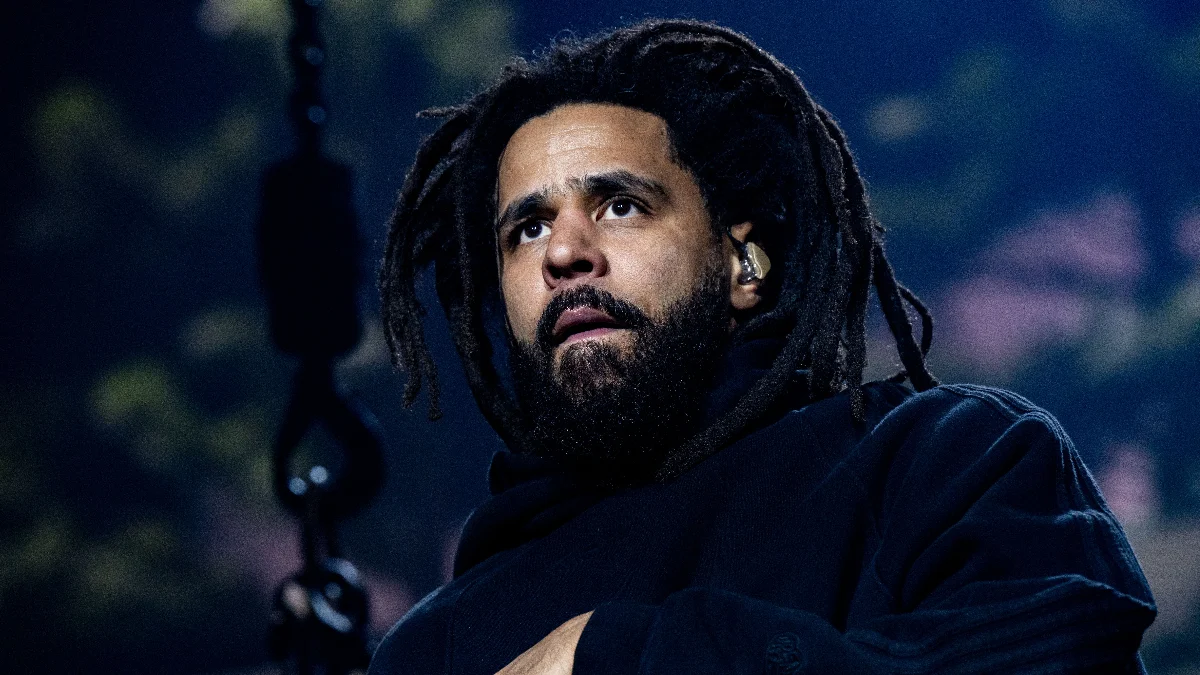
The landscape of contemporary American hip-hop experienced a definitive shift when Grammy-winning rapper and producer J. Cole officially announced the permanent cancellation of his long-teased retirement plans. Speaking during an in-depth interview on the NFR Podcast, the Fayetteville native addressed months of speculation, fan anxiety, and mixed messaging that followed the rollout of his landmark project, The Fall-Off. For years, the hip-hop community had braced itself for the conclusion of a storied discography, operating under the assumption that J. Cole’s conceptual swan song would signal the end of his illustrious recording career. However, shifting circumstances, creative breakthroughs in the studio, and the unpredictable currents of the modern rap landscape ultimately convinced the artist to abandon his retirement timeline entirely.
The announcement brings closure to a protracted guessing game that began long before The Fall-Off ever materialized on streaming platforms. J. Cole, born Jermaine Lamarr Cole, had spent a significant portion of the early 2020s hinting that his career was winding down. In various guest verses, interviews, and promotional runs, he positioned The Fall-Off as the final chapter in a monumental album run that began with his 2011 major-label debut, Cole World: The Sideline Story. Yet, as the official release date of February 6, 2026, approached, the narrative surrounding the album underwent a dramatic metamorphosis. What was initially conceived as a concise, definitive conclusion transformed at the eleventh hour into a sprawling double album, directly influenced by the shifting dynamics of the rap industry and high-profile creative catalysts.
The Catalyst: How Industry Friction Reshaped The Fall-Off
To understand the reversal of J. Cole’s retirement plans, industry analysts and fans must examine the volatile timeline that preceded the release of The Fall-Off. For years, Cole had maintained a philosophy of peaceful coexistence within the upper echelons of hip-hop, often rapping about collaboration, mutual respect, and the avoidance of unnecessary friction. However, the ecosystem of the genre shifted dramatically in the spring of 2024 following the release of Kendrick Lamar’s verse on the Future and Metro Boomin track "Like That."
The ensuing cultural storm placed the "Big Three" of modern rap—Kendrick Lamar, Drake, and J. Cole—at the center of an intense lyrical dialogue. While Cole initially responded with a track on his surprise mixtape Might Delete Later, he swiftly withdrew from the engagement, publicly expressing a desire to step back and realign with his core artistic values. This momentary pause, however, proved to be the ultimate creative spark for his studio sessions. Rather than retreating from the fray permanently, Cole channeled the high-stakes energy of the hip-hop landscape back into his recording process.
When discussing the creation of the album on the NFR Podcast, Cole candidly revealed the internal conflict he experienced in the studio. "When I was making that album, I was making it like, ‘Damn, this is going to be my last sh*t,’" Cole stated. "Luckily, by the time I got to actually finishing the album, because of circumstances, I’m like, ‘Nah, I’ll never say I’m going to retire.’"
Those "circumstances" included the expansion of The Fall-Off into a double album, an ambitious structural choice that forced the rapper to re-examine the scope of his artistry. Instead of closing the book on his career, the grueling and deeply introspective writing process for the project revitalized his passion for the craft. The energetic reception from fans, paired with a massive, high-capacity international tour, further demonstrated that public demand for his music remained at an all-time high.
A Chronology of Uncertainty: From Teases to Final Reversal
The path to J. Cole’s official cancellation of his retirement was marked by a series of contradictory public statements that kept the music industry guessing for months:
- 2020–2023 (The Teasing Era): J. Cole repeatedly references The Fall-Off as his prospective final album, establishing a thematic retirement narrative across guest features and promotional rollouts.
- April 2024: Amid widespread industry tension sparked by "Like That," Cole releases Might Delete Later before publicly stepping away from the ongoing lyrical conflict, prompting renewed speculation about his career timeline.
- February 6, 2026: The Fall-Off is released as a surprise double album. While initially presented as a retirement project, Cole immediately begins walking back the definitive nature of the exit during release week interviews.
- Spring/Summer 2026: Cole embarks on a massive, critically acclaimed stadium and arena tour, proving through his live performances that his stage presence and creative stamina are operating at peak levels.
- Late 2026: During his appearance on the NFR Podcast, J. Cole makes it official, formally announcing that he is permanently abandoning his retirement plans and committing to a prolonged future in music.
This timeline illustrates a gradual evolution from a rigid career-ending mindset to an open-ended artistic philosophy. By recognizing that creative inspiration cannot be artificially bound by self-imposed deadlines, Cole chose longevity over theatrical finality.
Unprecedented Chart Dominance and Commercial Legacy
The decision to continue making music carries significant weight when viewed against J. Cole’s historic commercial achievements. Since breaking into the mainstream consciousness with Cole World: The Sideline Story in 2011, Cole has built one of the most consistent and flawless chart resumes in the history of recorded music. Every single one of his seven studio albums has achieved a rare feat: debuting simultaneously at No. 1 on the Billboard 200 and the Top R&B/Hip-Hop Albums chart.
In an industry often defined by fluctuating trends, fleeting viral moments, and declining physical sales, Cole’s ability to anchor his commercial success entirely on lyrical depth, conceptual storytelling, and organic fan loyalty is virtually unmatched. Had he proceeded with his original plan to walk away after The Fall-Off, he would have joined the rare pantheon of artists who retired entirely on top, leaving behind a pristine discography unsullied by commercial slumps.
However, continuing his career introduces a new set of stakes. Maintaining a flawless No. 1 album streak across an extended discography becomes increasingly difficult as artists age and musical landscapes shift. Yet, Cole’s unwavering cultural relevance suggests that his future endeavors will face little difficulty maintaining his standard of excellence. His fans, known for their devotion to his introspective lyricism, have welcomed the news with overwhelming relief, eager to see how his artistry evolves now that the finish line has been removed.
Concept, Craft, and Athletic Pursuits Outside the Booth
To fully appreciate the artistic space J. Cole occupies, it is essential to examine the unique thematic framework of The Fall-Off. Serving as a conceptual deep-dive into his roots, the album acts as a sonic and narrative exploration of his hometown of Fayetteville, North Carolina. The double-album structure is cleverly partitioned across two distinct phases of life: the first half captures Cole visiting his hometown at the age of 29, brimming with the ambitions, anxieties, and hunger of a rising star. The second half shifts the perspective forward to age 39, reflecting a decade of accumulated wisdom, fatherhood, industry pressures, and the philosophical realizations of a veteran statesman.
Beyond his contributions to hip-hop, Cole has consistently captured public attention through his diverse extracurricular pursuits, most notably his high-profile forays into professional basketball. Unlike most musicians who treat athletics as a hobby, Cole has actively pursued professional opportunities on the hardwood, playing in three separate professional leagues. His journey has included stints in the Basketball Africa League (BAL) with the Rwanda Patriots, the Canadian Elite Basketball League (CEBL) with the Scarborough Shooting Stars, and internationally with the Nanjing Monkey Kings in the Chinese Basketball Association (CBA). This rare balance of elite musicianship and professional athletic endeavors underscores his relentless drive to challenge himself outside of traditional comfort zones.
Broader Implications for the Hip-Hop Ecosystem
J. Cole’s formal reversal of his retirement carries broad implications for the broader hip-hop ecosystem. In an era where veteran artists frequently utilize the threat of retirement as a marketing gimmick to boost opening-week sales or generate streaming buzz, Cole’s transparent admission of his changing mindset feels refreshingly authentic. By acknowledging that his creative inspiration was revitalized by the very industry pressures that once prompted him to step back, he humanizes the artistic process.
Furthermore, the decision ensures that hip-hop retains one of its most vital and structurally rigorous standard-bearers. At a time when the genre is experiencing rapid generational turnover, the continued active participation of artists with Cole’s level of technical mastery, commercial weight, and cultural reverence provides a stabilizing bridge between classic rap traditions and modern innovations.
As J. Cole turns the page on this chapter of his career, the narrative has shifted away from finality and toward boundless potential. With no retirement hanging over his head, the Fayetteville icon is free to create music purely for the love of the craft, unburdened by the pressure of constructing a definitive ending. For hip-hop fans worldwide, the realization that J. Cole is here to stay ensures that the genre’s golden standard of lyricism will continue to shape the cultural conversation for years to come.

