
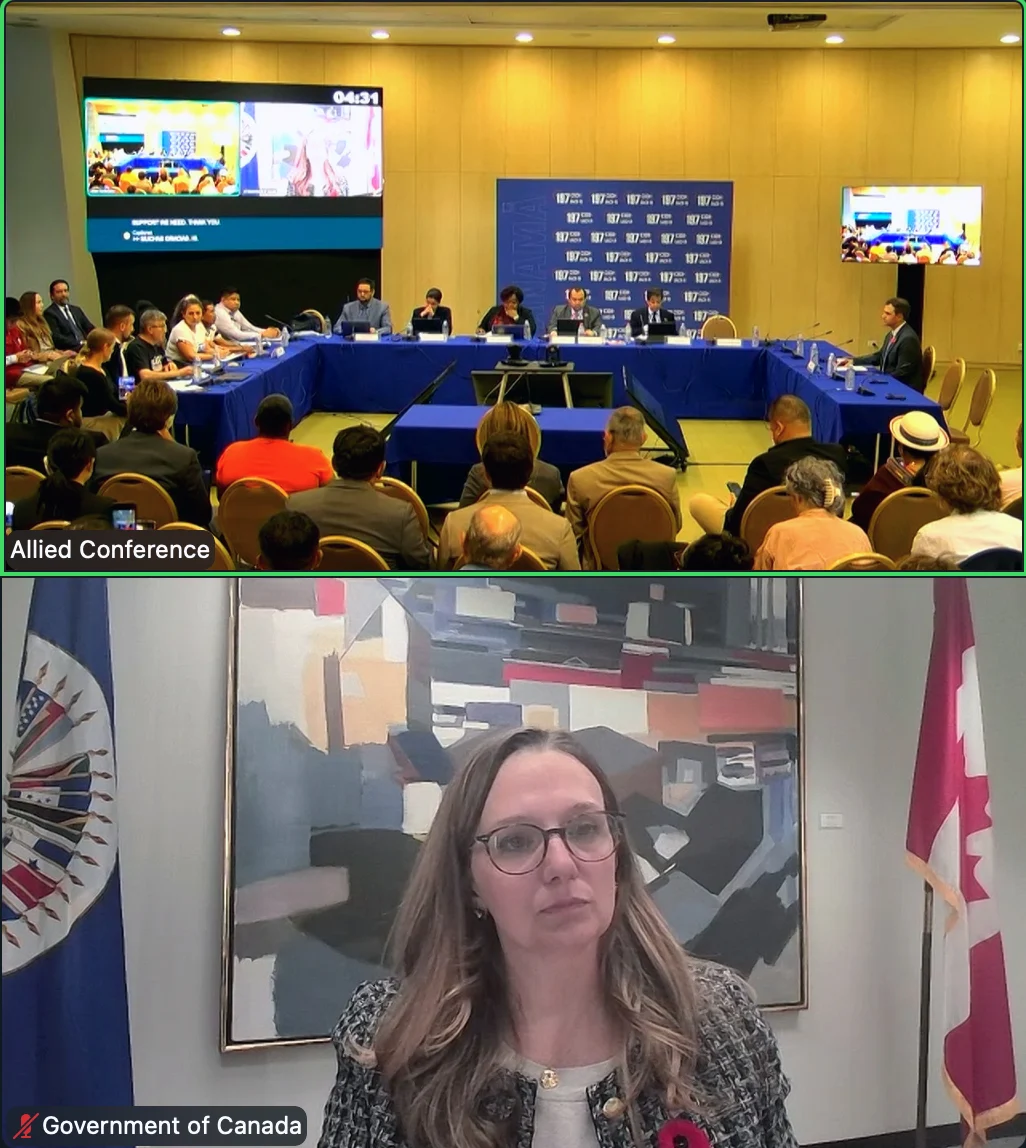
The Inter-American Commission on Human Rights (IACHR) convened in Panama on October 27 to address a mounting crisis of corporate accountability, specifically focusing on the activities of Canadian-based extractive firms operating across the Americas. The session served as a high-stakes forum for testimony from representatives of six nations, who presented harrowing accounts of environmental degradation, community displacement, and targeted violence against those attempting to defend their ancestral lands.
Canada holds a unique position in the global mining landscape, serving as the base for approximately half of the world’s publicly listed mining and mineral exploration companies. While this industry is a cornerstone of the Canadian economy, its global footprint has become a subject of intense scrutiny by international human rights bodies and civil society organizations. The IACHR hearing was not merely a procedural inquiry but a confrontation with the perceived failure of the Canadian government to enforce human rights standards on its corporations when they operate beyond its borders.
The Human Cost of Extraction
The testimonies provided in Panama painted a stark picture of the consequences of large-scale mining. Marco Manobanda, an Indigenous fish-farmer from Las Naves, Ecuador, offered a vivid account of the environmental and social collapse he attributes to the El Domo copper and gold mine. The project, operated by Vancouver-based entities Silvercorp Metals Inc. and Salazar Resources Ltd., is accused of polluting vital water sources and destroying local ecosystems upon which the Las Naves community depends.
Manobanda’s testimony echoed the broader trend of criminalization facing land defenders. He described a climate of fear characterized by a heavy military and police presence, constant harassment, and the strategic use of the legal system to silence opposition. According to reports presented to the commission, more than 30 residents of his community have faced criminal charges in relation to their protest activities, with some receiving multi-year prison sentences. This pattern—using the state’s security apparatus to protect private commercial interests—is a recurring theme in the allegations brought before the IACHR.

Similarly, Mayerly López from Colombia testified about the existential threat posed to the Santurbán páramo, a high-altitude, biodiverse ecosystem that provides water to approximately two million people. The threat, according to López, stems from the Soto Norte gold mining project, led by the Aris Mining Corporation. Her testimony highlighted the dangerous phenomenon of "stigmatization," where defenders are labeled as enemies of development or associates of illegal armed groups in public pamphlets and on social media, effectively placing targets on their backs.
A Chronology of Declining Accountability
The IACHR hearing follows a period of significant policy retrenchment by the Canadian government. For years, advocates had pushed for a robust, independent mechanism to investigate complaints against Canadian corporations. This led to the creation of the Canadian Ombudsperson for Responsible Enterprise (CORE). However, the government’s decision to effectively dismantle the CORE earlier this year has left human rights advocates reeling.
The following timeline illustrates the shifting landscape of Canadian corporate oversight:
- 2000s–2010s: Persistent reports of human rights abuses linked to Canadian mining firms lead to years of lobbying for an independent investigative body.
- 2018: The Canadian government announces the creation of the CORE, tasked with investigating human rights abuses in the garment, mining, and oil and gas sectors.
- June 2026: The federal government announces the elimination of the CORE, opting to centralize complaints within the National Contact Point (NCP) framework.
- September 2026: Critics and analysts publish reports criticizing the NCP, citing its lack of investigative authority and its poor record of achieving formal resolutions.
- October 2026: The IACHR holds a hearing in Panama, where activists argue that the lack of a strong, independent Canadian watchdog leaves them without any viable path for justice.
The Structural Deficit in Oversight
The central point of contention for legal experts, such as Charis Kamphuis of the Justice and Corporate Accountability Project, is that Canada’s current oversight mechanism, the National Contact Point, is fundamentally unequipped to handle complex human rights litigation. Unlike the CORE, which was intended to have the power to investigate, the NCP operates under the OECD Guidelines for Multinational Enterprises. These guidelines are voluntary, non-binding, and serve primarily as a platform for mediation rather than adjudication.
Arturo Ezquerro-Cañete, the Latin America program coordinator with MiningWatch Canada, characterized the NCP as a mechanism that "lacks teeth." The data supports this assessment; of the 33 cases handled by the Canadian NCP since 2000, only three resulted in formal joint agreements. Critics argue that the system is designed to facilitate dialogue rather than resolve disputes involving serious violations, such as the use of force against protesters or the destruction of essential water supplies.

Furthermore, because Canada has not ratified the American Convention on Human Rights, it remains insulated from the jurisdiction of the Inter-American Court of Human Rights. This means that the IACHR can issue recommendations, but it lacks the authority to mandate legally binding remedies or financial restitution for affected communities. Consequently, the burden falls heavily on domestic Canadian courts, which have proven difficult for international claimants to access due to high legal costs and jurisdictional complexities.
The Global Context: Latin America as a Flashpoint
The testimonies provided in Panama are set against a grim backdrop of global statistics. According to data from the NGO Global Witness, Latin America has consistently been the most dangerous region in the world for environmental and land defenders. In 2025 alone, the region accounted for a disproportionate number of killings of activists. Colombia, in particular, was identified as the deadliest country for such individuals, with nearly 40 recorded deaths last year.
The link between these killings and the extractive sector is frequently documented by international observers. When local communities resist large-scale mining projects, the resulting friction often involves private security contractors and state police forces. The testimonies from Panama suggest that the presence of Canadian capital often acts as a catalyst for these tensions, as local governments prioritize foreign investment and export revenues over the environmental and human rights protections of their rural and Indigenous populations.
Official Responses and Diplomatic Tensions
During the IACHR hearing, Gillian Gillard, representing Canada at the Organization of American States (OAS), defended the government’s approach. She argued that the NCP framework is designed to promote responsible business conduct and that the Canadian government maintains an expectation that its companies will adhere to international standards.
"No framework can eliminate all risks," Gillard stated during the session, emphasizing that the government encourages companies to mitigate adverse impacts. However, when pressed by commissioners for specific details on how Canada verifies compliance or conducts independent investigations into abuse allegations, the representative’s responses were noted for their lack of directness. Instead of outlining a clear investigative path, the Canadian delegation focused on a series of broader, less-defined initiatives, leaving many in the room unsatisfied.

Future Implications
The IACHR hearing in Panama represents a critical juncture for Canadian foreign policy and corporate governance. By failing to provide a clear, independent mechanism for accountability, Canada faces the risk of becoming an international outlier in the management of its multinational corporations.
As the global transition toward renewable energy increases the demand for minerals—many of which are sourced from Latin America—the pressure on Canadian mining companies to extract these resources in a socially responsible manner will only intensify. Civil society organizations are now calling for the Canadian government to adopt mandatory human rights and environmental due diligence legislation. Such legislation would shift the burden from vulnerable communities to the corporations themselves, requiring them to proactively identify and mitigate risks as a condition of their continued access to public financing, export credits, and government insurance.
Without such a shift, the gulf between the corporate rhetoric of "responsible business conduct" and the lived reality of communities in the Global South is likely to widen. The testimony in Panama has served as a formal record of this disconnect, providing a foundation for future international legal strategies and continued public pressure on Ottawa. As it stands, the families of those affected by mining-linked violence remain in a precarious state, waiting for a government thousands of miles away to recognize that their corporate brands are inextricably linked to the actions of their companies on the ground.

