
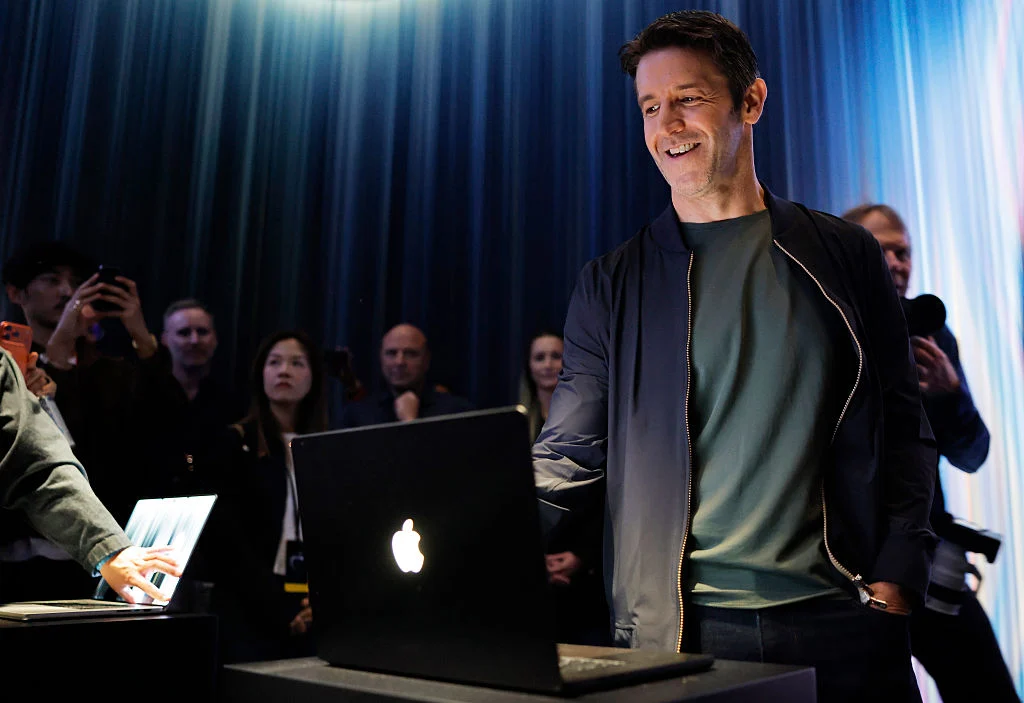
In a high-stakes climate where Silicon Valley giants are locked in an unprecedented race to define the future of artificial intelligence, Apple’s new CEO, John Ternus, has broken his silence regarding the company’s measured approach to the technology. Speaking during an extensive interview with Wired’s Steven Levy, the newly minted chief executive offered a robust defense of Apple’s philosophy, pushing back against critics who have characterized the iPhone maker as a laggard in the generative AI revolution. As Apple navigates a transition period following the departure of his predecessor, the company is attempting to balance the aggressive integration of machine learning with its long-standing reputation for polished, user-centric software.
The discussion, which took place in the lead-up to a high-profile product event in Los Angeles, provides a rare window into the internal strategic thinking at Cupertino. For many industry observers, the central question remains whether Apple’s "deliberate" pace is a masterclass in product refinement or a dangerous oversight that risks ceding the next generation of computing to rivals like Google, Microsoft, and OpenAI.
A Timeline of Apple’s AI Evolution
To understand the current tension, one must look at the chronology of Apple’s recent AI journey. For years, Apple marketed its machine learning capabilities under the "Neural Engine" branding, focusing primarily on privacy-preserving on-device processing for features like photography enhancement, predictive text, and FaceID. However, the November 2022 release of ChatGPT shifted the goalposts, making conversational, generative AI the new industry benchmark.
- 2023: Apple remained notably quiet on the generative AI front, prioritizing incremental improvements to Siri while its peers rushed to announce Large Language Model (LLM) integrations.
- Early 2024: Internal reports suggested a "scramble" to integrate generative AI into iOS, leading to a massive reorganization of resources within the software engineering division.
- August 2026: Apple finally launched a long-awaited, significantly upgraded version of Siri. Despite the anticipation, the rollout received a lukewarm reception from analysts who felt the update lacked the "wow" factor seen in competitors’ offerings.
- September 2026: John Ternus officially assumed the role of CEO, signaling a leadership transition focused on hardware-software synergy.
- October 2026: In his first major public interviews as CEO, Ternus outlined his vision for an "AI-augmented" rather than "AI-driven" Apple.
The Philosophy of "Invisible" Intelligence
At the heart of Ternus’s defense is a distinction between "AI for AI’s sake" and functional, value-added technology. During his conversation with Levy, Ternus emphasized that Apple’s goal is to embed intelligence so deeply into the fabric of the operating system that it becomes indistinguishable from traditional software.
"We don’t want to ship AI for AI’s sake," Ternus stated. This perspective aligns with Apple’s historical product design language, which has always prioritized the user experience over technical vanity. By focusing on how AI can streamline workflows—such as intelligently sorting emails, automating photo edits, or optimizing battery performance—Apple aims to avoid the pitfalls of early-stage, "hallucination-prone" chatbots that have plagued other platforms.
This approach carries significant weight in the consumer market. While competitors have focused on chatbots as the primary interface for AI, Apple is betting that consumers will eventually prefer an experience where they do not have to "prompt" a machine. Instead, the software should simply understand the context of the user’s actions.
Market Data and Competitive Pressures
The skepticism surrounding Apple’s strategy is rooted in tangible market data. According to recent quarterly earnings reports and third-party analyst estimates, Apple’s share of the "AI-ready" device market has faced pressure from Android manufacturers who have been quicker to adopt cloud-based generative AI features.

Data from the third quarter of 2026 indicates that while Apple remains the leader in high-end smartphone retention, the "upgrade cycle" has slowed. Consumers, particularly those in the enterprise and creative sectors, are increasingly looking for devices that offer native support for advanced LLMs. The launch of the upgraded Siri in August was designed to mitigate this, yet industry analysts at firms like IDC and Gartner have noted that Apple’s reliance on on-device processing—while superior for privacy—imposes hardware constraints that can limit the sheer power of its AI models compared to cloud-reliant competitors.
Despite these challenges, Apple’s financial fundamentals remain strong. The company’s services segment, which relies on the stability and ease of use of the Apple ecosystem, continues to grow, suggesting that the "walled garden" approach remains a powerful deterrent against churn, even if the feature set lags in specific AI-driven benchmarks.
The "Agentic" Future and the App Ecosystem
Perhaps the most significant portion of the interview concerned the future of the app ecosystem. As the industry moves toward "AI agents"—software that can execute complex, multi-step tasks across different apps on a user’s behalf—many have questioned whether the traditional app-based model will become obsolete. If an AI agent can book a flight, manage a calendar, and send an email without the user ever opening a specific application, the current business model of the App Store could be fundamentally disrupted.
Ternus remained optimistic, if slightly guarded, on this front. "That could make life really easy, I suppose," he admitted, "but the creation of products is a deeply human and personal thing." By framing the creation of apps as a "human" endeavor, Ternus is subtly reinforcing Apple’s role as the curator and gatekeeper of digital experiences. Apple’s strategy appears to be one of controlled integration: allowing AI agents to bridge the gaps between apps without dismantling the app economy that has served as a cornerstone of its revenue for nearly two decades.
Implications for the Tech Landscape
The implications of Ternus’s stance are far-reaching. By positioning Apple as the provider of "invisible" AI, the company is effectively carving out a niche that contrasts sharply with the "agentic" and "conversational" focus of its competitors.
- Privacy as a Product: By doubling down on on-device processing, Apple is doubling down on its "Privacy First" marketing strategy, which remains a key differentiator for privacy-conscious users in an era of massive data breaches and training-data controversies.
- Hardware-Software Integration: Apple is betting that its custom silicon, specifically the latest iterations of its A-series and M-series chips, will provide the necessary local compute power to outclass rivals who rely on expensive, latency-prone cloud connections.
- The "Slow and Steady" Risk: The primary risk is that Apple’s caution could be interpreted as complacency. If a competitor manages to create a truly transformative AI experience that fundamentally changes how people work—and does so before Apple can pivot—the company could lose its position as the primary gateway to the internet for hundreds of millions of users.
Conclusion: A New Era for Cupertino
John Ternus’s comments reveal a CEO who is keenly aware of the criticisms leveled at his company but remains confident in the Apple way of doing business. The transition from the Tim Cook era to the Ternus era will be defined by how the company manages the shift from a hardware-centric model to one where the hardware is merely the vessel for sophisticated, ambient intelligence.
As the tech industry watches the Los Angeles product event unfold, the message from the top is clear: Apple will not be rushed into a frantic arms race that compromises its standards. Whether this measured approach is the correct one will be determined not by the speed of their product releases, but by the long-term utility their users find in the next generation of the Apple ecosystem. For now, the company is doubling down on the belief that when it comes to technology, the best innovations are those that disappear into the background, leaving the user to focus on what they love to create.

