
Sydney PhD Student Recreates Cosmic Dust, Illuminating Origins of Life’s Building Blocks
In a groundbreaking achievement that bridges the vastness of space with the precision of a laboratory, a PhD student at the University of Sydney has successfully synthesized cosmic dust, a fundamental component of the universe and a potential harbinger of life. Linda Losurdo, a candidate in materials and plasma physics within the School of Physics, has meticulously recreated the conditions found in the energetic environments near stars and supernova remnants, producing carbon-rich dust that mirrors the material found throughout interstellar space. This remarkable feat, detailed in a recent publication in The Astrophysical Journal of the American Astronomical Society, offers profound insights into the early chemical evolution of the cosmos and the potential origins of life’s essential molecular components.
Simulating the Cosmic Forge: A Laboratory Universe in a Bottle
The experimental process, a testament to ingenuity and scientific rigor, involved combining three key gases: nitrogen, carbon dioxide, and acetylene. These elements were chosen to simulate the extreme conditions prevalent in stellar nurseries and the explosive aftermath of supernovae. The crucial step involved exposing this carefully curated gaseous mixture to a powerful electrical charge. This energetic discharge triggered a complex series of chemical reactions, effectively breaking down the initial molecules and allowing their constituent atoms to recombine into larger, more intricate structures.
The result was the formation of fine, carbon-rich dust particles. Spectroscopic analysis revealed that this laboratory-produced dust bore a striking resemblance to the composition and structure of cosmic dust that drifts through the interstellar medium. Crucially, this synthesized material contains complex combinations of carbon, hydrogen, oxygen, and nitrogen – the very elements that form the backbone of organic molecules, collectively known as CHON molecules, which are fundamental to all known life.
"We no longer have to wait for an asteroid or comet to come to Earth to understand their histories," Ms. Losurdo stated in an interview. "You can build analogue environments in the laboratory and reverse engineer their structure using the infrared fingerprints." This ability to create and study cosmic dust analogues on Earth represents a significant leap forward in astrophysical research, allowing scientists to probe environments that are otherwise inaccessible and incredibly difficult to study directly.
The CHON Connection: Dust as a Cradle for Organic Chemistry
The significance of the CHON molecules found in the laboratory dust cannot be overstated. These elements are the fundamental building blocks of amino acids, nucleotides, and other complex organic compounds that form the basis of life as we know it. The presence of these elements, intricately bonded within the synthesized dust, strongly suggests that the very chemical ingredients necessary for life could have been forged in the extreme conditions of space long before the formation of our own planet.
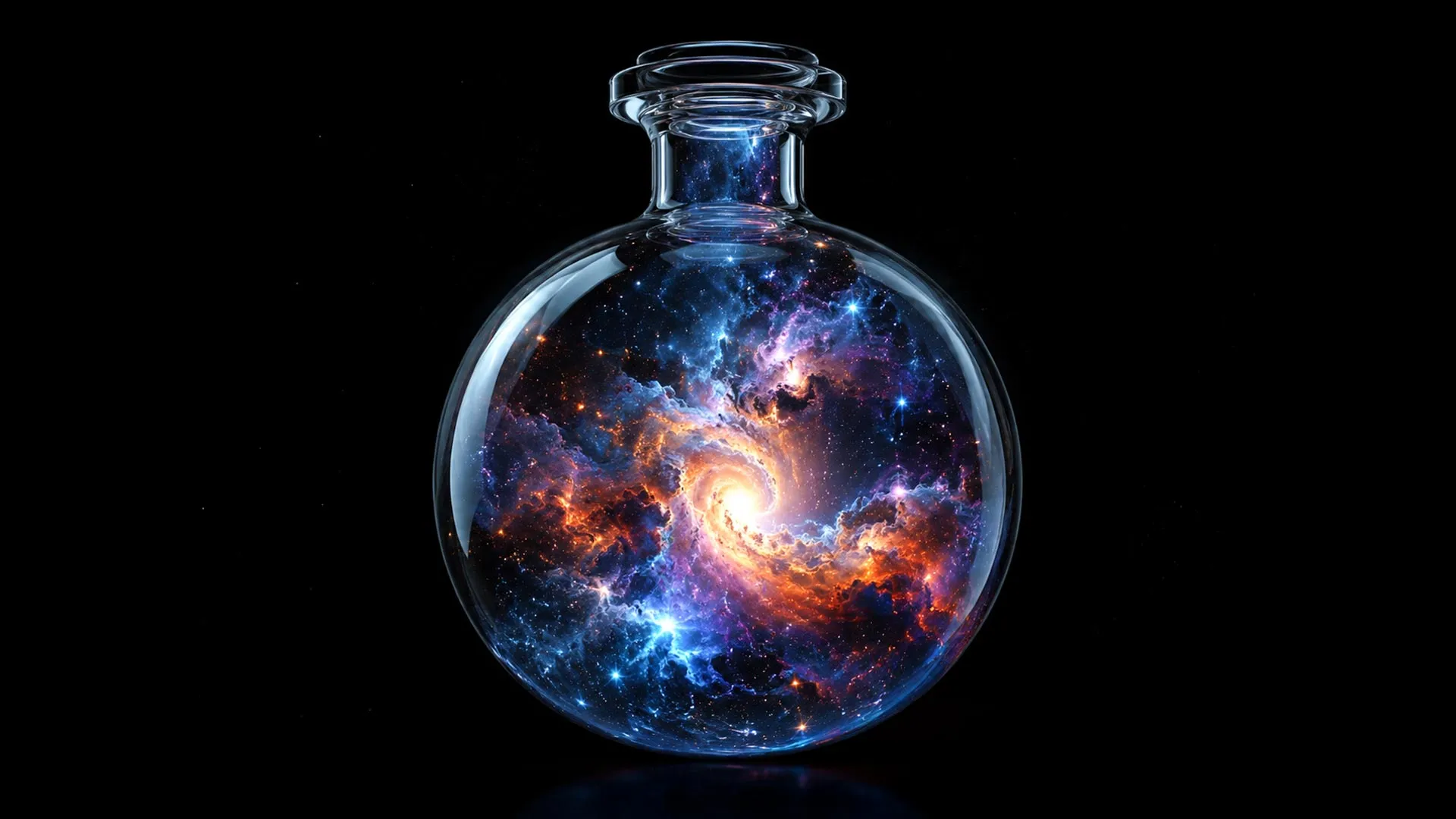
"This can give us huge insight into how ‘carbonaceous cosmic dust’ can form in the plasma puffed out by giant, old stars or in cosmic nurseries where stars are being born and distribute these fascinating molecules that could be vital for life," Ms. Losurdo elaborated. "It’s like we have recreated a little bit of the Universe in a bottle in our lab." This evocative analogy highlights the profound impact of her work, transforming abstract astronomical theories into tangible, observable phenomena.
In the vast expanse of space, cosmic dust is thought to evolve under relentless bombardment from ions and electrons. These high-energy interactions drive chemical reactions, gradually building up more complex molecular structures from simpler precursors. Astronomers have long relied on analyzing the infrared light emitted by cosmic dust to identify its composition. These emissions act as unique molecular "fingerprints," allowing researchers to deduce the chemical makeup of distant celestial materials.
Remarkably, the laboratory dust produced by Losurdo’s experiment exhibited the same distinctive infrared signatures observed in naturally occurring cosmic dust. This concordance is a powerful validation of the experimental methodology, indicating that the simulated conditions closely mimic the actual processes occurring in real cosmic environments.
Tracing the Origins of Life’s Building Blocks: A Cosmic Delivery Service?
The question of how life originated on Earth remains one of science’s most enduring mysteries. While various hypotheses exist, a prominent theory suggests that the early Earth may have been seeded with organic molecules delivered by comets, asteroids, and interplanetary dust particles. During the Hadean and early Archean eons, approximately 4.56 billion to 3.5 billion years ago, Earth experienced a period of intense bombardment. Scientists believe these celestial visitors, rich in organic material, could have played a crucial role in supplying the raw ingredients for nascent life.
However, the precise origin and formation pathways of this extraterrestrial organic material have remained subjects of intense scientific debate. Understanding where and how these vital molecules were synthesized is key to unraveling the complex tapestry of abiogenesis – the process by which life arises from non-living matter.
"Covalently bonded carbon and hydrogen in comet and asteroid material are believed to have formed in the outer envelopes of stars, in high-energy events like supernovae, and in interstellar environments," Ms. Losurdo explained, connecting her experimental findings to broader astrophysical contexts. "What we’re trying to understand are the specific chemical pathways and conditions that incorporate all of the CHON elements into the complex organic structures we see in cosmic dust and meteorites." Her research aims to bridge this gap by providing empirical data on these formation processes.
Recreating Space Inside Glass Tubes: The Mechanics of Cosmic Synthesis
The meticulous execution of the experiment was overseen by Professor David McKenzie, Losurdo’s supervisor. The process began by creating an ultra-high vacuum within glass tubes, effectively replicating the near-emptiness of interstellar space. This vacuum chamber was then filled with the precisely measured quantities of nitrogen, carbon dioxide, and acetylene.
For approximately one hour, this gas mixture was subjected to an intense electrical potential, around 10,000 volts. This energetic treatment induced a form of plasma known as a "glow discharge." The extreme energy within the plasma environment served to break apart the original molecules into their constituent atoms and smaller fragments. These reactive species then underwent recombination, forming progressively larger and more complex chemical structures.
Over time, the newly synthesized dust particles settled onto silicon chips strategically placed within the glass tubes. The collected material formed a thin coating, and in some samples, the particles shimmered like microscopic fragments of cosmic material.
Professor McKenzie emphasized the practical implications of this laboratory synthesis: "By making cosmic dust in the lab, we can explore the intensity of ion impacts and temperatures involved when dust forms in space. That’s important if you want to understand the environments inside cosmic dust clouds, where life-relevant chemistry is thought to be happening." He further noted that this research also aids in interpreting the history of extraterrestrial samples. "Its chemical signature holds a record of its journey, and experiments like this help us learn how to read that record."
Building a Fingerprint Library for Astronomers: A Rosetta Stone for Cosmic Dust
The potential applications of this research extend far beyond merely understanding the formation of life’s precursors. The University of Sydney team plans to leverage their findings to develop a comprehensive database of infrared "fingerprints" corresponding to various types of laboratory-created cosmic dust.
This meticulously curated library will serve as an invaluable resource for astronomers. By comparing the infrared signatures of celestial objects and regions with the database, scientists will be able to identify the specific types of cosmic dust present and infer the physical and chemical conditions under which they formed. This could lead to a more precise understanding of star-forming regions, the remnants of dying stars, and the complex chemical processes occurring within these cosmic environments.
Furthermore, this database will significantly enhance scientists’ ability to interpret the historical records encoded within meteorites and asteroid fragments. The chemical composition of these extraterrestrial samples acts as a cosmic diary, preserving evidence of the temperatures, radiation levels, and particle impacts they have endured throughout their long journeys through space. By understanding the laboratory-generated fingerprints, researchers can more accurately decode these ancient narratives.
The research, which has already garnered recognition with Losurdo receiving an award for best presentation at the international Annual Meeting of the Meteoritical Society, underscores the power of interdisciplinary collaboration. The University of Sydney node of Microscopy Australia provided essential support, and the project received crucial funding from the Australian Research Council.
In conclusion, Linda Losurdo’s pioneering work in recreating cosmic dust in a laboratory setting represents a significant stride in our quest to understand the universe and our place within it. By bridging the gap between theoretical astrophysics and experimental chemistry, this research offers tangible insights into the deep cosmic past and illuminates the potential pathways that led to the emergence of life on Earth, transforming our understanding of our cosmic origins.

