
Four years after the historic U.S. Supreme Court ruling that dismantled federal abortion protections, the battleground over reproductive rights has shifted decisively back to the state level. In the upcoming November general election, voters in at least four states will weigh in on ballot measures that seek to either enshrine, expand, or roll back access to reproductive healthcare. Among these states, Missouri and Nevada stand out as unique flashpoints, holding high-stakes return referenda that are forcing electorates back to the ballot boxes to re-litigate decisions they made just two years prior.
The unfolding legislative and electoral chess match highlights a deeply polarized nation navigating a fragmented legal reality. With abortion policy dictated entirely by state legislatures and citizen-led initiatives, the resulting patchwork of laws has created widespread confusion among patients, healthcare providers, and advocacy groups alike. As campaigns ramp up nationwide, the upcoming November votes could fundamentally reshape the boundaries of reproductive autonomy across the American Midwest, the Mountain West, and the Mid-Atlantic.
The Post-Dobbs Landscape and the Emergence of State-Level Battles
The genesis of the current wave of ballot referenda traces directly back to June 2024, when the U.S. Supreme Court delivered its decision in Dobbs v. Jackson Women’s Health Organization. By overturning the decades-old precedent set by Roe v. Wade, the high court effectively returned the authority to regulate or prohibit abortion to individual states.
Almost immediately, a stark geographic divide emerged. States controlled by Republican legislatures moved swiftly to enact near-total bans or severe restrictions on the procedure. Conversely, Democratic-leaning states and progressive coalitions organized rapid-response legislative and ballot initiatives to protect or expand access. This dynamic birthed a complex web of laws, including so-called "shield laws" passed in states where abortion remains legal. These statutes are designed to protect in-state medical providers from civil and criminal liability when treating patients traveling from jurisdictions where abortion is strictly outlawed.
This volatile environment has fueled a constitutional debate that legal scholars and advocates warn is hurtling toward a national crisis. Kristi Hamrick, vice president of media and policy for the anti-abortion organization Students for Life Action, pointed to the fundamental friction of a country divided into opposing regulatory regimes.
"Can you have 50 state standards on whether or not a human being is a human being? Can you have 50 state standards on whether human beings have legal protection?" Hamrick asked, predicting that the ongoing legal and moral conflicts will ultimately demand federal intervention or a constitutional showdown.
Chronology of the Missouri Battleground
In Missouri, the path to the November ballot has been defined by rapid legislative pushback against citizen-led democratic mandates. Long before the Dobbs decision, Missouri had established itself as one of the most restrictive states in the nation regarding reproductive healthcare. Through a steady accumulation of regulatory hurdles enacted over three decades—including mandatory 72-hour waiting periods, strict physical specifications for clinic hallways and procedure rooms, and requirements that attending physicians maintain admitting privileges at nearby hospitals—the state had effectively choked off access.
By 2021, state health records indicated that only 150 legal abortions were performed in the entire state of Missouri, a steep drop from the 5,772 procedures recorded a decade earlier in 2011. Following the 2022 Dobbs ruling, Missouri became the very first state in the country to trigger a near-total ban on the procedure, halting all operations at its remaining clinics.
Frustrated by the near-total ban, reproductive rights advocates mobilized a massive petition drive that culminated in a historic victory during the 2024 midterm elections. Missouri voters approved a constitutional amendment that reversed the state’s strict ban, guaranteeing the right to an abortion up to the point of fetal viability, which is generally understood to be around 24 weeks of pregnancy.
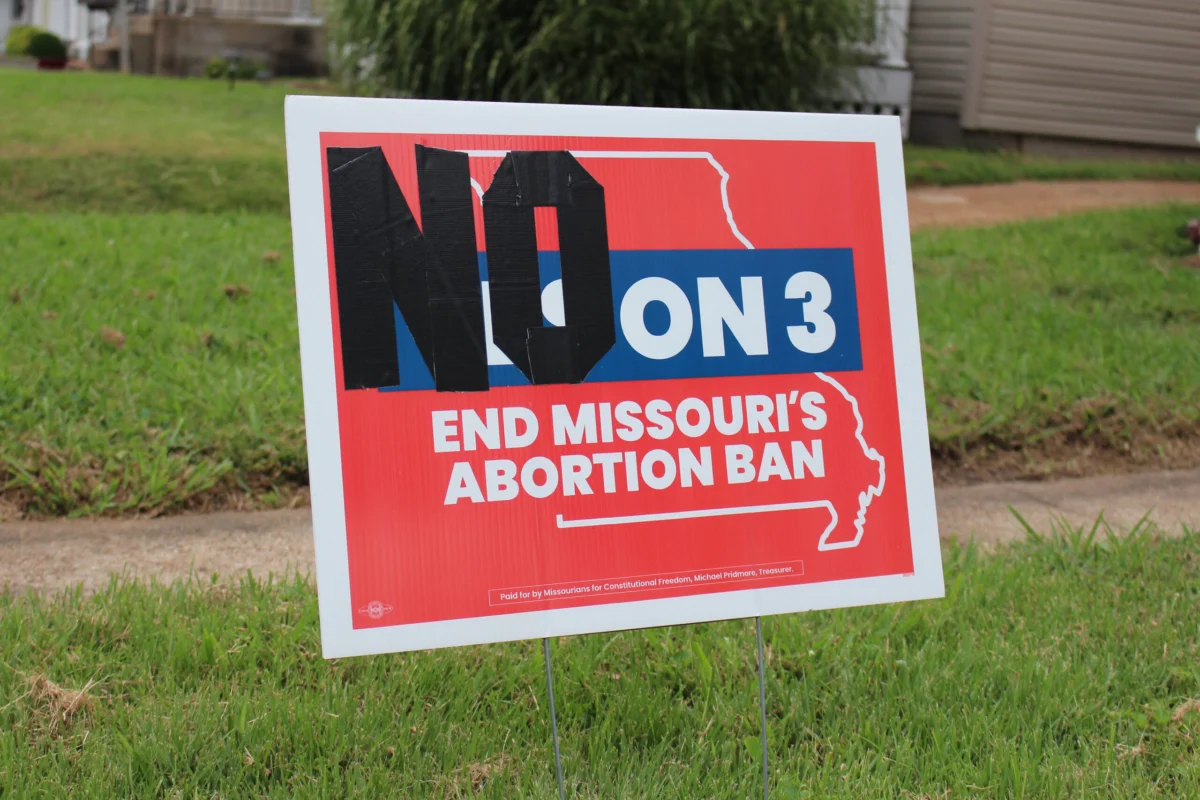
For residents like Kelly McCoomb, a suburban resident of Maplewood, Missouri, the 2024 victory was a moment of profound relief. McCoomb kept her campaign yard sign as a keepsake in her basement, though she harbored lingering skepticism about how the state government would respond.
Her intuition proved accurate. Just two years later, Missouri’s Republican-dominated legislature advanced a counter-measure designed to undo the constitutional protections recently ratified by voters. In a twist of administrative coincidence, both the 2024 citizen initiative and the 2026 legislative repeal share the exact same ballot designation: Amendment 3.
The semantic and tactical overlap has created a dizzying environment for voters. In 2024, a "yes" vote added protections to the state constitution. In November, a "no" vote is required to preserve those same protections, while a "yes" vote will repeal the constitutional amendment and replace it with a statutory ban. The proposed legislative replacement includes narrow exceptions for medical emergencies, fetal anomalies, and pregnancies resulting from rape or incest—though the latter exceptions carry a strict 12-week gestational limit.
The Whiplash of Voter Confusion
The administrative overlap of ballot measures has sown profound confusion among the electorate. Margot Riphagen-Dunn, CEO of St. Louis-based Planned Parenthood Great Rivers, noted that the bureaucratic whiplash of a second statewide vote directly mirrors the ongoing confusion patients face when attempting to determine whether care is legally available to them.
"Chaos is kind of the point here," Riphagen-Dunn said, characterizing the legislative maneuvers as an intentional strategy to disrupt service provision and exhaust the pro-choice coalition.
Curiously, the confusion has also presented challenges for anti-abortion organizers who are actively campaigning for the passage of the repeal measure. Reagan Barklage, vice president of Students for Life of America and treasurer of the Missouri Students for Life Ballot Committee, acknowledged the logistical hurdles posed by the shared numbering of the amendments.
"I think it’s unfortunate," Barklage said. "People need to be very clear on what they’re voting for."
Barklage noted that during canvassing efforts, she and her fellow volunteers have frequently had to correct anti-abortion voters, reminding them that to support the repeal of the current constitutional protections, they must vote "yes" on Amendment 3—a reversal of the voting pattern they employed on the identically numbered measure two years ago.
"It is crazy that it ended up being even the same number. I do not think that was intentional, but we’ve got to deal with what we’ve got," Barklage added, wryly observing, "I hope the pro-choicers kept their yard signs from last time."
In Maplewood, McCoomb proved that many voters did indeed keep their memorabilia. She took her 2024 yard sign out of storage, covered the word "YES" with a strip of black duct tape, and wrote "NO" over it before placing it back on her front lawn. She hopes the repurposed sign will serve as a visual reminder to her neighbors to show up and reverse the legislature’s initiative.
Nevada and the Requirement for Double Majority Approval
While Missouri is unique in attempting to strip away recently established constitutional protections, other states are grappling with procedural hurdles designed to cement access. In Nevada, voters will also head to the polls for a second time regarding a reproductive rights ballot measure, though the political dynamic differs significantly from Missouri’s.
Denise Lopez, president of the coalition Nevadans for Reproductive Freedom, explained that the push to enshrine abortion access into the state constitution stems from a desire to insulate Nevada women from the restrictive policies taking root in neighboring states such as Idaho and Utah.
Under Nevada law, constitutional amendments enacted through citizen ballot initiatives must pass by a majority vote in two consecutive general elections before they officially take effect. In 2024, the initiative secured a robust 64% of the vote. To clear the final constitutional hurdle, the measure must once again secure majority support this November.
The Nevada proposal does not alter the state’s baseline statute, which currently permits elective abortions up to 24 weeks of pregnancy. Instead, it places a higher procedural bar on any future attempts to restrict or ban the procedure, requiring that any subsequent legislative bans be approved by voters across two separate statewide elections.
"Folks care about it," Lopez said of the upcoming vote. "They’re seeing what’s happening at the national level, and they want to make sure that whatever’s happening in our neighboring states, like Idaho and Utah, doesn’t happen here in Nevada."
National Snapshot: Ballot Measures Across the Country
Beyond Missouri and Nevada, several other states are addressing the future of reproductive rights through direct democracy this November, reflecting a nationwide push to clarify or alter state-level legal frameworks.
In Idaho, where state statute enforces one of the most stringent abortion bans in the country, a citizen-backed ballot measure successfully qualified for the November ballot. Voters will decide whether to amend state laws to protect abortion access up to the point of fetal viability, challenging a legislative ban that has forced many residents to travel out of state for medical care.
In neighboring Utah, where access remains legally turbulent amid ongoing court battles over a suspended state ban, the regulatory environment hovers around an 18-week limit, keeping healthcare providers and patients in a state of continuous legal suspense.
Meanwhile, in Virginia, where elective abortion is currently permitted through the second trimester up to 28 weeks, voters will decide whether to permanently codify these rights by embedding them directly into the state constitution, thereby safeguarding them against future shifts in legislative control.
Broader Implications for American Democracy and Healthcare
The convergence of these ballot measures in the November general election underscores a broader transformation in American politics, wherein the arena of reproductive rights has been permanently decentralized. By forcing electorates to revisit complex medical and moral questions at the ballot box—sometimes in consecutive election cycles—states are redefining the mechanics of direct democracy.
For healthcare providers, the persistent legal instability creates severe operational hurdles. Clinics face mounting insurance costs, recruitment challenges, and administrative burdens as they attempt to interpret shifting statutory landscapes. For patients, particularly low-income individuals and those residing in rural areas, the chaotic regulatory environment frequently translates into delayed care, financial hardship, and profound psychological stress.
As the campaigns in Missouri, Nevada, Idaho, and Virginia enter their final stretches, both sides of the abortion debate are pouring millions of dollars and countless volunteer hours into mobilization efforts. Whether through black duct tape modifying old yard signs in suburban St. Louis or multi-million-dollar advertising blitzes in the Mountain West, the message from the grassroots is clear: the fight over the future of reproductive autonomy in America is far from settled.

