
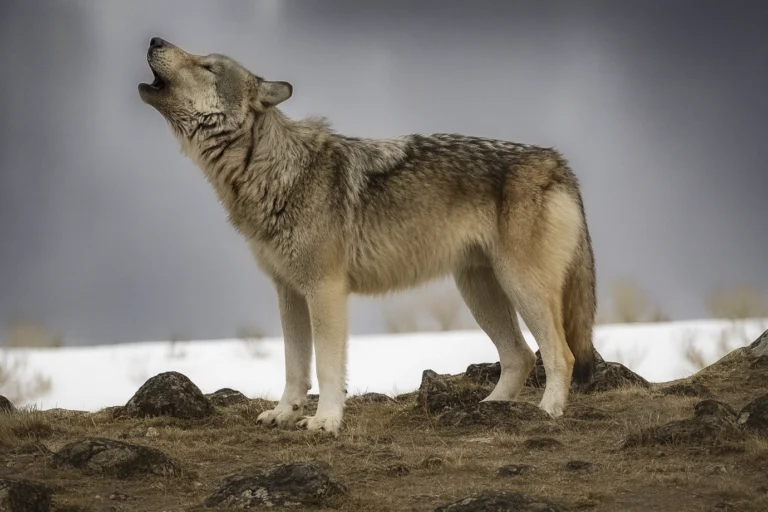
Five years ago, on a desolate stretch of road in rural Montana, Jeff Reed stood poised to end the life of a gray wolf. Raised in a culture that viewed the species through the lens of the Little Red Riding Hood myth—a villainous creature to be eradicated on sight—Reed raised his rifle as the animal stood broadside in his truck’s headlights. In that singular, life-altering moment, he lowered the barrel. The encounter did not end in a gunshot; instead, the wolf trotted alongside his vehicle, indifferent to the threat, and disappeared into the night.

That moment of hesitation served as the catalyst for a radical departure in Reed’s life. A linguist by training and a seasoned software engineer from Silicon Valley, Reed pivoted his career toward bioacoustics and conservation. Today, he stands at the forefront of a technological revolution in wildlife management, utilizing artificial intelligence to decipher the complex, often misunderstood communication patterns of one of North America’s most polarizing apex predators.
The Evolution of the Yellowstone Wolf Project
The backdrop for Reed’s work is the storied Yellowstone Wolf Project, an initiative that has fundamentally altered the ecological trajectory of the American West. Wolves were systematically eradicated from the park by the late 1920s, a policy driven by agricultural interests and the pervasive fear of the "ruthless predator." The absence of wolves led to a trophic cascade: herbivore populations, particularly elk and deer, surged unchecked, overgrazing the landscape, destroying willow and aspen saplings, and destabilizing the riparian ecosystems that beavers and other species relied upon.
In 1995, the National Park Service began the monumental task of reintroducing wolves to Yellowstone. Under the long-standing leadership of chief wildlife biologist Dan Stahler, the program has grown to monitor eight distinct packs, totaling approximately 84 wolves. For decades, this monitoring required high-risk, expensive, and invasive methods: tracking via aircraft, tranquilizing animals from helicopters, and fitting them with GPS collars. While effective, these methods provided only a snapshot of wolf behavior. Stahler, seeking a "new prong" in research, found a willing partner in Reed, whose technical expertise offered a non-invasive, continuous window into the lives of these animals.
Bioacoustics: Translating the Language of the Wild
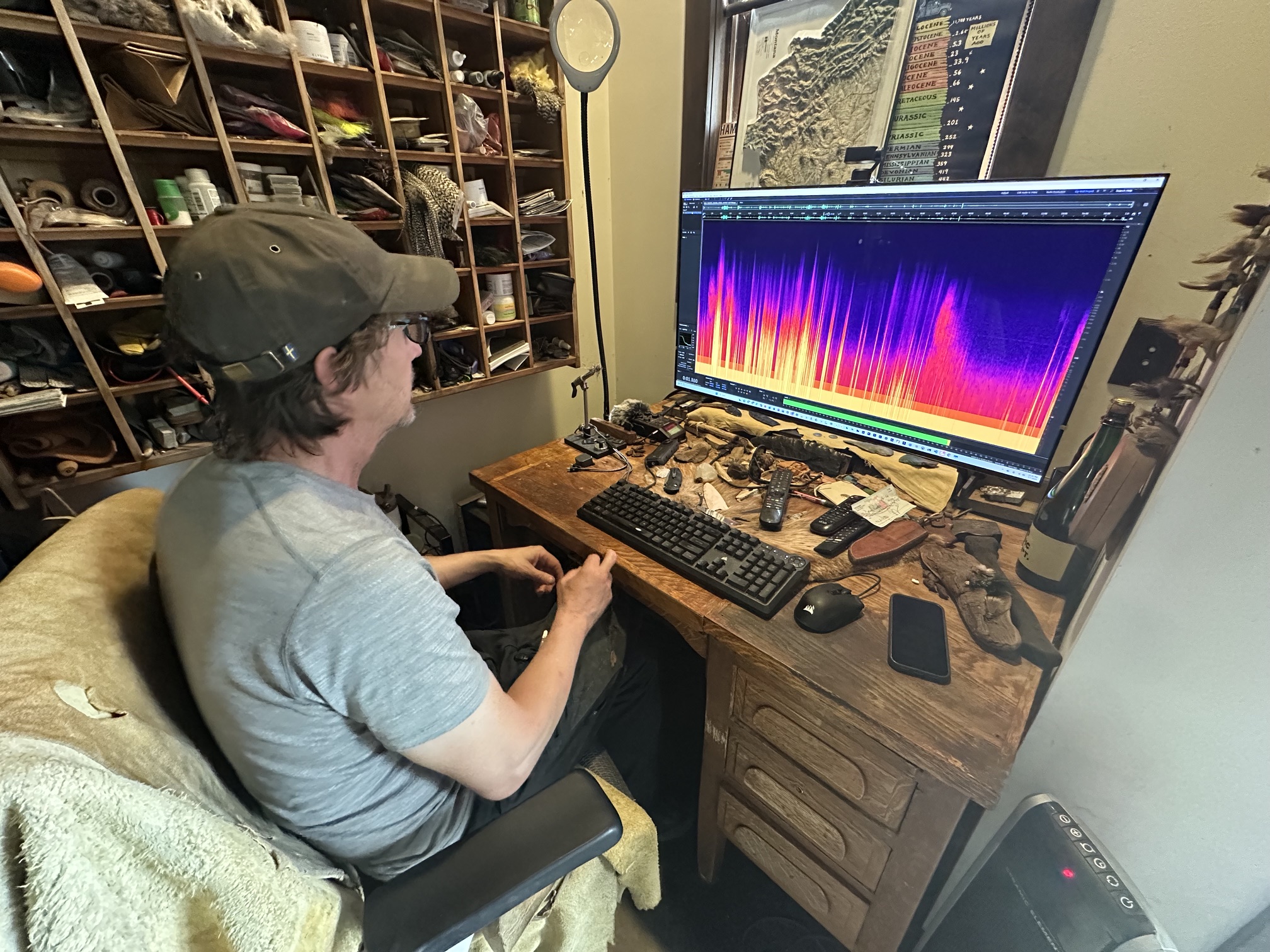
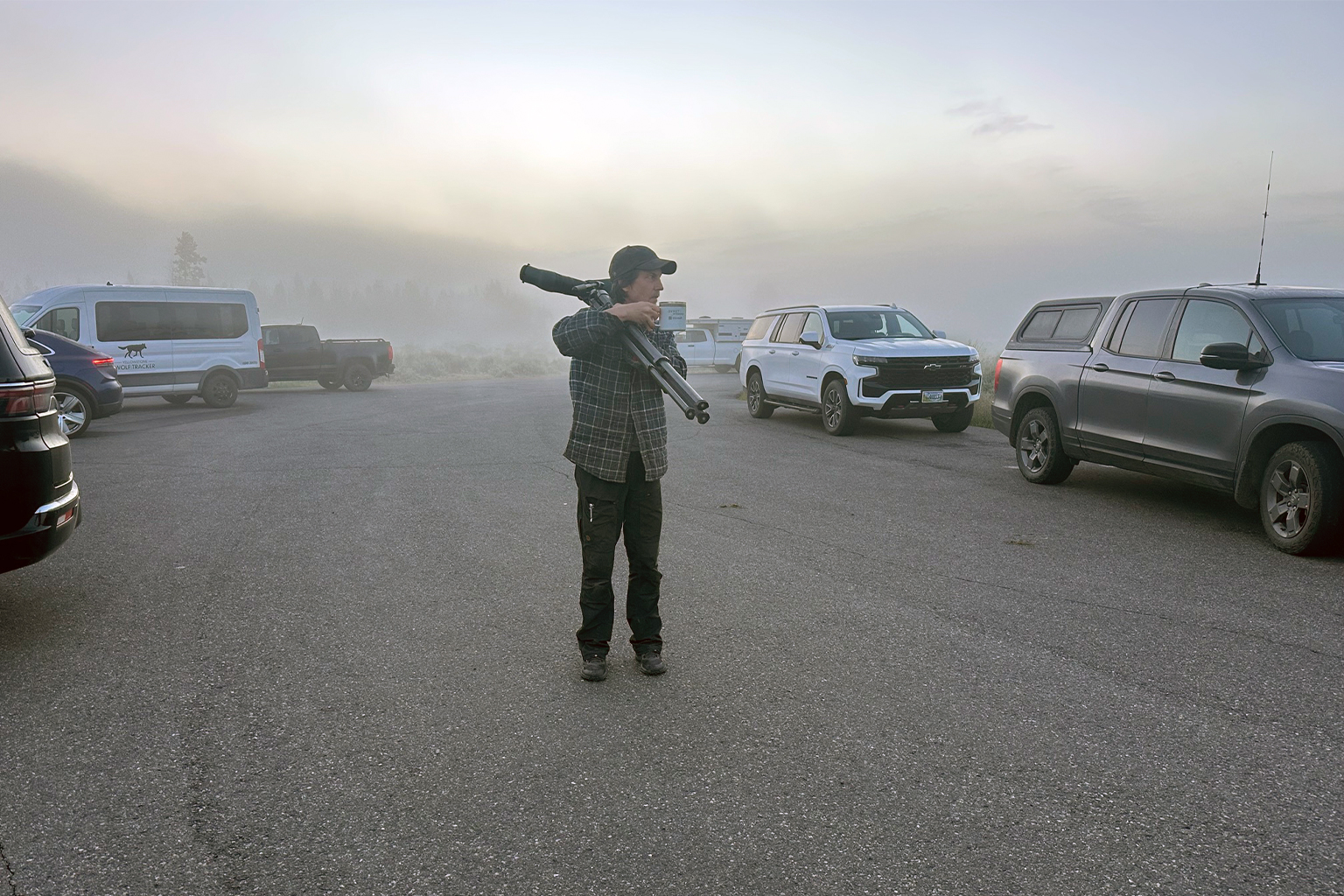
Reed’s project, known as the Cry Wolf Project, represents a significant leap in wildlife monitoring. He has deployed approximately 50 Automated Recording Units (ARUs) throughout the Yellowstone backcountry. These devices operate 24/7, capturing over 500,000 hours of audio annually. From this massive, raw dataset, Reed’s custom-built AI algorithms filter out background noise to isolate more than 8,000 hours of continuous wolf vocalizations.

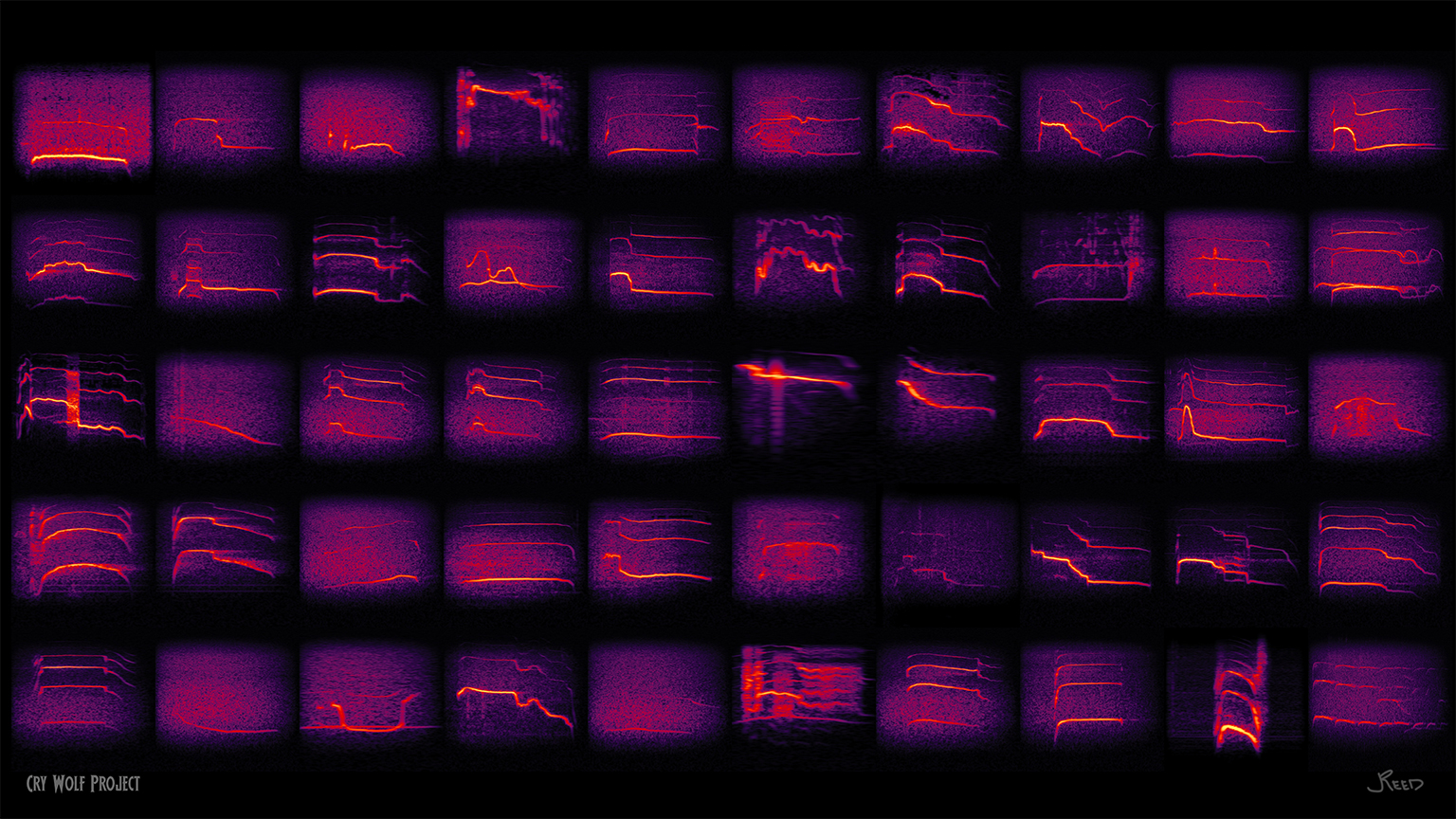
This database is currently the largest of its kind in the world. As Reed explained in a 2025 TED talk, wolves possess a complex vocal repertoire of more than 20 distinct call types, including barks, whimpers, whines, yelps, and the iconic "chorus howl." By transforming these sounds into spectrograms—visual representations of frequency and intensity—Reed is able to analyze the "wolfish" language in unprecedented detail.
The AI models are trained to recognize individual wolves by their unique acoustic signatures. This allows researchers to track movement and pack dynamics without ever needing to physically touch the animals. "Wolf biologists have been studying howling for decades," Stahler notes. "But now we have new ways to ask questions about wolves because of new technology."
Bridging the Gap: Public-Private Partnerships
The collaboration between Reed’s private startup, Grizzly Systems, and the Yellowstone Wolf Project serves as a model for public-private cooperation in science. According to Mark Hebblewhite, a conservation ecologist at the University of Montana, academic institutions often lack the agility to develop high-end hardware and software rapidly. Reed’s ability to "deliver on hardware and software" in a timeframe that would take years in an academic setting has allowed the project to pivot quickly in response to new research questions.
This synergy is not merely academic. The goal is to provide data that informs real-world conservation strategies. By understanding the timing and meaning of vocalizations—such as those signaling a territorial dispute or a successful hunt—researchers are gaining insights into the social hierarchy and survival strategies of the packs.

A New Philosophy of Conservation
The implications of this research extend far beyond the borders of Yellowstone. In northern Italy, researchers at the Osservatorio Lupi are already deploying Reed’s ARU technology to monitor Apennine wolves near the town of Fidenza. Their focus is on developing an early-detection system to prevent human-wildlife conflict. By identifying when wolves are approaching livestock or residential areas, local communities can implement non-lethal deterrents rather than resorting to lethal control.
Reed’s long-term vision is the widespread adoption of these tools by private landowners and wildlife managers globally. He argues that the primary driver for conservation is empathy, which is fostered through understanding. When landowners can monitor the behavior of local wolf packs—recognizing them as family units that hunt, care for their young, and communicate—the "villainous" caricature of the species begins to dissolve. "If you can talk with a wolf, you identify with a wolf, you relate to a wolf," Reed says. "If you get enough of those people listening, then you have an army of humans who can help with wolves."
The Challenges of Machine Learning in Nature
Despite the promise of AI, the field is not without its hurdles. Erin Hecht, an evolutionary neuroscientist at Harvard, notes that while machine learning is adept at finding patterns invisible to human observers, the interpretation of those patterns requires human nuance. AI can identify a vocalization, but it cannot inherently understand the social context of a specific howl.
Reed remains acutely aware of these limitations. Despite the speed of his algorithms, the annotation process is grueling. He has personally spent hundreds of hours labeling data to train his models, noting that he is only about 20% through the massive catalog of recorded vocalizations. The work is tedious, yet it yields profound moments of discovery, such as capturing the final vocalizations of a legendary, 11-year-old wolf known as 907—an animal that had become a fixture in the lives of park researchers and observers before its death in 2024.

Implications for Global Biodiversity
The success of the Cry Wolf Project highlights a shift in how we approach the "management" of wild species. The reliance on intrusive, lethal, or disruptive measures is being challenged by a new wave of citizen science and high-tech bioacoustics. As the technology matures, it is expected to provide insights not just for wolves, but for bears, mountain lions, and other species that rely on acoustic communication for survival.
As the data continues to grow, so does the responsibility of those managing it. The project stands as a testament to the power of a single moment of empathy. What began as an impulse to protect an animal from a bullet has transformed into a global, tech-driven movement to document the secret lives of apex predators. The narrative of the wolf, long told through the lens of human fear, is finally being rewritten through the lens of objective, digital observation—a "narration of the howl" that promises a more sustainable future for one of the world’s most misunderstood animals.

By providing tools that are accessible, non-invasive, and scientifically rigorous, the project is building a foundation for coexistence. As the technology spreads to regions in Europe and North America, the hope is that the roar of the chainsaw or the crack of a rifle will increasingly be replaced by the silent, data-driven vigilance of the listener. Through this digital intervention, we are not just learning how wolves communicate; we are learning how to live alongside them.

