
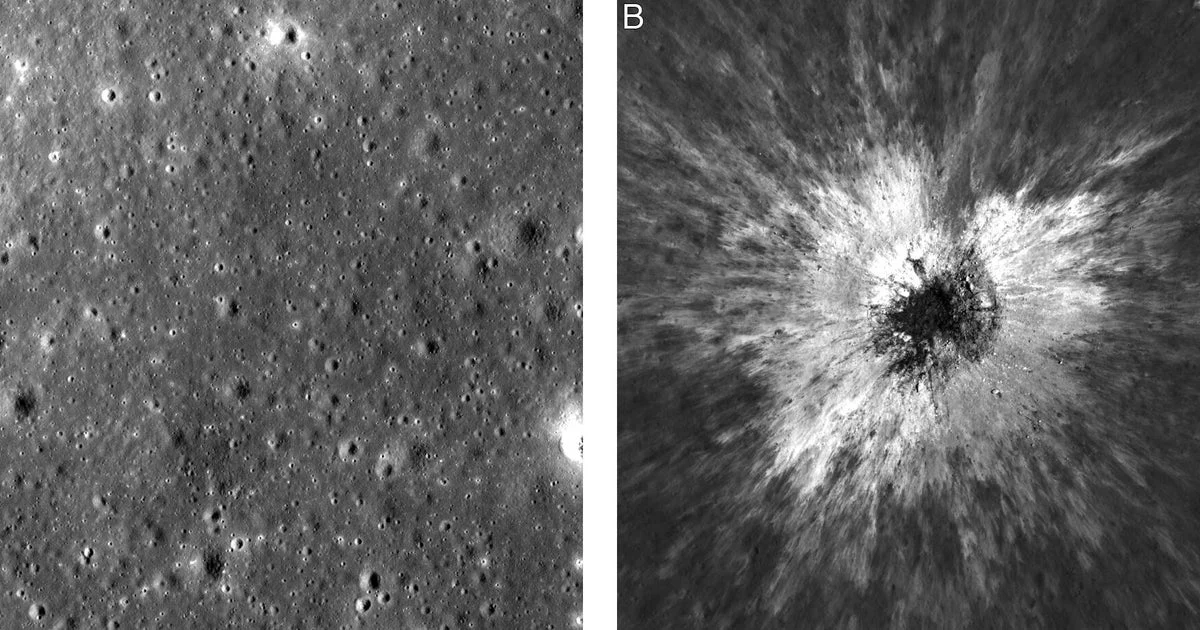
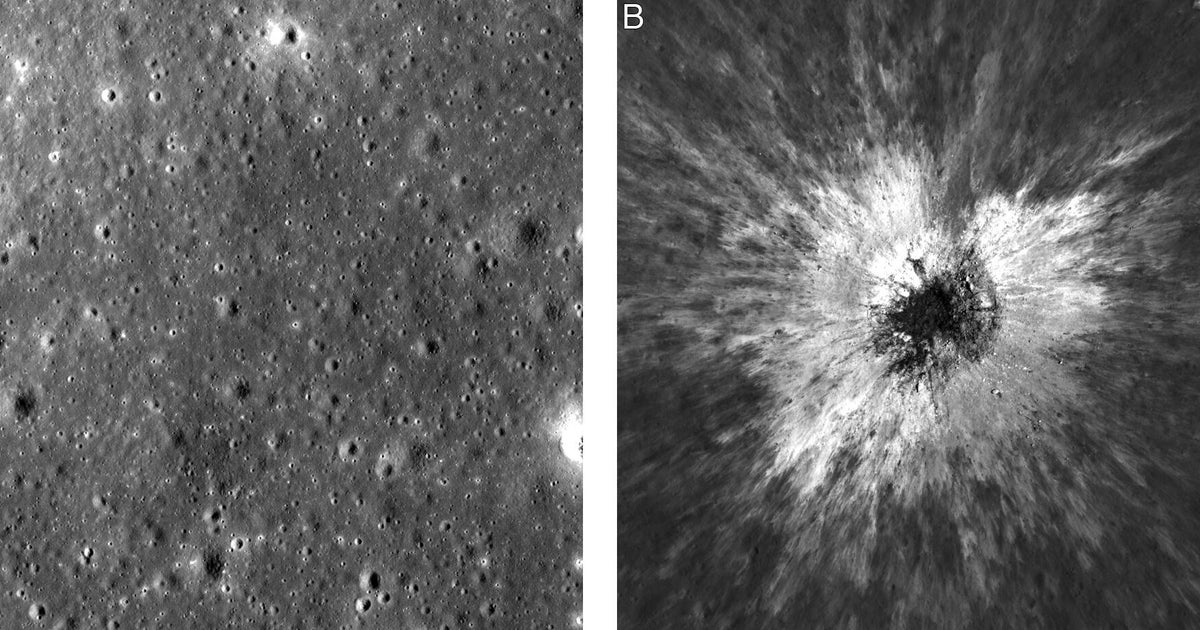
Scientists have officially confirmed the discovery of a massive impact crater on the lunar surface, a geological feature that surpasses the scale of the Roman Colosseum and represents the largest such impact observed in the solar system in modern history. The crater, located on the moon’s near side, measures approximately 728 feet in diameter—roughly the length of two professional football fields—and plunges to a depth of 141 feet. For scale, the depth is equivalent to three yellow school buses stacked vertically. The discovery, detailed in two peer-reviewed studies published this week in the journal Science Advances, provides a rare glimpse into the volatile nature of the lunar environment and the persistent threat of celestial debris as NASA ramps up its efforts to establish a permanent human presence on the moon.
A Chronology of Discovery
The impact that birthed this crater occurred between April 11 and May 22, 2024. Despite its significant size and the energy required to displace such a volume of lunar regolith, the event remained entirely undetected by ground-based observatories and space-based monitoring systems at the time of occurrence.
The detection process was a result of meticulous data analysis rather than real-time observation. NASA’s Lunar Reconnaissance Orbiter (LRO), which has been in a polar orbit around the moon since 2009, captured high-resolution, wide-angle images of the site. However, the sheer volume of data produced by the LRO means that significant surface changes are often buried in imagery archives. It was not until August 2025 that researchers flagged the anomaly while processing historical datasets. Following the initial identification, the LRO was tasked with conducting follow-up observations to capture high-detail imagery, which ultimately confirmed the nature of the impact early in 2026.
The Science of the Impact
According to researchers, the crater was created by an incoming asteroid or cometary fragment estimated to be the size of a three- to six-story building. Upon striking the lunar surface, the object unleashed a kinetic force sufficient to churn the lunar crust for more than 66 miles surrounding the impact site.
Mark Robinson, the chief scientist for the LRO’s cameras and a researcher at Intuitive Machines, served as the lead author for one of the primary studies. His analysis suggests that the impact dynamics were more energetic than typical small-scale strikes, resulting in the ejection of dust and rocky soil at higher angles than existing impact models had predicted.
Beyond the crater itself, a secondary study has identified a "cold spot" spanning four miles around the site. David Paige of the University of California, Los Angeles, and a co-author on the research, noted that this phenomenon is consistent with the massive displacement and loosening of the moon’s top layer of soil, or regolith. Paige likened the process to "gardening" on a cosmic scale, where impacts act as a natural mechanism to bring deep, subsurface materials to the surface while simultaneously turning over the top layers of sediment.
Historical Rarity and Lunar Dynamics
Statistically, an impact of this magnitude is estimated to occur only once every 132 years. Because the moon lacks a significant atmosphere to burn up incoming debris, it acts as a permanent record-keeper of solar system activity. The newly named "McGetchin Crater"—honoring the late Thomas McGetchin, a former director of the Lunar and Planetary Institute—is three times larger than the previous record-holder for modern-era impacts, which was discovered by the LRO roughly a decade ago.
The persistent bombardment of the lunar surface has profound implications for our understanding of lunar geology. Previous estimates suggested that the top inch of the moon’s soil was overturned by ejecta every few hundred thousand years. However, the LRO’s observations over the last 17 years suggest a much more aggressive rate of turnover. Robinson’s data indicates that this process occurs on a timescale of approximately 80,000 years, significantly faster than earlier models suggested.
This finding carries a poignant message for history: the iconic footprints left by the Apollo moonwalkers, which many assumed would remain as permanent monuments to human exploration, are subject to this constant geological "gardening." Given the rate at which surface material is churned and redistributed, these historic markers will almost certainly be erased by natural processes within this shortened time frame.
Implications for Future Lunar Exploration
The discovery of such a significant impact event serves as a critical data point for the Artemis program and other international efforts to establish lunar bases. As NASA moves toward its goal of long-term human habitation on the moon, understanding the frequency and severity of these impacts is no longer just a theoretical concern; it is an engineering requirement.
"This event constitutes a statistically rare, effectively once-in-a-lifetime observation," the research team noted in their publication. For space agencies, this rarity is a double-edged sword. While it provides an invaluable opportunity to study the physics of crater formation, it also highlights the unpredictable nature of the lunar environment.
Engineers tasked with designing lunar habitats are now looking to use this data to refine their safety protocols. The primary concern is not just the initial impact, but the secondary ejecta—the high-speed spray of rocks and dust thrown up by an impact—that could pose a risk to surface infrastructure. The current research is shifting toward calculating the "ejecta risk zones" to ensure that future habitats are located in geologically stable areas or are constructed with materials capable of withstanding high-velocity debris strikes.
"We are now thinking of impacts as a way to garden the regolith," said Paige, emphasizing that while the impacts are destructive, they are also the primary drivers of lunar surface evolution. Understanding this cycle is essential for astronauts who will need to utilize in-situ resources, such as water ice or oxygen-bearing minerals, which are often buried beneath the surface and brought up by these very impact events.
A New Era of Monitoring
The discovery of the McGetchin Crater underscores the limitations of our current surveillance capabilities. With the moon becoming a focal point of geopolitical and commercial activity, the inability to detect a medium-sized asteroid impact in real-time has prompted calls for an improved lunar monitoring network.
While the LRO remains a workhorse of planetary science, its orbit and current instrumentation are optimized for high-resolution mapping rather than real-time threat detection. Scientists suggest that integrating seismic monitors, as well as dedicated optical monitoring arrays, could provide early warning systems. Such infrastructure would be vital for protecting lunar hardware, such as power grids, communications relays, and life-support modules.
As the scientific community continues to digest the data from the McGetchin impact, the consensus is clear: the moon is not a static museum of ancient history, but a dynamic, evolving world. The 2024 impact serves as a stark reminder that the lunar surface is constantly being reshaped. For NASA and its international partners, the challenge will be to balance the risks of this volatile environment with the immense scientific and logistical potential that the moon holds for the future of space exploration.
The LRO is expected to continue its mission for the foreseeable future, providing the high-resolution, long-term monitoring required to build a comprehensive risk assessment for the next generation of moonwalkers. As the agency prepares for the next phase of human exploration, the legacy of the McGetchin crater will likely inform everything from site selection to the architectural hardening of future lunar outposts, ensuring that the mission of discovery can proceed in spite of the constant, unpredictable, and sometimes violent nature of the lunar landscape.

