
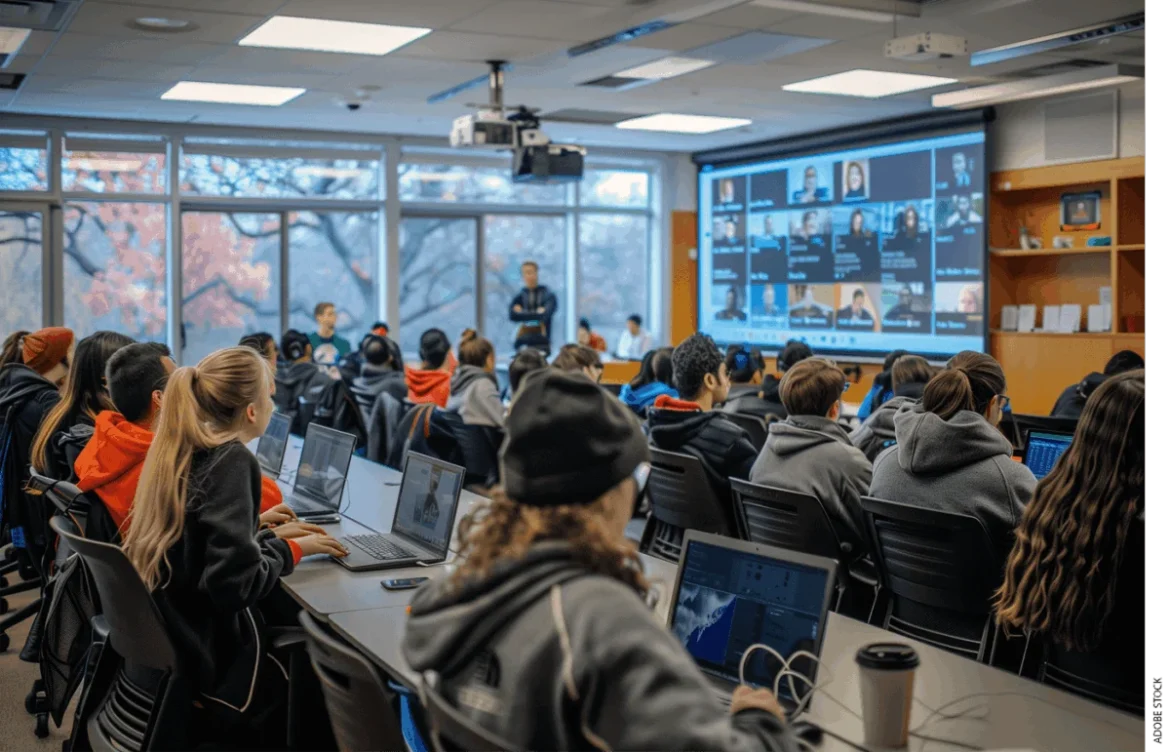
While public sentiment toward major technology conglomerates has soured dramatically in recent years, a persistent halo effect continues to protect the ed-tech sector. Parents, conditioned to fear that their children might fall behind in a hyper-competitive global economy, often view digital integration in schools as a hallmark of progress. This enduring optimism relies on the assumption that modern software and hardware are deployed with rigorous pedagogical intent, guided by educators who understand how to balance innovation with cognitive development.
However, a newly released empirical study challenges these foundational assumptions, suggesting that the widespread digitization of secondary education has birthed an invisible culture of corner-cutting, evasion, and systemic distraction. The report, published by the Thomas B. Fordham Institute and authored by researcher Brian Fitzpatrick, paints an unsettling portrait of the contemporary American high school. Titled High Tech, Low Standards: High School in the Age of Distraction, the publication compiles survey data from 1,000 current high school students and 1,000 recent graduates, revealing a stark chasm between the promise of educational technology and its actual execution on the ground.
The findings indicate that the integration of digital tools has not necessarily elevated academic standards; rather, it has expanded the avenues through which students circumvent them. As mounting evidence documents the toll of screen-driven instruction, educators, policymakers, and parents are forced to confront whether the digital transformation of classrooms has traded genuine academic rigor for the mere illusion of progress.
The Chronology of Classroom Digitization
The modern era of educational technology did not materialize overnight; it represents the culmination of a multi-decade push to wire schools, distribute devices, and transition curricula into digital formats.
In the late 1990s and early 2000s, the primary focus of school technology initiatives was basic computer literacy. Classrooms introduced dedicated computer labs where students learned word processing and basic internet navigation. As broadband internet became ubiquitous, the paradigm shifted from specialized computer classes to ubiquitous access. Districts began implementing one-to-one device programs, wherein every student was issued a laptop or tablet for daily use.
A significant inflection point occurred during the COVID-19 pandemic. Between 2020 and 2022, emergency remote learning necessitated a massive, overnight acceleration of educational digitization. Billions of dollars in federal relief funds, including the Elementary and Secondary School Emergency Relief (ESSER) fund, poured into school districts to purchase hardware, software licenses, and home connectivity solutions. Devices that were once supplementary became the mandatory, primary medium through which education was delivered.
Even as students returned to physical classrooms, the infrastructure established during the pandemic remained deeply embedded. School-issued Chromebooks and iPads became permanent fixtures of the daily routine. Concurrently, the consumer technology landscape evolved, with short-form video platforms like TikTok, Instagram Reels, and YouTube Shorts capturing the attention spans of adolescents. When generative artificial intelligence tools exploded into the public consciousness in late 2022 and 2023, the technological ecosystem of the high school classroom reached a critical mass. Today, students navigate an environment where school-issued devices, personal smartphones, and advanced artificial intelligence tools coexist, creating unprecedented challenges for classroom management and cognitive focus.
Survey Data: The Scope of On-Screen Distraction
The Fordham Institute report provides a quantitative baseline for what many teachers have long observed informally: the contemporary classroom is an arena of continuous, multi-layered distraction.
According to the survey, three-quarters of high school respondents admitted to engaging with illicit technology on a daily basis during instructional hours. This category encompasses the use of personal smartphones and unauthorized browser tabs to access non-academic content while teachers are actively leading instruction.
Specific metrics within the report underscore the depth of the habit:
- Social Media Consumption: Fully 50 percent of surveyed students reported accessing social media platforms, such as TikTok, Instagram, or Snapchat, at least once a day while inside the classroom.
- Video Streaming: One-third of respondents (33 percent) acknowledged spending instructional time watching YouTube or other video streaming services.
- Online Commerce: Seventeen percent of students admitted to engaging in online shopping during school hours.
Beyond unauthorized personal device usage, the study reveals that school-issued devices themselves are frequently repurposed for non-academic activities. The survey highlights that 62 percent of students spend more than half of their total class time staring at school-issued screens. Even more alarmingly, nearly one in three students—approximately 32 percent—reported spending more than three-quarters of their class time utilizing screens for various purposes.
When these statistics are combined, a troubling reality emerges: the majority of students spend the vast majority of the school day looking at digital displays, balancing mandatory academic software with a parallel stream of self-directed distractions.
The Artificial Intelligence Paradox: Tutoring or Cheating?
While early digital initiatives focused on hardware distribution and media consumption, the contemporary ed-tech debate centers heavily on artificial intelligence. Proponents of generative AI in education argue that large language models act as personalized, 24/7 tutors capable of explaining complex mathematical proofs, deconstructing difficult literary passages, and providing individualized feedback to struggling learners.
However, the Fordham Institute report indicates that students view and utilize these tools through an entirely different lens. Rather than employing AI as an intellectual scaffold to deepen understanding, a significant portion of the student body uses it to bypass academic work altogether.
The survey outlines specific modes of AI utilization among high schoolers:
- Mathematical Shortcuts: Forty-eight percent of respondents admitted to using artificial intelligence to solve math problems for them, effectively outsourcing the cognitive work required to build numerical fluency.
- Literary Evasion: Thirty-six percent reported using AI tools to summarize books, articles, or reading assignments, circumventing the actual reading process.
- Ghostwritten Prose: Twenty-nine percent acknowledged using AI to generate the first drafts of essays, reports, and written assignments.
- Assessment Integrity: Twenty-six percent of students reported utilizing AI for assistance during quizzes and tests—a practice that previous generations simply categorized as cheating.
The downstream effects of this widespread adoption are reflected in student attitudes toward traditional assignments. When asked to evaluate the impact of AI on their academic lives, 58 percent of respondents agreed with the statement that artificial intelligence has made homework meaningless. Furthermore, 57 percent agreed that AI allows students to secure high grades without performing any genuine intellectual labor.
This dynamic fosters an academic culture defined by performative compliance. Students can easily project the outward appearance of engagement—submitting completed assignments, participating in digital modules, and navigating software interfaces—while entirely avoiding the friction and cognitive struggle essential to true learning.
Perspectives from Educators and Policymakers
The findings of the Fordham report have accelerated an already simmering debate among educators, school administrators, and child development experts regarding the role of technology in secondary schools.
A growing faction of educators argues that the wholesale embrace of digital instruction has outpaced the empirical research supporting it. Teachers’ unions and professional associations have increasingly highlighted the toll that constant connectivity takes on student mental health, attention spans, and social-emotional development. Many classroom teachers report feeling powerless against the algorithmic pull of modern devices, noting that traditional disciplinary measures are insufficient when distraction is built into the very architecture of the learning environment.
In response to these mounting concerns, a counter-movement has begun to take shape across the United States. A growing number of school districts are implementing strict, bell-to-bell bans on personal smartphones, often utilizing specialized magnetic pouches (such as those manufactured by Yondr) to secure phones away from students during the school day. Proponents of these bans point to immediate improvements in hallway socialization, face-to-face communication, and classroom focus.
However, restricting personal smartphones addresses only half of the equation. Addressing school-issued devices presents a more complex bureaucratic and financial challenge. Because districts invested heavily in one-to-one device models—often tied to specific software contracts and federal grants—reversing course or scaling back screen time requires a fundamental rethinking of modern curriculum delivery.
Broader Implications and Future Outlook
The implications of the Fordham Institute study extend far beyond individual classroom management challenges; they strike at the core of the educational system’s foundational mission. If high schools inadvertently facilitate an environment of low standards driven by technological shortcuts, the long-term consequences for workforce readiness, higher education, and civic competence could be profound.
Colleges and universities have already begun reporting a generational shift in incoming freshmen, noting declining stamina for sustained, independent reading, complex problem-solving, and critical thinking. Employers similarly emphasize the need for foundational skills that cannot be easily replicated by software algorithms, such as deep analytical reasoning, interpersonal collaboration, and ethical decision-making.
For parents, the report serves as a wake-up call to look past the marketing narratives promoted by technology firms and ed-tech advocates. The eternal parental desire to prepare children for a high-tech future must be balanced against the reality of how those technologies are experienced on a daily basis.
As empirical studies like High Tech, Low Standards continue to document the hidden costs of screen-saturated schooling, the pressure on policymakers to establish guardrails will intensify. The challenge for the coming decade will not be figuring out how to introduce more technology into classrooms, but rather determining when and how to step back, reintroduce friction into the learning process, and restore the classroom as a space dedicated to genuine human intellect.
