
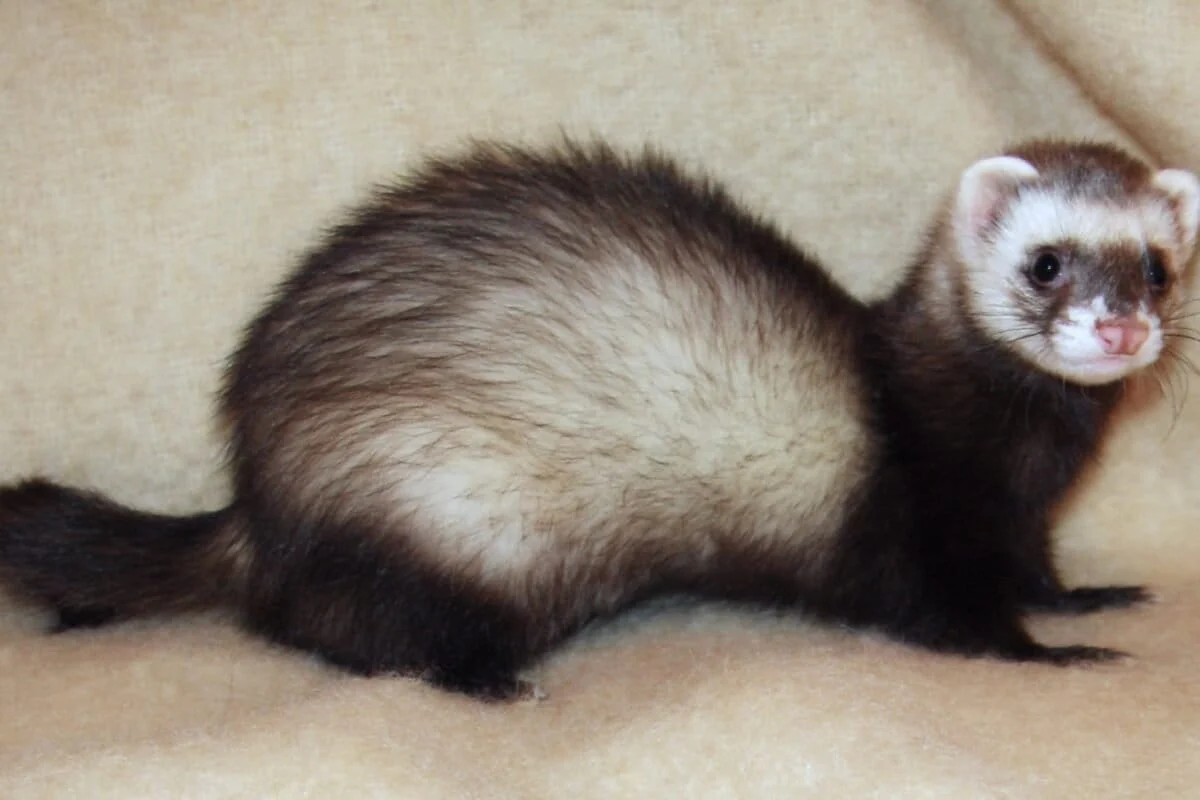
In a historic milestone for global conservation, Rathlin Island, situated off the northern coast of Northern Ireland, has been officially declared free of feral ferrets. The achievement marks the first time in history that this specific non-native predator, which was domesticated from European polecats approximately 2,000 years ago, has been successfully eradicated from an island environment. The removal of the ferrets (Mustela furo) concludes a multi-year, intensive biological restoration project aimed at protecting the island’s internationally significant seabird colonies, which had been pushed to the brink of collapse by the invasive mammals.
The eradication effort, known as the "Life Raft" project, was a collaborative initiative led by the Royal Society for the Protection of Birds Northern Ireland (RSPB NI) in partnership with the Rathlin Development and Community Association, the Department of Agriculture, Environment and Rural Affairs (DAERA), and various international ecological experts. The project, which launched in 2021 with a budget of £4.5 million ($6.1 million), utilized a combination of traditional trapping, advanced thermal imaging technology, and specialized detection dogs to track and remove the remaining ferret population.
The Origins of an Ecological Crisis
The presence of ferrets on Rathlin Island was not a natural occurrence but the result of a well-intentioned though ultimately disastrous attempt at biological pest control. During the 1980s, the island’s farming community struggled with an explosion in the rabbit population, which caused significant damage to agricultural land and grazing pastures. In an effort to mitigate the rabbit problem without the use of extensive chemicals or fencing, ferrets were introduced to the island.
However, the ecological outcome deviated sharply from expectations. While ferrets are known rabbit hunters, they are also opportunistic generalist predators. On Rathlin, they discovered an abundant and far more vulnerable food source: the island’s massive seabird colonies. Rather than focusing on the agile rabbits, the ferrets began preying on ground-nesting birds, their eggs, and their chicks.
Rathlin Island serves as one of the most important breeding sites in the United Kingdom and Ireland, hosting over 250,000 seabirds. The rugged basalt cliffs and maritime heath provide essential nesting grounds for Atlantic puffins, razorbills, common guillemots, kittiwakes, and Manx shearwaters. The introduction of a land-based predator into this delicate ecosystem triggered a decades-long decline in several key species.
The Cost of Predation: Impact on Avian Populations
The scale of the damage caused by the feral ferrets was profound. According to data provided by Erin McKeown, the program manager of the Life Raft ferret-eradication project, the puffin population on Rathlin Island suffered a staggering decline of over 70% during the period of ferret infestation. While factors such as climate change and fluctuating food sources in the North Atlantic played a role, overpredation by ferrets was identified as a primary driver of the local collapse.
Ferrets are notorious for "surplus killing"—a behavior where a predator kills more prey than it can immediately consume. This trait proved catastrophic for the puffins. In one documented incident in 2017, a single feral ferret gained access to a puffin colony and killed more than 26 mature birds in just 48 hours. For a species like the Atlantic puffin, which reaches sexual maturity slowly and produces only one egg per year, the loss of mature breeding adults is an ecological blow from which a colony struggles to recover.
The impact extended beyond puffins. Manx shearwaters, which nest in burrows on the island’s plateaus, were almost entirely extirpated from Rathlin as breeding birds. Their ground-level burrows offered no protection against the agile and nocturnal ferrets, leading to a 40-year hiatus in successful breeding for the species on the island.
A Chronology of the Life Raft Project
The recognition of the ferret crisis led to the formation of the Life Raft project, a five-year strategy designed to restore the island’s natural balance. The project followed a rigorous timeline:
- 2020-2021: Planning and Funding: Stakeholders secured funding from the EU LIFE Programme, the National Lottery Heritage Fund, and DAERA. A baseline survey estimated the ferret population at approximately 93 individuals, a small but highly destructive group.
- 2021: Launch and Community Engagement: The project officially commenced, prioritizing the involvement of the island’s roughly 150 permanent residents. Community support was deemed essential for accessing private land and monitoring sightings.
- 2021-2023: Intensive Removal Phase: Professional trappers deployed a network of humane traps across the island’s diverse terrain. This phase integrated high-tech solutions, including 110 motion-activated cameras and thermal-imaging drones, to locate ferrets in the island’s inaccessible crevices and thick vegetation.
- 2023-2024: Verification and Monitoring: After the last known ferret was removed, the project entered a two-year "absence verification" phase. This period required zero sightings or DNA evidence of ferrets to confirm eradication success.
- Late 2024: Declaration of Success: Following two years of intensive monitoring with no signs of ferret activity, Rathlin Island was formally declared ferret-free.
Innovative Methods: The Role of Technology and "Woody"
The success of the Life Raft project is attributed to its "belt and braces" approach, combining modern technology with biological expertise. Traditional trapping alone was insufficient due to the island’s complex geography, which includes steep cliffs and dense scrubland.

The deployment of thermal drones allowed the team to scan large areas of the island at night, identifying the heat signatures of small mammals. This data was cross-referenced with the camera network to map ferret territories and movement patterns. However, the most critical "low-tech" asset was Woody, a specially trained conservation detection dog.
Woody was tasked with sniffing out ferret "scat" (droppings) and identifying scent trails. Even when ferrets were not visible to cameras or drones, Woody could confirm their presence or absence in specific sectors of the island. His ability to detect minute biological traces ensured that no elusive individuals were left behind to restart the population. Even following the official declaration of eradication, Woody remains a key part of the island’s biosecurity protocol, conducting regular sweeps to ensure no new ferrets are accidentally introduced via cargo or private vessels.
Early Signs of Ecological Recovery
Though the eradication has only recently been finalized, the biological benefits are already visible. Data from the 2024 and early 2025 breeding seasons indicate a significant rebound in avian activity. Puffin numbers recorded in 2025 represent the highest count in the last five years, suggesting that the removal of predator pressure has allowed more chicks to fledge and more adults to return to their burrows safely.
Furthermore, the Manx shearwater has made a triumphant return. For the first time in four decades, researchers have confirmed successful breeding pairs on the island. Perhaps most surprisingly, the project has benefited the corncrake (Crex crex), a ground-nesting bird that is critically endangered in the United Kingdom. Last year, six male corncrakes were recorded "calling" on the island, a sign of established territories. These birds, which rely on tall grass and nettles for cover, are highly susceptible to small mammalian predators, and their return is viewed as a hallmark of a recovering ecosystem.
Socio-Economic and Agricultural Implications
The eradication of ferrets has also yielded tangible benefits for the human inhabitants of Rathlin. Beyond the boost to eco-tourism—which is a vital part of the island’s economy centered around the RSPB Seabird Centre—the project has revitalized local small-scale agriculture.
For decades, residents reported that keeping domestic poultry or small livestock was nearly impossible due to the ferrets’ penchant for raiding coops. Anecdotal evidence from the community suggests a renewed interest in self-sufficiency, with residents now able to keep chickens and ducks without the constant threat of overnight slaughter. This improvement in the quality of life for residents has strengthened the bond between conservationists and the local population, providing a model for future island restoration projects.
Global Significance and the Path Forward
The success on Rathlin Island resonates far beyond the shores of Northern Ireland. Elizabeth Bell, a technical expert from Wildlife Management International based in Aotearoa New Zealand, emphasized the global importance of this achievement. In a statement, Bell noted that the lessons learned on Rathlin—particularly regarding the integration of community involvement with high-tech monitoring—will serve as a blueprint for island restoration projects worldwide for decades to come.
Ferrets remain a significant invasive species threat in other regions, most notably in New Zealand, where they have contributed to the decline of iconic flightless birds like the kiwi. The Rathlin methodology proves that even highly adaptable and elusive predators can be removed from complex island environments if the strategy is sufficiently funded and sustained.
However, the declaration of success does not mean the work is finished. The Life Raft project is now transitioning into a permanent biosecurity phase. Preventing the reintroduction of ferrets—or the arrival of other invasive species like rats or mink—is the new priority. Strict protocols for freight and increased public awareness among visitors are being implemented to ensure that Rathlin remains a sanctuary for its aery inhabitants.
As the 2025 nesting season continues, the cliffs of Rathlin Island are once again a cacophony of life, free from the shadow of the invasive predator that nearly silenced them. The project stands as a testament to the efficacy of coordinated conservation action and provides a glimmer of hope for the world’s embattled island ecosystems.

