
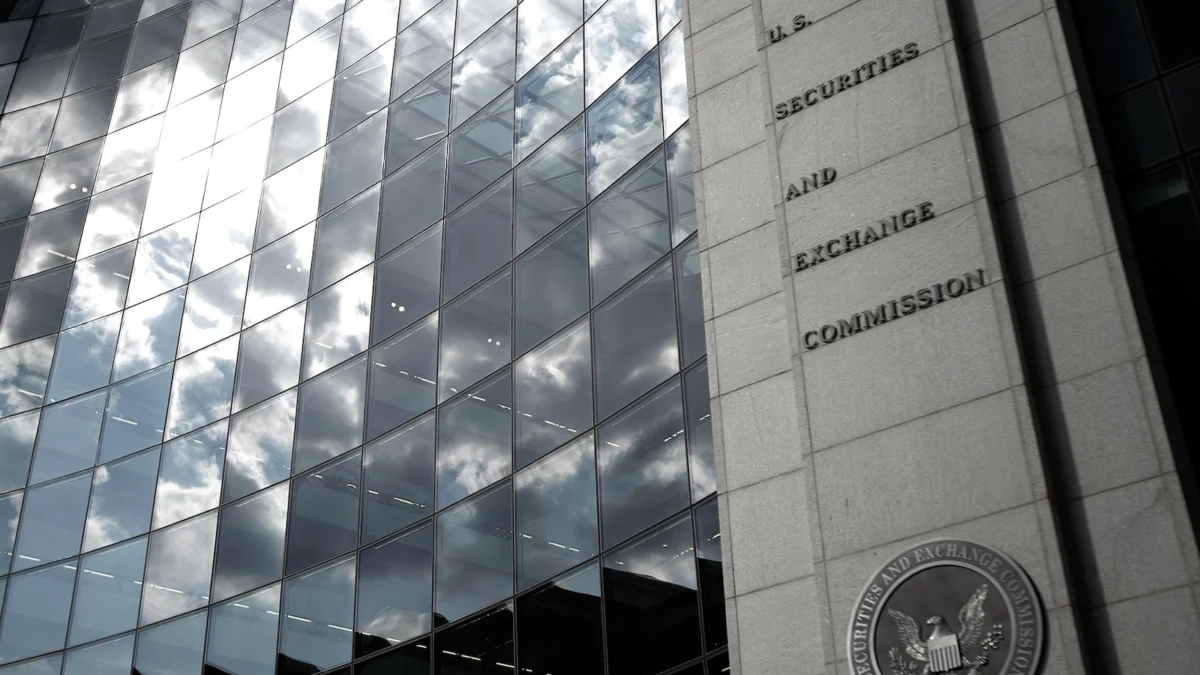
In a direct challenge to recent regulatory shifts at the Securities and Exchange Commission (SEC), a coalition of activist investors and shareholder advocacy groups has launched an independent filing platform designed to bypass new restrictions on the federal EDGAR system. The new initiative, titled the Proxy Open Exchange (POE), serves as a decentralized alternative to the government’s official Electronic Data Gathering, Analysis, and Retrieval (EDGAR) database. The move comes as small and mid-sized investors express growing frustration over what they characterize as an attempt by the federal government to insulate corporations from accountability regarding climate change, diversity, and executive governance.
The Proxy Open Exchange was spearheaded by As You Sow, a leading non-profit focused on shareholder advocacy. The platform’s name is a deliberate literary pun on the author Edgar Allan Poe, but its mission is rooted in the serious business of market transparency. Under current regulations enacted and enforced during the Trump administration and continued into 2026, the SEC has significantly raised the barriers for shareholders seeking to communicate with their peers. Specifically, a January directive barred investors holding less than $5 million in company shares from using the EDGAR system to file "exempt solicitations"—critical documents used to advocate for specific votes on shareholder resolutions.
The Shift in Regulatory Winds: The SEC’s January Directive
The catalyst for the creation of POE was a fundamental change in how the SEC manages shareholder communications. For decades, the EDGAR system served as the "town square" of the American financial markets, allowing any shareholder who met basic eligibility requirements to post communiqués known as exempt solicitations. These filings are vital because they allow investors to explain their reasoning for or against certain board members or policy proposals without the exorbitant costs associated with a formal proxy contest, which can run into the millions of dollars.
In January, the SEC narrowed access to this system, citing the need to "rein in the scope of government" and reduce the administrative burden of managing a high volume of requests. By setting a $5 million ownership threshold for EDGAR access, the commission effectively silenced thousands of individual and small institutional investors. This policy change has been viewed by critics not as a clerical optimization, but as a strategic move to protect corporate boards from "irksome" activists pushing for faster transitions to renewable energy or more transparent diversity, equity, and inclusion (DEI) reporting.
Andrew Behar, CEO of As You Sow, has been vocal about the necessity of a free-market approach to information. "We believe a free market requires communication," Behar stated during the platform’s launch. "If they’re going to take away EDGAR, we’re going to give them POE."
Chronology of the Conflict Between Regulators and Activists
The tension between the SEC and shareholder activists has been building for several years, following a trajectory of increasing corporate pushback against Environmental, Social, and Governance (ESG) initiatives.
- 2019–2020: The SEC under the Trump administration begins proposing rules to heighten the requirements for submitting shareholder resolutions, including increasing the amount of stock an investor must hold and for how long.
- 2021–2023: A brief period of regulatory loosening occurs, where the SEC allows more climate-related resolutions to reach a vote. However, corporate lobbying intensifies, with major firms arguing that "social" resolutions are a distraction from fiduciary duties.
- 2024–2025: Legal battles escalate. Major corporations, such as Exxon Mobil, begin bypassing the SEC’s "no-action" process to sue shareholders directly in federal court to prevent resolutions from appearing on ballots.
- January 2026: The SEC officially restricts the EDGAR system, implementing the $5 million threshold for exempt solicitations.
- February 2026: As You Sow and the Interfaith Center on Corporate Responsibility (ICCR) begin developing alternative digital infrastructures.
- Current Week: The Proxy Open Exchange goes live, immediately seeing a surge in filings that would have previously been hosted on the government’s servers.
Comparative Data: EDGAR vs. POE
The early data suggests that the demand for shareholder communication remains high, despite the government’s attempts to restrict it. In its first week of operation, the Proxy Open Exchange recorded 63 filings. In contrast, the official EDGAR system has recorded only 39 exempt solicitations for the entirety of 2026 thus far.
This discrepancy highlights the "chilling effect" the $5 million rule has had on the official record. By removing these smaller filings from EDGAR, the SEC has effectively created a blind spot in the public record of corporate dissent. Advocates argue that before the restriction, the EDGAR system provided a comprehensive historical archive of shareholder concerns. Now, that archive is fragmented, making it more difficult for researchers, journalists, and other investors to track the momentum of specific movements, such as the push for Scope 3 emissions reporting or the closing of the gender pay gap.
The Mechanics of the Proxy Open Exchange
The POE platform was designed to be as familiar as possible to the investment community. It utilizes the same Central Index Keys (CIK)—the unique identifiers the SEC assigns to individuals and companies—to organize its database. This ensures that users can search for a specific corporation and find all related "unofficial" filings just as they would on a government site.
While As You Sow reviews submissions for basic clerical errors to ensure the platform remains professional, it does not filter content based on ideology. This openness is a core tenet of the project. Tim Smith, a senior policy advisor for the Interfaith Center on Corporate Responsibility, noted that the platform is intended to be a "big tent" for all perspectives.
"It could be an investor that’s filing a resolution on climate. It could be a conservative investor who decides to push a resolution that’s challenging diversity, equity, or inclusion," Smith said. The goal is to preserve the democratic nature of shareholder engagement, regardless of whether the prevailing political winds favor ESG or "anti-woke" investing.
Legal Frameworks and Anti-Fraud Protections
A common concern regarding third-party filing systems is the potential for misinformation or fraud. However, legal experts point out that moving away from a government server does not exempt an investor from federal law. Jill Fisch, a professor of business law at the University of Pennsylvania, emphasized that any communication intended to influence a shareholder vote is still subject to the SEC’s anti-fraud provisions.
"The postings have to be accurate; that doesn’t change," Fisch explained. She further noted that in some ways, the POE platform is an improvement over the government’s legacy system. "The government’s site is kind of old and glitchy," she said, describing POE’s interface as more "user-friendly" and better suited for the modern digital age.
The SEC Rationale: Efficiency vs. Suppression
The SEC has defended its decision to restrict EDGAR access as a matter of administrative necessity. In previous statements, spokespeople for the commission have argued that the system was being "misused" by investors with negligible stakes in companies, causing confusion among the broader investor base. By raising the threshold, the SEC claims it is easing a "burdensome regulation" and ensuring that the filings on EDGAR represent the views of significant stakeholders.
Furthermore, the SEC has suggested that smaller shareholders do not need a government platform to be heard. The commission has pointed to the rise of social media, press releases, and private electronic forums as "commonly used means" for conducting exempt solicitations. However, activists argue that these platforms lack the centralized, searchable, and authoritative nature of a dedicated financial database, making it easier for corporations to ignore minority voices.
Institutional Resistance and the Role of Proxy Advisors
Despite its early success, the Proxy Open Exchange faces a significant hurdle: the institutional "gatekeepers" of the financial world. Proxy advisors, such as Institutional Shareholder Services (ISS) and Glass Lewis, play a massive role in how institutional investors (like pension funds and mutual funds) cast their votes. These advisors provide research and recommendations on thousands of shareholder proposals every year.
Reports indicate that some major proxy advisors, including ISS, have signaled they will only consider information that is filed on the official EDGAR platform. If these firms refuse to look at POE, the influence of the alternative platform may be limited to smaller retail investors and niche funds, potentially muting the impact of the activism it aims to facilitate. ISS has declined to comment on its specific policy regarding third-party platforms, but the industry’s reliance on "official" data sources remains a formidable barrier to the democratization of shareholder communication.
The Broader Impact on ESG and Corporate Accountability
The struggle over the EDGAR system is a microcosm of the broader battle over the future of corporate governance in America. For years, the SEC has been the primary arbiter of what constitutes "material information" that companies must disclose. By restricting the ability of shareholders to flag issues like climate risk or board diversity through official channels, the current administration is seen by many as taking a side in the culture wars currently roiling the financial sector.
If the Proxy Open Exchange becomes a permanent fixture, it could signal a shift toward a more decentralized and fragmented regulatory environment. Jill Fisch suggested that "the cat is out of the bag," noting that once investors realize how easy and cost-effective it is to communicate through independent digital channels, they are unlikely to return to the strictures of a government-managed system, even if a future administration reverses the January directive.
However, there is also the possibility of a "platform war." If activist investors continue to gain traction on POE, corporations like Exxon Mobil or Chevron might respond by launching their own proprietary platforms to host "preferred" shareholder communications, further fragmenting the information available to the public.
Conclusion: A Temporary Fix or a New Standard?
For Andrew Behar and the team at As You Sow, the ideal outcome would actually be the obsolescence of their own platform. "We do not want this to be a necessary platform into perpetuity," Behar said. "When the administration changes and the SEC returns to its core mission, we expect EDGAR to be restored because transparent information sharing is essential for the free market."
For now, the Proxy Open Exchange stands as a testament to the resilience of shareholder activism in an era of regulatory tightening. Whether it remains a temporary workaround or evolves into a permanent rival to the SEC’s authority will depend on how institutional investors, proxy advisors, and the courts navigate this new landscape of decentralized financial discourse. What is certain is that the barriers to entry in the corporate "town square" have been challenged, and the conversation surrounding the responsibility of American corporations is moving to a space the government no longer controls.

