Between 2.5 and 2 billion years ago, Earth experienced one of the most profound chemical transformations in its four-and-a-half-billion-year history. During this era, often referred to as the Paleoproterozoic, the atmosphere underwent a dramatic transition as oxygen levels surged for the first time. This "Great Oxidation Event" (GOE) fundamentally altered the planet’s surface chemistry, paving the way for the eventual emergence of complex, multicellular life roughly 500 million years ago. However, a new study led by researchers at the California Institute of Technology (Caltech) suggests that our understanding of this epochal shift—specifically regarding the stability of the global carbon cycle—may require significant revision.
For decades, geologists have pointed to a peculiar isotopic signature found in ancient marine sediments as proof of a planet-wide environmental upheaval. This signature, known as the Shunga-Francevillian event, has long served as a cornerstone of the argument that the carbon cycle was fundamentally destabilized across the globe during the oxygenation of the atmosphere. By analyzing deep-earth drill cores from Russia and Gabon, scientists have interpreted anomalous carbon-isotope ratios as evidence of massive, synchronized biological and geological shifts. Now, by probing microscopic fluid inclusions in rocks from Russia’s Zaonega Formation, researchers are proposing a more localized, nuanced explanation for these ancient signals.
A Chronology of Earth’s Oxygenation
The Earth’s atmosphere was largely devoid of free oxygen for the first half of its existence. It was not until the rise of cyanobacteria, which utilized photosynthesis to produce oxygen as a byproduct, that the chemistry of the air and oceans began to change. This process was not instantaneous; it was a long, protracted struggle between the biological production of oxygen and the chemical sinks—such as exposed volcanic iron—that absorbed it.
By the period between 2.5 and 2 billion years ago, the accumulation of oxygen had reached a threshold. During this window, massive quantities of organic matter were buried beneath the seafloor, effectively sequestering carbon in rocks and leaving behind the distinct isotopic markers that have fascinated geologists for years. The Shunga-Francevillian event, named after the sites where this signature is most prominent, represents a massive perturbation in this carbon storage process. Historically, the scientific consensus has held that this was a global phenomenon, representing a synchronized biological "crash" or transformation across the world’s oceans.
The Zaonega Formation: Reassessing the Record
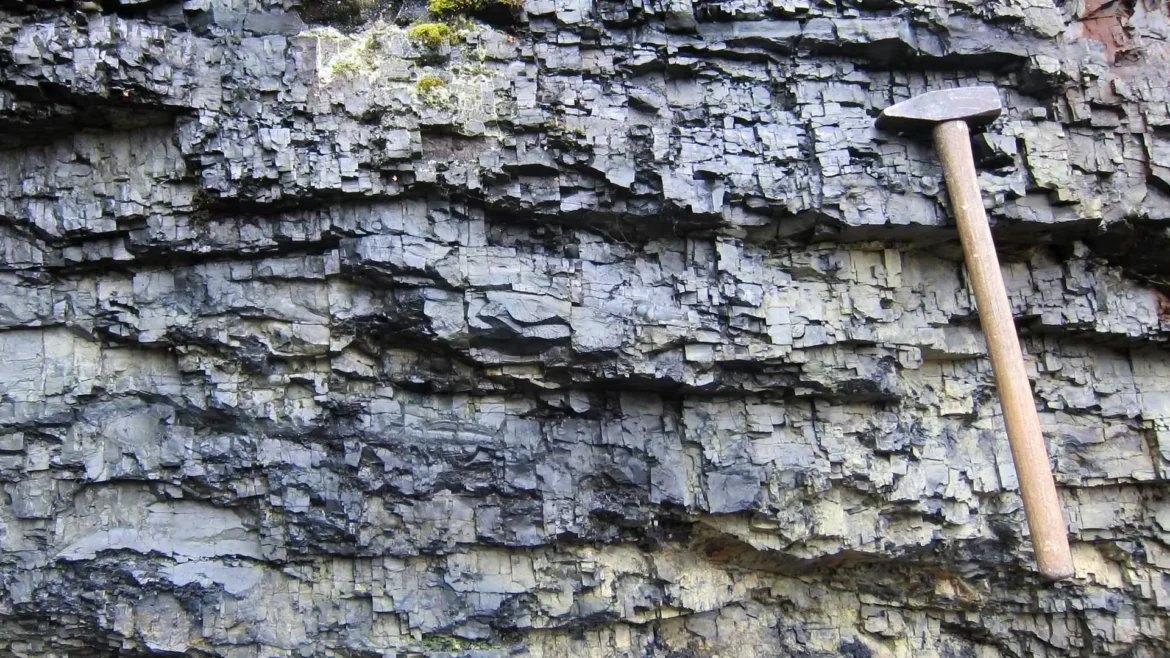
The Zaonega Formation in Karelia, Russia, is one of the world’s oldest known fossil oil fields. It has long been the primary reference site for researchers studying the Shunga-Francevillian event. However, the new research, published in the journal Geology, suggests that the "global" signature found there may be the result of a much more localized series of geological accidents.
Nivedita Thiagarajan, a senior scientific researcher at Caltech and the study’s lead author, emphasizes that while the signal is indeed present, its origins are likely subterranean and regional rather than atmospheric and global. "We studied gases trapped in microscopic pockets within rocks from the Zaonega Formation and found that the carbon-isotope signal at this key site can be explained by local phenomena that occurred in a several-hundred-square-kilometer sedimentary basin," Thiagarajan explains.
The team’s investigation focused on pyrobitumen, an insoluble organic carbon residue formed when buried crude oil or kerogen is subjected to extreme heat. By analyzing the isotopic composition of gases trapped within these rocks, the researchers were able to reconstruct a thermal history of the basin.
The Role of Magma, Methane, and Microbes
The researchers propose a specific, high-heat scenario to explain the anomalous carbon signatures. They theorize that roughly 2 billion years ago, a massive sheet of magma forced its way through marine sediments beneath a prehistoric ocean. The intense heat radiating from this intrusion—calculated by the team to be as high as 350 degrees Celsius near the magma contact—triggered the thermal breakdown of organic matter trapped in the sediment.
This heating process generated a surge of hydrocarbons, including methane and propane. These gases migrated upward through the sediment layers, eventually reaching the seafloor, where they fueled a localized community of methane-consuming microbes. These microorganisms, in turn, produced biomass that carried a distinct, light carbon-isotope signature. When this biomass was buried, it left behind the very isotopic record that previous researchers had mistakenly attributed to a global, planet-wide disruption of the carbon cycle.
The temperature gradient identified by the researchers serves as strong supporting evidence. By measuring the changes in the isotopic makeup of the rocks at varying distances from the magma intrusion—moving from 350 degrees Celsius near the source to a much cooler 72 degrees Celsius roughly 300 meters higher—the team demonstrated that the carbon anomalies are spatially linked to the heat source. This suggests that the isotopic signal is a byproduct of local thermogenic processes rather than a reflection of the global atmospheric state.
Implications for the Geologic Record
The findings pose a significant challenge to the status quo in Precambrian geology. If the Shunga-Francevillian signal in Russia is indeed the result of localized volcanic heating, it calls into question the validity of using this event as a benchmark for global environmental shifts.
John Eiler, the Robert P. Sharp Professor of Geology and Geochemistry at Caltech, notes that the ability to analyze these microscopic pockets of gas has provided a higher-resolution view of ancient geological processes than was previously possible. By integrating isotopic data from modern oil and gas basins with these 2-billion-year-old samples, the team has established a new framework for interpreting how organic carbon is transformed and preserved over geological time.
For the broader scientific community, the implication is that some of what we have categorized as "global" events may actually be the cumulative result of regional geological noise. While the researchers do not claim that every aspect of the GOE is misunderstood, they argue for a more rigorous re-evaluation of the reference sites that define our understanding of this era.
Future Research: The Gabon Connection
The focus now shifts to the Francevillian Basin in Gabon, the other primary site associated with the Shunga-Francevillian event. Aivo Lepland, a researcher at the Geological Survey of Norway (NGU) and a co-author of the study, is spearheading efforts to determine if the same localized processes were at work in Africa.
The GOE-DEEP project, a multinational drilling initiative, has already recovered new rock cores from the region. These samples are currently undergoing an extensive, international analysis involving experts from 18 countries. The objective is clear: to determine if the Gabonese isotopic signal aligns with the thermal-magma model developed for the Russian site, or if it represents a different set of environmental circumstances.
"Now we can really put things together by doing a similar type of study on the Gabonese rocks to compare the two sites," Lepland stated. "This is how science moves forward."
A More Complex Picture of Earth’s Past
The study of Earth’s early history is an exercise in interpretation. Because the rock record is fragmented and obscured by billions of years of tectonic activity, scientists often rely on "proxy" data—signals like carbon isotopes—to fill in the gaps. While these proxies are powerful tools, the Caltech-led study serves as a necessary reminder of the importance of context.
As researchers continue to refine the timeline of the Great Oxidation Event, the distinction between local geological accidents and genuine global trends becomes paramount. If the Shunga-Francevillian event is downgraded from a global atmospheric crisis to a localized thermal episode, it does not diminish the significance of the GOE itself. Instead, it refines the narrative of how life and the planet evolved in tandem, moving away from a simplistic view of a "crazy" Earth toward a more sophisticated understanding of the intricate, often messy, processes that have shaped our world.
The ongoing work in Gabon will likely provide the final word on whether the Zaonega findings represent a new paradigm for Paleoproterozoic research. For now, the scientific community is left with a compelling new theory that highlights the necessity of looking beyond the surface of the rock to the thermal and biological processes occurring deep within the Earth’s crust. As the 18-nation team begins its analysis of the new Gabonese drill cores, the quest to decode the history of our planet’s first breath continues.