
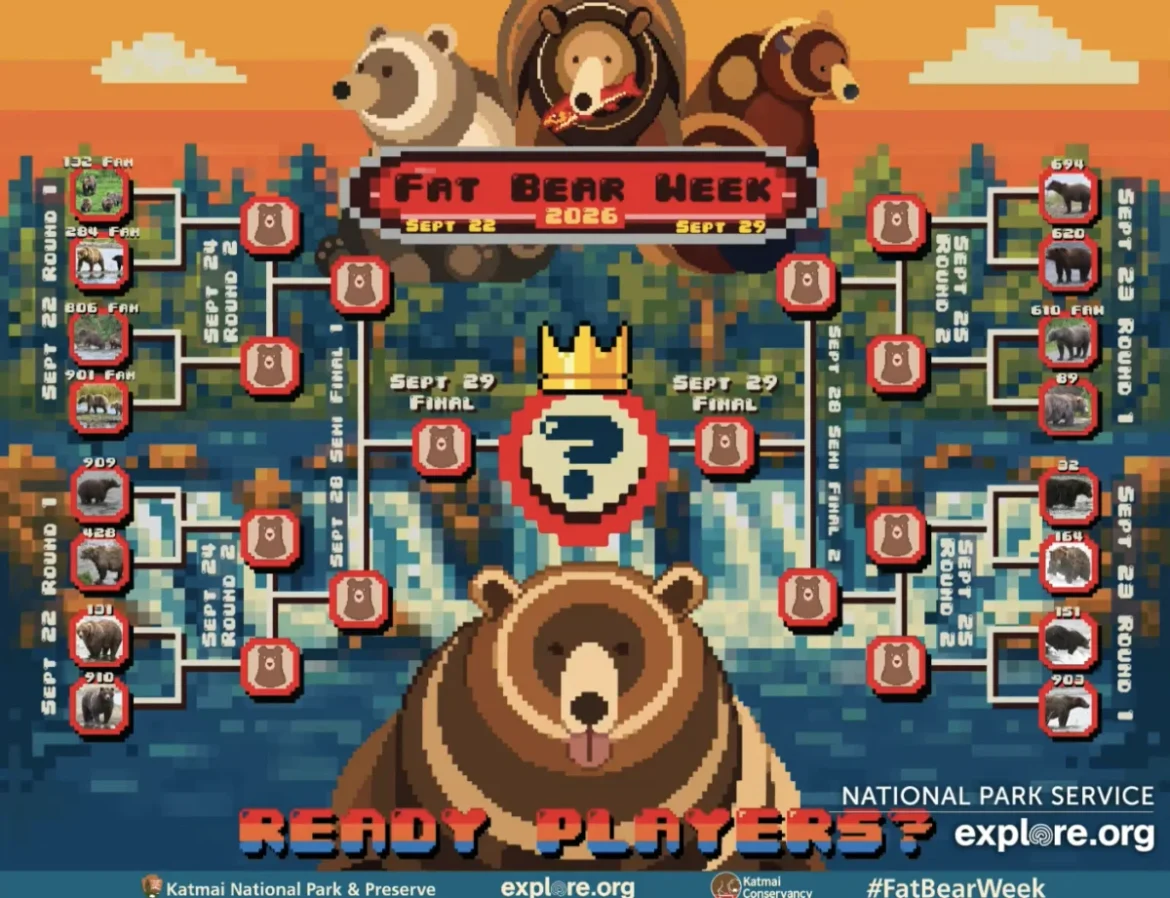
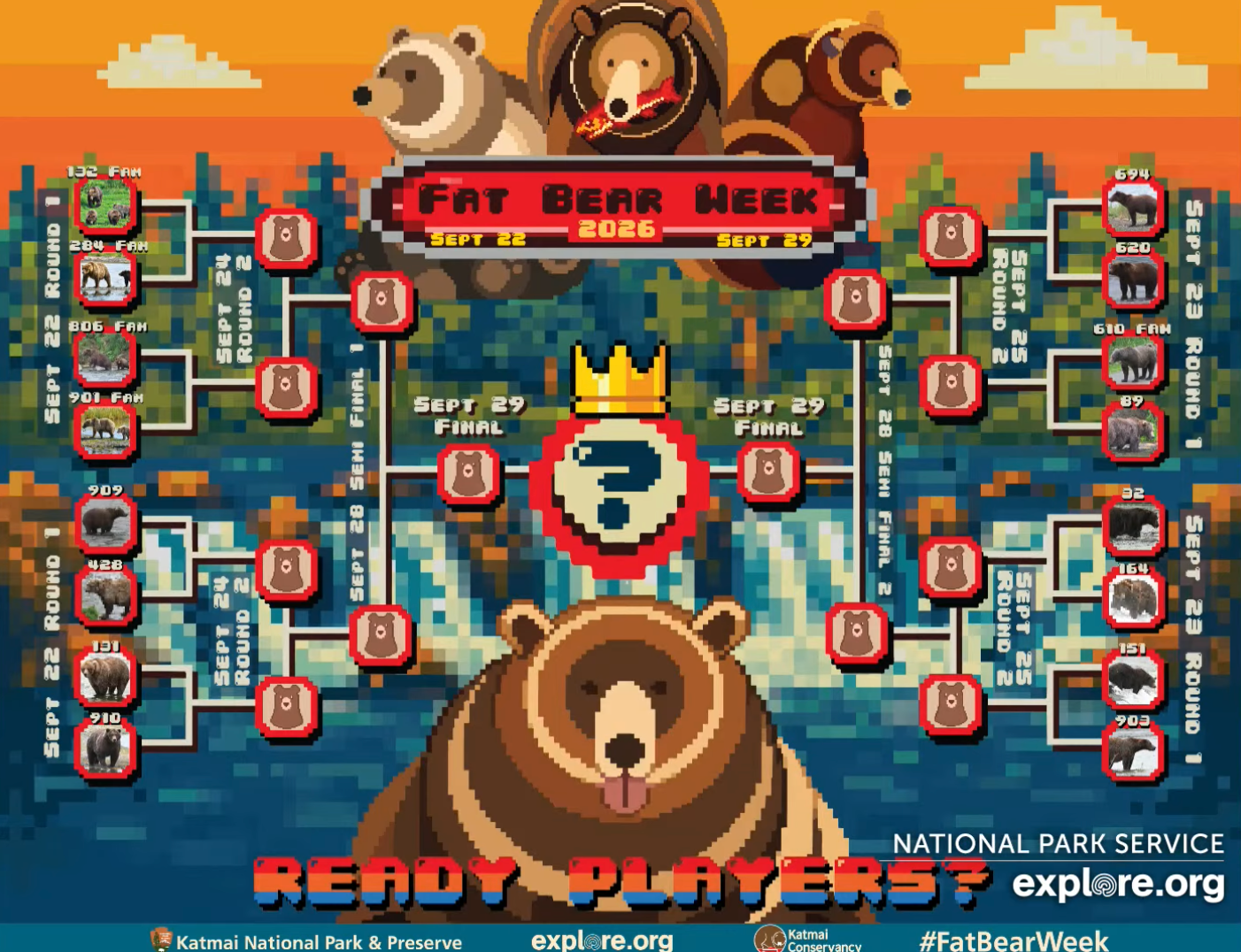
The annual anticipation surrounding Katmai National Park and Preserve has reached its zenith as the official bracket for Fat Bear Week 2026 has been unveiled. This year, 16 of the most formidable brown bears (Ursus arctos) from Alaska’s Brooks River have been selected to compete in a single-elimination, bracket-style tournament that captures the imagination of millions of wildlife enthusiasts worldwide. The competition, which serves as both a celebration of natural resilience and an educational platform for conservation, begins on Tuesday, September 22, and will culminate in the crowning of a champion on Tuesday, September 29.
The selected contenders are organized into four distinct categories: mother bears, single adult females, sub-adults, and the massive adult males. This grouping allows observers to better understand the varying survival strategies employed by different demographics of the bear population. While the digital tournament is a lighthearted way to engage the public, it is rooted in the serious biological reality of "peak fat"—the critical state of physiological obesity that brown bears must achieve to survive the long, resource-depleted winter months in the Alaskan wilderness.
The Evolution of a Global Phenomenon
What began in 2014 as a modest, one-day event titled "Fat Bear Tuesday" has ballooned into a week-long international spectacle. In its inaugural year, the contest generated a mere 1,700 votes. By 2025, that figure had skyrocketed to 1.2 million votes cast by participants from more than 100 countries. This growth is largely attributed to the transparency provided by explore.org’s live-streaming cameras, which allow the public to witness the daily struggles and triumphs of the bears of Brooks Falls in real time.
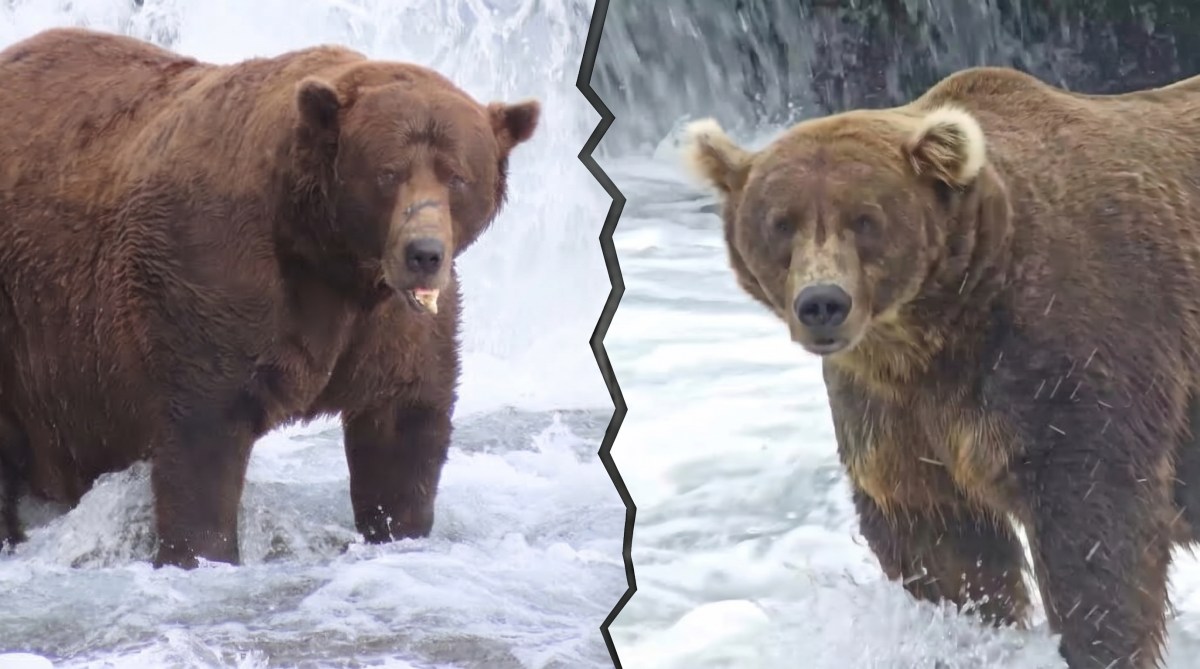
The tournament functions as an analogue to March Madness, though the stakes are survival rather than athletics. Throughout the competition, voters are presented with "before and after" photographic evidence—images taken early in the summer season contrasted with updated portraits from September. This visual data illustrates the staggering metabolic efficiency of these animals, who can transition from approximately 700 pounds in early summer to upwards of 1,200 pounds by the time they are ready for hibernation.
Biological Context and the Reality of Torpor
Public interest in Fat Bear Week often centers on the humor of the bears’ physiques, but biologists emphasize that this mass is a life-or-death necessity. Contrary to popular belief, bears do not experience "deep hibernation" in the same manner as smaller mammals like bats or rodents. Instead, they enter a state known as torpor.
During torpor, a bear’s metabolism slows significantly, and its heart rate drops, but the animal remains capable of waking if threatened. Because they do not eat, drink, or defecate during this months-long period, they are entirely reliant on the adipose tissue stored during the salmon runs. The salmon migration at Brooks Falls is the primary engine of this weight gain. In late summer, as the fish spawn and expire, the bears shift their foraging focus to the lower Brooks River, consuming the nutrient-dense, decaying salmon to build the thick layers of fat required to sustain their bodily functions through the winter.
The 2026 Roster and Competitive Dynamics
This year’s field is particularly notable for its mix of seasoned veterans and rising stars. The absence of a dedicated "Fat Bear Week Junior" category in 2026 has shifted the focus, as young cubs are now integrated into family units within the adult bracket. This decision reflects a more holistic approach to observing the bears, acknowledging that the survival of a cub is intrinsically linked to the success of its mother.
Historical rivalries continue to define the competition. Bear #151 and Bear #903, for instance, are expected to be key figures in the tournament. Their rivalry is not merely a digital one; field observations have repeatedly shown them competing for the same prime fishing spots along the river. Such interactions provide a window into the complex hierarchy of the Brooks River, where dominance is often measured by a bear’s ability to secure the most productive salmon-catching stations.
The previous champion, Bear #32, known as "Chunk," remains a point of intense discussion. His 2025 victory was particularly impressive given that he competed while nursing a broken jaw—an injury likely sustained in a territorial dispute. His dominance is challenged by legacy figures such as the offspring of past winners and other high-profile, recognizable bears whose life histories are documented by Katmai naturalists like Mike Fitz.
A Season of Unprecedented Observations
The 2026 season has been a challenging one for the resident bears, providing the public with a stark look at the often-harsh realities of nature. Naturalists at Katmai reported several instances of inter-species conflict that have sparked significant discussion among the public. In late July, live-stream cameras captured a rare and unsettling incident where a mother bear, identified as #806, killed and consumed a cub belonging to another female.
Subsequent incidents, including the loss of a cub belonging to Bear #335 (Jolly) during an encounter with another mother, have led park experts to analyze the drivers of such behavior. While infanticide in brown bears is a known phenomenon, its occurrence in such a public forum has sparked broader questions regarding the impact of food scarcity, population density, and maternal protective instincts. These events serve as a sobering reminder that the "chunky predators" celebrated in the competition are apex animals navigating a complex and often brutal ecosystem.
Despite these hardships, the season has also provided moments of wonder. From the emergence of a silver-furred cub to the innovative, if occasionally clumsy, fishing techniques of bears like #164 (Bucky Dent), the livestream continues to provide invaluable data for wildlife biologists and endless fascination for viewers.
How to Participate and Support
The democratic nature of Fat Bear Week is its most defining characteristic. Voting takes place daily from 12 p.m. to 9 p.m. EDT at fatbearweek.org. During these windows, voters are encouraged to review the biographies of each bear, including the specific challenges they have overcome—whether that be injury, raising a litter of cubs, or competing against larger, more established males.
Beyond the vote, the Katmai Conservancy continues its conservation efforts through the Otis Fund, named in honor of the legendary Bear #480, who claimed four titles during his lifetime. The fund supports habitat protection and ongoing research into the health of the Brooks River population. In a move to encourage philanthropy, explore.org has committed to matching all donations made between September 22 and October 3, effectively doubling the impact of contributions from the public.

The Implications of the Event
The impact of Fat Bear Week extends far beyond the entertainment value of the bracket. By humanizing these animals through names and individual narratives, the event fosters a deeper connection between the public and the wilderness of Alaska. It serves as an essential tool for public outreach, educating millions on the importance of habitat preservation, the intricacies of salmon ecosystems, and the biological realities of climate change as it affects the Arctic.
As the 2026 competition kicks off, the focus remains on the resilience of the brown bear. Whether or not a particular bear wins the bracket, the true success of the event is measured by the sustained public engagement with the natural world. As the bears prepare for their winter slumber, the global audience stands ready to cast their votes, honoring the immense effort these creatures exert to survive another year in one of the last truly wild places on Earth. The coronation of the 2026 Fat Bear Week champion on September 29 will mark the end of the tournament, but the stories of these bears will continue to unfold on the riverbanks of Katmai, far from the digital screens where they are so celebrated.
