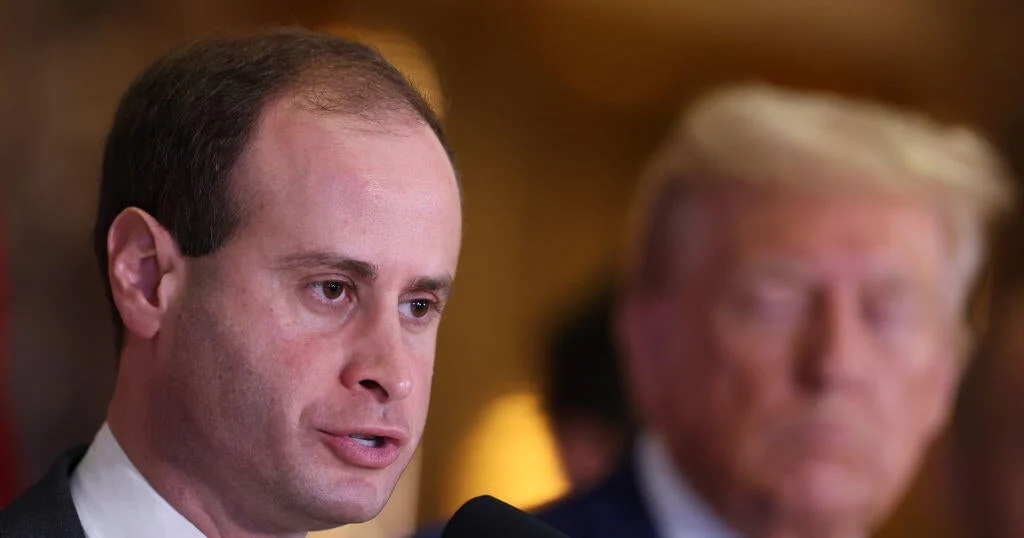
The incoming balance of power in Washington has triggered an immediate and volatile standoff between the White House and the Democratic-controlled Congress. As the nation prepares for the start of the 2027 legislative session, White House Counsel Will Scharf has issued a stark, unprecedented warning to Representative Robert Garcia, the incoming Chair of the House Oversight and Government Reform Committee, suggesting that aggressive congressional investigations into the Trump administration could be met with executive-branch-led criminal probes.
This escalation marks a profound departure from traditional norms of inter-branch cooperation, setting the stage for what many constitutional scholars describe as a defining battle over the limits of executive privilege and legislative oversight. With Democrats securing 254 seats in the House and 55 in the Senate following the recent midterms, the party is poised to utilize its newfound subpoena power to scrutinize the final two years of President Trump’s second term.
A Constitutional Collision Course
The tension centers on a letter dated November 10, 2026, in which Scharf cautioned that congressional investigative acts must be grounded in a "legitimate legislative purpose." Scharf’s warning went beyond traditional procedural objections, explicitly stating that "threats to executive branch officials designed to deter them from public service" or processes intended to "abuse or instill fear" could cross the threshold into "blatant criminality."
For his part, Representative Robert Garcia has rejected the White House’s framing as an attempt to intimidate the legislative branch. "Congress’ authority comes from Article I of the Constitution, not from the permission of the White House," Garcia stated in a formal rebuttal. He emphasized that the House intends to move forward with a robust investigative agenda, asserting that the administration’s aggressive posture suggests a fundamental desire to shield itself from transparency.
Contextualizing the Oversight Agenda
The friction is rooted in a long-standing disagreement over the scope of congressional authority. Following the 2024 election and the subsequent midterms, House Democrats have made it clear that their oversight priorities will be expansive. The proposed agenda includes:
- Financial Scrutiny: Investigations into the business dealings of the Trump family and potential conflicts of interest.
- Corporate Governance: A probe into corporate corruption and influence peddling within federal agencies.
- Immigration and Enforcement: Comprehensive reviews of actions taken by federal immigration authorities.
- The Epstein Inquiry: A renewed focus on the historical scandal involving Jeffrey Epstein, specifically regarding how it pertains to individuals within or associated with the current administration.
Historically, the executive branch has utilized the "legitimate legislative purpose" standard—a concept reinforced by the Supreme Court in the 2020 ruling involving President Trump’s financial records—to block congressional access to sensitive documents. While the Court has acknowledged that Congress holds significant legislative interests, it has also provided a mechanism for the administration to challenge the necessity of specific subpoenas.
The Legal and Political Landscape
Legal experts suggest that while the rhetoric from the White House is aggressive, the practical ability to prosecute members of Congress is severely limited. The Speech or Debate Clause of the Constitution provides a formidable shield, immunizing lawmakers from criminal or civil actions arising from their official legislative duties.
Molly Nixon, a senior fellow in executive power at the Cato Institute, views the current conflict as a political maneuver rather than a viable legal strategy. "This letter is an opening salvo in a public argument," Nixon noted. "It is highly unlikely that any court would find merit in a criminal charge against a member of Congress for voting to issue a subpoena. The criminality question is distinct from the legislative purpose question; a court may quash a subpoena, but that is a far cry from a criminal indictment."
A Multi-Front Conflict: The Texas Connection
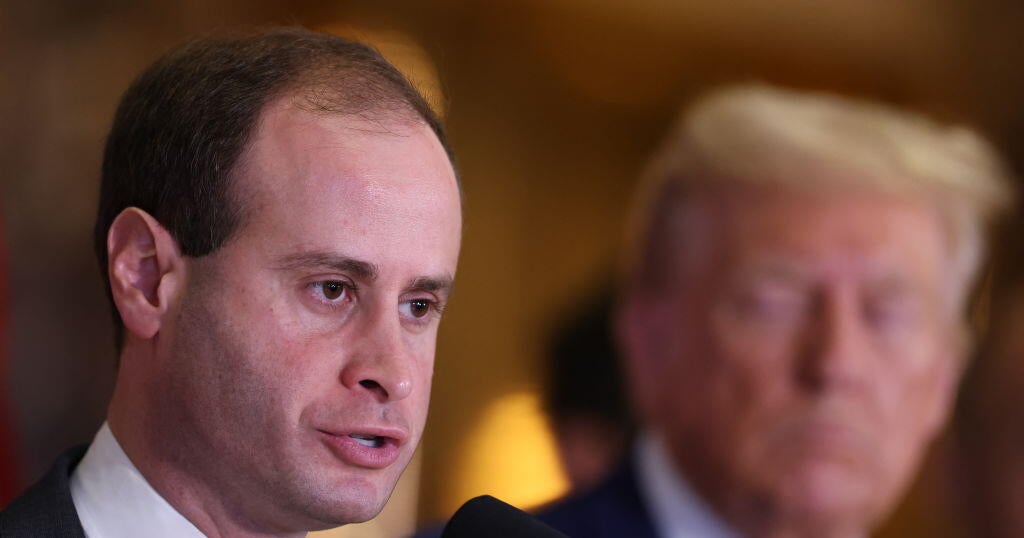
The conflict has expanded beyond the White House and the House Oversight Committee. Aaron Reitz, the U.S. attorney for the Southern District of Texas, recently issued a warning to Senator Richard Blumenthal regarding the Senator’s plans to investigate donors involved in a White House ballroom project. Reitz cited civil rights statutes, suggesting that the Senator’s investigative actions might constitute a conspiracy to deprive individuals of their rights.
This action has drawn sharp criticism, with Attorney General Todd Blanche clarifying during a recent press briefing that the Department of Justice currently has no open criminal investigations into members of Congress. "There are no ongoing criminal investigations into words that incoming senators or congressmen have said," Blanche stated, attempting to temper the intensity of the rhetoric.
However, the President himself has amplified the administration’s stance. Through social media, Mr. Trump described the Democratic oversight push as "extortion" and characterized incoming committee members as "sleazebags" who should be held accountable. These declarations have forced a debate over the separation of powers and the extent to which the Justice Department can be used to monitor the political opposition.
Historical Precedents and Future Implications
The current standoff mirrors the intense conflicts observed during the 2019-2020 period, when Democratic leaders first moved to scrutinize the Trump administration’s financial dealings. In that instance, the administration successfully delayed the production of records for months by navigating the federal court system.
However, the political climate of 2027 differs significantly. House Democratic Leader Hakeem Jeffries, preparing for his transition to Speaker, has signaled that the Democratic majority will not adopt a passive approach. "A Democratic Congress is going to be a check and balance on an out-of-control executive branch," Jeffries told reporters. He argued that the previous two years saw a Republican-led Congress act as a "reckless rubber stamp," and that the public mandate for the incoming Congress is to provide necessary oversight.
Analysis: The Risk of Institutional Erosion
The implications of this standoff extend beyond the immediate legislative battles. By framing standard congressional oversight as potential criminal activity, the White House is testing the boundaries of the executive-legislative relationship.
- Chilling Effect: The primary goal of the White House’s rhetoric may be to create a "chilling effect," discouraging career officials or potential whistleblowers from cooperating with congressional inquiries for fear of retaliation.
- Institutional Stalemate: If the executive branch refuses to recognize the validity of congressional subpoenas, the government risks a period of total gridlock where essential oversight—and by extension, legislative transparency—is brought to a standstill.
- Judicial Involvement: As in previous terms, the courts will likely be forced to intervene. However, the slow pace of judicial review means that these investigations could remain stalled for the remainder of the President’s term, potentially limiting the impact of the oversight.
As the calendar turns toward January, the situation remains fluid. Representative Garcia’s directive for the administration to "lawyer up" signals that the House is prepared for a prolonged legal and political fight. With the administration vowing to use the Justice Department to monitor the oversight process and Congress asserting its inherent constitutional authority, Washington is entering a period of institutional friction that will test the resilience of the U.S. government’s system of checks and balances.
Ultimately, the resolution of this conflict will not likely be found in a courtroom, but in the court of public opinion. As Molly Nixon observed, the American public will have to weigh whether they view these congressional investigations as legitimate attempts to hold a powerful executive accountable or as partisan harassment. For now, the divide between the two branches of government appears as wide as it has ever been, with the constitutional order serving as both the battleground and the primary point of contention.