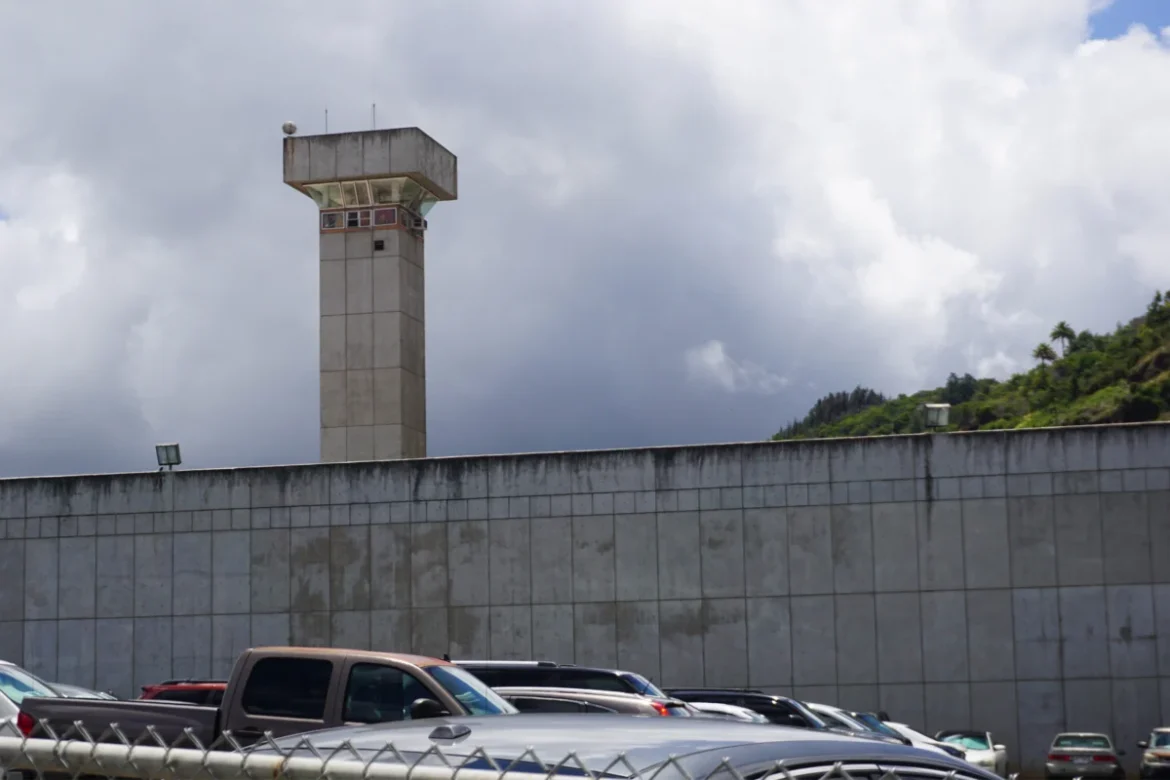
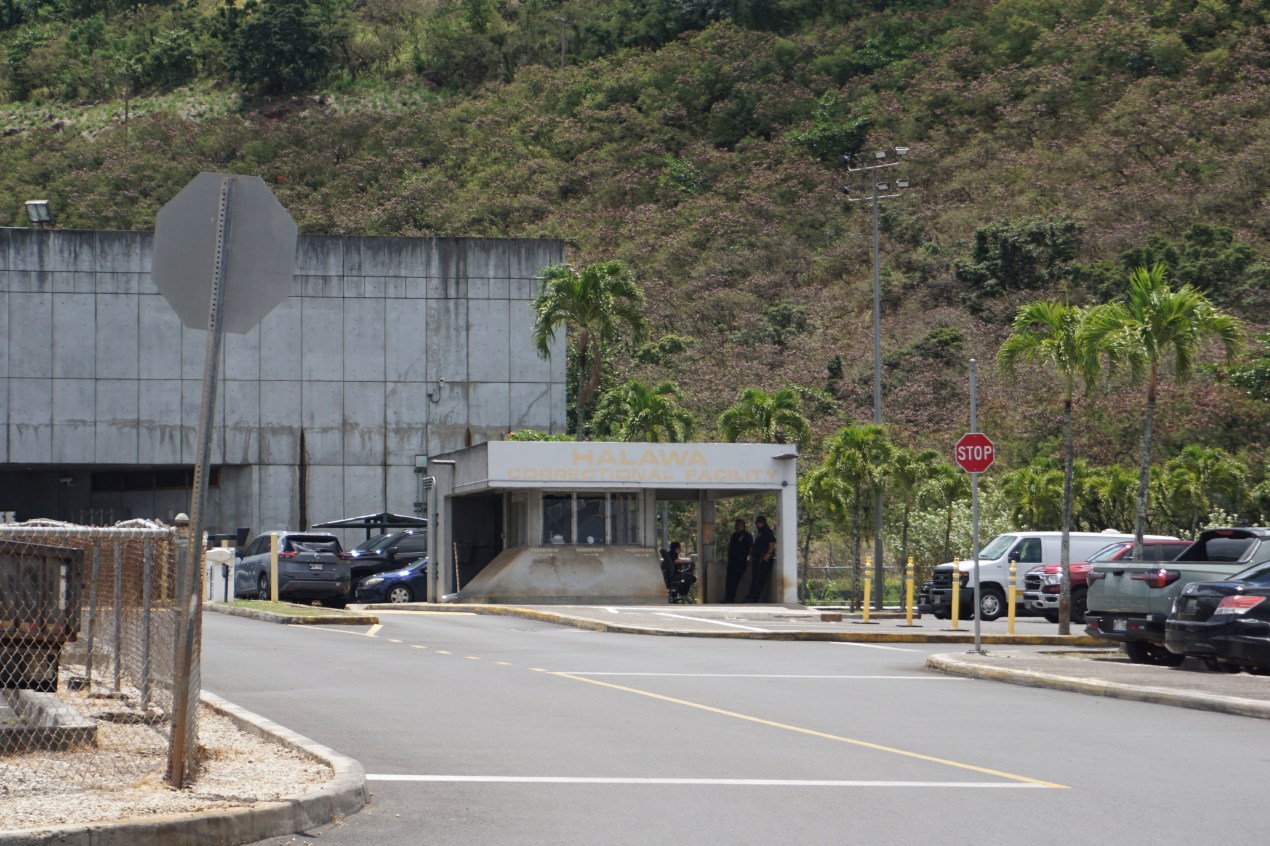
Christian Alameda, a 52-year-old inmate at the Halawa Correctional Facility in Honolulu, awoke in his cell, the morning’s light a stark contrast to the dim infirmary where he had been recovering. A cane, his newfound support, helped him push himself upright, a laborious effort that underscored the reality of his condition: a stroke in January had left the right side of his body largely paralyzed. His hope for a swift transition to care outside prison walls had been ignited in February when Hawaii’s parole board granted him compassionate release. This provision, designed for individuals with severe medical conditions, offered a lifeline, an opportunity to receive necessary medical attention beyond the confines of correctional healthcare. Yet, Alameda remained incarcerated, a prisoner of circumstance, as no long-term care facility was willing to accept him.
His plight is not an isolated incident. As of June, the state parole authority confirmed that at least three other prisoners, similarly granted release to address critical medical needs, were indefinitely housed in the prison infirmary. The common, insurmountable barrier? A refusal by long-term care facilities to admit them, primarily due to their criminal backgrounds. This systemic failure to integrate medically vulnerable former inmates into community care settings is a growing concern, echoing a nationwide challenge.
The Waning Promise of Compassionate Release
Compassionate release, also known as medical parole or medical release, is a mechanism available in every U.S. state, allowing for the early release of incarcerated individuals due to severe medical conditions, terminal illness, or advanced age. While Hawaii is unique in its reliance on an internal policy rather than specific legislation, the intent remains the same: to provide dignity and appropriate care for those who can no longer serve their sentences meaningfully within a correctional environment. These individuals often require specialized care in assisted living centers, nursing homes, or hospice facilities, services not typically provided by prisons.
However, the optimistic promise of compassionate release frequently collides with a harsh reality: a significant number of long-term care facilities nationwide are unwilling to accept patients with a history of incarceration. This reluctance results in individuals remaining imprisoned for months, and sometimes even years, after their release has been legally sanctioned.
The scope of this issue is far-reaching. In Rhode Island, a study revealed a dramatic surge in nursing home rejections when potential patients were identified as having come from prison. Similarly, in Colorado, prisoners with extensive medical needs experienced an average delay of 200 days post-parole before securing placement, a consequence of widespread denials from long-term care centers. In New York, the situation escalated to the point where prisoners granted parole were compelled to file lawsuits against the state, citing their inability to find nursing home accommodations.
Shifting Healthcare Policies and Financial Hurdles
Adding another layer of complexity to this crisis is the impact of federal healthcare policy. President Donald Trump’s "One Big Beautiful Bill Act," enacted in the summer of 2025, has inadvertently placed additional strain on long-term care providers’ capacity to accept individuals transitioning from incarceration. A key element of this legislation relates to Medicaid reimbursement. Prisoners do not qualify for Medicaid while incarcerated, necessitating applications for the program upon release. However, the act significantly reduced the window for facilities to receive retroactive Medicaid reimbursements for new patients, shrinking it from three months to as little as 30 days prior to application. This creates a substantial financial risk for facilities, as they may not be compensated for care provided during the period before the patient’s Medicaid application is approved within the tightened timeframe.
Timothy Foster, a spokesperson for the Centers for Medicare & Medicaid Services (CMS), acknowledged the challenges, stating, "CMS encourages providers and beneficiaries to prioritize timely application submission to maximize coverage." Yet, for parolees, navigating this complex application process while grappling with severe medical needs and the stigma of their criminal record presents a formidable obstacle.
The "Risk Is Just Too High" Barrier
The reluctance of long-term care facilities is not solely a financial concern; it is deeply rooted in perceptions of risk and a lack of resources. A 2024 report by the American Health Care Association and the National Center for Assisted Living highlighted that most nursing homes nationwide already face lengthy waiting lists for new residents. This existing backlog further exacerbates the challenge of placing individuals transitioning from prison.
Bob Merce, a former attorney and advocate for prisoners’ compassionate release, often finds himself attempting to assuage the fears of nursing home administrators. "We tell the nursing homes that most of the people who we are talking about cannot hurt somebody," Merce explained, underscoring the non-violent nature of many individuals seeking release for medical reasons.
However, the reality within correctional infirmaries can be stark. In June, several prisoners at Halawa’s infirmary required significant assistance, unable to walk or dress themselves independently. Some struggled with memory loss, while others with advanced conditions like brain cancer could not coherently respond to inquiries. These profound medical needs, coupled with the institutional history, create a difficult calculus for care providers.
Sean Sanada, the Oʻahu Region CEO for Hawaii Health Systems Corp., which oversees state-funded long-term care facilities Leahi Hospital and Maluhia, confirmed that while his system has reviewed numerous compassionate release referrals, they have never accepted any. Sanada emphasized that the decision is not based on discrimination but on critical concerns for staff safety and the availability of adequate resources to manage patients with complex needs. "The risk is just too high in most of those instances," Sanada stated, reflecting a sentiment shared by many in the long-term care sector.
The documented rise in violent incidents within long-term care facilities nationwide further fuels these anxieties. A 2024 study observing 14 assisted living facilities found that 15% of residents experienced aggression from other residents within a single month. This backdrop of resident-to-resident aggression, often linked to conditions like dementia, creates an environment where facility administrators are acutely aware of the potential for harm and the challenges of managing behavioral issues.
The Financial Burden on Taxpayers
When long-term care facilities refuse to accept prisoners granted compassionate release, the financial burden shifts squarely onto state taxpayers. According to FAMM, the annual cost of incarcerating an individual with complex medical needs in Hawaii can be up to eight times the average cost of housing a person in prison, which stands at approximately $112,505. In contrast, the average Medicaid reimbursement for a long-term care patient at a Hawaii Health Systems Corp. facility hovers around $135,000 annually. This disparity highlights a significant financial inefficiency, where keeping medically vulnerable individuals incarcerated proves to be a more expensive proposition than providing them with community-based care.
A Patchwork of Solutions: Contracted Care and Family Intervention
In an effort to address this growing chasm, four states—Connecticut, Georgia, Massachusetts, and Vermont—have proactively entered into contracts with nursing facilities to accept prisoners granted compassionate release. iCare Health Network’s MissionCare Health, a provider operating nursing homes specifically for individuals transitioning from prison, has secured contracts in three of these states. David Skoczulek, iCare’s vice president of business development and communication, estimates that their daily rates are between $100 and $350 higher per patient than average nursing home rates in their operational states, reflecting the specialized care and increased risk management involved.
In Hawaii, the process for compassionate release typically begins with recommendations from the correctional department to the parole board, which then makes the final decision. Successful candidates can be released to family members willing and able to provide care, or to a long-term care facility. However, Corey Reincke, head of the Hawaii Paroling Authority, noted that in his 24-year career, he could not recall a single instance of a prisoner being placed in a long-term care facility without significant family intervention, often involving family members directly contacting facilities.
"Parole has to find a facility that can meet their medical needs and is also willing to take them," Reincke stated. "That’s where we’re hitting the roadblocks." He recounted calling over 100 care homes for one parolee, all of whom declined due to safety concerns. Despite Hawaii’s long-term care facilities operating at approximately 80% of their bed capacity, workforce shortages make maintaining even these levels challenging, further limiting options for these vulnerable individuals.
The Vital Role of Family Support
For many prisoners seeking compassionate release, family becomes the last, and often only, resort. The story of Paul Kupihea, a 69-year-old man, illustrates this poignant reality. He died in a hospital just five days after being granted compassionate release to his family, his passing occurring before he could travel to his home island. Diagnosed with an incurable form of cancer while still in custody, Kupihea’s condition worsened, prompting his family to intervene.
His daughter, Lahela Kruse, and her child flew to Oʻahu upon learning of his critical state. Kupihea’s daughter agreed to take him into her home in Hilo, despite having a strained relationship with her father for much of her life. "She knew he was sick," Kruse recalled, "but she didn’t know the severity of it. I didn’t truly know." Her daughter’s willingness to provide care was the catalyst for his compassionate release. However, Kruse lamented that the notification of Kupihea’s grave illness came too late to allow for a smoother transition to community care.
Molly Crane, an attorney with FAMM, has been actively advocating for the expansion of compassionate release laws nationwide, aiming to broaden eligibility criteria and enhance transparency in the process. Hawaii lawmakers have made repeated attempts to pass legislation formalizing compassionate release, but these efforts have yet to succeed. Crane emphasizes that without a clear statutory framework outlining a formal process and defined eligibility, even robust family support may prove insufficient. The absence of such legislation, she argues, leaves individuals languishing and, in some tragic cases, dying in prison, unable to access the care they desperately need.
A Systemic Failure with Human Consequences
Back in Christian Alameda’s cell at Halawa Correctional Facility, the stark reality of his confinement persists. The cramped space, characterized by a functional but basic toilet and a window offering a view of concrete, is a stark contrast to the care he requires. Alameda, who has been incarcerated since 2024 for drug possession, driving a stolen vehicle, and jumping bail, expresses regret for his past mistakes. His primary motivation for change is his daughter, who recently turned five. "I made some mistakes in my life," Alameda stated, his voice tinged with a mix of remorse and hope. "I tried when my daughter was born, but I know I’ll change, because she needs me out of here."
Merce, the former attorney, continues his tireless efforts to find a placement for Alameda, a man who committed no violent offenses. Having witnessed firsthand the struggles of prisoners seeking medical release, Merce has successfully facilitated the transition of approximately 15 individuals from Hawaii’s correctional facilities to medical care. However, the cases that weigh most heavily on him are those where he was unable to secure placements, leaving individuals trapped in a system that failed to meet their most basic needs. The systemic breakdown in compassionate release is not merely a bureaucratic issue; it represents a profound human crisis, leaving vulnerable individuals in a state of prolonged suffering and indignity, their pleas for care unheard and unanswered by the very systems designed to provide it.