
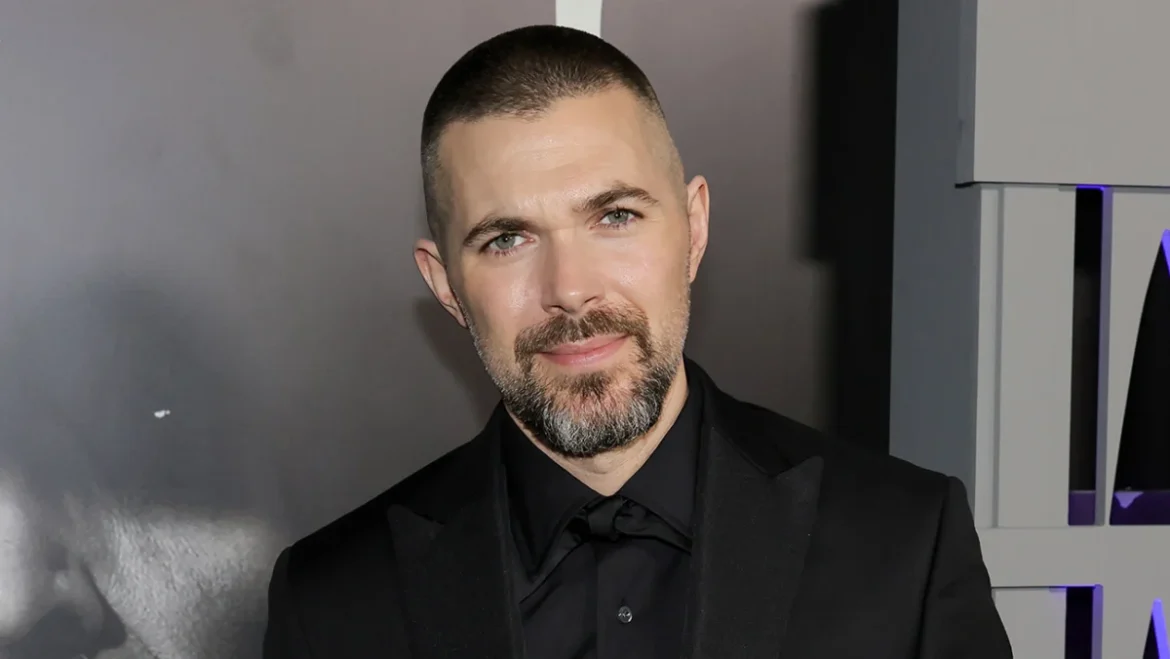
For over a decade, acclaimed filmmaker Robert Eggers has cemented his status as a modern master of cinematic dread, conjuring historical nightmares populated by colonial witches, seafaring madness, and gothic vampires. However, after years of bringing visceral terror to the silver screen, the director has announced that he is ready to step away from the genre that defined his meteoric rise. Speaking during a recent question-and-answer session in Mexico, Eggers admitted to feeling the weight of his own cinematic legacy, signaling that his upcoming holiday release will likely be his final foray into outright horror for the foreseeable future.
The announcement arrives just as anticipation reaches a fever pitch for Eggers’ latest feature, Werwulf, slated for a Christmas Day theatrical release. Distributed by Focus Features, the film transports audiences to 14th-century England, tracking a remote medieval village terrorized by a predatory beast that threatens a family, notably played by Aaron Taylor-Johnson alongside Lily-Rose Depp and franchise regular Willem Dafoe. Despite the immense excitement surrounding Werwulf, Eggers candidly told his audience that he is eager to break away from the expectations of constructing his own brand of terror. "I’m eager not to continue purposely doing Robert Eggers’ House of Horror," the director remarked, adding that while he does not necessarily feel compelled to helm traditional monster franchises like The Mummy or The Phantom of the Opera down the line, a substantial intermission from the genre is desperately needed.
A Chronology of Terror: Eggers’ Path Through the Macabre
To understand the weight of Eggers’ decision to step back, one must look at the meticulously crafted filmography that established him as a premier voice in modern auteur-driven horror. Eggers burst onto the international scene in 2015 with The Witch, a slow-burn, atmospheric masterpiece set in 17th-century New England that explored religious hysteria, isolation, and folkloric evil through an uncompromising historical lens. The film grossed over $40 million worldwide against a modest budget of $4 million, instantly launching Eggers into the upper echelon of independent genre directors and earning widespread critical acclaim for its historical authenticity and chilling tone.
Following his breakout success, Eggers pivoted to the shores of late-19th-century New England for 2019’s The Lighthouse. Starring Willem Dafoe and Robert Pattinson as two lighthouse keepers descending into violent psychological madness, the film was shot on 35mm black-and-white stock utilizing vintage photographic lenses. The Lighthouse grossed approximately $18 million globally and further solidified Eggers’ reputation for uncompromising aesthetic rigor, historical vernacular, and psychological torment.
After stepping slightly outside the traditional horror boundaries to direct the sweeping, Viking-era epic The Northman in 2022—which, while possessing dark and violent motifs, functioned more as a mythological action-adventure than horror—Eggers returned full-throttle to the genre with 2024’s Nosferatu. His long-awaited reimagining of the classic vampire mythos brought gothic horror back to the mainstream consciousness, pushing box office boundaries and earning universal praise for its suffocating atmosphere and technical mastery. Taken together, Eggers’ filmography represents a cohesive, albeit punishing, exploration of human fear rooted deeply in historical texture.
Weighing In on the "Elevated Horror" Discourse
During his recent appearances and retrospective discussions, Eggers also turned his critical eye toward the contemporary film landscape, specifically addressing the polarizing industry buzzword: "elevated horror." The term, frequently debated by critics and audiences alike over the past decade, attempts to distinguish prestige horror films—often distributed by companies like A24 or Neon—from traditional, commercial slasher or monster movies.
Eggers offered a nuanced perspective on the phenomenon, arguing that while the moniker itself is largely a marketing construct, the underlying shift in filmmaking is real and driven by artistic pragmatism. He pinpointed the mid-2010s as the true catalyst for this movement. "There’s always been horror movies that don’t suck and there’s always been horror movies that are actually probing what darkness is in humankind, and even some of them that have been profound throughout the ages," Eggers explained to his audience. "But what you guys are talking about is something that I think really started with [2014’s] It Follows. Although Ti West was doing this kind of work before then."
Elaborating on the economic and creative mechanics behind this wave, Eggers noted that many visionary auteurs have cleverly utilized genre frameworks to secure financing for deeply personal projects. "There’s been a whole lot of filmmakers that have wanted to make personal films, really talented filmmakers with unique voices, and have realized that they can get financing if they do it as a genre film," he observed. "And I think that’s kind of what this is: people who are telling personal stories with unique voices but are doing it through genre."
At the same time, the director was careful not to dismiss traditional, commercially driven horror franchises, acknowledging the massive cultural footprint and financial success of modern masterworks like James Wan’s Insidious and The Conjuring universes. Ultimately, Eggers concluded that while "elevated horror" may be an industry-invented term, it exists primarily because critics and audiences have willed it into existence due to an undeniable, sustained public hunger for dark cinematic storytelling over the past ten years.
A Shakespearean Intermission: What Lies Next for the Director
Even as he steps away from the monsters, witches, and werewolves that defined his early career, Eggers is showing no signs of slowing down his creative output. Rather than taking a leisurely vacation from filmmaking entirely, the director’s next major project represents a sharp tonal pivot into classic theatrical drama: an adaptation of William Shakespeare’s Romeo and Juliet for Focus Features.
The seeds for this unexpected transition were planted during a post-screening Q&A session at Beyond Fest earlier this fall, where Eggers offered a characteristically dry and humorous explanation for how the project came to be. Having completed Werwulf, Eggers revealed that he immediately began drafting a script for another horror feature, only to find the material taking an intensely grim turn.
"I was doing something else," Eggers shared with the Beyond Fest audience. "But what happened was, after Werwulf, I was writing another horror movie, and it got so dark again, and I was like, ‘I need a break. So, I’ll do something about two teenagers killing themselves.’"
This tongue-in-cheek summation of Shakespeare’s ultimate tragedy highlights the filmmaker’s self-awareness regarding his predilection for bleak, high-stakes narratives. While Romeo and Juliet deals heavily in death, poison, and despair, it allows Eggers to step outside the explicit boundaries of the horror genre while retaining the theatrical grandeur, heightened language, and fatalistic inevitability that have characterized his historical explorations thus far.
Broader Impact and Industry Implications
Eggers’ temporary departure from horror carries notable implications for the independent and mid-budget film sectors. Over the past decade, auteur-driven genre cinema has served as a reliable engine for studios and specialty distributors looking to capture both critical acclaim and profitable theatrical runs. Filmmakers like Eggers, Ari Aster, Jordan Peele, and Robert Eggers have proven that audiences are willing to show up for challenging, original R-rated features that do not rely on established superhero intellectual property.
When a foundational voice like Eggers hits the pause button on the genre, it opens up space for emerging voices to claim the spotlight, even as fans mourn the temporary absence of his singular aesthetic. Furthermore, his transition to Shakespearean tragedy via Romeo and Juliet tests whether his intensely atmospheric, detail-oriented directorial style can revitalize classic literary adaptations for contemporary audiences in the same way his horror films redefined period-piece dread.
As the industry prepares for the December 25 release of Werwulf, moviegoers can take comfort in the knowledge that while Robert Eggers may be locking the doors to his cinematic House of Horror, his uncompromising artistic vision is simply evolving. Whether navigating the muddy forests of 14th-century England or the Verona streets of Shakespearean tragedy, Eggers remains one of modern cinema’s most unpredictable and thrillingly distinct storytellers.
