
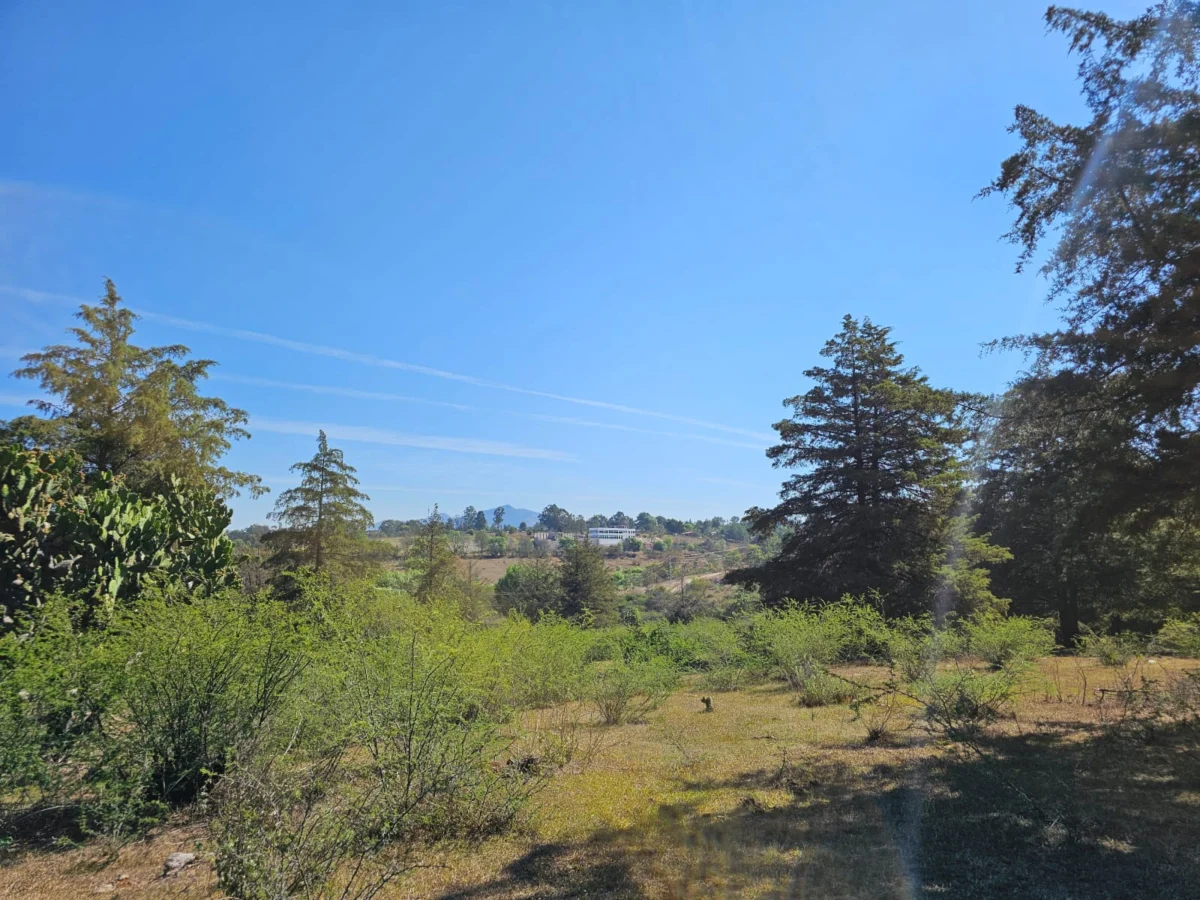
In the heart of Mexico’s southwestern state of Michoacán, the city of Uruapan stands as a testament to both the natural beauty of the region and the encroaching industrial pressures of global agriculture. Juan Madrigal, a long-time resident and founder of the nonprofit educational center Ecocentro del Río Cupatitzio, spends his days organizing efforts to protect a 50-hectare (124-acre) urban ecological park. This plot of land, situated at the edge of the Río Santa Bárbara, has been a state-protected area since 1995. Its marshlands serve a vital ecological function, purifying the surrounding Cupatitzio watershed where nine natural springs provide drinking water to approximately half a million people.
However, the park is increasingly a victim of neglect and systemic environmental degradation. Madrigal reports that the habitat—home to the ruddy-capped nightingale-thrush (Catharus frantzii), the endangered Michoacán pocket gopher (Zygogeomys trichopus), and the endemic Pátzcuaro frog (Lithobates dunni)—is under threat. According to Madrigal, local authorities have historically failed to provide the necessary oversight, leaving the burden of conservation to grassroots citizen movements. This movement gained significant traction when it began to include downstream ranchers who grow fruit and corn. These agricultural workers realized that the native forests are the primary regulators of the water cycle; without the trees, the springs that sustain their livelihoods would inevitably vanish. Yet, for the dominant industry in Michoacán, a different logic applies: without massive quantities of water, there are no avocados.
The Rise of the Green Gold Empire
Michoacán is the world’s leading producer of avocados and the only region on the planet where the fruit is harvested year-round. This agricultural dominance is often referred to as the "Green Gold" rush, a phenomenon that has brought immense wealth to some but at a staggering cost to the environment. Between 1993 and 2023, avocado orchards replaced nearly 700,000 hectares (1.7 million acres) of native tree cover. To put this into perspective, the deforested area is approximately three times the size of the municipality of Cape Town.
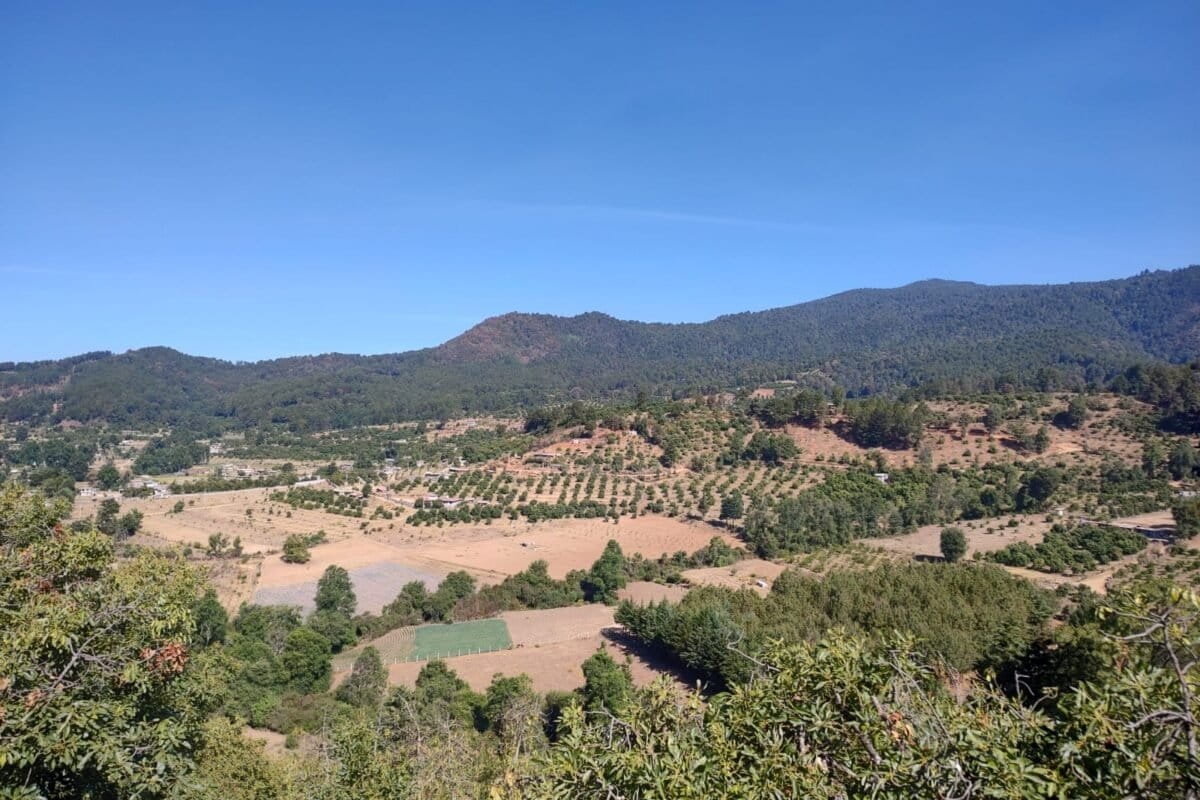
The catalyst for this expansion was the 1997 opening of the United States export market for Hass avocados. Prior to this, phytosanitary concerns had kept Mexican avocados out of the lucrative U.S. market for decades. Once the ban was lifted, the demand skyrocketed, leading to a radical transformation of the Michoacán landscape. The rapid expansion has not only decimated forests but has also invited the presence of organized crime syndicates, which now exert control over various stages of the avocado supply chain, from land acquisition to protection rackets.
A Chronology of Avocado Expansion and Policy Shift
The environmental crisis in Michoacán has unfolded over several decades, marked by key milestones in trade and land use:
- 1993: Foundation of Ecocentro del Río Cupatitzio by Juan Madrigal to combat local environmental neglect.
- 1995: The Uruapan urban ecological park is officially declared a state-protected area.
- 1997: The U.S. Department of Agriculture (USDA) lifts the import ban on Mexican Hass avocados, initiating the "Green Gold" boom.
- 2001–2018: A critical period of expansion during which soil moisture in high-productivity areas begins to drop at an alarming rate of 38 liters per cubic meter annually.
- 2018–2025: An estimated 20,000 hectares of native tree cover are destroyed specifically for new avocado plantations.
- 2024: A historic drought year leads to the discovery of approximately 4,000 unauthorized water collection ponds ("hoyas") across the state.
- January 2026: Major industry associations pledge that avocados grown on illegally deforested land will no longer be eligible for export to the United States.
The Hydrological Crisis: Drying from the Ground Up
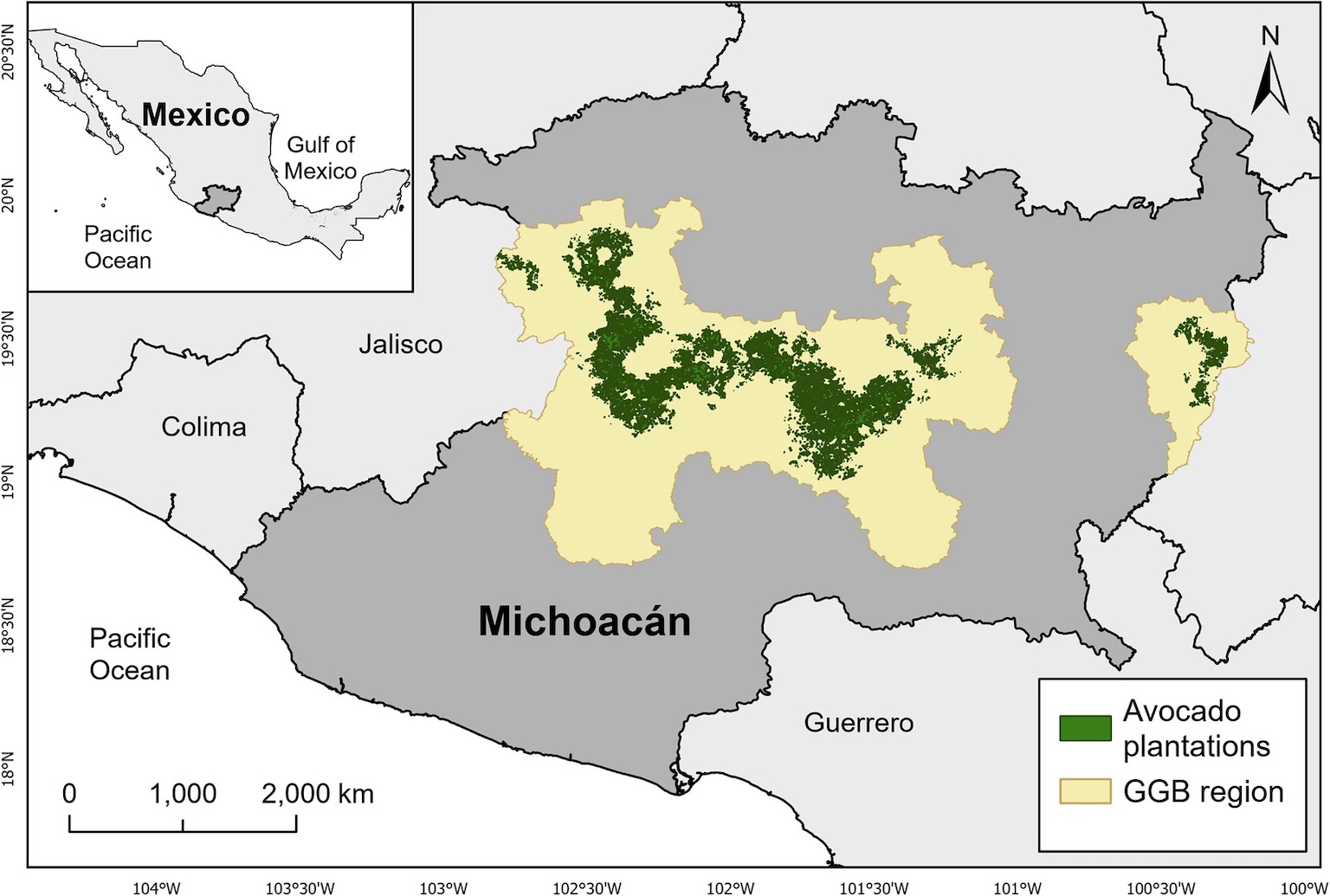
The most invisible but perhaps most dangerous consequence of the avocado boom is the depletion of soil moisture. A study published in March in the journal npj Sustainable Agriculture focused on Michoacán’s "Green Gold Belt" (GGB), the area with the highest industrial avocado production in the world. The researchers found that between 2001 and 2018, the region lost a total of 68.4 billion liters of topsoil moisture.
Alma Vázquez-Lule, a study co-author and researcher at the National Autonomous University of Mexico (UNAM), notes that this loss is equivalent to depriving approximately 110,000 people of the optimal daily quantity of water every year. If using the World Health Organization’s metric for basic water access (20 liters per day), the impact reaches half a million people annually—roughly 11.3% of the state’s population.
Avocado trees are notoriously thirsty. In hot climates, a single tree requires around 45 liters of water per day in the spring, which can surge to 220 liters per day during the summer months. To ensure a steady supply during Michoacán’s six-month dry season, producers have constructed thousands of human-made ponds, or hoyas. In 2024, the mayor of Pátzcuaro identified 800 illegal water collection points surrounding the Pátzcuaro lakebed alone. These ponds prevent rainwater from reaching ravines, rivers, and lakes, effectively privatizing the state’s water supply for industrial use.
Ecological Collapse and the Decline of Biodiversity
The environmental strain is evident in the region’s major bodies of water. Lake Pátzcuaro and Lake Cuitzeo, both critical sanctuaries for migratory birds and home to endemic species like the achoque (Lake Pátzcuaro salamander), have halved in size over the last 40 years. This shrinkage is exacerbated by the removal of the forest’s leaf litter layer, which usually acts as a sponge to retain moisture. Without it, groundwater evaporates more quickly, soil bacterial communities are disrupted, and the entire water cycle is altered.
Arturo Chacón Torres, a limnologist at the University of Michoacán, describes the avocado as a "plague" that threatens the very existence of the forest. He points out that the Oyamel fir (Abies religiosa) population, famous for hosting monarch butterflies, has severely declined due to recent droughts. As soil moisture vanishes in traditional growing areas, avocado producers are pushing their orchards higher onto steeper slopes, further encroaching on primary forests that are essential for water generation.
Socio-Political Tensions and Indigenous Resistance
The crisis has sparked a fierce reaction from local communities, particularly indigenous groups who see their ancestral lands being devastated. On May 5, the Supreme Indigenous Council of Michoacán, representing 80 communities including the P’urhépecha, Otomí, and Nahua peoples, issued a direct notice to the avocado industry. They lamented the "accelerated environmental degradation" and called for an immediate halt to the expansion of orchards into protected territories.
In response to these criticisms, the Agricultural Association of Avocado Producers of Uruapan issued a statement claiming that the academic studies contribute to a narrative that discredits the sector. They have requested that future research distinguish between "historical producers"—those operating before the 1997 boom—and newer, potentially less regulated actors. They have also called on the government to do more to stop illegal deforestation.
Government Intervention and the "Forest Guardian"
The state government has attempted to mitigate the damage through technological intervention. The "Guardián Forestal" (Forest Guardian) is a digital platform that uses satellite imagery to monitor land-use changes in real-time. Since its inception, it has generated over 1,000 reports of illegal deforestation and has been used to block orchards on deforested land from using certified packing houses for export.
Additionally, the Proforest Avocado certification, introduced by the Michoacán governor in 2024, aims to identify orchards that have not engaged in deforestation since 2018. However, environmentalists argue that the 2018 threshold is too recent. Satellite data provided by Vázquez-Lule shows significant land-use changes occurring as early as 2011, meaning many plantations that caused massive ecological damage are now being "grandfathered" into sustainability certifications.
Broader Impact and Future Implications
The future of Michoacán’s environment remains precarious. While Mexico’s avocado exports are forecast to triple by 2030, the USDA predicts that rainfall in Michoacán could decrease by up to 15% over the next three decades due to climate change. This creates a collision course between industrial growth and ecological survival.

For long-time growers like Arturo Troyo, who has managed an 18-hectare orchard near Uruapan for 40 years, the changes are palpable. Troyo notes that he never used to have to water his avocado trees, but the 2024 drought was so severe that it took two years for his trees to recover. He now finds himself giving smaller tree trunks "emergency showers" to keep them alive. "I’ve spent a big part of my life working in this," Troyo said, "but different things are happening because of climate change."
Experts like Chacón Torres argue that the only way forward is a radical shift in how the industry is regulated. He suggests moving away from a continuous "avocado belt" toward an "avocado mosaic," where cultivation is prohibited on steep slopes and integrated with environmental impact studies. Furthermore, producers may soon be required to offset their impact by replanting native forests in proportion to the size of their orchards.
As the global appetite for avocados continues to grow, the burden of that demand is being borne by the soil, the water, and the people of Michoacán. The transition from a lucrative "Green Gold" rush to a sustainable agricultural model is no longer just an environmental ideal; it is a necessity for the region’s continued survival. Without immediate and stringent land-use planning, the very industry that brought wealth to the state may eventually leave it parched and barren.

