
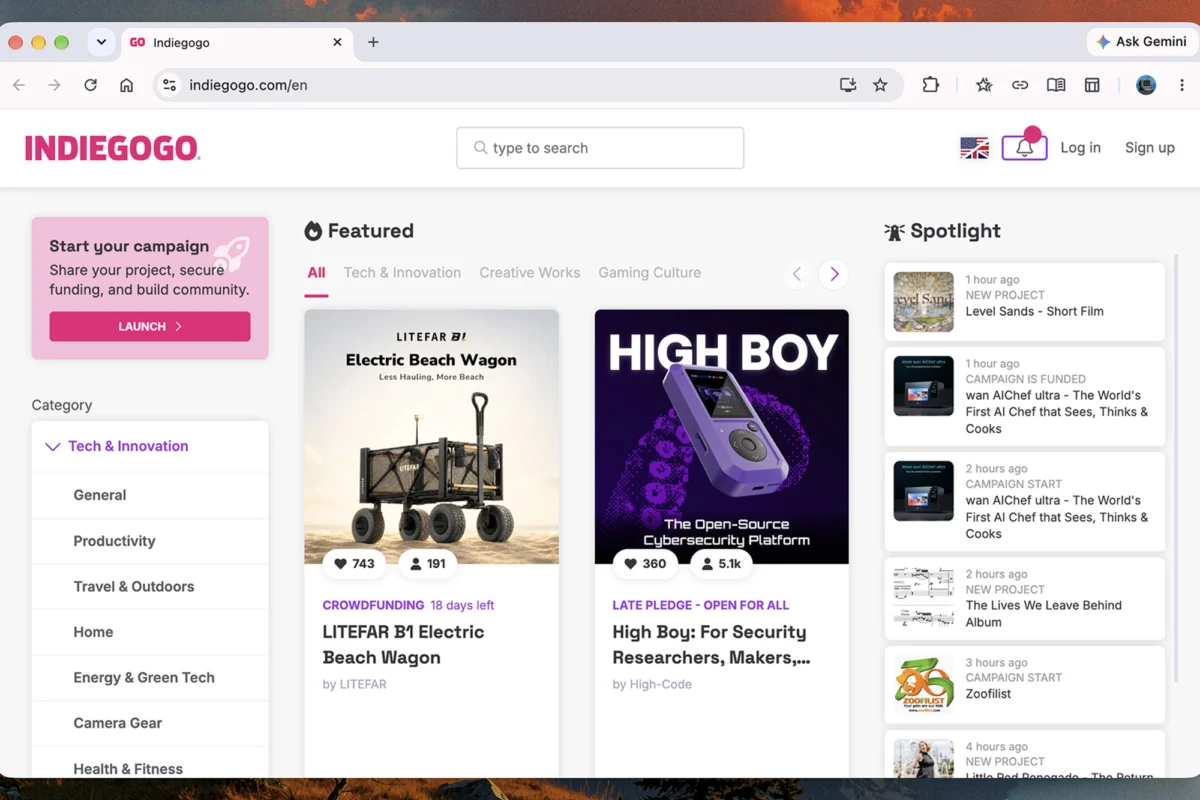
The landscape of consumer electronics is shifting away from the exclusive domain of established tech giants like Apple, Google, and Samsung, moving toward an ecosystem defined by rapid innovation, agile startups, and direct-to-consumer funding models. Platforms such as Kickstarter and Indiegogo have democratized the product development process, allowing individual creators and small businesses to bypass traditional venture capital and retail gatekeepers. This evolution has transformed these websites into primary hubs for cutting-edge hardware, ranging from high-fidelity audio equipment and AI-driven robotics to sustainable energy solutions. However, the transition from a digital pitch to a physical product is fraught with logistical challenges, financial risks, and market uncertainties.
The Evolution of the Crowdfunding Model
Crowdfunding represents a fundamental shift in the economic lifecycle of a product. Traditionally, companies invested millions in R&D and manufacturing before a single unit reached the shelf. In the contemporary crowdfunding model, the financial burden is shared with early adopters. By pledging capital during the development phase, consumers essentially act as micro-investors. In exchange, they receive the product—often at a significant discount—once it reaches the production line.
The roots of this model can be traced back to the late 2000s. Kickstarter launched in 2009 with a focus on creative projects, while Indiegogo followed shortly after, establishing a more open-ended platform that allowed for diverse project types, including technology and social causes. According to data provided by industry analysts, the global crowdfunding market size was valued at over $17 billion in 2023 and is projected to maintain a compound annual growth rate (CAGR) of approximately 15% through 2030. This growth is driven by the increasing appetite for bespoke, niche technology that mass-market retailers often ignore.

Chronology and Lifecycle of a Project
For a project to succeed on these platforms, it must navigate a clearly defined lifecycle. First, creators must develop a Minimum Viable Product (MVP), which serves as the proof-of-concept for their pitch. The campaign duration is typically set between 30 and 60 days. During this window, the project must hit a predefined financial goal.
If the goal is met, the "production" phase begins. This is where most failures occur. Statistics from platforms indicate that while the vast majority of projects reach their funding goals, the delivery timeline often faces significant delays. Industry observers note that approximately 10% to 15% of funded hardware projects fail to deliver a final product entirely. The reasons for these failures are diverse: supply chain disruptions, underestimated manufacturing costs, and the technical hurdles inherent in scaling from a handmade prototype to mass-produced consumer electronics.
Data-Driven Analysis of Success and Risk
A critical examination of historical data reveals that success is not randomized. Projects that include high-resolution video demonstrations of the hardware, transparent timelines, and detailed breakdowns of manufacturing costs show a 40% higher success rate than those that do not. Furthermore, the presence of an experienced team—individuals with verifiable histories in electrical engineering or industrial design—serves as a primary indicator of viability for potential backers.
Conversely, "over-promising" is the leading cause of campaign collapse. When creators promise features that push the boundaries of current material science or software integration without providing a clear engineering roadmap, the risk of failure increases exponentially. Financial experts suggest that backers should view their pledges as "high-risk support" rather than a traditional retail transaction. Unlike purchasing an item from an established retailer, there is no inherent consumer protection guarantee if a campaign fails to deliver, as the transaction is categorized as a contribution to a project rather than a purchase of goods.

The Role of Regulatory and Platform Oversight
While Kickstarter and Indiegogo provide the infrastructure, they maintain a "hands-off" approach regarding the ultimate responsibility of the project creator. In the event of a project failure, the platform provides limited avenues for recourse. In recent years, both platforms have implemented more rigorous identity verification processes for creators to mitigate the risk of fraudulent campaigns.
Official statements from these organizations emphasize that they act as facilitators of communication between creators and backers. However, they stop short of guaranteeing the technical success or the quality of the final hardware. This leaves the burden of due diligence squarely on the consumer. The lack of standardized oversight remains a point of contention among consumer advocacy groups, who argue that as these platforms mature, they should adopt higher transparency requirements regarding financial audits of funded campaigns.
Broader Implications for the Tech Industry
The rise of crowdfunded hardware has forced established tech manufacturers to rethink their R&D strategies. Many large firms have begun using these platforms to test public interest in experimental products before committing to a full-scale retail launch. For example, brands like Ultrahuman have leveraged Kickstarter to build a dedicated community of "pro-users" who provide feedback during the beta-testing phase. This "co-creation" model allows firms to iterate on designs based on real-world usage data before the product ever hits a retail store.
Beyond the hardware itself, the ecosystem has created a secondary market for independent designers. It has fostered a culture where consumers feel empowered to influence the trajectory of technology. Yet, this culture also necessitates a new level of digital literacy. Consumers must learn to distinguish between a functional prototype and a speculative rendering. The ability to read through technical specifications, analyze the feasibility of a production schedule, and assess the past performance of a startup is now a prerequisite for the modern gadget enthusiast.

Strategic Best Practices for Backers
To minimize risk, potential backers should adhere to a strict set of evaluation criteria. First, scrutinize the "risks and challenges" section of the campaign page. If a creator fails to acknowledge potential manufacturing delays or component sourcing issues, it is often a sign of inexperience. Second, search for third-party reviews. Many tech journalists now receive early access to prototypes from successful campaigns. If a project has been reviewed by a reputable source, it significantly bolsters its credibility.
Third, investigate the team’s portfolio. Have they successfully delivered previous projects? Do they have a web presence outside of the crowdfunding platform? A company that exists only on a campaign page is inherently more risky than one with a established brand identity. Finally, consider the price point. If an item is being offered at a price that seems too good to be true compared to existing market alternatives, it is likely that the creators have not accurately accounted for the costs of mass production, safety certifications, and international shipping.
The Future of Innovation
As we move toward the latter half of the decade, the line between crowdfunding and traditional product launches will likely continue to blur. We are seeing a trend toward "hybrid" launches, where companies use crowdfunding to gauge demand and then move seamlessly into traditional retail channels. This integration provides a safety net for the consumer while maintaining the spirit of innovation that these platforms were built upon.
The democratization of technology development is, on balance, a positive advancement. It allows for the rapid testing of ideas that would otherwise never leave the laboratory. While the inherent risks of the crowdfunding model will always exist, the tools available for the discerning consumer are better than ever. By focusing on transparency, verifying the engineering pedigree of the team, and maintaining a healthy dose of skepticism regarding delivery timelines, the modern tech enthusiast can participate in the next wave of innovation safely and effectively. The future of consumer tech is no longer being dictated solely by the boardroom; it is being shaped by those willing to support the next big idea, one pledge at a time.

