
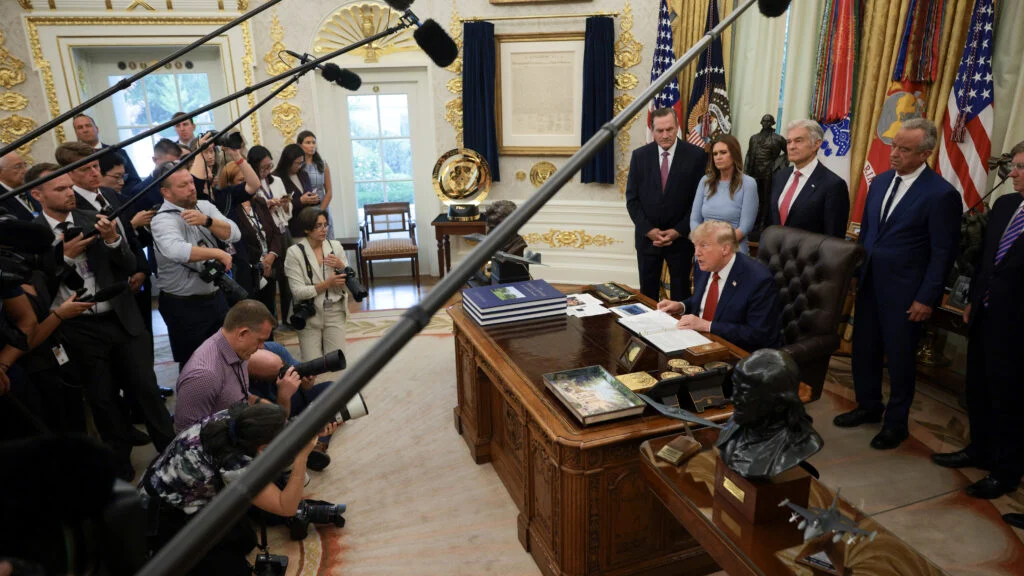
WASHINGTON — President Trump announced a significant new federal initiative on Friday, dubbed the GENEROUS model, designed to fundamentally alter how Medicaid programs across the United States negotiate and procure pharmaceutical products. The administration positioned the program as a landmark effort to lower drug prices for vulnerable populations; however, the rollout was immediately met with a mix of administrative confusion and calls for greater transparency regarding the specific mechanisms of the proposal.
While the President stated during his briefing that all 50 states, the District of Columbia, and Puerto Rico would participate in the model, the Centers for Medicare and Medicaid Services (CMS) later clarified that the landscape of participation remains a work in progress. According to official agency records, 40 states and Puerto Rico have formally signed agreements to participate, while the remaining jurisdictions are currently in the application phase. States have been granted until the end of the current month to finalize their participation, leaving a narrow window for local health departments to evaluate the long-term financial impacts of the federal mandate.
The Genesis and Objectives of the GENEROUS Model
The GENEROUS model represents the latest in a series of executive and legislative efforts aimed at addressing the rising tide of prescription drug costs, which have long been a focal point of national healthcare policy debates. Medicaid, the joint federal and state program that provides health coverage for low-income individuals, represents a massive portion of the nation’s pharmaceutical expenditure. Because Medicaid programs are often required to cover a wide array of treatments to meet federal mandates, states frequently find themselves at the mercy of volatile pricing set by pharmaceutical manufacturers.
The administration’s objective with GENEROUS is to create a more unified negotiation front. By centralizing certain aspects of drug payment and incentivizing states to align their procurement strategies, the White House hopes to leverage the collective purchasing power of the Medicaid population. The initiative seeks to shift the burden of rising costs away from the taxpayer and back toward a more competitive marketplace, theoretically compelling manufacturers to offer deeper rebates and price concessions.
Chronology of Implementation and Administrative Hurdles
The announcement on Friday followed months of quiet negotiations between the Department of Health and Human Services (HHS) and state-level Medicaid directors. The timeline of this initiative reflects a rapid push to finalize regulatory changes before the close of the fiscal period.
- Initial Policy Development (Early 2024): HHS officials began circulating frameworks for the GENEROUS model, focusing on value-based purchasing agreements and potential outcome-based rebates.
- Stakeholder Outreach (Mid-2024): CMS engaged in a series of closed-door briefings with state governors and health commissioners to discuss the potential integration of state drug formularies with federal price-control models.
- Formal Announcement (Friday): President Trump officially introduced the program, claiming universal participation as a cornerstone of his administration’s pharmaceutical pricing platform.
- Administrative Clarification (Late Friday): CMS updated the participation status, confirming that while 40 states and Puerto Rico have officially joined, 10 states remain in the application process.
- Deadline for Finalization: States have until the conclusion of the current month to execute binding participation agreements, creating a high-pressure environment for local budget officials.
Supporting Data: The Medicaid Cost Burden
To understand the stakes of the GENEROUS model, one must look at the macro-economic data surrounding Medicaid drug spending. According to the Medicaid and CHIP Payment and Access Commission (MACPAC), net spending on prescription drugs in Medicaid has consistently risen over the past decade. Even after accounting for mandatory manufacturer rebates, the gross cost of specialty drugs—which account for a small percentage of prescriptions but a massive percentage of costs—has placed significant strain on state budgets.
In 2023, Medicaid spending on outpatient prescription drugs reached nearly $80 billion, representing an increase of approximately 6% over the previous year. This growth is driven largely by the introduction of high-cost gene therapies and complex biologics that were not present on the market a decade ago. The GENEROUS model is specifically designed to address this segment of the market, offering a framework for states to enter into "subscription-style" models or risk-sharing agreements where payment is tied to clinical efficacy rather than just volume.
Perspectives from the Field: State Responses
The reception to the announcement has been bifurcated. Many state officials have welcomed the prospect of federal support in negotiating prices, particularly for high-cost rare disease treatments. "Any tool that allows us to manage the unsustainable trajectory of pharmaceutical pricing is a welcome development," said a spokesperson for a state health agency, who requested anonymity due to the ongoing application process. "However, we need to ensure that this model does not inadvertently restrict access to essential medications for our most vulnerable patients."

Conversely, some industry analysts and healthcare policy experts have expressed skepticism regarding the speed of the rollout. By forcing states to sign agreements within a month, critics argue that the administration may be sacrificing the granular analysis required to ensure that such a model does not lead to unintended consequences, such as the disruption of existing state-run supplemental rebate programs.
Broader Economic and Clinical Implications
The implications of the GENEROUS model extend far beyond simple price tags. If successfully implemented, the model could shift the clinical paradigm toward value-based care. By requiring manufacturers to prove that their drugs provide tangible health outcomes to receive full payment, the federal government is effectively incentivizing the pharmaceutical industry to prioritize efficacy.
However, the pharmaceutical lobby has remained largely cautious. Trade groups have frequently warned that overly aggressive government price-setting could stifle innovation and reduce the pipeline of future drugs. They argue that the high cost of development, particularly for breakthrough therapies, requires a return on investment that current pricing models provide. If the GENEROUS model significantly compresses these margins, manufacturers might rethink their investment strategies for Medicaid-heavy therapeutic areas.
Furthermore, there is the question of the "innovation gap." If states are locked into a centralized model, will they lose the flexibility to design local programs that better suit their specific demographic needs? For example, a state with a high proportion of elderly Medicaid recipients may have different drug needs than a state with a younger population. The ability of the GENEROUS model to accommodate these local nuances will likely determine its long-term success.
Fact-Based Analysis of Regulatory Impact
From a regulatory perspective, the GENEROUS model represents a significant expansion of federal authority over state healthcare programs. Historically, states have enjoyed a significant degree of autonomy in how they manage their Medicaid formularies. By moving toward a standardized model, the administration is effectively centralizing the "buying power" of the Medicaid program.
This shift has legal implications as well. If the model mandates specific participation requirements that conflict with state statutes, it could trigger a wave of administrative challenges. Furthermore, the reliance on CMS to act as the primary negotiator for the entire country requires a high level of bureaucratic competency and data transparency. If the federal government fails to deliver on the promised price reductions, states may find themselves in a precarious position, having surrendered their individual negotiation leverage for a federal program that does not yield the expected results.
Looking Ahead: The Path to Integration
As the month-end deadline approaches, the focus will shift from the political announcement to the technical execution. The success of the GENEROUS model will depend on several critical factors:
- Participation Rates: Whether the remaining 10 states decide to join, and if so, whether they do so under protest or as full partners.
- Data Transparency: The willingness of CMS to share the specific methodology behind its price negotiations with the states.
- Manufacturer Cooperation: The extent to which pharmaceutical companies are willing to participate in these new value-based frameworks without litigation or market withdrawal.
- Patient Access: Ensuring that the focus on cost does not lead to "utilization management" strategies—such as prior authorization hurdles—that delay patient care.
In the coming weeks, the industry will be watching for the release of technical guidance from the Department of Health and Human Services. This guidance will likely contain the "fine print" that will define the actual impact on drug access and state budgets. As it stands, the GENEROUS model is a bold, albeit incomplete, effort to solve one of the most complex challenges in American healthcare. Whether it provides the relief the administration promises or creates a new layer of administrative complexity remains to be seen, but the urgency with which it is being pursued signals a permanent shift in how the federal government intends to manage the pharmaceutical landscape in the years to come.
Ultimately, the initiative serves as a litmus test for the administration’s broader healthcare agenda. If the model succeeds in lowering costs without compromising access, it could become the blueprint for future reforms. If it falters, it may serve as a cautionary tale about the limits of centralized control in a diverse, state-based healthcare system. The eyes of stakeholders across the industry—from patient advocates and pharmacy benefit managers to state lawmakers and pharmaceutical executives—are now firmly fixed on the implementation phase of this evolving policy.

